VideoDeconstructor of Fun
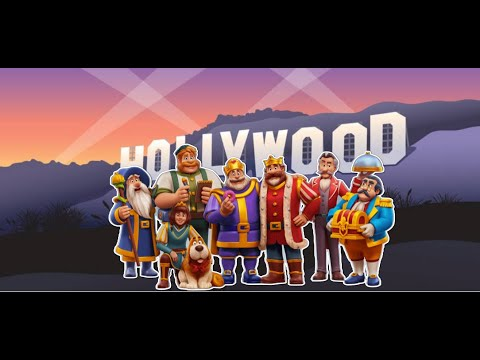
TWIG #328 The Hidden Cost of Celebrity Ads and the How Hollywood Doesn’t Get Games
24 Apr 202568 min video

[Music] Web stores. You've seen what good looks like, but have you seen great? App charge is the direct to consumer platform backed by the likes of Supercell and built by monetization pros from Moonactive, Platika, Huge Games, and others. People who know the difference. App charge powers over half a billion dollars in transaction a year for top studios, optimizing every detail. Deeply personalized web store offers, custommade design, industryleading monetization features, in-game payments SDK, and more. 70% of top grossing games already have a web store, but the one scaling fastest, they're doing it with Appcharge. Learn more at appcharge.com. Game devs, here at Heroic Labs, we know that great gameplay is what players love. But integrating metagame features like challenges, progression, and
rewards is crucial for retention and monetization. But coding them is a tedious and timeconuming process. That's why top studios have turned to Hero from Heroic Clabs. Hero provides a complete suite of battle tested metagame features that are quick to implement, letting you spend more time on the core gameplay experience. Ready to ship fully featured engaging games? Check out her today at heroiclabs.com. Hello everyone and welcome to Deconstructor of Fun. This week in games 328 game industry news by industry insiders. Hi, I'm Jen Dono. I fill the marketing and publishing role on the podcast. Today we have Phil Black Mandization ZAR Eric Crest shouting at the VCs. Misha Katcov is whispering to the founders. Here's what we want to get to today. I don't know if we're gonna make it past the first point. Watch out VCs. Here comes Chris. Congrats to Games Beat
going independent. The solitire category is filling up with brands. Royal Kingdom celebrity campaign looks to be the biggest in mobile game history. Just from me looking at it from the outside. Holy [ __ ] Happy has a new game in soft launch called Whittle Defender. All I can think about is somebody like whittling a piece of wood. Like the name on that. Yeah. It just I don't I was like what where did that name come from? And then that Netflix Rebel Moon game is alive and in closed beta from Super Evil Mega Corp. So more on that. Oh, we have no banter because the entire episode is like jam-packed full, right? So I'm going to just I'm going to just go right to you. You guys are great. Everyone's good. Woo! Thumbs up. Okay, shill. Go, Mishka. Okay, quick shill. On the blog side, I wrote a piece about Supercell Investments. It's their investment arm that is now 9 years old, but they came out with their web page recently. We covered it briefly on Twig, I think a couple episodes ago, and the title is
called a creative community or a missed opportunity. So, they did have a pretty big PR push with paid media website and interviews and so forth. And I talked to one of the game industry journalists who shall be unnamed and he said this is a nothing burger. They don't talk about fund size, check size, stages, strategy, anything. So I was like I should write about this. So I did. It's a great feel-good vision that they launched but I wrote a constructive analysis that will maybe get me deported from this country. So let's see what happens. Oh, that's awesome. So there's one thing I want to ask you about this which is another angle the VC had mentioned to me in a conversation which is that a lot of the times if you're you know a game maker game publisher like this is information right this is just a steady stream of information that helps you keep a pulse on the market and honestly like you're going to get all those investor updates right you're going to get direct reports so you really know what's going on at a KPI level like imagine if you're Riot you know you can invest in theory craft through other vehicles right like you
can hedge your bets Right. Isn't this a nice tool and like kind of a strategic playbook from that perspective rather than money machine? You're absolutely right. And in that piece that I wrote, there are certain strategies that corporate venture funds like Supercell Investments do employ. One of them is to look at these different signals. But then again, you have to look at Supercell Investments 9 years after. Like how have those signals come to play? How much capital have they thrown down? Do you have a sense of that? I would actually say between three to 400 million dollars over the course of the life cycle. That doesn't seem bad to me. Yeah. Through nine years, that's nothing. That's peanut as a percent of revenue. Yeah. That's nothing. It's a hobby. Yeah. It's building worlds in Africa. It's not even a business. It's a feel-good story. It was about spreading the gospel, the cultural gospel. Okay. Yeah. So, okay. Great piece, by the way. I read an early version of it. Thank you, sir. Great feedback. Very balanced. I love when Phil writes feedback. This
looks like AI wrote it and then you just [ __ ] deleted it. Sounds like when marketing gets feedback on art. Like I don't like pink, which I am famous for telling my team it his feedback is so strong that you cannot ignore it. So I'm glad it's actionable. Yeah. Yeah. And that's my show. And the other show is what Crest is going to [ __ ] all over. So Crest, he was named three times during the Morids podcast. So it's like calling the Beetlejuice. So Crest, Crest, Crest, and here you go. Well, let me set it up. So you interviewed Morid from Light Speed Ventures. Extremely likable guy. So Chris, I wore my Patagonia jacket. I don't have a vest for you. Handing it to you to respond to the great podcast interview that Mishka did, his fourth interview with Moritz, the liable. Chris has done one. Actually, Chris has done one. That's true. God, you just want to like him, though. Like, he's like such a nice,
easygoing, easy to talk to guy, and he seems to have a grasp of all the things that's going on. But telling you, dude, the entire podcast was a contradiction. Like, he just kept contradicting himself over and over again. And the two biggest issues again are the exits in gaming are not big enough for light speed of a fund this size and two the perverse incentives around managing money versus returns. Right? And so he tries to discuss this but he completely contradicted himself when he said this. So he says VC is a business that you win by outliers, right? And he did the back of the envelope math. $7 billion fund, 15% ownership in any company. A 3x return would require $25 billion, which would imply, listen, $300 billion to $500 billion of exits in value or public
equity or M&A, right? He says this, so sales of companies or IPOs of 1 to5 billion dollars are not material to lighteed. And then a few minutes later, he said, "We don't need $5 billion exits to gaming to work out for gaming investments in Lightseed. We max out at about a hundred million valuation. So 300 to $400 million exit would be fine for gaming, right? This makes no sense. It is return math versus scale math for exit, right? So a $300 and $400 million exit is absolutely mice nuts for Lightseed by his own calculations, not mine. Right? They have small funds that actually would benefit tremendously from exits like this. But Lightseed, it is immaterial. Okay, full stop. Exits don't even exist like this in gaming. And that was kind of discussed on the valuation perspective which was a really good question by Mishka which he completely didn't answer but the multiples are just
too low to justify these type of investments at this scale. Right. Yeah. And then everything's kind of already gobbled up right now as well. Yeah. Yeah. Because of the consolidation. All right. So the second big issue that we keep talking about and I think this is the last time I'm talking about this. The perverse incentives around management fees was just really not explained by him at all. like he only claims that a few people are impacted by management fees within these organizations. I would argue that the entire organization is funded by these management fees, right? The organizational leadership and around these organizations is all paid by these management fees, which is perverse because they're not incentivized to actually return. They're incentivized to raise, right? Versus smaller funds with smaller organizations can't make significant money on the 2% management fees because it's too small of a fund, right? they get paid based upon returns, right? So small funds in general have more in align incentives where the success of the founders is tied to the
success of the VCs, right? So in essence like what what seems to be happening and he kind of articulated this in his own way honestly is that these big funds you collect these massive management fees you pay all these minions marketing and PR folks to push the company brand and the personal brand I mean there's no one better at [ __ ] promoting the personal brand than this light speeded dude right than Morance himself this creates brand equity to get involved in better deals right which ultimately leads to get more funds from LPs under management to continue to hire these marketing and PR folks to pump up the brand and to continue to invest in more companies, right? It's like the ultimate Ponzi scheme, right? I mean, it's it's like a definition of Ponzi scheme, right? The only thing that's missing here is the actual exit, right? And the returns that are supposedly going to be coming, but those have not come yet, right? And we don't see those yet, right? Except for the really early stuff that they've done. So the smartest people are
disrupting the status quo and taking away from the incumbents. That is not what's happening in this market at all at all. Like there is everything's an incumbent right now, right? Like 60 70% of this business is being driven by incumbents, right? And growing, right? So I don't know what he's talking about. And then market growth is very small. Like there's all these tailwinds he's talking about. Yes, the market will grow this year and we'll be good this year, but I don't think we'll be growing next year. And the market is still growing at 3% versus 20% for the last 10 years. So, it's like Morris is the ultimate hypester, right? He like he knows how to hype things up and and he is the master of this grift in my estimation. I mean, he does it even better than A16Z. A6G just has more resources to throw at it, right? These are the points I've been making for the last like five years or four years. And again, not just me, game changer guys, Mitch guys that are [ __ ] allin, all these guys are talking about the same thing. He's
saying it but not saying it, you know, in his own words. So that's my take on his interview. I have a question like how would you structure the incentives for VCs? Because the typical management fee model is 20 and two. So basically you get 2% of management fee of the entire fund size and then you get 20% of the return after the investor has been paid. So if your fund returns you know 1 billion you get 200 million out of that. And of course with funds this big it typically is that the management fee is taken out of capital deployed and not the overall capital that is gathered. So you're not incentivized to actually just gather and sit on that and just collect interest. But press like how would you see it structured that would be better for LPS? I mean I think you have to keep it small, right? First of all, that's like the primary way so that you have blind incentives, right? And then second of all, I just don't think that some of this content stuff is actually venture capital investable. It just doesn't make sense. So riddle me this though, right?
So the evaluations get updated as more information comes in, right? So like when a company IPOs, that's a moment of reevaluation in the portfolio, right? So when I think about like what is the next moment the games industry is going to face where it's like okay let's you know let's define this relationship it's got to be the supercell IPO right like that's got to be the next thing that's going to define what the markdowns are on the VC sheets right I mean Scopley's off the table right like what else is there that's going to give us a big moment of reevaluation of the portfolios well the one thing Morris did say that is actually accurate is that we are in a point in time right they do have these longer time horizons Now, first it was like 5 to seven years. Now it's 7 to 10. Soon it's going to be 10 to 15, right? Like so no one you're going to have to get [ __ ] Nostradamus to predict the valuations at that point in time, right? But if indeed the IPO market opens up and Supercell and or Epic go public and they do poorly, that's really bad,
right? Really bad. But if they do well, that's actually very good, right? because that means that valuations will then go up for their book in theory, right? If any other companies they've invested in are even around at that point, you know, like they have a longer time horizon to think about. And so that makes it much easier for the grift, right? Because they don't have to have immediate returns. They don't know need to know what happens next year, the year after, five years, [ __ ] even 10 years, right? Like they could just sit there and grift all the they want and market the [ __ ] out of their funds. And as I said, the big marketing grift of this stupid speedrun thing, which doesn't make any [ __ ] sense at all, right? They just keep marketing the [ __ ] out of that, right? The jewelry is still out. Like, what do you mean doesn't make any sense? Like, we don't know that. Like, in the end, they might be finding really good companies and getting access on deals early on. It does not make sense for a $7 billion fund to be investing a $1 million in early
startups. Like that makes no sense, right? And the shotgun approach, you're basically creating false hope of all these people and then all of a sudden like when it comes down for a they're not involved with it at all and they are forever tainted, right? They'd even capitulate it. That doesn't make sense. They're not investing in games anymore. They're investing in all things techreated and consumer related, robots and all this other [ __ ] obviously, right? Because it doesn't make sense for games, right? It doesn't make sense for in this market, right? I thought it was funny how poor Morates for 15 minutes had to deal with your speedrun questions and he was like, "Dude, like why do you keep asking me about my competitor's program?" He has strong opinions on it just like Mr. press and I wanted him to kind of steal manand them and I wanted to just kind of look at from different sides because I think it's not true to say speedrun doesn't work after they've done what four runs and saying like this is [ __ ] I understand Chris's point
and I was just trying to approach it from a different point because the jury is still at it could work really well. We got 15 20 years though. Yeah. Exactly. we're going to be [ __ ] dead by the time it's like, you know what I'm saying? Okay, by the way, the last thing I want to make sure that people understand is that I don't think venture is necessarily broken for everything, right? Like clearly there's tons of investments in AI that make a lot of sense right now and who knows what's going to happen there. I am only talking in the context of gaming, right? Gaming tech, gaming companies, right? This is my only context here. So, well, to wrap this one up, number one is Morris is the most likable guy I've heard on a podcast with you, Mishka, in a long time. And the way that he presents the information, I found as someone who doesn't live and breathe this every day, like very interesting and consumable. And he helped me really understand it. And so, Crest, I actually agree with you
on that contradiction. I was like, "Wait, if this is mice nuts to lighteed, then anything in our world is like not ever going to touch that." So I I I kind of even from my like ignorant like I don't live this. I was like one of these things is not like the other in the true Sesame Street fashion. So I did kind of get you on that point and what was interesting is just understanding the different landscape of VCs as well. Like A16Z does it very differently than they do it. So So thank you for that. Thank you, Morris, for putting yourself in a position where he knew that this was going to happen. And that takes a lot of guts. I so I got to give him a lot of credit for that, too. I'll give one sentence. Pessimists get to be right. Optimists get to be rich. So Mors is an optimist and I hope he get to be rich at the end of the He's already see the thing is he's already rich. Like Andrew Chen or maybe he's getting rich. How about that? Andrew Chen's already rich, right? like where are their incentives, you know, to see these companies thrive and grow and become successful. He
actually even said the truth out loud is like they only focus on the ones that are the winners. Yeah. The winners, right? The true OVC and many founders don't understand. They think they get investment from a company like let's say, you know, you name it or a fund and then there's no like interaction. It's like guys, you're not moving the needle. That's why they're not calling. Well, the one other thing he said is it is not my job to keep investing in you. And I was like, which you know, again, if you're a founder taking that money, we talked about like zombie companies before. If you take the money from a big fund and you're not working out and they don't continue on, you have a little bit of a stain on you. Moving on, something really interesting in the world of journalism. So video game publication games beat has spun out from the tech site venturebe into a separate independent entity and a great variety article on our friend Dean Takahashi. So
Gina Joseph is now the CEO and Dean is now the editorial director. They have an event coming up, you know, the games beat events that happen. And let me just do a quick show just personally. They do a lot to support kind of women in games and they have this breakfast that happens and I go every year and I'm super happy for them and I'm happy to see game journalism having a future. There's something fishy about this whole thing from the get-go. And the order of operations are really interesting, right? So, Variety writes a cover story about this spinout, right? And I'm like, wait a minute, why is Variety writing something about Venturebe? Right? It's really kind of a bizarre. And then today, Venture Beat wrote what exactly is happening, right? So there is something behind the hot what's happening, right? Oh, I didn't catch up. So fundamentally, VentureB is moving away from consumer, right? They're focusing on enterprise AI and data infrastructure and intelligent security.
So they are basically spinning out this consumer part because it's not a core asset by any stretch. So it seems that Dean himself who has so much like popularity and leverage was able to spin this particular thing out with the help of Peter Lavine at Griffin. So congrats to Dean. Generally speaking though, it will be more of a challenge to do what he needs to do without the backing of Venture Beat. But I think they'll give it a go for a few more years, but it's going to be a bit of a challenge relatively, but we'll see. Yeah. A lot of it is events. Like that's how they are making money cuz ads is rough. I know the ad side. Exactly. And sponsorships is rough. So, hey game companies with a little extra money, go sponsor these publications. Dean is a Twig alumni. I remember he was one one of the Twig episodes. So, congrats to him. And Peter Leven is also a podcast alumni. So he seems to be the rain maker of the background. He actually had a podcasting and gaming publication
company before he became a VC. So interesting turnaround. Yeah, he had one of the massive gaming podcasts. So maybe we should contact Le on like what to do. Yeah, we Yeah, we need we should guide you. Let's add that to your to-do list. All right, continuing on into more talk of people giving money. Not a lot of things happening in games, but there was an exclusive. Andre Horowitz is seeking to raise a $20 billion mega fund. I meant global interest to US startups. So investments are heating up. The one investment news that caught my eye was this global gaming league and they raised a $10 million a safe round launching a celebrityowned gaming entertainment league featuring live events across multiple games. So esports. And I'm really really puzzled about this because I thought that we came under agreement that esports is not a viable business and definitely not a
business you should be investing into. Like if you're a game publisher like Riot, the biggest esports company in the world in the sense of biggest esports owner, they lose money on esports and they call it a marketing funnel, which makes sense. That's fine. If you're a tools and tech company like Face It or Grid, yes, you're making some money through the streaming infrastructure and you can be even a profitable gaming company. If you have high-profile events like the International, the League of Legend Worlds, those individual events can be profitable, but it is a hit or miss depending. And if you have small events in some key markets like Korea or Brazil, that can be sustainable, but definitely not a major business. But none of these above make it an investable business in my opinion because esports burn cash has very high cost rate. Has no reoccurring revenue because everything is about prize money or sponsorship. Has very low monetization from fans. The arpoo is really low. Is super dependent on the publishers like you know Activision that
suddenly ends the whole franchises. And talking about franchises, that experiment failed terribly. And most importantly, there's no exit when it comes to esports. Nobody's going to buy a stock from an esports company after those exits cuz they went to zero in record time. And they those happens during like the co boop. So I'm really confused about this news. I just wanted to bring it up. I'm confused that somebody outside the kingdom of Saudi Arabia is still investing into esports. So this is really interesting. So that's my take from the games perspective. The Elder Scrolls Oblivion remaster was released yesterday, which I did download on my Xbox Game Pass. I do subscribe. Thank you very much. Amazing game. It seems like the remaster was done extremely well. And that and the game was beloved as a classic, but it didn't have the popularity of Skyrim. Sorry. Skyrim did 30 to 35 million units, and this one did around 5 to 10 from what I could gather. Right. Yeah, it's definitely getting some attention. It definitely makes me just want the next Elder Scrolls even more because these
games are absolutely amazing. Did you buy the horse armor edition? No. That was one of the horse armor. Yes. Yes. Oh, I didn't see that. I got it for free. That is some of gaming's finest monetization history. Yeah. I mean, this is a nice little cash cow, right? Like I mean, you do what? 1 to2 million units, maybe $40 ASP. What does that get you? like 100, 2 million, 100 million, 200 million. Like this is a nice little easy bank. There was some something on LinkedIn. I almost lost my goddamn mind about how Game Pass is pushing people to buy games that are longer on Steam, which just is such o [ __ ] horshit. It doesn't even make sense. Anyway, the point is that Game Pass is really limiting the upside here, right? Because this is free for everybody with Game Pass. So a big portion of the people that love Microsoft Xbox are just going to get this for free. So yeah, I think it could do one and a half to two and a half maybe million units maybe at 40
bucks. You take out some cost there and it's a good small but profitable remaster but again immaterial for someone like Microsoft right generally speaking or for Xbox really. But it's a good fan service in a lot of ways. Speaking of fanervice, Netflix has shown the trailer for the new exciting co-op action RPG set in the world of Zach Schneider's Rebel Moon developed by Super Evil Mega Corp of Vain Glory fame. It looks to be what is this? What is this? An action RPG? What? This is mobile. Okay, Netflix stories died for this [ __ ] The pitch line, which is everywhere on their well done marketing materials, is an online co-op action adventure game set in the Rebel Moon universe. It feels like somebody who doesn't know anything about mobile marketing wrote that line because as a mobile game player, you're like, what does that mean online? Like, why did you use that word with me? Although
the trailer looked really nice. nice to have a closed beta open. But yeah, I think the bigger topic is not the game itself, which visually looks really nice. They also have a really fun Turtles game and they do Vangalore. So all their games kind of have this same look and feel to it. They have the same engine. They So that's the real the evil engine, Ev. So they have a great name, by the way. Super evil megaore. Probably the coolest company name ever. There's a bigger topic around them, right? not a bigger topic per se because like we did talk about venture capital before that and the interesting part about Superum Mega Corb like I went actually and looked at how much money they've raised and what's the history of the company they've raised actually more than 70 million till date through six different funding rounds and their history was like there there was the launch of that moa fang glory the first moa to the west a lot of hype it was featured on Apple remember the scarf guy that was their CTO he was on stage with Apple like Apple love them. Ton of downloads, you
know, failed to get traction. No surprise. It was super hardcore theme. They didn't have virtual joystic. It was three versus three. But most importantly, it was a mobile done for the western audience. They should have asked Crest, he would have tell right away that this is like it doesn't matter what you do, this is a failed endeavor. Nevertheless, the saddest part is as an investment or even from the founders's perspective because it's not that you try something super risky like this, get a lot of high traction, but you fail. and you just try again. You get more funding and you start a new company. But they failed with Vain Glory, but they didn't go out of business. They kind of kept on raising more money. And now they're stuck in what I would like to say a twilight zone of startups. They're not growing. They're not dying. They're existing. And they're not going to be acquired because the valuation is so incredibly high. If you raise 70 million, your valuation is probably like closer to what 34 $500 million. And now they've kind of gone from this independent studio with a lot of
momentum entering new category having their own engine making you know having this team from Riot and so forth to uh work for High Studio making games for Apple Arcade and Netflix. And that's not a sad state to be at. There's nothing wrong in making games for Apple Arcade or Netflix especially these kind of good-looking games. But it's definitely not the outcome that likely the founders and the VCs, I think A16Z included, were expecting from this company from purely the VC perspective, not from the perspective of how good the team is and the quality of their game because I think those are all there. It's just what can happen if you end up in a Twilight Zone. I think Phil would say Twilight Zone, which you stole, which I love. Yeah, this is the Twilight Zone happening. It's like the hibernation of the infected in Last of Us 2, you know, underneath. So good episode if you haven't seen Last of Us 2 season 2. Oh, anyway, go Chris. Two main points here. One, this was an amazing team that can
build amazing product from the get-go. They've always been like one of those premier teams, right? So, I'll give them that. Right. Two, to be clear, these were the original OG mobile developers, right? This was the proof that it could never work because they actually built quite a good game with Vang Glory and it [ __ ] bombed. Absolutely bombed. There was just no market for it, right? So, these guys took the risk that made sense at the time and they were the kind of the proof that it was never going to work and the fact that people made MOBAs after Vang Glory before the West never made sense. So, these guys were the OG. So, I don't really blame them for taking a shot at it. Um, third thing I would kind of surprised that this thing is still being green lit, right? This seems against the strategy. Rebel move, you know, like most likely this thing is very almost done, right? Must pretty far along. And I guess it supports one of their IPs, which is solely failed. So, I don't know exactly why, but this is the
closed beta trailer that we were witnessing on the screen a little bit. This is the announcement. Yeah. So, they were far and they announced it with Zack Snider was at some event I think this week, right? My guess, and we talked about this last time, is it's contractual. Yeah. Right. Right. Right. But yeah, this does not bode well for Super Evil Mega Corp, though. Like, this game I didn't even know, honestly, that it was on mobile only. Oh my god. Are you kidding me? Like, this game can't do well on mobile. I'm sorry. I didn't see other platforms on the website. Somebody checked me on that, but it looked like it was mobile only. I thought it was Steam and console, actually, when I saw it, and I'm like, "Okay, well, this could Yeah. All right. Yeah, but mobile. No, not going to happen. Not going to work. It probably doesn't have a monetization. It's probably cosmetic, you know, like it's like, you know, whatever. But Chris, it's a Netflix game, so there is no monetization. They already paid for it. They already won. Oh, right. They already won. And it's the previous Netflix leadership that probably overpaid by 20x.
Oh god. Makes no sense. Makes no sense. Anyway, by the way, there the bloodletting in Netflix continues. Like the whole core business team is [ __ ] gone. Like quietly, right? They just let go everybody. Everybody, right? So, and I want to be clear with all these gaming people that are going to Netflix, buyer beware, dude. These guys don't give a [ __ ] about games, you know? And it's like, you go there, you're doing a deal with the devil, like I've said before. You might get paid, dude, but you got a two three year two three year runway, dude. That's it. So, be aware. Be aware. Be afraid. Oh my god. I'm looking at their website. It does not tell me platform. Yeah, you have to search really hard to figure out it's on mobile. They don't use the mobile symbol anywhere. They actually clarify it in Twitter comments. I'm sure it will come out on Switch as well. So, after Brawl Stars, of course. That should absolutely. I mean, it can't, but it should. All right. So, Val Mobile in China. Interesting news. We finally have
a launch date for Valerant Mobile which will be launching in China after 4 years in development. I had heard this was on rocky grounds and I actually had heard that it was close to cancellation. I thought the plug had been pulled on this but it is stuck it out and it has a shot I think at a market that's pretty frothy in China when it comes to first-person shooters particularly for tactical shooters like this with a built-in audience on PC already. So let's see how this does. You know, right now we're looking at the top performers in China in the FPS category for iOS only. Again, just to control for the distribution of Android in China. And you'll see Crossfire is number one far and away, doing about 20 million a month on those platforms. That, of course, is the ripoff of CS:GO that China has and then developed for mobile. Delta Force is out, by the way. That was the HD title we were looking at earlier this year. It's out in the last 2 months. did at 11 million it looks like so far. Let's check back in on that one. Very curious
to see how that one performs in the long run. Arena Breakout, we mentioned that a couple months ago. That's kind of found its own footing. Call of Duties still sticking around. And then there's just kind of this collection of NEI Battle Roy which just float around for quite some time. So I think this game has a real shot. I'm not quite sure what it looks like from a product perspective. So let's definitely check back in on this one and see whether or not they executed. And these are revenues for China app stores only. iOS only. I just removed Android al together. Boom. Yeah, that's a So that's a fraction of the money that they're making. Yeah, I mean correct. Holy [ __ ] Crossfire Gunfight King. Stupid ass name, but must make stupid money, too. Yeah. I wouldn't be surprised if it was hitting 50 plus million a month. Yeah, most likely. What's not on here is Fight for the Golden Spatula, which is TFT in China run by Tencent, which crushes it. It's a top 10 revenue driving game. And just be clear, this is Lightseed Studios, which
is doing Valerant Mobile, which is the PUBG studio inside of Tencent. I'm very interested to see what they pull off from a product perspective. Yeah. Yeah. The fight for the Golden Spatula is T-Mi, which is another one of the studios. But yeah, so just to be clear, sorry everyone, this is only in China. Valerant is not coming to western markets. All right. So, I wanted to talk a little bit about solitaire. I know we did it in twig free 15 with Laura, but what's happened recently is Superplay is announcing Disney solitaire. And so, I just wanted to point out all the irony going on in this subgenre. So, Mishka is actually playing the video showing Disney solitaire. So for this category, just really quick, you know, it's one of those I I think Crest would call it a mice nuts category. Top seven, top revenue subgenre in casual puzzle in the US according to our friends at sensor tower. Actually technically solitire runs in a card category. It's, you know, pretty big. So this is also a genre that
is highly IAA inapp ad driven and also has a lot of RMG real money gaming components and competitors which I touched on last time as well. Why am I mentioning it this time is it's the irony of what's going on. So number one it's really weird that Disney Solitaire is coming from a Playa owned studio and the leading solitire game is Grand Harvest which is operated by Playa. So that's kind of an irony. The genre is super crowded. Candy Crush Solitaire launched in February, which is why we covered the first time. And so there's another King that's in market that's called Pyramid Solitaire Saga. And King talked a lot about using those learnings to help with Candy Crush Solitaire. So okay, two companies again with, you know, Solitaire games. And then you're starting to see brand extensions. And so this is where a little bit of my advice comes from. So Metacor, who we talked about earlier, they're Merge Mansion, and they're crushing it with Merge Mansion. So they have a soft launch game in Solitaire called Grandma Solitaire.
If you remember, Merge Mansion is the videos with Did Grandma Do It Like all of those like UA ads with the grandma looking like she killed somebody. So I, you know, I looked at Sensor Tower and, you know, tier one ranked by revenue and it's such a smaller category, but if you're a brand and you're a game and you want to expand into multiple genres, my one piece of advice is make sure you use the name of your game like Grandma Solitaire is not going to get you any SEO love, unless on purpose you're not trying to and you want to change that later. that becomes a little bit of a nightmare, but you know, Candy Crush Solitaire, Disney Sol, use the name of your game and your SEO. Please just, you know, do that. Take note. So, anyway, that's my quick kind of review. Disney Solidar, Candy Car Solitaire, everyone's entering this category. You know, just you wait, it's going to blow up. No, it's not. Go ahead, Mishka. Yeah, I I'm really confused. It feels to me like one of those like, you know, execs making
decisions of what type of games to launch and they're looking into back into rear view mirror of the revenues and saying like, "Okay, this is nice. Like, let's come into this category. Seems like the top games don't have an IP, so let's make the same game with an IP and they slap a Disney or Candy Crush on top of it." And honestly, I don't know if we've ever seen this type of a strategy work out in gaming. like it's hard to define an example where you were able to come in and put in one of those legacy IPs on top of a game and find meaningful traction. I remember in RTS or those tower defense games like whoever tried to challenge Clash of Clans or Clash Royale, those were kind of categories that I was looking at. All these games came in from Titanfall to Dungeon Keeper to Command and Conquer just ate [ __ ] and died. And I feel like this is the future of these games. No, I think this is a little different especially with the genre and the IP. You know, we talk about the CPI boost for brand. I mean, you already see Disney Solitire getting traction and they're in soft launch. Candy Crush quickly grew and I think is the number three game in the category just
launching in February. So, in this type of genre, brands do matter and they're just, you know, copy and pasting gameplay basically from the winners, which to Crest's point is how you succeed in today's market. Go find what works. Copy it. Put a brand on it. Get a CPI boost. And there you go. Winning formula number 67. So, I just believe everybody. This is how you win in today's world. I don't feel like it's how you win. I don't feel like it's how you ever won. But on mobile, look at Monopoly Go, dude. What the [ __ ] They just copied Coin Master [ __ ] verb, dude. Threw a [ __ ] Monopoly thing on there. Eric, that is that is so painful to hear. You seen the Star Wars integration with Monopoly Go? It had like the cutest video of all time as a Star Wars fan. I was like, "Oh my god, this I might actually play again." Okay. Not really, but Mhm. Okay. This podcast is brought to you by Appsflyer. In today's digital world,
understanding your app's journey from discovery to download is more than just insightful. It's essential. Enter Appsier, the leader in mobile attribution and marketing analytics that allows you to measure the full potential of your marketing efforts, making every ad dollar work smarter. With Apps Flyier, that's your new reality. Dive deep into datadriven insights that reveal exactly where your users come from and how they'll interact with your app. Apps flyier, where your app's potential meets performance. Attention app and game developers. Are you ready to unlock the secrets behind the world's top performing apps and games? With Sensor Tower, you get the ultimate competitive edge. Whether it's breaking into new markets, fine-tuning your UA strategies, or boosting monetization, dive into data like never before, track global trends across app stores, analyze market leading inapp purchase and inapp ad strategies, and benchmark your performance with realtime
insight. The best part, Sensor Tower doesn't just deliver data. It helps you turn it into action with intuitive tools and expert analysis. It's everything you need to make smarter, faster decisions. Thousands of app and game studios from indie creators to global giants trust Sensor Tower to help them win. So why not you? Start your free trial today at sensortowwer.com. That is sensortow.com. All right, let's whittle away the rest of the podcast with your game intro. Whittling. That was Okay. Yeah. Let's build fire. Let's cook. Let's go. That's a much better one. Okay, so new game, new game
in soft launch from Habby. I have a particular interest in this one. I think it's combining a lot of really interesting things and I think it's a great chance to check back in on Habby, which I would argue may be having its wonder kid in years. Heavy Bear Go, Archer 2 are starting to hit kind of their equilibrium, their long run download steady state, and it's looking pretty good. when you start to include ads and also China and Android, I mean, you could be looking at 200 million a pop in terms of these games. And so, you try to frame it from Haby's perspective, you know, okay, let's say that these are each doing 200 million. You're looking at maybe 400 a year from these and maybe 100 from the back catalog, which by the way, you know, when you subtract Cavi Bear Go and Archer 2 out of the portfolio, it actually doesn't look the the greatest. Like it's great that they popped off, but you know, still it it didn't look the greatest before that. And so, okay, where do you want to be if you're happy? So, let's say they're doing around 500
million. That puts them right at the 21st spot in terms of the publisher rankings in gross revenue for a year. Garina was at 520 last year. Lilith was at 528. Peak was at 565. So, you got this big clustering kind of around 500 600 million. I think this is the chance for them to step up and take that to the next level and start to move up these charts and at least get into the top 20 which I think would be a huge success from a studio. If you remember one of the first Deconstructor Fun articles that I think really popped off with the founder of Navic as well who wrote it talking about Archer and the revolution that happened after that game was launched. It wasn't just the hybrid casual model that it invented but remember they also used like default Unity assets to ship the title. there's all these really cool lore. And so they've gone from that to having a bunch of new games in their portfolio. And they've done it by leveraging the same meta assets. And so they'll take the same card progression, they'll take the same stat system, whatever it may be,
and they'll work them into all their different titles that they're testing out. And sometimes it doesn't work out. Like we saw SS Snaker, if you remember, that was another a shot that they took on goal. I think Whittle Defender holds a lot of promise, right? It's got that heavy core. It's got the rogike abilities. It's got Evo Fusion. It's got the stat system. It's got linear power score progression. It also tweaks in a lot of squad RPG elements. It's got the happy meta. What is the core gameplay? I would put it very close to the what I would call the idol tower defense genre. So, we've seen other tower defense genre iterations where you're placing characters on a map and so you have a strategic advantage to placing them in a certain place and you're face waves of enemies that go through a certain pathing. So, you know, they might go diagonal, they might go this way, they might go that way. So, there's a lot of strategy that comes from map placement. This simplifies this massively. You were looking at a screenshot of the core gameplay where you have five characters that sit in the middle. They have enemies that are closing in on them like you sometimes have at the end of Survivor.io, but this time you don't have any autonomy about how the units
move. And the units will try to defend the circle. They all have different abilities just like you would have in a squad RPG. And once you've defeated enough enemies, you level up and that's when you get to choose your rogike abilities which are attached to the characters as well. So you're getting a lot of really I'd say lowhanging fruit when it comes to the meta collection elements. And I think they also have a great template. So there's another game that's called the tower which has actually been scaling for quite some time. I think for the last 3 or 4 years this game has been scaling which is very simple. I would say another iteration of this but much more simplified in terms of graphics. It looks like Geometry Wars, if you're familiar that title from back in the day on Xbox. And so this to me is a high-res version of this with the heavy meta attached. I think there's a potential for a winning formula here. And I'm really excited to see how this game develops. And I would say that just the last thing in terms of gameplay is it's great to see someone continue to focus on passive input as the core gameplay. So remember, you don't need to move your character around when you're playing a level. it almost autoresolves
and you can use the auto timer to increase the rate at which the enemies move so you can clear more of them faster. So the thing that's really nice is that we've kind of moved away from these designs. We're moving a lot more towards active inputs. Like if you look at Supercells titles, virtual joysticks are everywhere. We're assuming that people are in the home having these long sessions. And it's great to see games that still you can play with, you know, very little cognitive input when you go through the core gameplay. Like trying to fill that dead time, I think is the thesis we had for a while on mobile. Which countries is this soft launch now? This is in Vietnam, Thailand, Canada, Singapore, and Australia. Interesting country selection. There's some other things they do to the meta here. Like we're looking at revive ally here. So, if you remember when you're playing Archer, one of the syncs they have is that you die and you have a chance to revive. This you have, you know, a squad of five. So, each time they die, it's another revive opportunity, which means another RV opportunity, too. The whole uh addition of of ads, like this hybrid casual model, I'm interested in this because like these games focus on
long-term retention, but nevertheless, showing ads after certain date after you've shown, you know, 25, 30, 100 ads to a player, like they're not of great value. Yes. So, how does this game monetize like on the long term they really need to switch from ads to inapp purchases? I don't disagree that I mean there's also a correlation, right? I mean, if you can get up, then your eCPMs are going to go up. But I mean, to your point, Mishka, right, there's diminishing returns where you get zero marginal revenue. Yeah. From an ad. Yeah. Happy has a lot of external studios. So, often times when they publish a game, you can see the name of the studio as well as happy like with the snake and I don't remember if Survivor.io was done by external by a third party studio. Feels like everybody's following Aby's footsteps. Even like the wudoo and the the qualies and the Rolex of the world just trying to catch up with like thousands of prototypes a year. Well, what I'd love to see more of is what is like the casual version of Habby? Like it's pretty clear what the casual meta template is. Like everyone's just taking the royal match meta, which is, you know, it's a formula that's been refined over, you know, almost a decade, right?
getting people to the continue screen, getting them to buy extra moves, and then optimizing difficulty and like putting pressure on loss aversion with like lava quest or episode race, whatever it may be. It's not just match, right? It's a bunch of different meta you can put on top of that. But I I've yet to see one publisher go as wide on the core gameplay as Happy has while holding that meta template constant. Like I don't know if I see a casual version of Happy. If anyone thinks of Studio, drop in the slack. Holla, it's your boy. So, talking about Holla, should we talk about this little ad campaign? Oh, the Royal Kingdom celebrity ad campaign. So, let me just do a quick setup. Royal Kingdom, which is brother, I think the Kings are brothers, brother to royal match, just had a massive celebrity ad campaign. It kicked off on April 16th. The game officially launched back in mid November. So this is a case of a big
marketing push about what is that five months after the initial launch of the game. The game had been in soft launch for almost two years as well just to give you that context. So the ad campaign features the 10 celebrities that I've counted and some of them do multiple creative executions. LeBron has two, Jimmy Fallon has two. So here are the celebrities. LeBron James, Kevin Hart, Jimmy Fallon, Shakira, Amy Puller, Sophia Varga, Courtney Cox, and Lisa Kudro from Friends, Kaylee Cuckoo, and Johnny Gleki from Big Bang Theory. I sorry if I got their name. I didn't watch Big Bang Theory. So, all of those have different ad executions. Mainly, a lot of them are on social when I looked them up. Some of them were on TV. Crest, I think I heard you say you saw LeBron's ad on the NBA playoffs. Obviously, that makes a ton of sense from a LeBron standpoint. It makes no sense otherwise, but yes, go ahead. I'll let you get there. One other thing to note is all of
the ads were extremely heavy on no ads, no Wi-Fi needed. So, really interesting. I I hear this all the time. This is I really want to highlight this. All the celebrities said it. It's emphasized in all their ad creative. We know offline games does actually fairly well in the app store. This is actually somehow becoming a feature. I was just curious to see them repeat it over and over again. People hate ads. Not exactly true, especially for rewarded ads. However, they must have had some research that told them that this was insanely important to this audience, and I would love to see that. I don't know if I've seen research in this space that has shown that. So, anyway, Chris, you go first, and then, you know, the rest of us will chime in. I have to give real kudos to these guys that they made an amazing TV campaign slash YouTube like it is really truly memorable and definitely hit the zeitgeist I think achieved probably the objectives that they're stating great commercials
obviously the spokespeople that they were able to capture were amazing but they must have spent a fortune on this thing you know it's like a marketing team's like fever dream you know to be able to do that and when you see ads about a game like Royal Kingdom on the [ __ ] NBA playoffs. Are you [ __ ] joking? Like, how is that? What the [ __ ] Are they insane? Like, where is the overlap on audience for a [ __ ] basketball game? They just even went too broad on this, but I don't know. What do I know? So, what do the numbers say, right? So far, you know, a week after and a week before, like comparing like how they're doing. And they got the downloads, right? The downloads are up like 112%, right? roughly, but revenue is only up 6%. Right? So that doesn't make it really that meaningful them from driving like the business per se. And they spent gajillions on this, right? So we'll keep tracking it and see like if they actually see it. But again, this is
not targeting the right audience, right? We need to target audiences that are spenders, not like the broad audience to download the game. That's like the whole point of user acquisition is that you actually target people that are more likely to spend on the game, you know? So, and even if you hit the same demo by the numbers according to Neielson, right, you're still not capturing the spenders in that demographic, right? The way user acquisition targeting can do, right? And I think part of the problem is there's a lack of call action on TV spots. It's really hard to attribute TV spots. Like, it is a very impossible thing. So generally what I think is that when you run out of the capability of making money on UA spend then that's when you start looking at TV you know and I was hearing a GDC and Turkey I was hearing that they were doing like 24 month paybacks 18 to 24month paybacks on UA spend for some of these games which is [ __ ] insane. Like we were like 3 to
six back in the day and like 6 to 12 like even like social casino is like 12 to 16 or something like that but man [ __ ] 18 to 24 month payback that is nuts. So I'm not really too dubious about this on like these campaigns on YouTube or Tik Tok or like some of these new media stuff. But when you do traditional TV ads, I'm always skeptical because I think it means something really seriously wrong with UA that things are not working out on UA that you're going after TV. And that's generally the wrong reason. And what I also think, and this is a little bit of a dig on you, Jen, not specifically you, but marketing people love [ __ ] TV ads, dude. They are [ __ ] rockar [ __ ] Absolutely love it, dude. All they want to do is be diceed with all these [ __ ] celebrities, get down in LA, sit there and watch them film and just be all the ballers, right? Spend millions of dollars doing that. On the flip side of that, they can go out to all the
different networks and start like, "Oo, can we buy 5 million here and 10 million here and 20 million?" Like, it's just all a big circle jerk. And it's not particularly for [ __ ] mobile. I just don't think it's material. every single piece of evidence that I've seen out there, whether it's Raid, Evony, Monopoly Go, all this [ __ ] I don't think it really is as material and it doesn't do as much for the game. Machine Zone, remember they had amazing [ __ ] ads, dude. That was [ __ ] [ __ ] All that was [ __ ] Kate Upton and Schwarzenegger, like great ads [ __ ] on the Super Bowl, dude. That's like [ __ ] burning money, you know? Gabe Bladen said that, right? He said like how desperate you must be for come to me for help when you go to TV. Yeah, exactly. So this is in some ways it's a sign of desperation or it's a sign that they had way too much money at Dream or like some marketing guy got in charge and just started having a fever dream about doing [ __ ] TV ads. But I don't
think this is like necessarily great except that it is a great campaign. So whoever put the correct campaign together, how many gajillions of dollars they spent some [ __ ] agency to do this [ __ ] you know, go my more power to them. So that's my take. I want to break down the marketing because these are really high stake bets. And when you look at celebrities, like why would you use celebrities? So like one is of course you stand out in this crazy attention economy, which they did. I mean all those celebrities kind of covered the bases. You increase your UI efficiency. So you stand out probably your CPIs are lower, your conversion rates are higher. You build trust because like this is not just another game for Kingdom Match or I forgot even I hate those. I [ __ ] hate those games. I hate them so much. I even hate this game. Like all kudos to them, but I hate playing it. But nevertheless, it builds trust cuz it's like this not another puzzle game. It's the game that Kevin Howard plays. It's the game that LeBron James or you know, whoever
Shakira plays now. And as a crest would say, you know, CMOs do this for the ego, but I think there's other elements that that maybe are even more important than ego. I think elements like you have a pressure to scale because it has it's been out for a while, hasn't scaled probably quite as they as rapidly as they expected. So that might be there. There may be some UA plateau. You're not getting that type of a scale through traditional performance marketing. So you're pulling out the A-listers. There might be element of brand positioning. I don't know much about brand, but maybe that's kind of element how you want to stand these out with those USPS and tie-ins with celebrities. And then most importantly, as Chris said, they're probably sitting on a massive amount of money. And when you're sitting on a massive amount of money, well, what is it? You know, 3 million there on this guy and 3 million there on her and like it doesn't really matter. It's like, let's just spend a little bit to have so much fun. But yeah, I don't know. ROI,
at least on this short analysis, it's only a week away. Doesn't seem to be there, but maybe it's a long-term investment. Like, Jen, walk us through this. Phil hates when I do this. So, TV is not performance marketing, so you can't necessarily go and look, you know, exactly at what's going on. And so, going back to Monopoly, since it's been a little bit of time since their campaign, which was in November, I have some charts. So I pulled US because you know this is primarily where I think they ran the media for their TV campaign. So this is Monopoly Go again. So the first one that we are showing is revenue and downloads. The red line shows when the campaign ran. So from that highest level perspective it looks like it stabilized. It stopped the bleeding. So if you look at the few months prior, you know, Crest and everybody what you said is true, like you're not able, you know, UA is slowing down. You're starting to bleed downloads and revenue. You got to do something. You got to start to change the perception. And once they did the
campaign, it looks like it stopped the bleeding a bit. And then you know on the next slide I channeled Phil and you know I pulled up ARPDO and DAU and Arpdow and DAU was like oof in a freef fall and then after the campaign and listen they did out other things as well and this is the most difficult thing with these games and live service. It's hard to know exactly what did it. So all I can say is after that period of time you know DA you look like it stabilized and Arped out looked like it was even going up a little bit. So Breathe. Breathe. Meditate. All right. Jen. Jen. They're just hackling you. Go do your thing. They're just hackling. Listen, I So, let me start by saying I haven't made a TV ad in like eight years. Like, I don't know the last time I made a TV ad myself. When I did, it was like it was at Scopely. It was like on Walking Dead, which was very targeted, or WWE, which is very targeted against the exact audience I was trying
to get. So TV in this day and age is really difficult. You can do connected TV which is like super super expensive. The thing that you're trying to do is get creative that you can run on social and then have it behave Phil to your point a little bit more like performance marketing or you're trying to tap into the celebrities massive social media audience because they're going to post about it because usually they're contracted to post about it. And so I think in this particular campaign they probably spent about $3 million for each one of the A-listers and maybe one to two for some of the others. And I don't even know LeBron's like three million plus. I mean that dude can you imagine? So just for the celebrities creating the creative paying the agency to do that likely 15 to20 million just not even having spent money to promote that content. Then you add paid media on top of that, you know, getting spots on the NBA finals. That's a lot of money, right? That's, you know,
probably a couple million dollar campaign right there. So for from a paid media standpoint on TV, I mean, you're probably looking at 5 to 10 million on paid media on TV. Then you've got paid media in social and all of the other places. And so you start to, you know, add up all those numbers and you're at a, you know, 30 to$50 million all-in campaign for this type of stuff. So you would hope following their numbers over the next couple of months, you would see something respond to that. We'll see what happens, too, because you have Royal Match and Royal Kingdom. Good thing is they have both. Is there consumer confusion? Do people go and download both? I'm wondering why they didn't do this on a royal match which feels more actually broader and appealing than royal kingdom. They must see something in the KPIs. They kind of hint about the other game because they kind of talk about the two games. This is in one of the Jimmy Fallon's cute spots. He talks about both of them. So, it was a nice kind of co-promotion.
Like, listen, they have so much money at Dream. Like it's insanely it's insanely like I don't know why you have 10 celebrities blanketing the world at the same time. The strategy is something that I would have been able to have the balls to push through and hang out with all I wouldn't have had the time crest to hang out with all of those famous people picking 10. Maybe I would pick one of my, you know, favorites, Jennifer Garner, and go hang out with her. But, you know, like that's Anyway, you know, Jen, like you describing this actually makes me more outraged. It's like I mean, first of all, like Monopoly Go that result of like staving off the declines. That is not the purpose of [ __ ] marketing, right? That's not I I am I'm just tell that is like [ __ ] burning money, you know? Like let's just burn money just for the sake of it. Like go to the backyard and start burning $100 bills for like the next 20 years, you know? I I don't understand that
right at all. But even do it, Eric. Like look at the chart like Dau is down, right? So Jen, you show downloads downloads may have been stimied, but DIU is down. So that's the usual riff raff you get from brand is always these low retentive installs. It always kills your organic numbers because they come through as organics when you run these brand campaigns. So it looked even worse. and putting up arpow goes up when DAU goes down because only the survivors are left. It's a survival bias effect. Like if you look at any match game right now over the long run, you'll see that their arpow goes up. Like even Candy Crush has a really high arpow right now because they've ripped through so many installs that their DAU is mostly composed of customers at this point cuz they retain longer than users. That's great. You know, they're find you know they're getting more customers that spend more money. Isn't that a good thing? Totally. But that's not the purview of the marketing analysis, right? All we're saying here cuz DAU went down and that's why our where did DAU stabilized it looks so if we do DAU minus installs I would think you would
see a downward trend cuz I don't know how sensor tower is counting installs whether or not they automatically get a DAU tag which is sometimes what you see internally in analytic situations. So if you minus installs from DAU it's a downward sloping trend. This is also like, you know, the best I can do from the out like I don't have Monopolies data. They have web shops that I think actually does a decent business for Monopoly. So, it's difficult to know all of the stats. Put all the Monopoly go stuff to the side here. And I would go back to like listening to you on this podcast, right? And when we continue to cover this stuff when it comes up, right? Like the other versions of this that we've seen have been like from Supercell, right? Like remember when they had Heirling Holland, they did an integration, but he was a character in the game that you could buy, right? We're talking about maximizing the integration down the funnel, right? Is how you get the most bang for your buck out of these integrations, right? Is that I see LeBron James, and there's some relationship to LeBron James down to as I would argue as deep as you could get it into the game. And I don't know
if they use the collection cards. I had a hard time figuring this out beforehand. I think you might play a little bit more, but remember they have the albums or the collection cards. I am at the endame is LeBron in that is any of these celebrities. So why not? And I understand it's a licensing thing, but get the [ __ ] licensing thing to do all this downfunnel stuff. Like it's so disconnected. It's so foreign from the ad. They don't exist beyond this creative. And to your point, like why aren't we use like Anthony Star, remember there were some Anthony Star ads that he did for Last War that came out recently which were like those cringe mobile ads, which I just think it's awesome we can get all these people to bend the knee by the way to us. Like you talk about like Eric going out to Hollywood. I think it's awesome that we get to bend the knee to us. But like that was like a cheap maybe shot at home or cheap ad that moved quick. I'm sure they saw whether or not there was a response from Anthony Star. He's that lead actor on the boys by the way. Oh. Oh, he's Homelander. Yes, he's homeland. I know his name. Oh my god, I love his voice. Yes, he was on the he was on these ads. And so what I what I don't
understand is like doing things like that that are cheaper and lower quality to me are more consistent with the mobile UA meta rather than going out and dropping dime. $50 million minimum for this campaign, right? That generates like a 6% uptick in revenue if that. And we'll see what it goes. Like this is complete nonsense. Like it doesn't even make sense, you know? But I mean it looks pretty. But I think Eric, like when you think about the brand marketing campaigns on a TV, you know, let's add up all the match games in the United States and let's think about what their MAU is. Like what do you think? 30 to maybe we get to 50 million MAU across match in the United States. You know, that's starting to look like a like kind of like a PCG, you know, Gillettish product. You can sell to 350 a million Americans, right? Only 3 or 4% are spenders, right? So really, you're only the target is much smaller than that, right? of actual people that spend. We don't give a [ __ ] about MAU. This is not like MAU is not driving returns on the this game. I mean, it's just not right.
Maybe on the ad tech side, but still it's not that as material as the people that are spending. That's the whole beauty behind user acquisition because you're actually acquiring spenders. You know, I don't agree. Like, but you're shifting through a mass quantity of people to find those spenders, right? You said it yourself. the quality is so low. Yes. That those that retain are such a small percentage of those that you're capturing when you are actually capturing them on something that's so disconnected with actually downloading a game. Like you see a TV ad, you're going to go to your phone and go to the app store, which is a piece of [ __ ] and download that game. There's no call to action on that. Yeah. Yeah. I know. I agree with that. That's the tough part. Anybody that makes the argument that it justifies spending or justifies playing the game, which was the machine zone argument back in the day, that's what spend because they it's justified. Now that [ __ ] LeBron James plays the game, I should be playing this game and spending on this game. I mean, that that doesn't make better than pass the logic test, you know? Like, yeah, I I am much more motivated like when I hear an ad read in a podcast and they're
promoting a product and I trust the podcast. Heroic Labs are one of our favorite sponsors. You know, you know, when reads any any of our ads, I'm like, holy [ __ ] unless I must I use take all of our money. In my world of brand, one of the goals is like it isn't like, hey, I want to do this to get them to justify it, but you are trying to give a certain message. And I do think word of mouth, especially in this category, is a big deal. And they I think they were trying to create a moment and break through to generate a lot of word of mouth to keep that going. Like I said, I I don't know if I I I am not saying that this was something I would have done and promoted and spent, you know, this much money on. My belief of what works in today's world is influencer campaigns. Like crush, to your point, it is much easier for you to go if you're on your PC, you're on your mobile, for me to click and install
something on the device that I'm on and I'm already kind of in that mode to want to engage in that. TV is one of those for me like an aisle of last resort when you've kind of saturated UA. You've kind of done it all. This is the Netflix opportunity though. This is the Netflix Roku smart TV opportunity that I think is really interesting is is we talked about connecting this funnel. Like Netflix game showed me the QR code on their screen savers. That was like one of the wins they had in distribution. Very small win. So like give me something in the experience that reminds me to connected to mobile. Give me a synced push notification. I like I know the tech stack at Netflix could pull this out. You finished Emily and Paris season 3. Congratulations, Phil. Here's the link to go get it on the app store. Yep. And then you know what if you were playing the game and your actions dictated what happened in the show next season and you got let's not get in trans media. Let's not do that. We need to wrap it up. So the one thing to wrap up though is your point about like integration and where Supercell is crushing it is when they do a celebrity
integration with a John Cena or whoever that is. Now Holland this one actually I don't think was as successful if I think back to when we did the analysis. But if you are going to do something, you should integrate it into an event, it doesn't have to be a viable character or whatever that is, but it should actually make sense when you open the app. And this missed all of that. This campaign didn't do any of that. Supercell and Brawl Stars, like kudos, they are completely integrated in any of the campaigns and IP integrations that they're doing. Okay, there we go. Super expensive. What else we got? I think that's it. All right, everyone. Uh, see you next week. See you next week. You did it. You made it to the end of the episode. As a fan of the show, it would help us out if you'd subscribe and leave us a review on the podcast service of your choice. Those stars alike once
Auto-generated captions from YouTube — names and numbers may be misheard.
The gaming industry currently faces a structural misalignment between venture capital expectations and the realities of game development. Large-scale venture funds often struggle with perverse incentives, where the pressure to manage massive capital pools necessitates exits that the gaming market rarely produces. This disconnect forces many firms to rely on long-term hype to mask a lack of realized returns. Corporate venture arms and esports investments further exemplify this instability, as they often function as strategic information-gathering tools or marketing funnels rather than sustainable, high-growth financial engines. Consequently, many startups enter a state of perpetual existence, unable to achieve acquisition or meaningful growth, yet unwilling to fail.
Mobile gaming is simultaneously grappling with a shift in user acquisition strategies as traditional performance marketing channels reach saturation. Publishers are increasingly turning to high-budget celebrity advertising campaigns to drive visibility, yet these efforts frequently result in low-retention installs and declining daily active users. Unlike successful integrations where celebrity intellectual property is woven into the core gameplay loop, disconnected broad-reach campaigns often fail to convert casual viewers into long-term players. This trend suggests that the industry is struggling to maintain growth, leading to a reliance on expensive, inefficient marketing tactics that prioritize immediate download spikes over sustainable player value.
Looking forward, the sector is pivoting toward hybrid-casual models and active-input gameplay to improve retention. While legacy intellectual property is being applied to saturated genres to boost initial interest, the long-term efficacy of this copy-and-paste approach remains unproven. Success in the current landscape requires a move away from broad, expensive brand campaigns toward influencer-led strategies and deep meta-progression systems that better engage high-value spenders. Ultimately, the industry must reconcile its high burn rates with more disciplined, product-focused growth strategies to overcome the current plateau in mobile performance.

Deconstructor of Fun · 2026

Deconstructor of Fun · 2026

Deconstructor of Fun · 2026

Deconstructor of Fun · 2026

Deconstructor of Fun · 2026

Deconstructor of Fun · 2026

Deconstructor of Fun · 2026

Deconstructor of Fun · 2026

Deconstructor of Fun · 2026

Deconstructor of Fun · 2026

Deconstructor of Fun · 2026

Deconstructor of Fun · 2026

SocialPeta · 2026

Deconstructor of Fun · 2026

Deconstructor of Fun · 2026

SocialPeta · 2026

SocialPeta · 2025

Deconstructor of Fun · 2025
Deconstructor of Fun · 2025

Liftoff · 2024

SocialPeta · 2021

SocialPeta

Deconstructor of Fun · 2026
SocialPeta · 2026
Comments