Transcript
[Music] welcome to the novic gaming podcast where it is our mission to explore the business and future of video games we bring together the industry's brightest Builders investors and thinkers to keep a pulse on current events dissect emerging Trends and games share Lessons Learned and have a great time this podcast is also part of novic growing ecosystem which ranges from free and premium research to Consulting and AD advisory services for more information visit [Music] www.nic.edu Europe and Asia with its dedicated gaming practice light speed gaming the firm is investing from over $7 billion in early and growth stage Capital making
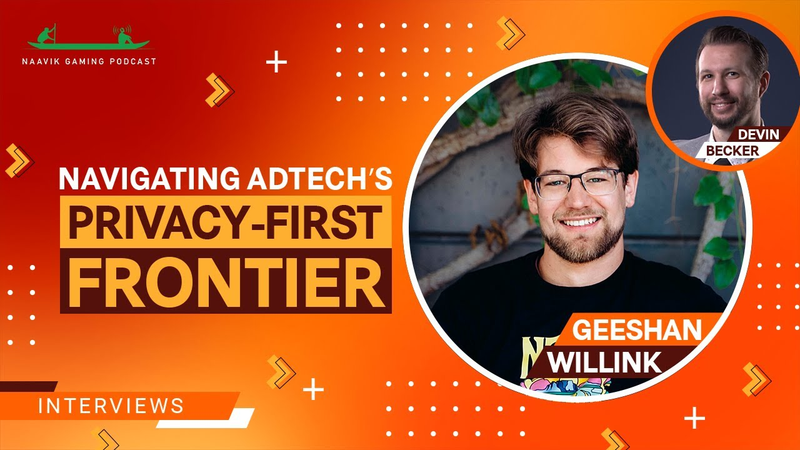
it by far the largest fund focused on gaming and interactive technology Light speed's Team combines deep expertise in gaming with a global multi-stage investment platform and a culture that truly puts Founders first selected Investments include epic games snap and stability AI as well as game designers and producers who led the creation of titles like fortnite Call of Duty League of Legends valerant Starcraft 2 and many more for more information simply go to gaming. lsvp docomo everyone I'm your host Devin Becker and today I'm delighted to be joined by gishan willink CEO of nefta and nefta is a privacy focused adte provider among other things it sounds like and uh today we're going to be talking about the future of games and ads and and sort of all this craziness around that and privacy uh but just to like familiarize listeners could you just quickly go over your background around the origin of nefta and kind of
what you guys do today yeah absolutely um hey Devin great to be on the show a lot to unpack there going to start with myself my background um originally I'm English Dutch grew up in England to parents from the Netherlands um have spent the last 12 years in business firstly um in Consulting at Banks um then I moved into startups I moved to Barcelona for three beautiful years uh built an early stage company there learn all about the tech and business sides of uh building a company then moved to Berlin um co-founded my first company um in FX trading was very technical built out all of the uh the systems the technology systems there uh sold the company in 2019 to a French company called iban first and then built another company in uh bond trading and machine learning
combining a lot of uh data in uh uh to help uh insurance companies uh improve their bond strategies and that we merged with a company in uh 2021 yes moving on to the more important stuff the more fun stuff uh nefta what is the origin of nefta what does it do today we are trying to disrupt the ad industry um we think that gaming companies have been hugely underserved in the in the in the adtech market um and we're trying to do that with both our ad Network and our premediation solutions to primarily of course deliver Superior Revenue performance in ads as well as to rebuild some of this trust that has been lost over time in adtech so nefta started as an idea for a game um basically the com combination of
Monopoly Pokémon go with uh collectible cards of real world points of interest and those cards would be on the blockchain so tra tradable um and I did this with my brother who's been in media gaming for more than a decade um I built out all of these technology systems and saw the potential to Pivot into a sasce model as my background was much better suited to working with business customers and not on the consumer side so um pivoted that had all of the tech built acquired early adopters brought together a fantastic team and raised 1 million from P's Capital big shout out there um in February March 2022 and um basically as part of that founding team we hired someone from outfit 7 who was instrumental in building in all of the incredible adtech
uh there which is their in-house mediation service and their bidder a lot more to unpack in these terms Etc um and so we came to Market with this SAS infrastructure platform but adtec was in our DNA um and was always the strategy to figure out how adtech would uh would work so we scaled that web3 infrastructure platform we built the adte piece we raised our seed round of 5 million uh led by play Ventures and um they put their largest ticket from their Play Future fund they're a fantastic team big shout out there also um in the end that round was over subscribed but goodness it didn't feel like it was oversubscribed going through it um talked to 100 investors over a 3-month period it was uh a real grind
um but we came out and um we we have the resources to have a great chance at actually disrupting this industry a little bit cool yeah definitely a lot there long history that definitely sounds like the destination is much different from the origin I guess the question then is and and you touched on this a little bit but I want to like just find out if there's a little more to unpack on this is what relationship if any there is either now or previously between what you guys were doing in web 3 and the adtech stuff out out of just the ITC being in your DNA so we built all of this web 3 infrastructure um stuff uh the idea is to profile Wallets on chain and look at the value that they have on chain um but what we saw in the web 3 space was that it needs scale web 3 doesn't have scale um and where adtec has really thrived is in Mobile and uh and using that wallet identified to
Target users on mobile is not in compliance with the Privacy Frameworks so the scale element and the Privacy element were the reasons why we pivoted away from web 3 adte but then we got really into the Privacy angle because that's what has caused so much issue in the adtech space um we hired expensive lawyers we dug ourselves into um this PR privacy angle and uh what we what we came to conclusion is that um the solution is first party data um the issue is that going from zero to one for gaming companies in first party data to actually increase ad monetization is extremely difficult you have to build all of this adtech infra yourself um or do an adet or ask an ad Network to do that for you so very difficult can you explain what you mean by first-party
data and how that works in terms of like in relation to ads and and data from users what we've done is we've standardized the way first party data is um structured what that means is uh we look at all of the interactions that players have within games um we collect all of that data we process it in a privacy compliant way we go into more details there um and use that data inside realtime machine learning pipelines and inference uh to modify the advertising bid price for a specific ad opportunity impression and basically the idea is that we correlate the value of the user with the um value of the advertising bid with all of this in-game behavioral data directly coming from the publisher So when you say value of the user do you mean General value or value
maybe to that specific Advertiser because obviously they may be advertising to different types of players and things like that is that part of that or is it just value in terms of like this is a player that spends money things like that no it's exactly like you described um the all of that behavioral data is combined with advertising data and the algorithms correlate um which type of Behavioral archetypes or behavioral characteristics perform well with different types of AD creatives so um certain users certain cohorts will perform better with different types of ads and the algorithms will automatically improve click-through rate with automatic training retraining um exactly that's uh that's how the system works so I mean the the obvious question I guess is that advertising these days especially post idfa is really about targeting user so you're not spending money on people that
just aren't your right customer right and that's generally what is a good idea for games to be doing because they have limited budgets to try and acquire users and acquiring users that are just going to turn anyways kind of pointless so the question is really why is taking this approach where you're technically leaving yourself with a lot less information uh a better balance with privacy versus trying to actually learn more about the user and directly targeting people like you know the Facebook style of things where they're very very specific down to you know uh age location all that stuff I think the key differentiating factor that you need to be aware of is um is pii um personable or personally identifiable information um and of course Facebook have a huge amount of pii you know name email address age all of this you can use to identify a person um what we are doing and uh what we believe is the future of
balancing um ad tracking and targeting with privacy is using this in-game behavioral data without collecting any email address IP address no idfa um and just using only that data to track users the big thing with at the Apple privacy framework is that you can't track users and the thing is the way users are defined um so users are defined in certain ways but as long as you don't collect pii you're able to track users and um correlate with advertising uh value can you give an example then of of how behavioral actions lead to ad targeting like what kinds of behaviors how does that actually correlate at least in at a high level to some kind of AD being targeted in a way uh you know based off your guys' system or even just the theory in general what we ask from game Publishers
is to look at their games and we help with this to send us the data that differentiates um the user player trajectories um and like I said earlier we've standardized these game interactions these game events and basically Publishers will look at these game events and send us this data and find as many data points that they can think about to help the models differ differentiate the the the users and what I mean by this is some users they spend a lot of time uh completing levels some focus on their inventory some like to focus on cosmetic items some fail many um levels um and so on and so forth so using this standardization of in-game Behavioral um interactions the models are able to differentiate the users into certain clusters correlate all of that data with advertising bids and improve
fckr rates um so that's that's how uh how it works yeah is there any potential for the same sort of strategy to be used then with uh promoting inapp purchases that are like targeted to the user based off their behavior because obviously that's something that games try and do already but they don't maybe have the same kind of technology or models to be able to understand if you're already consuming that data to try and understand what players are doing and what their you know maybe intentions might be in the future is there an opportunity there to to promote those items yeah absolutely and and this kind of optimization has normally only been possible to the largest Publishers out there who have built you know large uh analytics teams and also um ad adtech teams uh where they can you know optimize the user experience and user Journey um by showing less ads or less disrup ads um
or optimizing for specific IAP purchases um this is something which we we think about we talk about a lot internally um but this to us is at a later stage um the the adte piece and launching the network launching the mediation uh all of that is a huge huge challenge in today's market and so um you know we will focus primarily on that at the beginning and then these kind of services we can add uh later on but it's certainly in our wheelhouse uh with the team that we have um and the knowledge to to launch something like that on top of the solutions we have well then I guess the the question I have is too is when you're talking about building up all this uh you know starting kind of from zero with with different games and things like that are there kinds of games that this happens to suit better for a couple different aspects one is
being able to collect player data like you know how long people are playing those kinds of things the different the sort of uh different like uh nuances of data that might be coming from different types of games as well as games that use ads more than others for example a hyper casual game is going to be very ad dependent but at the same time also not a lot of player like Behavior differentiation or purchasing habits in in those kinds of things what kind of games ideally or or types of products does this sort of solution suit well it's very true that you know the largest types of uh games that are driven by ads are more you know these bite-sized hyper casual games um and they have you know more linear um player trajectories um and player progress paths um that has that is changing considering the Privacy changes um and so you know this term hybrid casual has come about um
basically making these uh games that are just for advertising also available for IAP um and this is really where things start to become much better when differentiating users the the the more complexity and more opportunity to Veer away from your standard path the better the models will be um fun fundamentally it is the volume depth and variability of events that are sent to us that enable the models to differentiate the user trajectories um and lastly uh part of the Privacy is that we build models per per app and per publisher and so it's not a question of like trying to compare apples with pairs we only have one model per app or per publisher and
so the models will find the variability within all of that data that you send and not try to um you know look at all of the different genres uh so it's game by game with the model and so that's how we improve accuracy improve performance on a Model by model basis if you understand what I'm trying to say yeah definitely I mean I mean would you say overall then player retention is something that improves accuracy over time so that like better ads can even be served if a player you know you retain them but they don't spend money on I but you might be able to serve them better ads the longer that that you retain them in the game because of those deviations you mentioned well this is a Publisher's dream a Publisher's dream is to be able to have more control over what ads and how disruptive the ads are within specific placements um as a publisher you don't have a lot of control over this um so this is something again we
are thinking about and exploring to allow Publishers to modify what is shown in specific placements for specific users perhaps a high potential user doesn't um or shouldn't be interrupted with an interstitial ad um but they should just continue on their user Journey but Publishers don't have that level of control yet um which is another area which we are uh exploring so uh you know one of the things that I think is going to be the question in a lot of people's minds is how does this sort of thing compare in terms of pricing add inventory all that kind of stuff I mean obviously you guys are starting a little bit from from uh the ground up but at the same time how does this work compared to traditional style of advertising uh and bidding and things like that especially on the ad inventory side because you targeting users differently at first it's you know cost per click and cost per install and these installs are attributed via MMP
providers um how they attribute installs the types of data that they collect um that is their business we receive the data from them and that is how existing adtech players are able to do Post install event optimization campaigns uh Ros campaigns and so on um and so we will start with uh cosper click and cosper install and move into using that externally attributed install data to uh post install event optimization and Ros campaigns um that is how we will uh be pricing it um another key component here is in margin traditionally in the adtech space um margin is not transparent um Tech providers adjust margin at the
beginning they have a very low margin and then they increase margin after the trial period or proof that things work is over um you have large incentives that are play paid to Publishers to get them integrated into a new STK um custom deals etc etc uh which is also part of the reason there is a lot of distrust in this place in this space we are trying to do something different what we are what we are doing is we're introducing a fixed margin of 15% and that is uh less than what I would call the average of about 30% um but we're also introducing a margin reduction system which enables the margin to be reduced in a transparent way down to 5% based on the volume um and contribution to the ad Network that a specific publisher brings
um so yeah we're trying to do something quite different here uh when it comes to our actual margin um and it being transparent and and how does scale affect all this in terms of when you're talking about like a game with a very few amount of players or a game with a huge massive amount of players obviously you know for example that might provide more training data but also might provide like a variety of different ad targets how does scale affect all this concept out outside of just simply more training data of course things work better with more data the models have more Nuance to find those those nuggets of players that perform well with specific creatives it does work on small games as well um if you lean into the the data that you send like I mentioned earlier that volume depth and variability um and it the models can still improve
ecpm at small scale but it's going to because of the model the model per app or per publisher um this um but of course it's going to work with larger titles um and have a higher impact so are are you tracking on this stuff to verify you know if they go and they actually click through the ads and they do some kind of post uh you know action and actually you know the ad essentially works are you first off tracking that in some way to know you the effectiveness of the ads in the system and then in secondly feeding that back into the trading data at all to be like hey here's positive feedback on that we verified that that you you guessed correctly with the model basically so we are not doing any of that um attribution ourselves we are relying on third party attribution providers to tell us um which campaign s have um been able to
acquire which users and like I mentioned earlier we will be introducing the post install event campaigns um optimizing for a specific uh in-game event and introducing the RAS campaigns which combines that attributed uh data with uh with the internal data is there risk at all with uh some of this if you have say low ad inventory um potentially skewing where the the data where you know people are being shown the same ad over and over and that might affect what the the rates look like through the attribution and skew the model further where it's like oh it thinks that ads effective because it's just the only one being shown to that user um those kinds of things those kind of problems I I imagine with low ad inventory at the beginning I mean it it touches upon you know the the pacing algorithms that are used inside the bidder and basically there are levers which we control which determine how often a user sees the same ad what is
the ad fatigue um and that's something which we uh we control and we can you can see when you launch a campaign the the point at which ad fatigue comes into play and the effectiveness of that campaign uh starts to uh reduce is there a specific type of ads that this is specializing in in terms of like interstitials or rewarded and also playable versus non-playable any particular types that it's kind of specializing in uh rewarded video and playable ads being you know the the most engaging ads and the best performing ads out there and we work with all of these ad formats as well I I haven't got enough concrete data to tell you you know the system works the best with banner ads well I mean overall like now that you guys have been doing this for a little bit of time uh what have been the biggest challenges to really growing this idea and concept because I as far as I know there aren't a ton of people doing this just yet and you're entering
kind of a mature industry like what have been the biggest challenges overall that you've run into one of the key questions I get asked is why doesn't some of the big adtech players out there do this why don't they um do what we've done and um there's a few things I think they've tried but it's very difficult um I underestimated how difficult it is to build such scalable and complex systems um so from a technology point of view there is a lot of challenges from a business trust point of view there is a lot of challenges as well I think there's a huge amount of distrust and dissatisfaction with large adtech providers out there at the moment but there are very few alternative Solutions launching a Marketplace business in itself is very difficult you need buyers and sellers Publishers and advertisers
at the same time and because the market is dominated by big players we are being integrated through third-party mediation and there is there is uh there's difficulties in that also because you can only bid at fixed ecbm prices and you don't have access to Fair ad auction Dynamics you know key areas that we've we've faced in launching this thing over the last six months Supply Demand Being integrated into um other marketplaces which don't give the the possibility to bid high for high users and low for low users um and of course that Tech complexity um and so this has been a a big struggle to launch this um but we're in in a a very exciting position now
having faced all of these challenges where we are um integrating directly into uh some of these large Publishers into their in-house mediation and uh we're also launching our own um SDK mediation which is following these same principles of trust and transparency and AD Revenue optimization exactly so we went through a tough months launching this but now we are um in a much better better place with the next phase in go to market also in that time just quick Point here is that we've we've uh we've done some case studies internally using internal data coming from Publishers and we don't want to go to market and say hey look at this case study because it's data that we have internally and you know there's not a lot of trust in outake so people are going to be like yeah you just manip manipulated the data um but what we have
noticed um is that we can improve ecpm by about five to 10 11% using this behavioral data on iOS opt outs um so applying that at scale um when we have you know good fills um then uh there is significant Revenue to be had uh using the solution and we just building building up to having all of that uh all of those pieces come together to actually deliver on that value uh I mean you mentioned the the opt outs thing is there anything you guys do when it comes to working with people that do opt in or let's say in the case of a of a game developer happening to have their own amount of data from some other source right are they able to then combine that with your data to enrich it themselves or you guys able to use that like to leverage basically other sources of information that the developer or publisher might have uh you know that that they're dealing
with sort of the Privacy implications of that on their own side if it comes from the publisher we could use it because it's first party um we can't link any of that data to any other source we can't have any universal identifiers those two go hand inand um so we could use it but imagine working with you know 50 100 Publishers and collecting unique data from each one so this is why the importance of standardization in the collection of that first party um data is is so key so I mean with you guys being in the trenches uh of this stuff and having seen like everyone kind of scrambling a bit to try to figure out what to do what kind of other Solutions you said you know you've seen some other Alternatives what kind of other Alternatives have you seen people trying outside of just hope for the best I mean there's got to be other Tech Solutions other other approaches that people are taking yeah there's a couple of things um uh one is people are going to different
um ad formats for example offer wool um this is another ad format that people are experimenting with um the influencer marketing route has been um has been uh taken off so there is there is a push for finding alternative solutions to this privacy um induced problems um some are successful some aren't but you know there is an interest to do that um there are also Tech Solutions out there that are trying to improve the actual adtech space it's just so hard um launching a mediation um launching an ad Network launching those things combined is just um really really difficult um and require very specialized knowledge um
you know a fair amount of funding um and a lot of determination and uh fighting uphills so to say but there are a couple of companies that are doing um transparent mediation um which have caught my eye um and some other companies experimenting with alternative ways to acquire users uh at scale and when you mentioned like regulations and and all that stuff earlier and involving lawyer I mean are you mostly talking about platform level regulations country level regulations like how are you looking at this from like a compliance standpoint uh because obviously these things can vary right yep absolutely um the key thing to note um is well the Apple at framework um like I mentioned you know you're not supposed to track users but how do you define users it is this pii and so as long as you uh um don't collect pii you
don't um H try to replace a universal identifier you don't mix the data between developers or link it with any third party data then you are compliant with Apple's at framework now there's been the introduction of TCF 2.2 especially in Europe with the eprivacy directive um and there is a small caveat here um that if a user Ops out of TCF 2.2 which is a small percentage because the opt out rates for TCF 2.2 are very small like 5 to 10% for example then nobody can do anything on the European users that opt out of TCF 2.2 because no identifier can be stored on the device without that consent um this happens in on web with cookies nowadays uh it still happens and it happens across Mobile in
all spaces it's just that it's very difficult to regulate but The Regulators are are coming and um we've seen uh we've seen some cases already so there is a small caveat in opt outs where if you opt out of TCF 2.2 in Europe then nobody can do uh anything with those users but we are focusing on iOS opt outs because we are compliant with the at framework and that is the area which we can improve ad Revenue the most uh now to your original question we're not just focusing on iOS opt outs we are collecting this in-game behavioral data from all users it is just that we can improve the revenue the most for that cohort for that segment um exactly if you're already doing like uh machine learning or or whatever form of modeling you're doing doing for these users when they're when working um is
there any way to then also leverage this for stuff things besides ads for the game developers obviously you're standardizing the inputs but the outputs could be you know whatever in terms of uh looking at other things like Behavior around like the the first-time user experience for example where being able to help you know facilitate better improvements there um and things that aren't just directly related to ads is there any CH I mean obviously AI is a big topic right now so everyone's kind of looking for opportunities in this space is that something that if you're already building that technology as you said was kind of difficult to build up all this infrastructure is that something where there's some opportunity outside of just straight ads or even just around like I was saying earlier around inap purchase uh you know offers and things like that to just better improve uh games overall outside of just showing better ads one thing which we are doing is building our churn and retention models this reduces the training period for the models to be um better at bidding in the advertising
bid and these churn and retention models can be used for other Solutions um if you think a user is high highly likely to churn within that you know those first few sessions is there ways to modify the game um to improve that you know those improve the likelihood that that user stays that that he retains retain to be able to do that to go from zero to one with that is quite difficult um and it also means you need to control you know firstly the ads because ads are part of that monetization strategy and the user experience at the beginning so how how quickly do you start showing ads um and is that driven by data how quickly do you start offering I AP opportunities is there perhaps an offer that you can give to the user if they are likely if they are perceived to be likely to churn um these are all
questions which game developers are asking there are some solutions out there to combat this but also Publishers need to be able to to control the ad stack um and be data driven enough to uh use third party solutions to um to to control that user experience so for us you know like I said we've explored this we will probably do something in that space but not for in the near future and I guess there are a few platforms out there that uh game studios can look at to uh to improve that game design um just wanted to add another Point here uh in in in the way the models work right now we're collecting all of this behavioral data using and correlating that with ad Crea data to improve click-through rates where we get really excited is more in
player trajectories and sequence embeddings similar to how these large language models work um you know when you hear they say yeah this model is 70 billion parameters 400 billion parameters I don't know how many gpus that uses but basically this is the same idea where we take all of these events and put them into these large matrixes if that's the right way to pronounce that word um and uh look at the sequence of events and correlate the sequence of events with the ad creatives and I think that is a an area which will hugely well no will be the next iteration in improving ecpm um from our side is actually improving the modeling techniques um based upon those large language models is there any uh chance then to to also feed this I mean we're talking about the game developer but also towards uh ad creatives and other
things around that advertising space uh when it comes to filling that ad inventory when you're I imagine talking to advertisers is there also a way then you can use what you doing to also help improve quality or the I mean obviously you're improving the targeting but just anything you do to improve the ad space in General on the ad side on the creative side I think there is a lot of dissatisfaction again with the quality of ads um having you know many end cards the x button is not being shown uh very long videos um tap on off on off until the ad is finally gone so the actual user experience is um pretty poor there a lot of complaints there is something you can do there when it comes to configuring ad placements from the publisher side to give them control over what kind of videos are shown how long they are um how many end cards are shown so there is certain controls that can be given to
Publishers from that angle that's certainly something we would uh we would like to do from an advertiser's perspective you know getting the data into which creatives are performing well in which jurisdictions in which segments that is key in iterating with creatives um and I I guess I touched upon a point there iteration of creatives and there's been discussions you know on generative AI and um advertising creatives what is the way those two things work hand inand um and does it increase that iteration in creatives Creative production um I think yes and over time as these models get better it will be creative um teams will be better assisted to produce larger amount of creatives and and let these models loose on comparing a larger number of creatives more variations of creatives with all of the other data
to squeeze the ecpm um and squeeze the performance in a from A New Perspective uh exactly cool I mean I guess just in general then you were talking about a little bit right there is just kind of looking towards the future of the space obviously there's bunch of different solutions being tried I imagine you have a lot of faith in your particular solution but just overall in the space out you assuming privacy doesn't go back the other direction what do you kind of see as the future of AD supported gaming and this could be outside of just uh what you're doing specifically but I mean different business models we've got subscription models like the Xbox game pass you've got the Apple arcade and Google plays one as well there's all these different ways to approach monetization of gaming and we're kind of at sort of a tough spot in the industry so having especially having pivoted a bit you guys uh yourselves what do you kind of see as the future and is there any relation to web 3 in that or any other the sort of Technologies uh obviously AI as well I think and here
you know a much larger shift to IAP so ads that are only monetizing through sorry games that are only monetizing through ads um are struggling clearly so they are introducing IAP and you know testing whether or not I AP is viable with that user base um to diversify away from just purely ads I think there is uh a large dissatisfaction with from gaming companies with large adtech providers um who are you mentioned it you know Publishers game developers are struggling um posting their worst quarters yet whereas some of these large adtech providers are posting quarter over quarter growth and so to me that is a um a trend which won't last and some at some point it will break and I think so there is certainly need uh in the adtech space um for subscriptions um for
console um to be honest it's it's difficult for me to to say I'm so focused on the adtech space um there are certainly other other people who are better equipped to answer that question you did actually make me think of of another thing I don't think we completely addressed which is um obviously there's a lot of non-personal information that you're getting right so one of the things that I wonder is about uh you definitely want to kind of understand maybe some idea of of the demographic in terms of like where the user located is there still some way to Target the ads uh you know based off geolocation to some extent like mean obviously you know a tier three country and a tier one country might have pretty different ads in terms of what you're providing but the gameplay might be exactly the same right yeah absolutely and this touches upon the IP address component um and theore storage of the IP address and whether or not that is
pii um which is yeah it's uh it's certainly a topic for discussion um what we said is we're not going to um expose ourselves to any of that um piece and therefore we don't collect IP address um on on any account but what you need to be able to do is differentiate the country so we use a service to um determine the country from the IP address and just store the country and then we don't save the IP address and this is critical to have that country level information because like you said you're going to have hugely different ecpm um in a tier one versus a tier three country um and our focus is tier one iOS and that's where we can improve the ecpm the most um but there is a whole debate um on the I IP
address component and we we've uh we've said we're not going to be exposed to that it's also you know working with great gaming companies um easier to go through the legal side of what we're doing uh when we say you know we're not doing we don't do any of that stuff and it's in the contracts um if that situation changes say the change or in like an apple changes it stance for some reason goes back the other direction are you guys willing to incorporate more data that whatever basically whatever is normally allowed uh and seen as as legal and and abiding by that to enrich the data or you going to just stick with the the kind of data that you have because you're already building up around those models well our opinion is that this is the the right way from the letter and spirit of these privacy laws is you are not trying to identify a user you are just grouping users into segments and
cohorts and understanding what what those users uh intent is um so we believe that this first party data not sharing not replacing idfa etc etc will be the the best way and the Long Way Forward for targeting in adtech and you'll see this uh across multiple Industries um where you know the revolute the Neo bank is now an adtech provider where PayPal have um said they are now an adtech provider um and there are lots of instances where companies are are realizing that first party data is the key and is the value to to unlock uh Amazon is another one and of course these great companies they sit upon a wealth of first party data and what we are trying to do is enable Publishers to
leverage that first party data but not need to do it all themselves that's a a really key key point is there a particular in size of company that you're generally targeting like kind of maybe like the double a size or something in that space where you know they don't have enough resources to do this kind of things themselves but they're big enough to need it yeah it's it's an interesting question um certainly you know as we've been launching this thing working with smaller to midsize Studios um that have some you know risk appetite to try new innovative solutions um that's how we've been going um but it's moved up the chain to be talking and working with some very large reputable um gaming companies even the largest Publishers out there struggle I think to to really leverage all of that data and um I say
this because I I know um King for example have a huge um analytics department and have been squeezing every percentage out of Candy Crush for the last x amount of years and have done extremely well there um but I think you know the companies that are able to actually pull that level of optimization off and that it makes sense at that scale are few um and so I think that there is a large area of the market that is underserved in having the technical um and so on ability to be able to properly leverage all of that data that is generated from from ingame is there any case studies or games like live right now using this kind of thing where people could kind of see some of this action or at least read the case studies and see kind of how it works just because right now it's a little abstract and I think it for people to get some concrete details yeah no absolutely um
and this is you know really what we've been working towards is releasing these business value case studies that have publisher name real percentages um and that are not using our data but data that is from the publisher so it's verifiable and that um yeah people people can see that it really works um it goes back to the issue that I've described earlier in launching the network in acquiring the scale to have um statistical significance to um to really show how much this works at a large scale for a specific or for multiple Publishers we've got this technical case study internally and we will release these case studies um we will release hope to release one very good one in the next two months I would say and that is because we are able to
integrate through a large Publishers in-house mediation and not go through um these other um mediation providers uh which is where we can really bid high and bid low um and we have access to these Fair auction Dynamics where the auctions aren't controlled by um by other people they are just Fair um so we're working on it and um we're getting there we've proven internally we're very committed um we know that first party data is the future in the long term and we will continue iterating until to improve ecpm the most using this data over time that's just a a couple of thoughts yeah and what would be the best place for people to kind of find uh you're talking about these potential future case studies things like that with just be on the website or Is there going to be a good place where people could just like be ready to get
this information uh LinkedIn linkedin's the best place um follow the follow the company um interact with the team um that's definitely the best place uh of course it will be posted to the website but LinkedIn is the the best cool we definitely look forward to seeing that I would like to see a lot of this action myself just to get an idea cuz obviously it all sounds great but it's it's something that uh I think we need to kind of see how it works over time especially with it being as uh nebulus is learning and modeling uh are all the rage these days so hopefully it works out but I definitely would love to check it out when you guys have that live but I did want to thank you for coming on today and talking about it I think it's going to be a very interesting space going forward obviously a lot of problems needing solved and you guys are definitely taking a big crack at it here so hopefully that'll work out but thanks for coming and explaining everything and uh if you want to plug the uh the website I think it was nefta doio was it yep that's right cool so definitely make sure to check that out and uh you guys
are doing a lot of cool stuff so who knows maybe even more uh in the near future as you guys tend to do a lot of cool different things so yeah fantastic Devon really good to be on the show and um looking forward to catching up again soon awesome and thanks everyone for listening I hope you had a good time learn some new stuff and definitely make sure to check out what nefta are up to at napa. it's nefta doio so you don't confuse with NAFTA as you mentioned earlier uh but thanks again both uh gishan and you listeners and we'll catch you next time if you enjoyed today's episode whether on YouTube or your favorite podcast app make sure to like subscribe comment or give a fstar review and if you want to reach out or provide feedback shoot us a note at podcast nov. or find us on Twitter and Linkedin plus if you want to learn more about what navic has to offer make sure to check out our website www.nic.edu . Co there you can sign up for the number one games industry
newsletter navic digest or contact us to learn about our wide ranging Consulting and advisory Services again that is www.nic.edu [Music]
Auto-generated captions from YouTube — names and numbers may be misheard.























Comments