
Key insights
7 slides
The pivotal transition
Discord's IPO forces a balance between community appeal and public market demands.
Discord is transitioning from a community-centric digital third place to a public company.
Revenue milestone. Discord reached $600 million in annual revenue by 2024.
$600 million
Discord's annual revenue by 2024
Monetization challenge
Discord must monetize its audience without compromising its social environment.
The core challenge lies in generating revenue through advertising and subscriptions. Discord must do this without damaging the social environment that drives its value.
Structural shift
The gaming industry is shifting toward consolidation and distribution efficiency.
The industry is moving away from content-heavy development.
Major divestitures
Major asset sales highlight the move toward monetization technologies.
Recent market activity includes the $3.5 billion sale of Niantic's games division. AppLovin also divested its gaming assets for $900 million.
Incumbent dominance
Epic Games Store struggles to overcome established competitors despite strong revenue.
Epic Games Store generated $1.05 billion in revenue in 2024. However, it has seen a plateau in user growth and a decline in third-party revenue.
Operational focus
Developers are reducing complexity by focusing on high-fidelity narrative experiences.
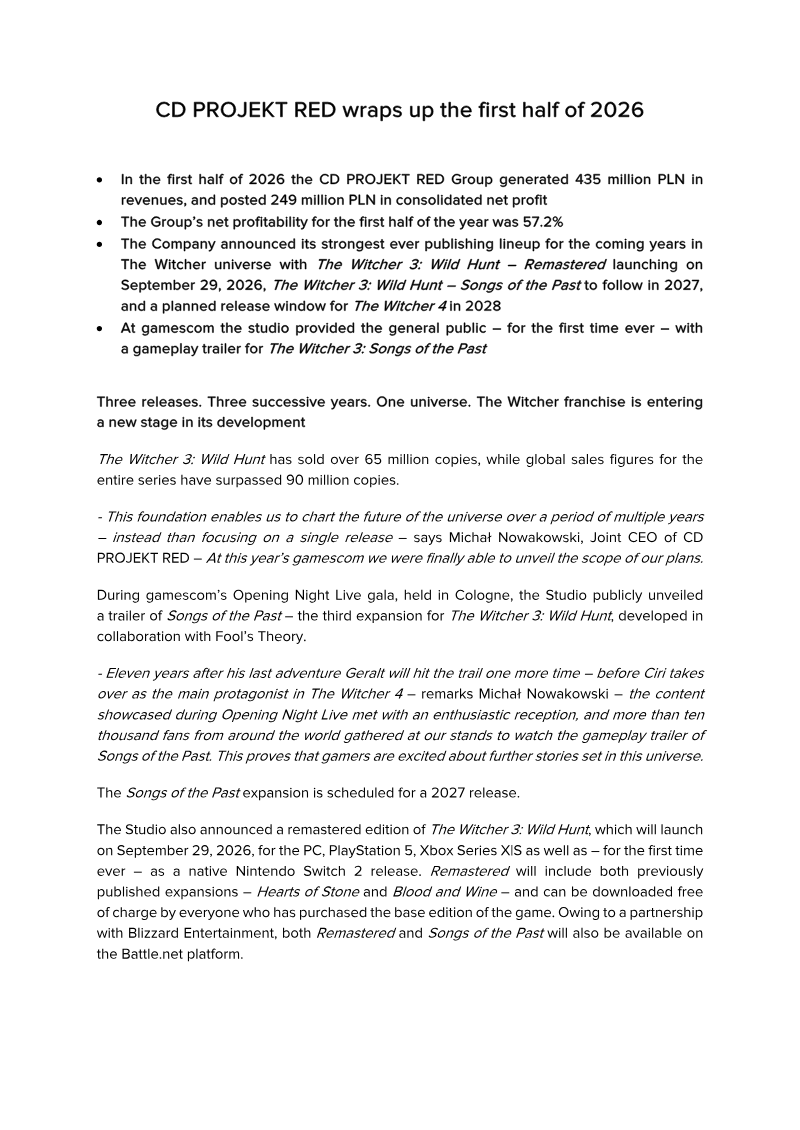
CD Projekt is focusing on high-fidelity narrative experiences. The company is also outsourcing mobile development to reduce operational complexity.
Sustainable efficiency
Industry strategy prioritizes sustainable efficiency over rapid speculative expansion.
Firms are increasingly prioritizing sustainable, long-term operational efficiency.
1 / 7
Ask AI about this report


















Comments