Key insights
4 slides
What changed
Studios are replacing deceptive ads with integrated onboarding funnels.
Mobile game development is undergoing a fundamental transformation as studios abandon deceptive advertising practices. Developers embed accessible, hyper-casual mini-games directly into the initial user experience.
The mechanism
Trojan Horse funnels mask intricate mechanics behind high-appeal themes.
By utilizing these so-called Trojan Horse funnels, studios can mask intricate mechanics behind high-appeal themes. This ensures that the transition from initial interest to deep gameplay is seamless.
The driver
Post-IDFA restrictions force tighter alignment between ads and in-app purchases.
The adoption of integrated onboarding is a strategic response to the post-IDFA landscape. Precise user targeting is increasingly difficult, and revenue must be maximized through tighter alignment of ad monetization and in-app purchase structures.
Post-IDFA response. Integrated onboarding responds to restricted precise user targeting.
The outlook
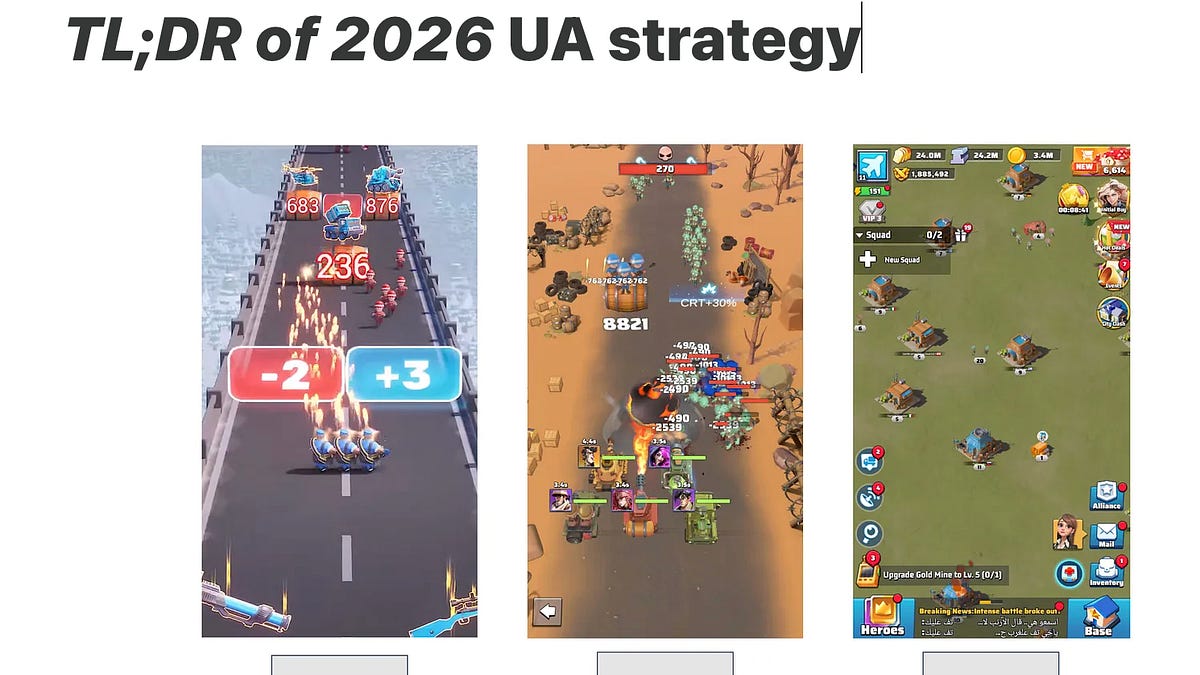
Industry strategy through 2026 will focus on genre-merging and refined funnels.
Looking toward 2026, the industry is prioritizing genre-merging and innovative acquisition strategies. These moves aim to maintain profitability for niche, high-monetizing titles.
1 / 4
Ask AI about this report