1 free read left. Create a free account for unlimited reading + AI research.
Create free account
The ethical hacker’s guide to winning with Gen Z
Key insights
5 takeaways- 01Integrating brands into existing cultural conversations rather than using traditional, self-promotional advertising improves user acquisition efficiency and engagement.
- 02The 'ethical hacker’s triangle' strategy requires brands to hack trending social moments, emphasize social utility over features, and communicate through native meme formats to effectively reach younger demographics.
- 03Leveraging popular pop culture references in creative assets can yield significant cost savings, such as a music streaming service reducing its CPI from $2.90 to $0.79 by featuring a popular cartoon character.
- 04Prioritizing emotional connection and social experience over technical gameplay features is a core driver for scaling user bases, as demonstrated by Plato growing from 20,000 to 200,000 daily active users in six months.
- 05Adopting Gen Z cultural language and meme-based content can drastically reduce cost-per-install (CPI), as seen with Ouevo, which lowered its CPI from $4.00 to $0.50 by repurposing a viral meme.
Ask AI about this video
Transcript
So, the title of this talk is like the ethical hacker's guide to winning with a younger audience. But actually, it's basically called how to drive downloads from Gen Z and millennials even if you're not one yourself. And the reason it is is because if you're trying to drive downloads from young people, then you have to think like one. So, I always like to start my talks off with a bit of a promise. So, my one promise to you is basically by the end of this, you guys would all start thinking like 15-year-olds. So, right? So, that's my one promise to you guys. And some examples of people who we've been able to make turn into 15-year-olds are people like Shawn here. He definitely doesn't look like a 15-year-old, but he's thinking like a 15-year-old to the
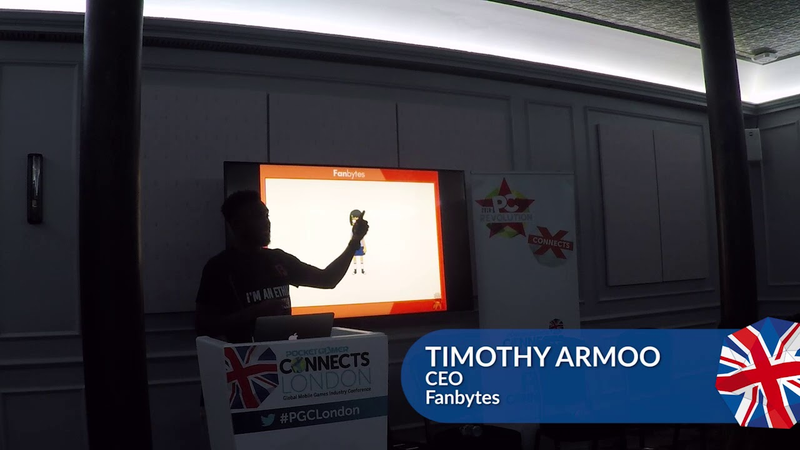
extent that he got his music streaming app at 59 cents CPI using the principles that I'm about to show. Or Joe over here who's who secured a 46 cents CPI using the principles here that we're going to talk about. Or Mo over here who was actually getting $4 CPI on Facebook ads, but then used the principles that I'm just about to share to get a 50 cents CPI which actually cut his Facebook ads cost eight times. So, now you're probably wondering, who are you and why are you here? Right? So, what is this random guy on stage talking about how he's going to make us think like 15-year-olds, right? So, my name's Timothy Armoo. I'm the CEO of FanBite and what we do is we help brands to create and distribute content primarily on Snapchat to a younger audience. But the actual story of FanBite actually goes way back. It goes about six years ago um when I was 17. And 17-year-old Timoo actually started a magazine called Entrepreneur Express. And when I started this online publication, I was obsessed with trying to drive traffic. I tried
all the cool things, right? So, SEO, Google AdWords, etc. These were all either like incredibly expensive or they were just not as scalable as I'd like. But, the thing that I started to realize was I was pretty good at being able to grow Facebook pages at scale. So, I could take a Facebook page something like this and I could grow it to a million likes within 46 weeks. And so, my distribution model basically became me taking a piece of content from my online publication Entrepreneur Express and just seeding it into the Facebook page. And by doing that, I could just send like hundreds and hundreds of thousands of people to the site. And this was all when I was 17. And in 11 months, the company was acquired. Now, when you're 17 and your company gets acquired, you pretty have one emotion and it's basically this one, right? You're basically like, "Jesus Christ, this is amazing. I didn't even think this is possible." But, then the other thing I really started thinking about was the power of these Facebook pages that I built, the power of these kind of social communities. Fast forward 6 years now and what I did was I started
FanBites and what we have is we've created a massive network of these Snapchat communities and pages around specific themes. So, you can see here like 1.5 million views per snap, a million views per snap. And these are millions of people who we can just easily engage with and just promote brands to. And we only started just over 2 years ago, but in a very short amount of time, what we've been able to do is work with some of the world's biggest brands both in the world of apps, but also just in the world of brand marketing. Forbes called us the millennials redefining how brands market to millennials. Huffington Post called us as ripping up the ad rule books and taking it back to what matters. And VentureBeat called us the magic that happens when a group of 20-something nerds take on the ad industry. And that all happened because of a triangle. And it's this triangle that I'm basically going to talk to you guys about, and it's what I call the ethical hacker's triangle. And it's the principles we've used in order to get the apps and the brands that we work
with, the results that you've been able to see. And the principles are just three different principles. The first one is this idea of hacking culture. The second one is this idea of choosing emotion over gameplay. And then the third one is memeing it up. And the idea is these whole three things have been the fundamental thing that we've used in order to get the brands that we work with, the apps that we work with, the results that we want. So, I'm going to share those with you, and by the end of this, the idea is that you would start to think about these in your marketing campaigns, but then also start thinking like a 15-year-old, which was the promise that I made to you. So, the first thing is hacking culture. Now, everyone knows that this younger audience, Gen Z and the millennial audience, are some of the ones who are hooked into culture the most. So, these are just some examples of some of the viral moments they've been able to really take on through social media. But, for a very long time, a lot of brands, and also apps themselves, essentially just look like this person. They don't actually take into
consideration anything about culture. What happens is they just stand there and just talk about themselves. Look at all this fancy footage we have. Look at how cool we are. Look at how cool we are. And fundamentally, if you're trying to reach with this younger audience, you have to enter into a conversation that's already happening in their minds. And the conversation that's happening in their minds is one around culture. And how do you actually sit into that context and make yourself relevant? So, I thought I'd give actually an example here. So, DI.fm, you guys have probably never um heard of them, but the reason why you may not have heard of them, they're a music streaming service really focused on EDM music. But, the reason why you may not have heard of them is because you've definitely heard of these two guys. And these two guys basically have owned the market of music streaming. So, to DI.fm, they had this really big challenge, and I'm sure a lot of people here may also have that challenge, which is the whole idea of we are in a market with massively funded competitors. How do we actually carve out the niche? And the way in which you do that is this whole idea of tapping into culture here. So, initially, what
DI.fm were doing were doing the traditional Facebook ads, etc., and they were getting $2.90 on Facebook ads. So, then we started to really think about is there a way you could tap into culture here? Now, by show of hands, how many people have actually seen this TV show before? Bob's Burgers. Excellent, right? So, a bunch of you guys have seen Bob's Burgers, that's good. This will make sense to you as I'm as it goes on. So, everyone is familiar with this character, Tina, right? Now, she is, I guess, in the thing she is she's kind of seen as the like socially awkward person. Um, the person who's kind of bit odd. Um, so, what we started to think was is there a way What are the two moments of culture in which DI.fm could actually be a part of? Now, if you listen to EDM music, then one of the most significant moment is when the drop happens, right? And then the second thing is when the drop happens, everyone just spazzes out. So, is there a way we could take this socially awkward girl and actually make her spaz out when DI.fm just starts to play? So, an
example of this directly here. So, we created this piece of content, and then we distributed it through our channels that I showed you at the early stages. So, this is an example of how it actually looked. When the drop happens. I'm listening to DI.fm to EDM to EDM music, right? And the reason why this resonated so well the reason why this resonated so well was because it took the two piece of culture here, right? It took the moment everyone can really relate to, the drop, and then it took a TV show which a lot of people in that demographic, that 18 plus demographic, can really connect with. And they ended up with this. They ended up getting a 79 cent CPI from a $2.90 CPI. And you Rebecca over here says, "Who would have thought that a twerking
cartoon would more than half our CPIs? It seems so obvious in hindsight, but my eyes have been opened to new creative ways to talk to our audience there." So, that is just an example of you being able to like hack into culture, looking at the references and the TV shows and the things which are already a conversation people are having in their mind and how you can insert yourself into it. That makes sense so far? Cool. So, now, the next one, emotion of a gameplay. Now, this is actually a really important one because we've spoken to a lot of gaming companies out here and the number one thing that I'm very sure of is you've been told when you're advertising on AdMob or Tapjoy that the thing is to show how really cool your gameplay is because the gameplay is what hooks people. And newsflash, no one gives a And the reason why no one cares is because when they're actually on Snapchat, they're not here to look at your also awesome gameplay, they're here actually to conversate and interact with their actual friends. And so, as a consequence, what you want to do is actually position yourself as an enabler to have cool experiences with people's friends. So, the example here that I
give is of our good friend Joe here. Now, Joe is the head of growth at a company called Plato. They're a social gaming company. So, they have a bunch of little games in in in their game and what they typically do has always been showing the gameplay. So, when running Facebook ads, they show the gameplay. Instagram ads showing the gameplay. And that was all good and well, but they were still seeing relatively high CPIs for a for a company like this. And so, when Joe approached us, the question was, "How do we actually create a conversation or how do we actually position Plato as a way for you to to able to compete with your friends rather than just going ahead with showing a bunch of the gameplay. Because, in all fairness, if you are interrupting a conversation someone's having on Snapchat or TikTok or something like that, and you're interrupting that conversation, that is not the way to actually build a relationship with the user. So, we came up with this whole creative, which was around competing with your friends and challenging your besties, and we came up with some memes and some really cool
stuff. We made it culturally relevant. And I'll show you how that actually looked here. So, we started off with that, and then afterwards, people could then figure out ABOUT THE GAME. AND THAT WAS JUST THE CREATIVE THAT WE JUST USED. And then we distributed that through our channels, and initially what was happening was Play was getting a $1.60 CPIs, and then they ended up getting $0.46 CPIs. And that was solely because again, rather than, "Hey, check out Plato. Look at all this amazing footage." We changed the conversation to, "This is how you can actually use us in order to have more experiences with your friends." And as a consequence of that, that then ended up with them being able to do this. And the really cool thing, again, this is a This is a quote from Joe here, "Better than organic
users." These are creatives are now aligned somewhere, right? But the cool thing is they just replicated that over and over and over again. And in 6 months, they used these type of creatives to go from 20,000 DAUs to 200,000 DAUs. And that was all just through using these things where it wasn't about Plato, but it was more about the experiences that you could cultivate with Plato. And the last thing here is this idea of meme in it up. Now, this is my personal favorite, and the reason why is because I basically got to like Google a bunch of memes to make my point. Um these are some of my favorites. Um, and here, the really important thing here is you guys send memes to your friends. Your Your friends also send memes to you. But, for some bizarre reason, when you then start to think about how I market my app, you don't then think about using things like memes. Because, fundamentally, your app is just going from one user to another, so why not speak in the language that they're very
familiar with? And, of course, when we're talking about a younger generation, which is what this whole talk is about, it's about the ways in which you can actually reach this younger generation. When we are talking about that, of course, these guys and I I speak in the language of memes basically the whole time. So, now the question is how can you leverage that language in order to really reach this audience. So, again, I'm really big on just giving examples, so this is actually a really good example. This is a good This is a good friend of ours called Mo. Now, Mo has an app called Auwevo. And, what Auwevo is is a 7-second video app, right? So, you can create videos and everything, but the length is 7 seconds and you can get rewarded up to $100 a day for creating the best videos, right? Now, the most important thing for you guys to understand there is 7-second video app, right? 7 seconds. Cool. So, initially, what he was doing was they were using Facebook quite a bit, Facebook ads. And, what they were saying here, they remember when they started
out with Facebook, they were seeing $8 and $9 per install, that to me is insane. But, then, with all their effort, they got it down to $3 to $4. And, then they tried Snapchat ads as well. And, what happened was they again got $3 to $4, and they changed their whole budget to focus on that. Again, this is just me kind of giving examples here because I'm really big into transparency, so therefore, like, this is actually conversation between um him and Mo. So, I then kept thinking about this idea of like the meme driven content. And so, what happened was the creatives came up with this really cool meme idea because a specific meme was taking hold on social media. And it was this meme. The distracted boyfriend meme. How many of you guys have seen this meme? Awesome. So, fun story by the way, these guys have built a whole career of just being like people in memes. So, if you actually kind of find their name and stuff, like all they do is just create memes which go viral, which is amazing.
But we then started thinking about this. And we got thinking and said, "Hmm, if you really think about it, this is someone leaving an old fling, shall we say, to go to like the new and improved version, right? Now, remember when earlier I said, "Bear in mind that it was a 7-second video app." And if you can cast your mind back to a time when there was a 6-second video app. Do you know the app I'm talking about? Vine, right? Then we thought, "What if we gave her the character of Vine and we gave her the character of Ouevo? Because then we could take a meme which a lot of people understand and in a very simple context be able to convey what it actually is. And that's exactly what we did here. And I'll show you the video here. So again, when you want to be faithful but you look at Ouevo and scorn Vine. CHUB, IT'S ME.
I HOPE YOU'RE HAPPY. AGAIN, completely farcical, completely ridiculous, but they used memes in order to speak to the audience in a language that makes sense for them. And what happened, again this is a a really kind of open conversation between he and I, they end up getting a 50 cent CPI. And that was from a $4 CPI. So, they end up chopping up the CPI by eight times. And that fundamentally is the final thing in this idea of the ethical hacker's guide. And my one promise to you at the beginning was that I will have you guys thinking like 15-year-olds. So, the question I'm going to ask right now is have I fulfilled my promise? By a show of hands, have I made you guys at least think like 15-year-olds? Thank you very much. You guys are really good. And the last thing, a lot of people have asked us about, hey, that made sense for this app, but does it make sense for this app? Does it make sense for this app? So, what we actually did was we went through and we picked 21
of the highest converting creatives in every niche from gaming, social networking, fitness, music, dating, etc. And we made that available for you guys. And if you want to actually get them, what you can do is firstly, you could just email show me the creatives to [email protected]. Or you can come to booth G10 and we'll just ping those over to you. Thank you very much. Peace.
Summary
The ethical hacker’s guide to winning with Gen Z focuses on effective strategies for driving app downloads among younger demographics by adopting their cultural language and communication habits. The central thesis posits that brands must move away from traditional, self-promotional advertising and instead integrate themselves into existing cultural conversations. By shifting marketing tactics to align with the mindset of a 15-year-old, companies can significantly reduce their cost-per-install (CPI) and improve user acquisition metrics.
The methodology centers on an "ethical hacker’s triangle," consisting of three core principles: hacking culture, prioritizing emotion over gameplay, and utilizing meme-based content. Hacking culture involves identifying trending social media moments or pop culture references and inserting the brand into that context. Prioritizing emotion over gameplay suggests that instead of showcasing technical features, brands should position their apps as tools for social connection and shared experiences. Finally, memeing it up leverages the native language of Gen Z, using familiar visual formats to communicate value propositions in a relatable, non-intrusive manner.
Evidence for these strategies is drawn from several case studies within the mobile app industry. For instance, a music streaming service reduced its CPI from $2.90 to $0.79 by incorporating a popular cartoon character into its creative. A social gaming company, Plato, utilized these principles to scale from 20,000 to 200,000 daily active users in six months, while another app, Ouevo, achieved an eight-fold reduction in CPI—dropping from $4.00 to $0.50—by repurposing a viral meme to explain its functionality. These results demonstrate that when brands stop interrupting social interactions and instead contribute to the cultural dialogue, they achieve higher engagement and more efficient growth.