VideoJason Schreier
Amazon Ditched Their Game... And It Revitalized Their Studio
24 Jul 202617 min video
Transcript
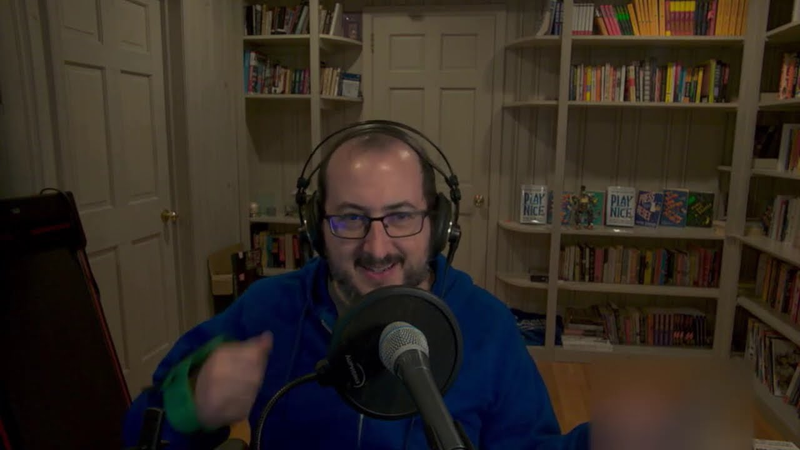
Hello, One Take Shrier here, and as you can see, I got a little bit of new lighting. Got a whole fancy new key light. Now, I am officially a YouTuber. Today, I am going to tell you a story, and this story is based on an article I published today for Bloomberg News based on an interview I did back at Summer Games Fest in June. Check out the link to the Bloomberg story in the show notes in the YouTube description. There's a gift link. You can check it out for free, at least if you are watching this video in the first 7 days of publication. Otherwise, see, I don't know, pay for Bloomberg. Why not? Why not pay for Bloomberg News? So, in January of this year, a guy named Mike Brown called together his video game studio for an all-hands meeting. They had some bad news. He said, "Hey, Amazon Games, the company that has been publishing our new video game and funding it and supporting it for the last year and a half or so, 2 years, has decided to pull out of the deal. They are no longer going to publish our
game." And Mike Brown, he looks around. He looks at everybody's faces. He sees the kind of the looks of horror and and stupification and um stunned terror. Uh what does this mean? Does this mean layoffs? Like, what what is this going to mean for our future and our game? Our future at Maverick Games, the studio, and our game, which is called Clutch. It's a racing game. What does this mean for us if Amazon is pulling out? And he pauses, and he observes everybody, and then he says, "This is actually going to be really good news for us." So, a little bit of history, a little bit of backstory here. Maverick Games was founded in 2022 by Mike Brown and a handful of other colleagues from a company called Playground Games that was run that was a that's owned by Microsoft and is run by Microsoft and is best known as the creators of Forza Horizon. They steward that series. They also make Fable. But back then, Mike Brown had just come off of a game called Forza Horizon 5, which was a highly well-regarded, critically acclaimed
racing game, open-world racing game, sold millions of copies, was nominated and won some game awards, and was just did really well. And Mike Brown looked around after that, and he said, "You know, I have some ideas that I think are probably a little too risky for Microsoft at this point, and I feel like I've done all that I set out to do with this game, with Forza Horizon 5, and so maybe it's time to move on." And of course, he was getting as the the leader of a very successful project, he was getting courted and and wined and dined by VCs. This was a time when venture capital was investing a lot of money into game studios. And so, he thought this was a good time to go and start his own thing. So, he took a few colleagues with him, and they started what would become known as Maverick Games. They got some seed money from venture capitalists to uh from a venture capital firm to create a vertical slice, which is another name for a big, fancy, beautiful demo. And over the next couple of years, they made that vertical slice for what
would become Clutch, this big Need for Speed-style racing game with really beautiful graphics and and lots of fast-moving cars that go vroom vroom. And so, uh around 2024-ish, they decided, "Okay, we need to find a publisher that will fund the bulk of development for this game the next 3 years or so, and help us take it to market, help us publish and and distribute and do PR and all the other things that a publisher does." Because believe it or not, a publisher can actually be very helpful for game studios. There's there's a reason people rely on publishers, and it's not just for the money. And so, they take it around, they have a lot of conversations with publishers, and the one that seems to be courting them the high the hardest, rolling out the red carpet for them, is Amazon, which is seems a little unusual to the people at Maverick Games. Because Amazon, first of all, is a tech company, of course, but second of all, has been trying to get into the games industry for a while now and failing. Um they started this initiative called
Amazon Game Studios way back in the day, 2012, really, you could say were the earliest days of Amazon's video game attempts, and they have tried all sorts of things over the years to no avail. Um they are run by this guy, or they were at the time for the first few years run by this guy named Mike Frazzini, who was a polarizing boss, namely because he hadn't worked in the video game industry, and his experience was entirely in Amazon. So, he would come in with really no knowledge of how the video game industry works and make suggestions and bring ideas to the table that the actual video game developers and executives at Amazon Game Studios considered to be a little silly or ridiculous, and it led to a lot of turmoil. You might remember a game called Crucible that Amazon released and then unreleased. There were a number of other canceled projects along the way, and then there was one success, an MMO, an online game called New World. Um and Amazon, after hitting the reset set button a few times and keeping New World going, but ditching some of those other projects and kind of
various abandoned initiatives along the way, they got rid of Mike Frazzini, uh replaced him with a guy named Christoph Hartmann, who was a veteran of 2K Games. He co-founded and ran 2K Games for a while, and Hartmann was the one who made this big pitch to Maverick and Mike Brown. They said, "Hey, we want to become the biggest video game publisher in the world. We have all these guys with experience making AAA games. We're making a new Tomb Raider game with Crystal Dynamics. We're doing all this stuff with The Lord of the Rings. We, Amazon, we're going to become this massive mega publisher that makes a ton of AAA games, and you should come on board. Come on, Maverick, we want you on board." Um plus, Amazon had a lot of money. So, Maverick Games said yes, and uh around May of 2024, they agreed to a deal and they said, "Hey, we're going to sign a deal with Amazon Games." Um and for a while things did seem to be going pretty well. They have this kind of this traditional developer publisher relationship where Maverick has to hit milestones and executives at Amazon
would provide notes and sometimes they go back and forth. Sometimes Amazon gives things that Maverick's like, "Oh, hey, that's a great idea." And sometimes it's like, "Eh, not so much." But that's kind of that's very typical in the in the publisher developer relationship. There's always a lot of back and forth. Um and uh they're Maverick is very happy with it. They feel like Amazon actually is adding a lot of value to the game and helping make it better. And Maverick also um something interesting about Mike Brown is that uh Maverick Maverick doesn't really give any reason for Amazon to want out of it. They feel like they're living up to their end of the bargain, too. And something that's interesting about Mike Brown is that he is obsessed with dates. And I'm going to read you a quote from him. This is something he said to me in June in that interview I mentioned at Summer Game Fest. He said, quote, "I actually had a really weird reputation at Amazon as being obsessed with dates. I coach my team that the dates are law. We have to hit every date we set out. The reason I do that is because I've seen times where if people don't believe in the schedule, then they don't have that discipline and clarity
of thought that allows them to make sharp decisions to get a game shipped on time, and that's when games get flappy. I firmly believe that steadfast belief in your dates actually make games better." Again, you can find that quote in the Bloomberg article that is linked in the show notes. Just published it today as part of my weekly newsletter game on on Bloomberg. So, Mike Brown has that belief and there's there's a broader conversation to be had and this will be a future video topic um about how uh limitations and restrictions and hard deadlines can actually lead to more creativity than being in kind of an open-ended box where you just have unlimited uh money and time to make your dream game or whatever. Deadlines lead to creativity and Mike Brown believes that pretty stringently. So, um he becomes known at Amazon as the guy who's like obsessed with hitting their dates and and not missing deadlines and so on. Then it all fell apart. In October of 2025, Amazon makes yet another pivot. They abruptly announce that they're
cutting hundreds of jobs, gutting studios, shutting down a couple of their studios in San Diego and in Orange County, and they're ending development on their biggest games including New World, which was actually doing pretty well, but they decided to shutter it, um cutting that Lord of the Rings MMO they were making among other projects, and they're instead going to pivot towards their cloud gaming service Luna. But, during this announcement, which by the way Maverick Games Brown and and everybody at Maverick Games, they find out about this at the same time as the public. So, basically through breaking news on Bloomberg.com cuz we had that scoop back then. So, Mike Brown is reading Bloomberg finding this out at the same time as everybody else. Um so, in this this kind of announcement that they make, they actually say, "We are continuing ship with two big games. One is Tomb Raider and the other is Maverick Games, the the game the racing game that they are making at the time. It's an unannounced racing game from Maverick Games." And uh privately, they're assuring Mike Brown and his team everything's going to be fine. Um you guys and Tomb Raider, we're still continuing going with you guys. You're still part of our plans. And Mike Brown
is a little bit skeptical, but he's like, "Okay, sure. Let's let's keep going." Then 2 months later, everything changes again. And Mike Brown is sitting at his desk one morning and he gets a text from Christoph Hartmann who is running Amazon Game Studios, um would very shortly uh depart, but before then, it's January, he texts Mike Brown, he says, "Hey, can we talk?" Mike Brown knows what that means and they get on the phone and Christoph Hartmann says, "Hey, we're going to end the publishing deal." And so, Mike Brown gets on that all-hands meeting and says, "Hey guys, like we're ending this publishing deal." But, here's the thing. Here's the catch. Um they are getting two out of it. One is that they are getting the reversion of all rights to the game. So, they now own that game in perpetuity despite whatever Amazon has paid for it. And two, they are getting a nice healthy financial cover. Mike Brown wouldn't get into specifics on the money with me. Most most video game companies are not really keen to talk about specific numbers, but he did tell me that they had very generous financial terms from
Amazon and they're getting kind of like more of it. It's not just up until the point where they say, "No, we're killing this deal." There is an extension of that. There is some sort of termination agreement and and runway. And basically, they are funded for a while after this deal ends. And on top of that, they also get like this kind of all these contractors and agencies that they were working with like QA QA and localization and PR and marketing firms and stuff like that, creative agencies. They all have these 60-day termination agreements, which means that Maverick Games gets to keep working with them for essentially 2-3 months after this this killer agreement. So, Mike Brown assures his team. He says, "Hey, like this is actually going to be a really good thing for us because of how we're set up financially. And now we can head into Summer Games Fest where we were planning on announcing the game anyway and we can then take that momentum and use it to sign a deal to fund the rest of development. We're aiming for release in spring of 2027. That is very viable.
Let's let's make this work. This will be cool." And then Mike Brown starts to realize something else, which is that under kind of the corporate relationship with Amazon, he was feeling a little bit fettered in ways that like he didn't even realize until after the deal fell apart. And now suddenly he felt like more re-energized. He didn't have to run all of these kind of big decisions up the chain of bureaucracy and get approval from executives anymore. I'm going to give you a great quote from him, which is um, quote, "The hypothetical burden of taking forward a new creative idea into a big organization is a little bit draining. It holds you back. And as soon as they were gone, I felt a little unchained." And just as an example, he brought up this podcast that they were doing at Maverick Games, which they launched when they started the company back then when they were just VC-funded and didn't have a publisher. And the idea was to document the saga of their development and be goofy and just talk about fun things about the studio on this podcast every month or so. And when Amazon came
into the picture, uh, Amazon didn't say, "Hey, don't do this." but they did say, "You have to send the podcast to us before you put anything out." And that that kind of had a chilling effect. Like even without getting a hard no, the idea of doing this podcast, having to worry that like some executives at Amazon, maybe some who you've never even met before, are going to be going over everything you say before you publish it, that kind of like inherently made them not want to do it quite as much. And the cadence wound up slowing down. They wound up doing it um, much less often after that Amazon deal. I believe they did it like only two or three more times after that deal came out. Um, so it kind of inadvertently had a chilling effect, despite the fact that Amazon was saying, "Yes." It was just like, "Yes, but just send it to us beforehand. No big deal." And I think anyone who's worked in a corporate environment knows that exact feeling where it's like when you can do something and you know you can just put it out there and just like get it out to people or you could just do it without having to run it up the chain, you have
a lot more freedom to be creative and just kind of like be the best version of yourself. And in fact, that is what Mike Brown told me, which is quote, "I don't think I was the best version of myself when we were there." So heading into May, they did another thing that like probably wouldn't have been something they did as a go-to-market plan under Amazon, which is they did a ridiculous 10-day live stream where they had this this car, this Fiat Multipla, parked in their office, in the lobby of their office. All sorts of weird, bizarre shenanigans went down on this live stream. It was very silly. At one point there was like a someone in a Spider-Man costume. There were parking tickets involved. I don't know. I didn't I didn't watch the whole thing, but it was a little silly. And it led into this game reveal and then a big trailer at Summer Game Fest that was received quite well, got a a bunch of attention and and people seem to really dig it and be into the game, which has now helped them um get momentum and and be in a really strong negotiating position when they go out to publishers. Um it really helps that they are in the final, I don't know, eight months of game development
on this game, eight months or so, that's an estimate. I don't know exactly when it's going to come out, but spring of 2027. And they have this game Clutch that they could say, "Hey, we're almost finished with this. It's already almost fully funded and we have this trailer out there that is getting tons of buzz and has a bunch of wish lists on Steam and is getting all this all these positive metrics that we can share with you." Which puts them in a very strong negotiating position for meeting with a publisher and getting really good terms out of the either publisher or investor for that final stretch of development. So now Maverick Games is about 145 people. They're working away in that final stretch of Clutch's development for spring of 2027. Um and according to Mike Brown, they are in a better position than they've ever been um in in large part because Amazon decided to ditch them. So uh this I think is a really fun story because it's uh just kind of an example of how sometimes when one of these big publishers says, "Hey, we're cutting you off. We're canceling your game." it can actually lead to
positive things for the studio involved, which is a nice little just kind of a very different story than some of the others we've heard recently such as Xbox and others that are parting that are that are cutting, ditching pub ditching their game studios and it's leading to negative consequences such as layoffs and cancellations and games just in a really bad position or studios having to having very little leverage and negotiating power as they have to go out and just kind of have to take the whatever contract they're offered even if it has bad terms. Um, another future video topic by the way, if you guys are interested and hopefully you will be, is kind of what it actually looks like when you're a game developer talking to a publisher and what those how how that kind of relationship and those terms can be so much different from one game to another. Often times you're out there, you hear "Oh, this game is published by EA. This game is published by Ubisoft." But the terms of that publishing arrangement can differ so drastically um in terms of revenue split and how recruit works and like all these other
IP things and um just kind of like sequel hooks and all sorts of other other um factors uh that that can really change the nature of that contract and that relationship. There are good publishing deals and then there are not so good publishing deals. But in this case, things have worked out. It seems like Clutch is on track to come out in the spring. And last I heard from Mike Brown, which was in an email, I followed up with him um this week to um hear about what the state of negotiations were cuz remember we spoke about a month ago at Summer Game Fest and he said, "We've spoken to a lot of really great companies and are close to finding the right partner to help us take Clutch to market. We hope to have something new announced very soon." All right, have a good weekend everybody and I will see you all in the next video with fancy new lighting and everything. Goodbye.
Auto-generated captions from YouTube — names and numbers may be misheard.
Key insights
Distilling the key insights…
Ask AI about this video
Cite this video
Citation
Generating citation…



















Comments