ReportDataspelsbranschen
Spelutvecklarindex 2023: Swedish Games Industry
18 Oct 202368 pages~119 min full read
Key insights
7 slides
Key number
Swedish games revenue reached 86.5 billion SEK in 2022.
The sector generated 86.5 billion SEK in global revenue in 2022.
Page 8 of the report86.5 billion SEK
Global revenue in 2022
- Year-over-year increase
- 47%
Global footprint
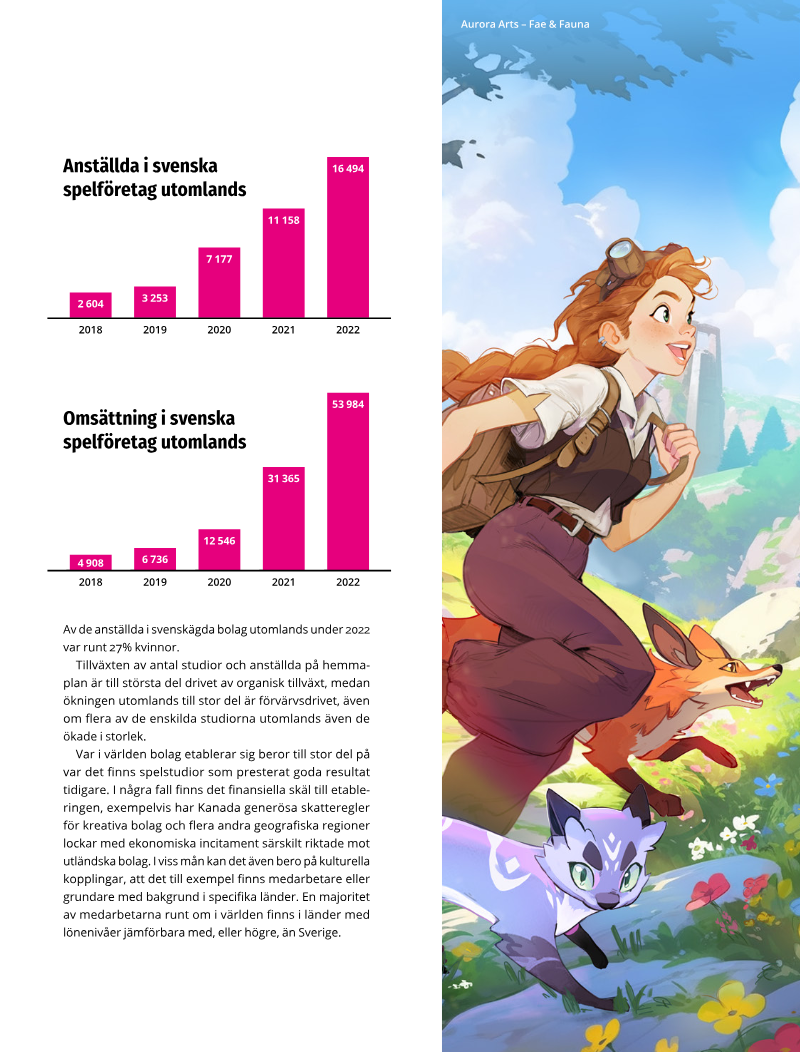
Swedish-owned studios operate across 59 countries.
There are 392 Swedish-owned studios operating across 59 countries. They employ 25,000 people globally.
The bottleneck
Talent shortage remains the primary constraint on production capacity.
A persistent talent shortage limits production capacity. Work permit difficulties and a lack of early-stage financial support compound the issue.
Gender diversity
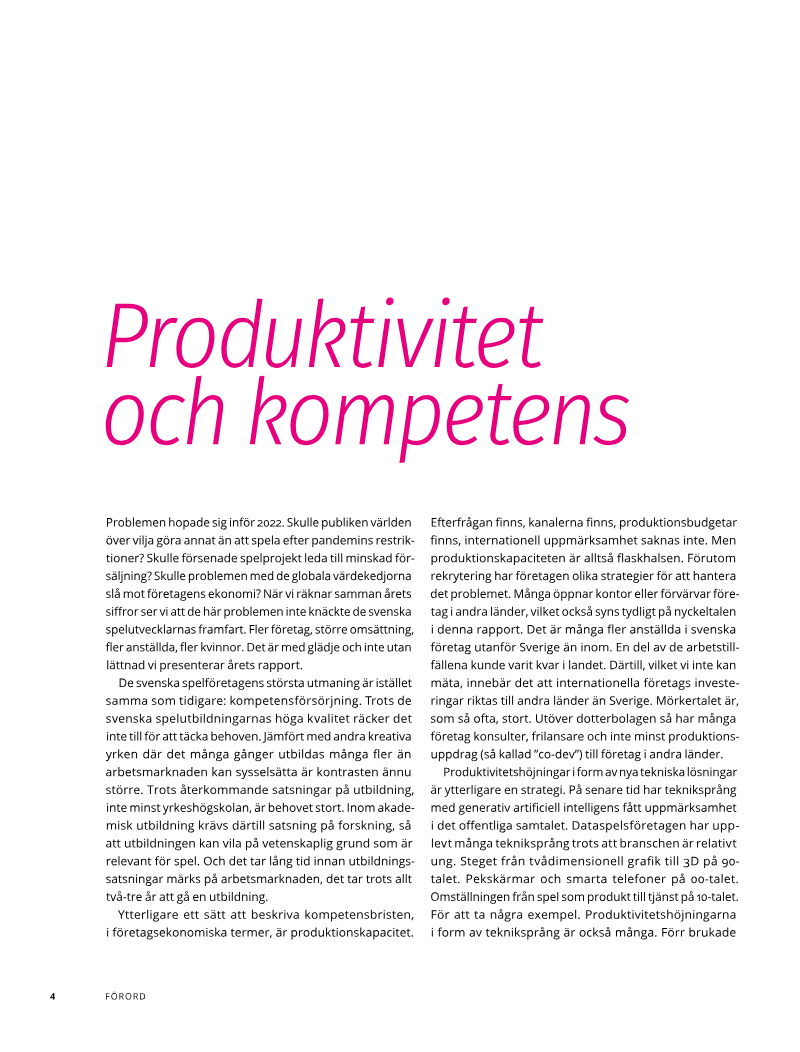
Women accounted for nearly 50% of new hires in 2022.
Women accounted for nearly 50% of all new hires in 2022. This raised total female workforce representation to 23.4%.
Adoption
Studios adopt generative AI and standardized game engines.
Studios are increasingly adopting generative AI and standardized game engines. They also use collaborative regional ecosystems to enhance operational productivity.
Page 59 of the report- 01Adopt generative AIStudios leverage productivity-enhancing technologies.
- 02Use standardized game enginesStandardized engines help mitigate production bottlenecks.
- 03Join regional ecosystemsCollaborative ecosystems bridge education and professional development.
Player scale
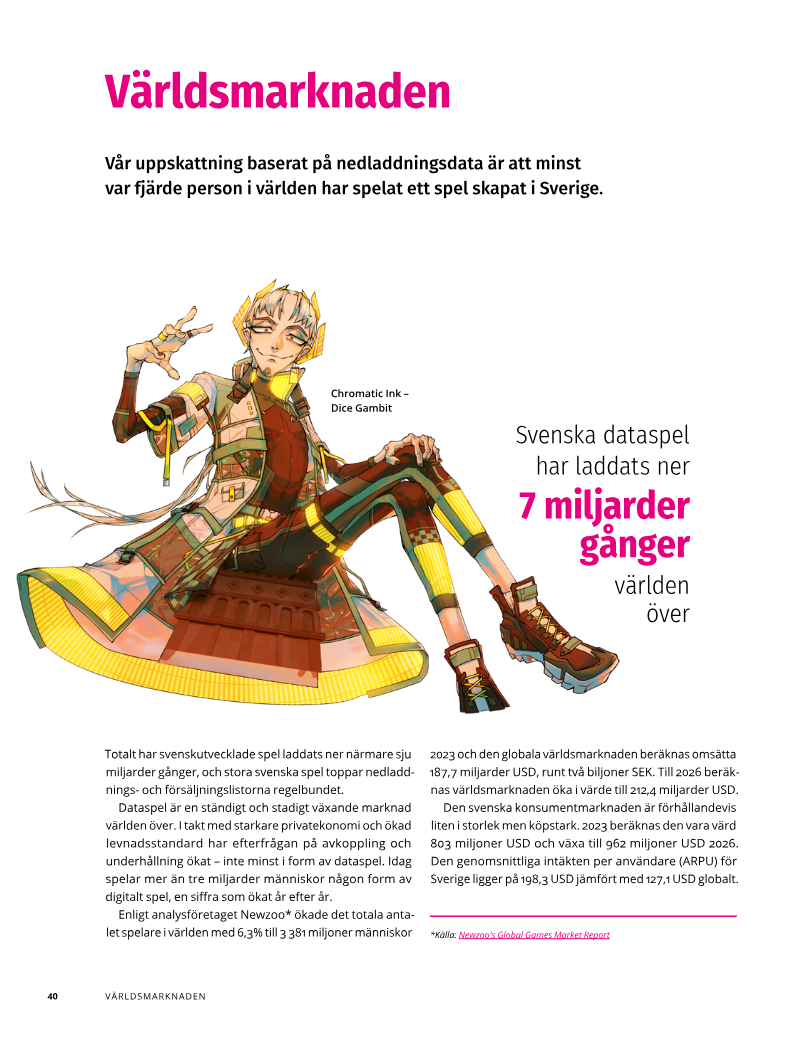
Swedish-developed titles accumulated nearly 7 billion downloads.
Swedish-developed titles have accumulated nearly 7 billion downloads. They engage approximately 25% of the global population.
Sustainability
The industry pivots toward broader sustainability goals.
The industry focuses on reducing environmental footprints. It also fosters healthy, inclusive workplace cultures.
1 / 7
Ask AI about this report