1 free read left. Create a free account for unlimited reading + AI research.
Create free accountReport European Games Developer Federation
1 free read left. Create a free account for unlimited reading + AI research.
Create free accountReportEuropean Games Developer Federation
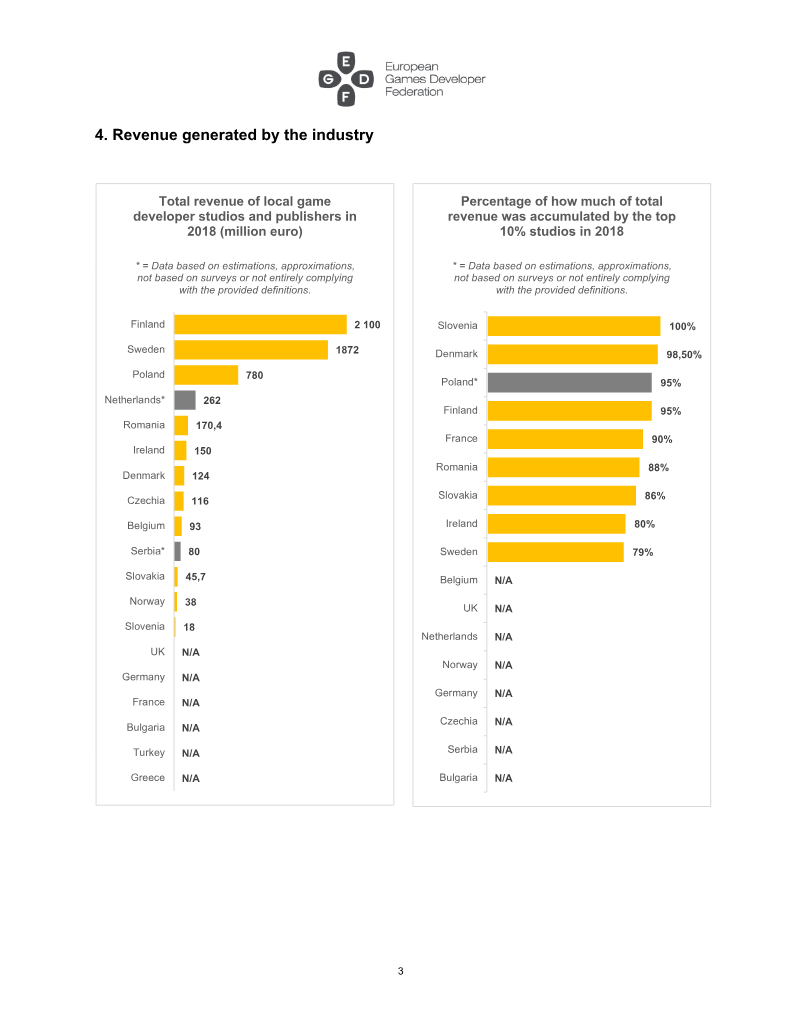
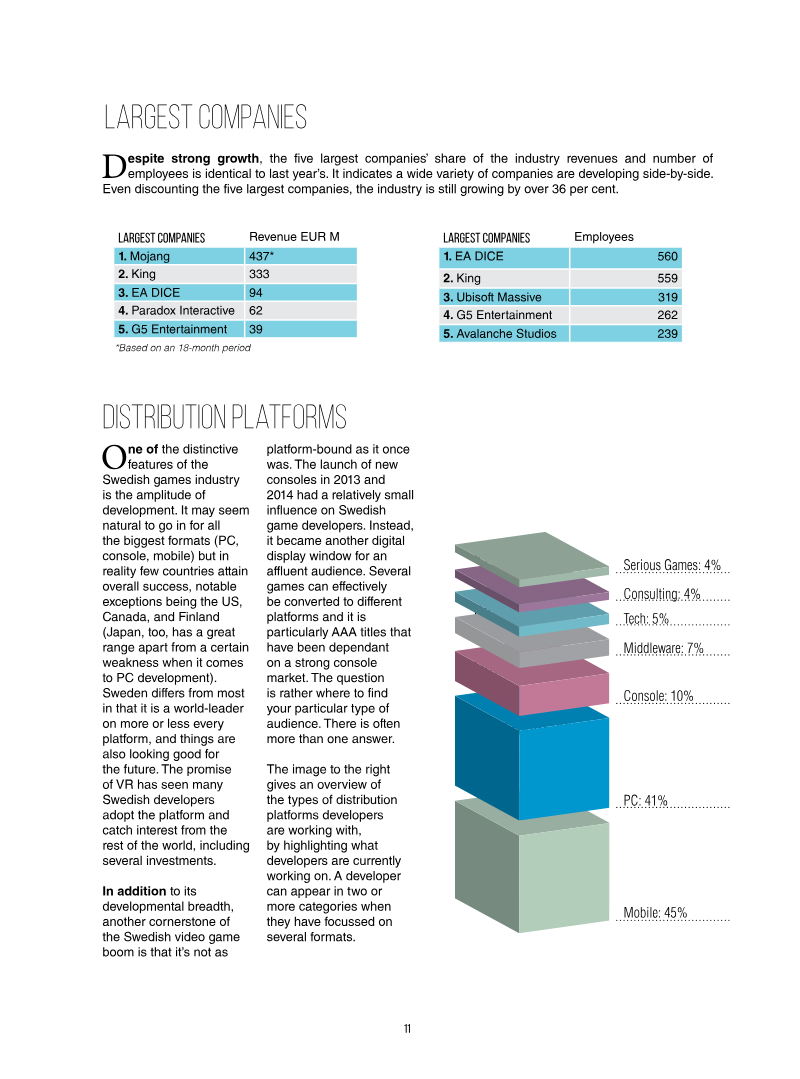
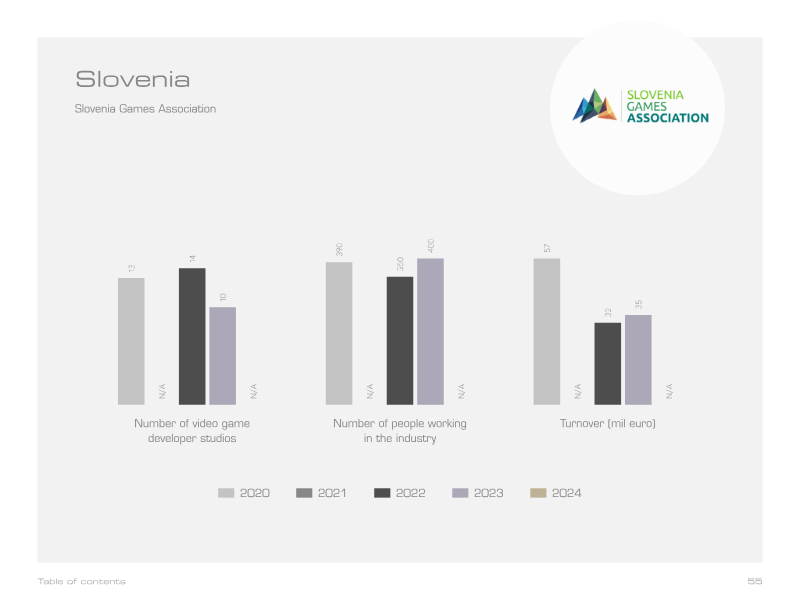
The top 10% of studios account for nearly all industry earnings in countries like Slovenia and Denmark.
Like a few blockbuster movies dominating box office sales, a small number of studios generate most of the revenue.
The European Games Industry in 2018 provides a comprehensive overview of the sector’s landscape across 19 European nations. The primary objective is to establish a standardized, comparable dataset regarding industry infrastructure, workforce demographics, revenue generation, and educational support. By aggregating national data through a unified questionnaire, the analysis highlights the maturity and diversity of the European gaming ecosystem, identifying key hubs of development and the varying levels of public institutional support available to studios.
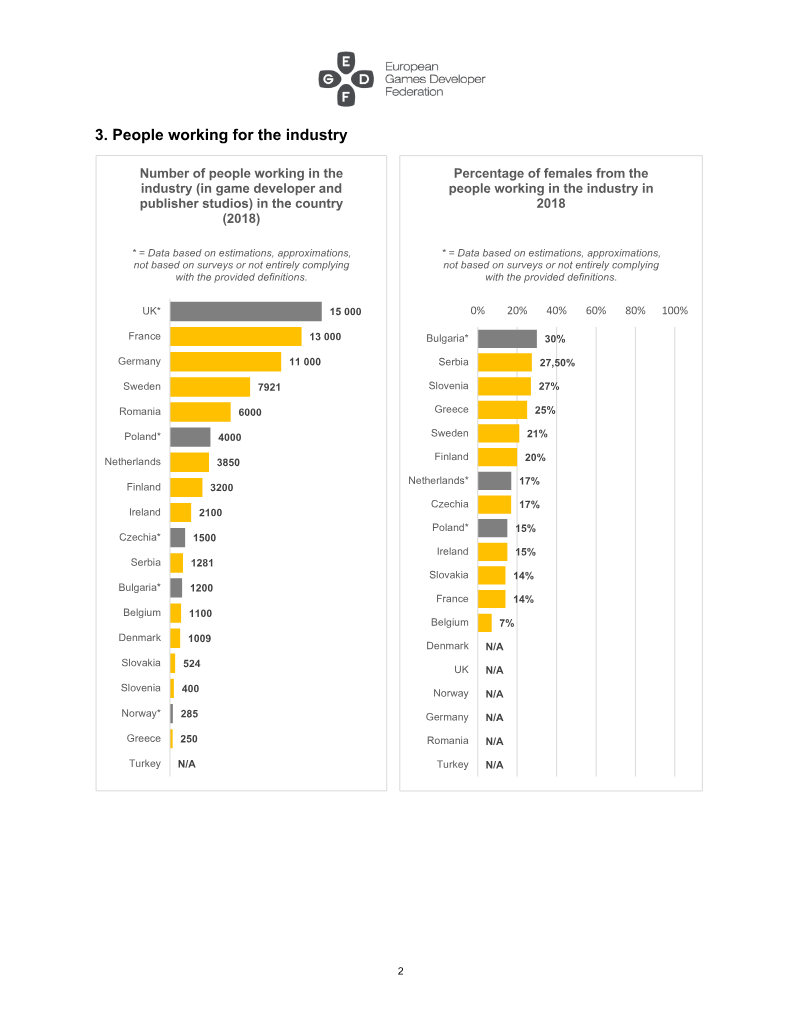
Key findings indicate a robust industry comprising 4,906 game development studios and 137 publishers, collectively employing 77,916 professionals. The United Kingdom, France, and Germany emerge as the leading centers for studio density and workforce size. Revenue generation is highly concentrated, with top-tier studios often accounting for the vast majority of national earnings; for instance, in countries like Slovenia and Denmark, the top 10% of studios generate nearly all industry revenue. Workforce gender representation varies significantly, with Bulgaria and Serbia reporting the highest percentages of female employees at 30% and 27.5%, respectively.
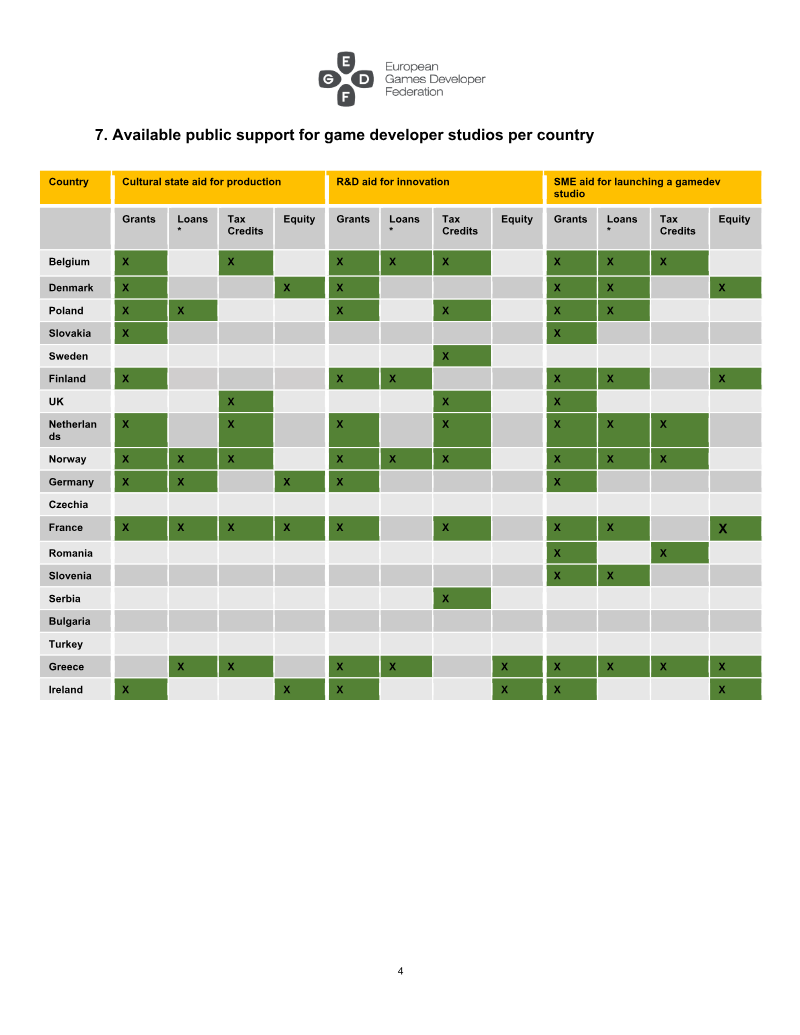
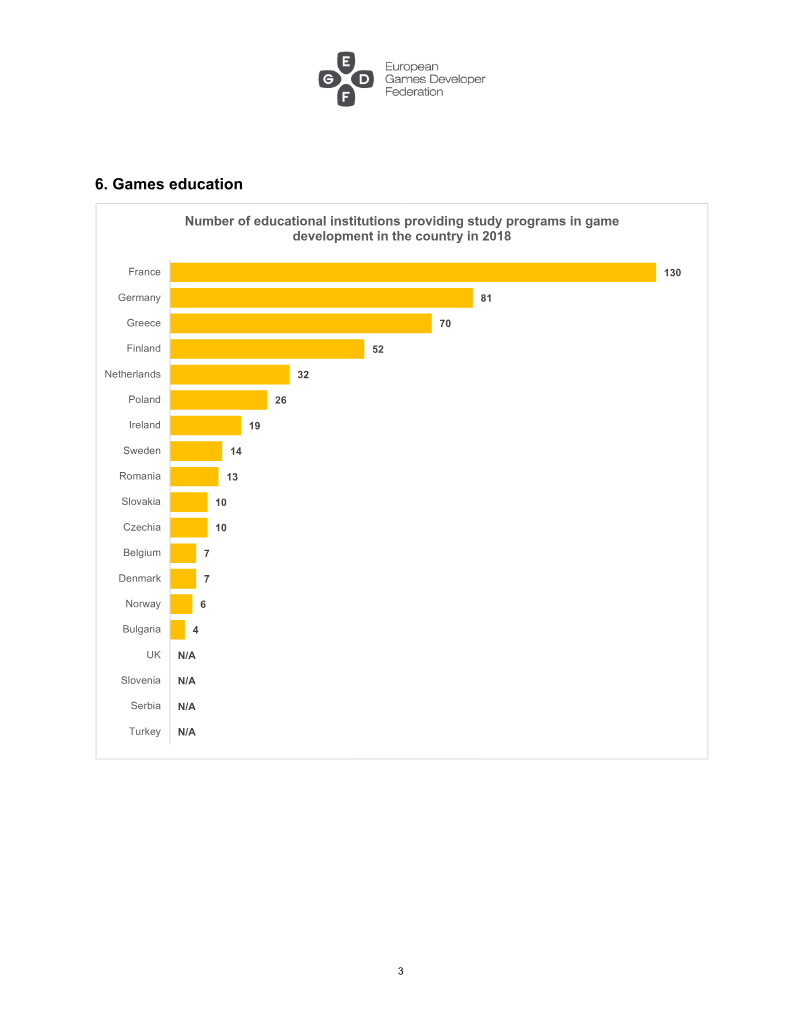
The scope of the analysis spans 19 countries, including Belgium, Poland, Sweden, Finland, and Turkey, among others. Methodology relies on a combination of national surveys and public registry data, with some figures marked as estimations where standardized reporting was unavailable. The industry demonstrates a strong commitment to future growth through education, with France and Germany leading in the number of institutions offering specialized game development programs. Furthermore, the analysis reveals a fragmented landscape of public support, where countries like Belgium, the Netherlands, and Norway provide extensive aid through grants, loans, and tax credits, while others offer more limited fiscal incentives.

Video Games Europe · 2026
European Games Developer Federation · 2026
European Games Developer Federation · 2025
European Games Developer Federation · 2025
European Games Developer Federation · 2025
European Games Developer Federation · 2024

Neogames Finland · 2024

European Games Developer Federation · 2024
European Games Developer Federation · 2024
European Games Developer Federation · 2024
European Games Developer Federation · 2024
European Games Developer Federation · 2023
Dataspelsbranschen · 2016