1 free read left. Create a free account for unlimited reading + AI research.
Create free account
Superstar Session: Bidstack: A New Era of Advertising for Your Game PGCD#2
Key insights
6 takeaways- 01Programmatic, native in-game advertising allows developers to monetize 3D environments across PC, console, and mobile platforms by integrating non-clickable, brand-building placements via specialized SDKs.
- 02In-game advertising prioritizes user immersion by treating ads as natural elements of the virtual world, which empirical data shows results in superior viewability and higher user attention compared to traditional digital display formats.
- 03Gaming is becoming a primary destination for advertisers as legacy media channels like television and social platforms face declining viewership and high rates of ad-blocking.
- 04The industry is currently establishing standardization through IAB guidelines and third-party viewability tracking to provide the measurable performance data necessary to attract non-endemic brands.
- 05Major advertising agencies are formalizing their presence in the sector by launching dedicated gaming divisions to help brands navigate the complexities of mobile, console, and esports ecosystems.
- 06Long-term viability in this space depends on balancing sophisticated technical capabilities, such as dynamic, region-specific 3D texture rendering, with a commitment to non-intrusive user experiences.
Ask AI about this video
Transcript
okay yeah welcome everybody so we're gonna take you through a new era of advertising in in games I'm near Sherlock I'm the CRO of bits that I've previously held roles agencies like denser Aegis also group home I was involved in setting up taxes in the UK and then more recently I launched a DSP business adapt TV and video and that got bought by AOL I all got bought by Verizon so I was very much involved in in the transition of their tech business I was in that organization so that's me and I joined big stack about a year ago
now and with a view to really shaping up this new ad category building that out in the market and then shaping the company strategy in how we interact with brands advertisers and clients so I'll hand over to Charlotte to give herself a quick intro yeah thanks no so my name is Charlotte I'm the VP of gaming at bid stack I have worked in the games industry for just under 10 years now and working previous year places such as Sega and take two more recently I moved into more of the startups that support the games industry is service businesses working agenda and and I've joined Pittsburgh last October and very much as Lewis said to be a part of something which is really exciting and new and establishing native in-game advertising as a channel for the games industry and so today what we're going to do is just a high-level run you through what we do and some of the opportunities that brands are looking to get into gaming
and why they want to get into gaming and that's very much something Lewis is going to cover and so who are we so bid stack is a london-based start-up we're based and over or normally not at the minute and Stratford on here Easter some of you may have been there for events or and we have partners such as Sports Interactive who are based over there we also have a tech office in Riga in Latvia and we have colleagues who are based in North America and some New York and what we've kind of been established to do is bring together the the world of advertising and the games industry to come together to look at monetizing native inventory within video games so establishing native in-game advertising as a channel and we're currently doing that with some world leading game developers so we're partnered with Sega and Sports Interactive so if you play football manager you may have seen our technology working live in game we also work with code master so the image on the right is of one of the code masters titles and then more recently we started signing with mobile developers so flying
squirrel is another company that we're working with currently who work on the mobile side and there are lots more that we are in discussions with that are due to be announced who are looking at implementing our technology into their games so essentially what we do is we bring together the world of advertising and the world and the gaming world through an SDK implementation that enables adverse to be served into game environments environments in the native inventory that already exists within your game the technology is being designed to work across all platforms that we work on PC console and mobile and also across all engines so we can work with engine providers such as unity or unreal we can also work with custom engines so that the technology can be adapted and to work across all of those the the concept is especially in mobile that the technology can be used to complement existing ads strategies that you have so if you are already running advertisements we can work alongside
those and the concept is that the our advertising is is more and is designed to be obviously native and non-disruptive so it's it's more brand building and so just going to show a very short video now which kind of covers what I've just said in a little more detail I think the sounds not running on it Louis the video I think there's an
option to share audio when you do a share screen there's a share computer audio option we can and we can put the link to the YouTube video in the chat afterwards if people want to I've got the music going off in my head insta awesome
so is there audio issues there yeah there will shadow then you choose for but basically they're just obviously explaining what we do and also a little bit about the the proprietary piece of technology we've built and the ad console that goes alongside it and how mobile game developers and gamers can manage working with us and so what we just wanted to look the points we're gonna mainly chat through today is specifically mobile in-game advertising so we're we believe native fits into that why brands are investing in this ad channel and why brands are activating in this new ad channel so where does native fit into the mobile gaming and space so obviously we aware that currently and mobile gaming has a very established stream of advertising which is mainly done through display or rewarded video
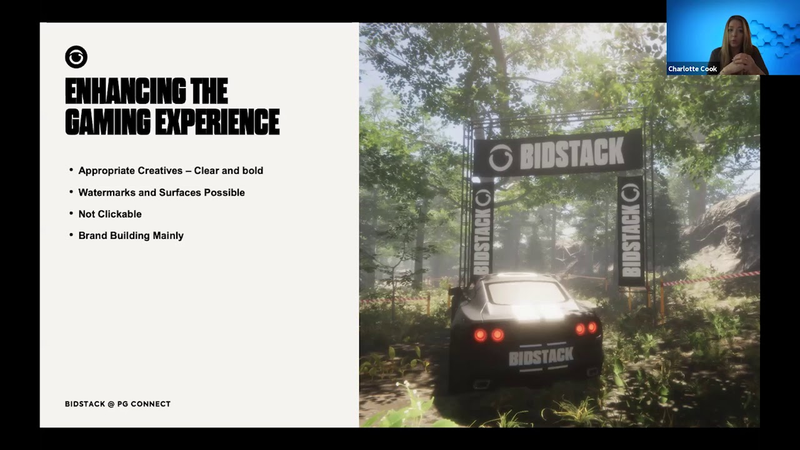
and what we are doing is also the native piece is looking at how we can complement those existing our channels so native in-game advertising is far more brand building and direct response so our ads are non non clickable and but they're designed to enhance the environment of the game so if you're playing a football game for example what we're looking to do is emulate the real-world experience that you would have in a real world football match where you would have the pitch side hoardings the businesslike technology enables that to happen in game in real time through programmatic placements so the as I said it's all about enhancing the gaming experience they're placing adverts where they would exist in their in a real world environment so we fully accept that there are games where our advertisements are never going to look right so if you had a fantasy game or you know it has to be an environment which which makes sense and the creatives are clear and bold you can see here an example on the right of how we
can we can place the creatives and the technology has been designed so that we can actually place an advertising creative on any 3d texture within the game and so watermarks and surfaces are possible so you've could for example place advertisements on a car on a football shirt on a football all and so that the technology has been designed that we can go to serve adverse on on those textures as I mentioned the adverts are non clickable it's about in hot and using the the native inventory and the ad channel is about brand building not direct response and that's that's how the technology has been designed so I think we're gonna hand over to Luis now to explain exactly where bit stacks it's in the middle how we work and and how you know appetizers are working with us to enable gate our games to serve these advertisements yeah thank Charlotte so the SDK that we build into the game allows us to dynamically swap the ads within the actual gameplay itself and and really start to advertise
on a one-to-one basis rather than one to many historically if you look to how brands would do this type of advertising in a video in a video on mobile game they would really need to sponsor the game at the point of development which creates obstacles hurdles a long lead time for a brand and often quite a lot of investment to get their branding again at that point so we've bits that last year really we solidified the technology that allows us to take that SDK ad opportunity that's within the game push the ad opportunity into our ad console which is essentially our ad server and then I suppose the biggest development that we made in building out is our categories how we then surface that infantry into a supply-side platform and our own SSP and then plug that into third-party demand-side
platforms such as the trade desks Adobe xander etc etc so that buyers can actually buy this ad space alongside their traditional mobile display mobile reward video but they're not all rather digital channels and I think given that the market has moved so far to programmatic you know we're talking anywhere upwards of 60 70 percent in our traded programmatically that's a big step forward in enabling brands to have an entry points who start to buy in these native environments within mobile and video games so I think that is a big big thing that's happened over the last six to twelve months so we're going to talk a little bit now about why brands are investing and there's two two big reasons I think brands will always need to invest a what and and it's really about evaluation of the media itself and
historically really the only thing you could do within native in-game advertising was just track how much did I deliver after the after the fact of the campaign but brands really want more than that and what we've been able to do is is we work with the advertising community to actually come up with a viewability standard and what are the types of stats that we need to provide brands from a viewability perspective but then also within their to old times how do we actually track the amount of time that those ads were in view so I'll talk a little bit a bit more about that in a minute but then also more tangible outcomes like brands studies where how much attention is and he adds hold in is there recalls their purchase intent is their brand uplift and I'll show you an example of that over the coming slides so reviewability within video within mobile games there is a little bit of
difference when you're comparing it to say a 2d advertising placement obviously these ads are in a 3d environment so things like screen occupancy how much space is that ad actually taking for it to count as a viewable impression you need to have those considerations what is the viewing angle because if it is really tight you and angle then it's actually not really seen and it would be a misrepresentation for the advertiser and all of this kind of creates an ant viewability baseline to start to measure your ability against but then also took 12 times and the amount of view time poem an aggregate timing view is really important I think for this it's established because quite often you'll you're the same ad will be seen multiple times within that that game session so we really want to like start to look at what is it aggregate timing
view of the ads for that session because it's often and what we've seen through the data since this has been in place is that we are talking 10 20 times more time of brand exposure compared to other digit or non-digital channel and so it's it's it's becoming quite a good benchmark for advertisers to pin themselves against so then if we move forward to brand studies we actually partner with lumen fellows are not familiar with room and they have technology that allows them to track our movements across the screen but then so that we can tell if people are actually noticing and seeing the ads within the gameplay and then they also back up with a full brand study as well to look at engagement and recall things like that and this is just a couple of slides from a study that we ran with a major car brand and it just showed that the
attention that the ad placements create from the user is you know two two and a half times more than traditional display and you're seeing there on the right ninety four percent of people are actually physically looking over those ad placements so that's a pretty high benchmark of people noticing the ads but then on top of that how much are they engaging with the ads so because often the ads if you think about it in a game like in a football game the ad will be around a full per minute of the pitch for quite a long time and it will tend to rotate again and again so it's constantly in view and we've seen here that it's actually you know 64 percent of the ad is in view for at least a second and that's ten times more than normal display so these types of metrics that brands can kind of evaluate the medium again so really when they're trying to figure out why is
the value on getting compared to my investment in other channels and we've been out to prove this out and it's starting to really gain momentum with brands these types of metrics then there's also recall so it's okay notes in the ads and in people engage in it but did he actually take notice of the message itself and I think this really lends itself well to that it is a captive environment that people are looking at these within when people are playing games so they do notice what's going on within the gameplay but also what's going on around so you can see here on the right there's very very low recall of the red herring questions in the brand study but if you look at did people notice the price of the car for example 63% recalled the price of the car was it affordable again the message coming across the net created 30 percent did where they promoting a new model again at nearly 30% there so all of these things point to people are really taking note of the ads within the
gameplay itself and we call in there as part of that Brown study so these are fantastic results and we've run a few more and they'll be lumen and it's really starting to gain a lot of trust with advertisers that they get in value for money from this new ad channel so how a brands activating I'm going to talk a little bit about that and why are they so if you look at some of the big problems I would say marketing that marketers have got at the moment is that there is this notion that there is a very hard to reach an unreachable audience and gaming is where a lot of that time spent it is causing that problem itself so if you look at the big media investment channels like TV social and display it's well documented that TV is in decline with regards to certain demographics and their viewership have it having it's especially ad funded TV so that creates quite a big blind spot for advertisers if if people are not
watching TV and you're spending a lot on TV then you need to compensate that to its own audiences then if you look at social there's often a lot of investment in social but we know that that people's time playing games he's often you know around an hour a day at least compared to two hours of socials so that's still significant considering the investment level that the social channels get and gaming is now becoming quite a big social outlet for certain demographics as well and then if we look at display across you know desktop or mobile there's the ad blocking problem that we have so there can be anywhere up to 40% 43% of people using ad blocking technology so all of these things combined create a big blind spot for advertisers to reach a gaming audience and we feel mating game helps address that problem another reason why people
are investing especially brands at the moment I think since covitz you know it happened earlier in the year I think it's really high in people Browns perceptions of will actually have ha there's been a lot of press about how much gaming is on the rise and there's there's been a lot of investment in the gaming industry and I think brands are now really really becoming focus on how do I start to address a gaming audience whereas before they may have been thinking about it I think the COBE situation and the rise of time of people spending in gaming is actually making brands really switch their strategies and we're seeing that with a lot of inbound inquiries at the moment but if you look at companies like GW I and they they're produced a survey during comida and we know a lot of these habits are actually long-term habits it's not you know going to be a flash in the pan when Kobe's over these are habits that are
going to continue after the pandemics over and another reason why brands are really activating at the moment is he's standardization of the channel itself so the IAB in our looking at gaming in creating a gold standard around it and obviously bid stock oh I'm moving along a track with with the IAB but then also third-party viewability tracking with companies like mote in check they're now really putting a lot of effort into how we can have a third-party verify you know that we're actually delivering out in view to a certain set standard so these two things are going to are create a lot of trust with brands to standardize this new ID channel itself and I think that's given a given brands a lot of confidence and that's what we're seeing and with that that is everything we've got to talk
about today so I'll stop sharing and open up for questions I think good stuff thank you very much okay so yeah there's a whole bunch of areas I I am a just kind of openness I'm I've been fascinated by this area for a quite long time one of my friends was involved with massive I don't know if you are familiar that was the old Microsoft purchase company and so that's how old I am I kind of remember those deals and seeing spin the cell with a mountain Jew bottle machine that would theoretically change I don't think ever changed but it would theory those things were there and that was their mindset I think back in the kind of berm yeah early noughties of what in-game advertising could would be but it seems to me like it's now more and more about taking real-world advertising and bringing into game world
so how how much kind of resistance or how much kind of adoption that are you seeing at the moment Charlotte yeah I mean I think and we understand that obviously any anything where you've got to integrate a piece of technology into the game is going to be concerned for a game developer and so that's something we understand but the technologies being designed to be as lightweight as possible and done through an SDK integration so to your point about massive and and sort of the the sort of former people who tried to use in the I think the big thing was the dev side was so ownerís that a lot of people were put off by it and the way that we've come about it with the technology is that through a one-time SDK integration you can then activate this and you know the work has done in terms of the technology implementation and so we don't want to be an onerous dev resource we want to be a lightweight solution that then means people games publishers and developers can start realizing the
revenue you know very quickly and and I think lots of people now you know see this as sort of brands were bringing the premium brands the way it's done that it's not intrusive they they understand that it will enhance enhance the game and you know so I think that's something that has definitely been has been interesting this is Sarah I've done a lot of work in actually did some Avengers and work for a couple of other companies who are in the same area but in particular some of those were focusing on VR na are worlds and I think that's okay and I'm not actually a very good space to do it but I think the biggest issue is making sure that it feels right in the game and obviously you showed off a racing game earlier on that's a perfect storm I think for for games which want to use that but I don't think it should be limited just at one genre it's the realization that if you
have a racing game you know there will be real-world ads in the real-world version of that game if those ads change and they're contextual they can be really powerful and I think that you said you know being able to know that people do pay attention to the brand identity they do pay attention to the the value of the of the the image as much as recognizing information as their driving past so do you thing is that kind of mind shift for players that's needed or is it more of a mind shift for brands that's needed to make this something that is mass adopted yeah I mean I think that brands are really starting to figure out how they get involved in gaming whether that's the eSports or just actually getting their ads into video games so I think there is there still a lot of work to do don't get me wrong on the brown site but I think now that they can see that there's the opportunity to actually get their brands into some needs video games
they're really really wanting to start to test the water and I think a lot of them are switching up there especially right now their media strategies for the back end of the year and I think I think gaming is coming into that a lot so they're just wanting to understand what's possible and if you tell them that this is possible they're like this is great we'd love to start to test this on and that's what we're seeing on our side I mean I think for me that was one of the biggest issues though is getting sufficient brands to actually do this on a regular consistent basis I saw some amazing work that was done by people at red ball and Aldi back in the PlayStation homier when I was home Arctic possession home where they had massive R&D but budgets that were trying they're being experimental they were doing cool things but seeing that translate to their mainstream rad revenue has always been a lot slower and what I find fascinating about that you hinted at it earlier but it seems to me that games is already the biggest digital entertainment form on the planet
you know a third of the population of the planet play games and more time is spent and more attention is spent in games that any other medium we generate more revenue as an industry than movies and music combined effect more than home entertainment and movies combined which is what's change in fact I think post co-lead there's a possibility I can check the data but it's pretty close to being more than movies home entertainment and music combined that is a phenomenon and the brands have been incredibly slow in fact they've been I think damaging to their own it's my opinion by the way damaging to their own success by how slow they've been and I think it largely comes down to media buyers not really paying attention to where the market is am I being really unfair or is there something I'm missing here no I mean I
don't think I still think there's a lot of work to do if we are all very honest with ourselves in this space there is a lot of work to do with brands but I think there that I think the tide has turned I think there is turning right now I think the brands are very much all trying to figure out what is our gaming strategy there's a lot that are now so I think you'll get some that are doing more entry-level things some more wholesale consistently all the time but I do think the tides turning and I think there's there's a lot more people now banging a drum on this and it's in the press a lot it's a lot a lot of digital publications at the moment and I think brands are just getting to the point where they just cannot ignore it so they are switching strategies up right right at this moment if you say you say that and I agree with you but I think o'the stop doing brand ads supply sorry I was getting a wrong language because I'm a game guy I forget which is supply which
demand but the key thing for me is that they stopped doing that work about a year and a half ago and that to me was I you know that's just tragic when you've got an organization of that scale not doing that kind of delivering to games that seems to me that it's a fundamental piece of the puzzle that's broken and but anyway that's just my kind of view on that as well for me having worked on the games industry side I think we've always been an industry that's not really been considered the mainstream and actually as an entertainment source to your point we are we're becoming that now and we are the mainstream we are thing that everybody does one-third of the world's population plays games on a regular basis and that's I think taken a while for some people to realize and realize the potential and take it seriously and you know and you look at some of the brand activations that are happening you know outside of native but you know like Gucci being in tennis class and you have these high high-end brands and a new Vuitton designing League of Legends
merchandise and it's a really interesting shift that you know does feel like it's picked up a mentum in the last nine months and you know of brands taking and you know serious attention about the audiences and and wanting to get into this space and so I think we've seen this sort of I've definitely noticed a seismic shift and I think you know we're in a position as Lewis said to educate the brands and help them on their gaming strategy and please part about though it's gonna be not just educating on the importance of games I think he's vital but I think there's a difference in because games is the medium where you act most of the mediums you receive but games are being a medium they act I think there's a there's an opportunity to do more interesting things with game related advertising and I think there's a real education kind of problem we as an industry have to help brands work out how they can be really effective I mean one of the conversations I was having was how do you put brand ads inside the science fiction game and the game designer wait
oh it's easy we just make the hologram and you have a hologram filter over the ad but the the brand guys need to have the ability to feel like a G it's ok if someone screws with my perfect for TV advert because it needs to be perfect for the game mm-hmm do you think there's a willingness to have that kind of thinking and once the brand's I don't know funk from what I'm seeing Isis some are brave and some are not brave it's a tricky one like we you've got like a lot of endemic brands that you know that they they want to do all of this cool stuff in gaming in sponsor eSports events they're not they're not too bothered if it's a fighting game they just know the audience is there and it's right and it's the right audience for them I think that like the non-endemic brands it's it's more of a convincing
point on here's your audience here's what here's what you can do because they often just don't even know what what they can do so it's it's just a massive education but with like if you look at what the agencies doing as well that I think are really helping with this so you know the big holding groups there then they're beginning to build our gaming divisions Gaming specialists gaming products gaming offerings so that and I think that's going to really help in educate clients as well because their world play to say I manage all all of your different channels and I know that based on where the audiences are and your brief that your as us as agents need to deliver against we have to start to figure out how we get into gaming because that's where the audience is and they've now often got a really strong narrative around what gaming looks like because they're doing the background work to say well here's what you can do in gaming you can do this in mobile
gaming you can now do this in console pc and native in gaming for example you can do this in eSport so I think they're really helping to start to cut through a lot of the the you know a lot of the bluster that's around gaming at the moment and actually cut through what's possible and and shape that narrative to brands and I think that's helping a lot as well I think that's great there's a couple of kind of pieces that come to questions have been raised by the people I'm gonna make sure I don't don't take all the light all the time because I wouldn't I would happily do that and so the first question is do you believe that that brands working with games will be as natural and as interesting as the work Brad's have been doing with the influences I think it will start to catch on I think the the whole influencer thing you know did happen what two three four years ago and you know a lot of influencer agencies out
there and I think Brad brands definitely want that influencer strategy as part of their bread and butter I don't think we're there yet we've we've gaming but I think it is companies kind of I think back into this year next year it will it will it will be part of their media mix planning but I just think we need a little bit more time to for them to start to test it learn and then it's kind of it's just a rolling way that they think about their optimal media mix I just think we're not quite there yet but it will follow things like influence and walk in I think you're right I think there's something about that kind of them there's a you have to have proof points sufficient good points and I think the issue with games is that every game is itself a unique media because it'll have its own personality mix in terms of the audience who are actually playing that game expectations based on their mode of play to the devices they're using but also the lifestyle kind of movin that they're playing that game I think all of these
elements will affect who you know the value of the of the brand the value of the game to the brand the value of the audience to the brand and also the rally the brand to the audience which you know should be new should we underestimate so I think there's a lot of moving pieces but I think is when there's organizations like yourselves who are trying to facilitate the ease of that and the fact the games has so much data you know provided we're following the right you know the appropriate roles not just gdpr but also yes respect for the player and yeah I think as long as we don't become creepy you know that kind of like the ad that's following you in every game that can be problematic but I think even we create experiences we're focused on value for the player one of the issues aren't so I don't agree where I was the original evangelist for unity ads which is run the sort of big video ad networks one of the first lessons we learn is that it's as much about how its implemented as anything else so getting game designers comfortable
with you know in World ads I think is actually as much of a battle as getting brands interested and I think educating the the game designers to understand where the value is for the player in their game and therefore the placement you know to make the placement optimal for good player experience and good brand experience I think it's going to be a learning curve as well does that make sense to you guys definitely and I think we did it the minute on both sides of the houses you know it's very consultative in terms of how we work with our games publishers and you know we spend a lot of time talking to them about optimal placements and you know working with them to ensure that all parties are comfortable with that and and then on the as you said each game is an individual piece you know so we we don't have a one-size-fits-all and so translating that then in on the advertising side to your buying into you know this environment or this particular style of
game on these platforms yeah I think that's something that's you know because we are at the infancy of this in some ways again and what's great is it's like being sort of the one-stop shop in the middle and sort of putting together both sets of concerns from both sides and packaging them up and then how do we how do we deal with that and educate so that as to Louis's point you know in the next 12 months this become sort of very much a part of the other media plan for a major brand which is you know what we fully anticipate to happen so the next question that comes up it actually takes us back to that massive thing I was mentioning earlier for those of you who don't know they were key thing there was putting brand placement or endorsed products within a game and so is a scope for that do you think oh you know there's a question here is it is that something that's allowed by advertising rules for example having a mountain Jew can in your in your game as the health potion for it effectively do you think do you think we'll see that so on the
gaming side as I mentioned that our technology has been designed so we can place advertisements on on 3d textures so if we were working with a game developer who wanted that as part of the gameplay experience and you know we could in theory if there's a can you know put an advert on that change it it might be that regionally we would be working with one partner one brand saying Asia but if you were playing as a North American player you might see a different and different brand on on that and so that's definitely thing we can do and I have had a few conversations with some developers around tying in sort of user acquisition and especially more on the mobile side you know and user retention strategies with advertising so rather than having someone say have to pay to you know continue their playing experience it might be that they could drink a drink with it's an advertisement the developers earning money off of the advertisement placement and the players just doing as part of the gameplay experience regrets to level in those kind of models and so something that there is interest for in tech technically we can do and I don't know
it's on the advertising side what the sort of yeah I mean like advertisers are all always wanting to do kind of innovative media first type placements like that so there's definitely an appetite on their side for it but I mean historically it was just quite clunky and hard to do it they would have to be talking to developers at a point of the game being made and that's quite challenging for a brand to understand that gaming world it's a complete even for me joining bid Stuckey is a very different world a different completely different set of people you need to interact with to get to that point so I think like like Shauna said the technology that kind of it enables it to be like an entry-level brand to go yet you can do that you can swap your brand into these games and it's very very easy I think that's gonna gonna help us get to the point where those possibilities
just Brown start buying into absolutely and on that no I go to about this subject forever as you can probably guess so I'm going to have to say yeah thank you very much obviously the whole track is sponsored by you guys so I'm sure that you'll be available for any questions that people have following on and obviously so on their note I'm going to say thank you to Charlotte and Louis okay you
Summary
Programmatic, native in-game advertising represents a transformative shift in how developers monetize 3D environments while preserving the integrity of the user experience. By utilizing specialized software development kits to connect game inventory directly to demand-side platforms, developers can integrate non-clickable, brand-building placements across PC, console, and mobile titles. This methodology prioritizes seamless immersion, ensuring that advertisements function as natural elements of the virtual world rather than disruptive interruptions. Empirical data confirms that this approach yields superior viewability and heightened user attention metrics when compared to traditional digital display formats.
The gaming sector is rapidly emerging as a primary destination for advertisers seeking to engage audiences that are increasingly unreachable through legacy media channels like television and social platforms. As traditional advertising faces challenges from declining viewership and widespread ad-blocking, gaming offers a unique, high-engagement environment. To facilitate this transition, the industry is actively working to standardize practices through IAB guidelines and third-party viewability tracking. These efforts are essential to building trust and providing the measurable performance data required by non-endemic brands.
Major advertising agencies are now formalizing their presence in the space by establishing dedicated gaming divisions to guide brands through the complexities of mobile, console, and esports ecosystems. Although the industry remains in a developmental phase, the trajectory points toward in-game advertising becoming a foundational component of mainstream media planning. Long-term success hinges on the ability to balance sophisticated technical capabilities—such as dynamic, region-specific 3D texture rendering—with a steadfast commitment to non-intrusive, value-driven experiences. By respecting the unique design of each game, developers and brands can foster a sustainable ecosystem that benefits both the player and the advertiser.













Comments