ArticleSuperJoost
Roblox's Hindenburg Moment: Will a Scathing Report Crash Its Valuation?
10 Oct 2024~12 min full read
The analysis examines the impact of a critical report by Hindenburg Research on Roblox’s market valuation and operational integrity. The primary thesis suggests that while the short-seller’s allegations regarding inflated user metrics and child safety are serious, they lack the necessary context and comparative rigor to fundamentally dismantle Roblox’s long-term business model. The scope of the discussion covers Roblox’s global operations, specifically focusing on its financial reporting, safety protocols, and expansion into Asian markets during the post-pandemic period.
Key findings address three major allegations. First, the investigation disputes Roblox’s reported daily active user (DAU) engagement, claiming actual playtime is 22 minutes per user versus the company’s reported 144 minutes. However, the analysis notes that Roblox’s historical transparency with data makes deliberate fraud unlikely. Second, the report highlights significant safety concerns, noting that the National Center for Missing & Exploited Children received over 13,000 reports involving Roblox in 2023. While damning, the analysis contextualizes this by noting that child exploitation is a systemic internet-wide issue and that Roblox allocates 28% of its costs to infrastructure and safety. Finally, the report points to declining conversion rates—from 1.5% in 2020 to 1.21% recently—as evidence of saturation, though this is characterized as a standard trend for platforms reaching critical mass.
The methodology behind these findings includes interviews with former employees, analysis of platform data, first-hand experimentation with fake accounts, and comparisons with Gallup surveys. The conclusion suggests that Roblox may respond by implementing a two-tiered system to separate premium, highly moderated environments from free-to-play areas. Ultimately, the analysis views the Hindenburg report as a catalyst for necessary dialogue on digital safety rather than a definitive financial death knell for the company.
SuperJoost · 2026

SuperJoost · 2026
SuperJoost · 2026
SuperJoost · 2026
SuperJoost · 2026
SuperJoost · 2026
SuperJoost · 2026

SuperJoost · 2026
SuperJoost · 2026
SuperJoost · 2026

SuperJoost · 2026
SuperJoost · 2026

Ubisoft · 2026
Capcom · 2026
Capcom Co. · 2026
Pearl Abyss · 2026
Capcom · 2026
Sony Group Corporation · 2026
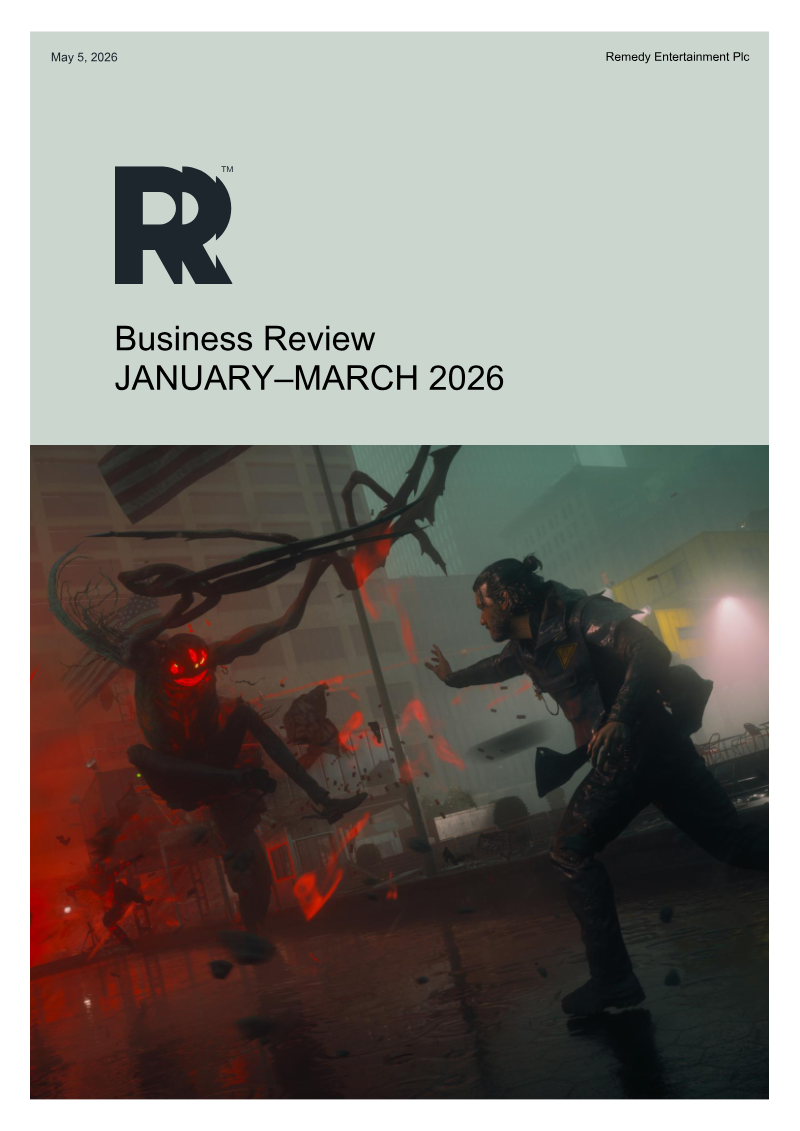
Remedy Entertainment · 2026
Giant Network Group · 2026

Archosaur Games · 2026
Enthusiast Gaming Holdings · 2026
Drake Star Partners · 2026

Aream & Co · 2026