1 free read left. Create a free account for unlimited reading + AI research.
Create free account
StriderDAO : Community-Driven IP Creation - The Metacast by Naavik
Key insights
6 takeaways- 01StriderDAO operates as a decentralized infrastructure layer that converts passive audience engagement into structured, collaborative intellectual property development across gaming, film, and music.
- 02The platform functions as a talent discovery engine by enabling creators to recruit skilled participants from a decentralized pool, bypassing the constraints of traditional, walled-off platforms.
- 03The platform utilizes templatized, game-like interfaces to segment users by skill, reducing collaboration friction and providing creators with granular data on their most engaged contributors.
- 04Financial sustainability is managed through automated revenue distribution models that formalize the value of lore-building and creative contributions into tangible, value-accruing assets.
- 05Contributors maintain ownership of their professional reputation through open, composable blockchain data, allowing them to move their work history fluidly between different IP ecosystems.
- 06Long-term viability depends on balancing individual user agency with cohesive creative direction to ensure incentive structures remain aligned with community goals and prevent disengagement.
Ask AI about this video
Transcript
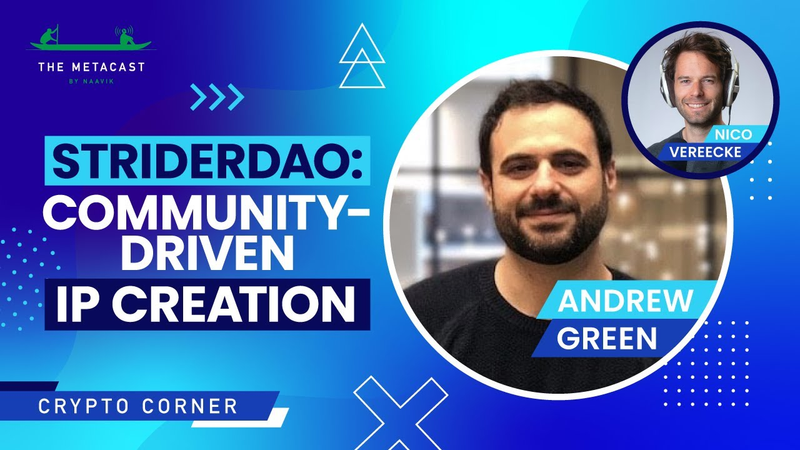
[Music] gm friends and welcome to the metacast crypto corner brought to you by navic i'm your host nico rieke and today i'm joined by andrew greene who is a co-founder and the ceo ceo at strider on strider dao strider is a web3 platform that helps harness the created creative power of communities to build new game and entertainment ip and there's a lot to unpack there there's a lot of questions i have when i read sentences like that um so let's have in first of all andrew welcome and thank you for joining me here thanks so much nico it's great could you um let's start a bit about you because you have a long history in the games industry and so um i think that experience leads a bit into what you're building so i guess a bit of background would be good yeah so um i've been in games for uh 22 years now but i'm not as old as i seem because i
started when i was actually 20. um and i um you know was was kind of on forums and and you know looking doing basically just participating in in the initial digital communities uh for games online and take too interactive had a job that i saw for um you know like a community lead and a product person product manager but back then it was packaged good so like it's very different and i was just like i want that job and i never went to college by the way um so uh i um called the ceo of take two interactive and i've ranted on his voicemail and sounded like an insane person and apparently the voicemail was so crazy that he sent it around to a bunch of people and they were all like laughing about it but they were like you know he's apparently very excited uh so they had me in for an interview and i got the job and that got me started in uh in
games both in like really early like internet and digital marketing and um what we refer to as as product management or brand management like for console package goods back in 2000 um i i worked at take two interactive and then atari uh i worked on a cool game there called the matrix path of neo um and then i went to electronic arts where i was more focused on uh community and digital um initially and um you know it was direct like for instance we were like the community managers for battlefield and then skate and um and then um you know a bunch of other products but eventually because dead space was such a ground-up type of new ip for ea me and and my my friend good friend uh but colleague ben swanson who now runs uh influencers at ubisoft um we um they tapped us to kind of like help
co-lead uh dead space um and really build that brand from the ground up because it's it had to be community led um and you know we worked with the incredible team and launched the dead space franchise and then dead space 2 and you know it's it's an extraordinarily beloved fan fan first franchise uh that's actually getting a remaster now i'll speed things up a little i went to uh i i went into free-to-play product management at ea then to a facebook canvas games company called la lapse and eventually ended up at tinyco which was one of the first ever free-to-play mobile games companies in the world i helped run the operations of tinycone partnered very closely with the ceo i did product strategy and greenlight built teams um and um you know the portfolio we we created generated like i think 1.3 billion in gross revenue which is really awesome and i game directed the concept phase of harry potter hogwarts mystery which was the first ever free-to-play
harry potter game and the first time jk rowling actually let someone uh create lore for the harry potter universe that wasn't written directly from her um you know her her pen and um i it's actually where i met my my co-founder strider um uh one of one of the co-founders of shredder mike brosman because well i was the game director on the concept phase and did kind of like the you know the the paper prototypes and art direction and you know getting everything settled with warner brothers and everyone he actually like really built the game um and you know um that game did is done like half a billion in revenue and six years later still um you know like a top 150 top grossing title which is which is amazing and a testament to the live operations um being run by by jam city but had a really really solid base i left um you know the studio was sold to netbar net marble jam city um i left
after potter shipped um and i that's when i fell down the crypto kind of rabbit hole um really just speculating and losing like tons of money um and and then that being the impetus for me to like really have to like do a lot more it's like the best impetus for research is like when you're just like losing money hand over fist um and um i got i got most of it back though which is good um and then you know crypto kitties happen and i was thinking about building in the space but um you know like i come more from like the use the kind of gameplay and usability side um not necessarily just like tinkering with like the the base layers of technology um so i waited i did i worked on a html5 games engine called knock knock um and eventually ended up at andreessen horowitz helping start the game's network and games investment um you know supporting the game's investment practice um among some other
stuff i was there for two years then did some m a um uh things and just wanted to get back to building and i was like what should i do um and i was already like you know kind of again i'm poorly buying nfts uh and um attempting to understand like the value mechanics as a speculator but i am a poor investor that is not what i am good at uh i am uh you know so but but what was interesting is again as i'm losing money and or you know whatever i'm doing a bunch of research and i'm seeing what's happening in like there's tons of communities popping up at this point and you've got some incredible like traction from things already like forgotten runes and parallel obviously apes um you know obviously axi was exploding at the time it was even before it like started to really explode um and you know i was just looking at it and being like
this is incredible like this is everything i've ever wanted in uh in the world which is like democratized kind of ip creation or a means for real like collaborative community driven um you know storytelling and finance um you know like uh and and participation and ownership uh but as a game developer you just constantly see holes in everything um and we saw just some massive massive holes and i started talking to mike brosman about it who was getting hit up by like crypto companies to join them as like their chief product officer so he was like getting you know deeper and deeper into it as well and we were just kind of like man like there's no like repeatable engagement layer um for pfp communities for web 3 games that are shipping very traditionally in terms of like the way that they're going to market and the way that they're building their game they're abstracting the assets and they're financializing
the assets but they're not building differently so that they still have these these large time um gaps where once a drop is done the the community is like okay live operations has started but there's no game there's no like engagement layer and the other thing that we were noticing is traditional media trying to get in to the space and also they they and traditional gaming have had a legacy of not really being able to for for a variety of reasons engage community creators um as well and leaving a ton of value on the table and then being stuck in like licensing and co-development um means to get into market um and so we were like wow like we've built like these like really elegant you know fiction based uh game loops that are very casual but very get very very deep over time and we were like well like
there's no onboarding for web 3 in general there's no orientation for communities in general this ownership model is not working the games traditional media and pfp communities all need either a secondary or primary means of actually creating this contribution there aren't good reward loops everyone's focused on kind of like how to build a quote-unquote metaverse but the way that they're thinking about that versus a game we thought was really like incorrect or or not the best strategy and so we started talking to as many folks as we could and started building this platform and then signed on a bunch of of you know really awesome partners as pocs to really dive in and start building and we raised some money um you know to to start that journey and we've been on that journey now for seven months is this collaborative community involved ip creation focused on gaming only or is it more broad it's the entire entertainment
industry so you know in all honesty since i'm not the biggest um sports person uh i can't sports fan uh like me neither yeah yeah so i think that there's very clear and like huge use cases for what we're building in pfp communities in web 3 games in traditional games traditional film and television and music i believe sports also can be there because sports is a another type of very deep narrative but i don't know if the narrative translates the way that all of those other segments in global entertainment and media translate and so if i understand you correctly you are offering developers of whatever type of media a means to tap into the you know yet untapped potential of their communities and the creativeness that lies there correct um it's all it also just acts as a perpetual higher engagement community management
like function because you're actually creating like dialogue and engagement that has a behavior loop in it versus just kind of leveraging kind of one-to-many communication tools from web 2. could you walk me through first from the uh perspective of a developer what this looks like like what the what how this works and then also i'd be interested to have the same story but from the bottom up from the from the community up yep yep what's really interesting is it's actually quite the same like from a use case perspective but we'll talk about how it actually differs uh for like a bottoms up versus a kind of existing ip or existing team but essentially we have a tool set that's automated and templatized and what the team gets to do is leverage a bunch of different modules whether they're contribution oriented modules or voting modules or proposal
modules you know some of which exists in dao's like today very like you know in very um you know simple ways where it's just like treasury you know there's nft drops there's a treasury being developed there's proposals on how to leverage that treasury and then there's voting on that and then the transfer of funds from the treasury management solution and then people leveraging that to build right but that the way that governance is working currently uh the way that um community can get oriented to work and that the people that are have higher power in the governance uh via like maybe the amount of tokens they have the relationship between them isn't informed um so there's no way to orient together and build a culture together around that work easily some some dows are doing a real really great job of that of course some but but but most aren't right
um and so the the the solution we have is that we create a behavior loop around um engagement by uh we have a what we call a contents a content module system uh and the content system is essentially built from our experience in interactive fiction development and it allows the vision holder governance to take aspects of their ip and to drop it as a flow of kind of interactive fiction but instead of this interactive fiction just being a game users play through it and at certain points they come to junctions where they're immersed in the story and the story is what prompts them for work uh so it's very different when you as a community leader are on a discord or on twitter or wherever you are and you shout into the ether
come do this with us come contribute for us come help us with this thing and and the audience half of them don't hear it most more than half like like like like 92 don't hear it right uh and then the eight percent that do hear it are like wait are you talking to me and then and then and then like then there's some percentage of them that's like i i don't i don't see myself as a writer um like do you want me to write and then there's like a very small percentage it's like all right i'm gonna write so there's like this like you know and you end up with like 20 people and then they might submit something right and like there might be like a discord channel and everyone's talking about it right but eventually no one comes back you have to do that whole thing again that whole like leaky thing again but with what we're doing is we're orienting you and giving you rewards in that community for every little contribution that you make even just playing right voting on something
having uh and and there's a bunch of different types of work you can do you can send incentivize a variety of different behaviors but it's just done through a game interface the other part that is uh really interesting about what we're doing is that as you gain reputation and as you do a variety of things on the platform we're creating a really rich data set and that data set is segmenting the community into a variety of personas whether it's skilled workers whether it's passive contributors whether it's active contributors whether it's passive fans whether it's speculators so that and that the activity and the the the um the the recency of that activity is very important recency is very important in community management what is happening today who is engaged today and like who is engaged more passively right so that you as a community lead now have a bunch of data
and the ability to reach directly out into a person's feed of work or activity that they can do so it's just like a game i come i know what quests i have to do i know the rewards i'm getting for them and i'm giving you feedback that allows you to customize and segment my experience except it's all about managing the community and building something together and that's what strider is essentially so if i'm a game creator i can take an aspect of my ip while i'm in development and it's a form of building excitement but it's more active um and it also gives me people like that it gives me insight into who from the community i should like be spending more time with and like actually deepening my relationship with right because you could spend the same six hours talking to a mass of community members without any idea of the value you could take that same six hours speak to a much smaller
portion of the community that you know is gonna act in a certain way and get way more out of it and um that uh and that and as you do that consistently as you gain kind of this side treasury um of funds you can have more ip building um you know uh pr derivative products whether it's like let's also add a podcast let's add a novella let's do a comic book let's do some linear content all the stuff that that game teams and other teams don't really want to fund as part of their game development process and that would seem really disruptive from the core flow but if you're creating this separate workforce and your community team is the one managing this this is a better use of their time essentially that's creating way more value and it is the new a new and best form of community management there's just such a better value proposition for everybody so i actually completely recognized the
problem that you're solving so i'm i've recently a few months ago started the dao we currently have about 200 members and uh part of what we want to do is also start writing some content and so it's like oh we want to write about this you know or like who's interested in these types of topics to write about and then people vote it's like oh i'm interested in learning about this and then you're looking for people to actually write [ __ ] you know and then and then it's great because no one knows how to get started doing that but if you put it to them in a way that is much more like engaged like you know this is going to be weird but right if i said to you nico um i really i'd love for you to write a uh like one pager about a character uh and the character lives in this dark forest and he's you know she or he is a recluse right and um you know yeah i'd love for you to write a page on that you're just kind of like uh so i'm
just gonna like write a page of like but if i said hey nico me and you are walking through a dark forest the wind is blowing and rustling in the trees we hear something in the distance and see you hold up your lantern and someone emerges from the bushes what do they look like it's it's kind of much easier for your brain to kind of immediately go right because you're already there right with this character and all of a sudden your brain it's just the way the human brain works it just starts activating to fill in the holes because that's what the brain does it tries to fill in holes but if i give you parameters that are open and ask you to figure out all the parameters of what i'm looking for and then write it and get over your own like fears or like resistance inherent creative or any type of resistance that a person has to get started in doing something with very little guidance and
handholding it's a really scary proposition but if it's done in play if it's done via the storytelling and narrative mechanics the human brain loves because it loves to fill in context holes you're like moving much faster that's fascinating do you see and this is absolutely to the aside from from the conversation but do you see applications of this outside of more like just pure creative creativity yeah you know i mean in all honesty like i i think there is right like i think that there definitely is like i think in software development um in general or in other forms of product development or other types of contrib you know contributory like um i mean you could go as far as saying governance in it in itself right could be updated um and how like people are brought into those processes because again i think we've we've always been a you know a one-to-many i mean i'm not gonna i'm not gonna go go go on a rant here about web 2 but i was part of i'm
old enough to have been a part of the full cycle of web one and web one while it was you know like re read write you know like it was it was weird like when i say weird like people got weird with it they created like weird communities that were really like had a lot of flavor and heart and like a lot of like depth and it they feel like dao's kind of feel in web 3. and web 2 like really did a bit of a it did some great things right it gave everyone like essentially broadcast capacity at scale um and created like insane commerce benefits um but it also has a ton of downsides one was one is homogenization two is like platform homogenization so like the amount of creativity any one community could like imbue into its space was limited to um
the bifurcation of brands from their audiences and making it that a paid relationship in order to access those audiences um and um and three uh obviously is mis misinformation and more opinion based conversation right where anyone can have an opinion um but what you know so so so with web3 i think you're kind of getting the best of web one and the best of web two in that effort from in the in the dynamic we're talking about in communities because you get an extraordinarily deep level of customization uh an extraordinarily like deep level of organization that's possible right and uh you know and then and you get and then you get so you get all the weirdness and you get all the the you know there's no centralization there's no barrier um and then um you get uh the ability to uh share and own in kind of the the ownership facilities of
of the internet i mean of of what you're building and the most important one i've forgotten i literally just had it and i forgot it and now i cannot remember it um but it was it's it was really good uh let's just say that it was it was a really good one and now i've forgotten it for some reason but that's in in and of itself that's already enough it's like it's like now you have direct-to-consumer relationships that you can orient and you can build with and they can be as weird and differentiated as possible so no one is being kind of drowned out by an algorithm i'm curious to understand how hands-on the um parameter setting or the because in the end you know the example you gave of you know you have a dark force someone lives there in one and like on one end you you say like okay these are like three parameters that you have and that's all you know go ahead any other and the other one there's more like hand-holding and and walking someone through i'm curious you just mentioned algorithms is there any automation there or is there a lot of like manual work involved for the video
yeah so that's a great question um so there's no um kind of automation on the um on the like there's no like ai automation on the content creation side like something that like um you know the folks that like ai dungeon um and latitude are doing it's but we are going to be leveraging a likely leveraging ai uh art generation as part of the pro as part of the submission process because that still is a creativity driven a human creativity driven process it just leverages technology but but the automation for us comes from the what what you know folks that have built game systems extensible game systems understand well is we tune we tune a bunch of templates right like we tune a ton of templates so that all of those templates are tuned right when you have templates that are tuned for the right session length the right you know um retention the right kind of
moments for where work prompts are associated how rewards are given what the actual like you know immediacy of feedback feels like at different points how the communication and orientation works when you've done all that work and you've done that work over and over again like the same way that like um it sounds like a weird example but like uh candy crush right like they created a engagement mechanism which just happens to be a match three and then they know now that like if they tune this match three appropriately that it like creates just insane ongoing retention and engagement and now all they have to do is drop in new puzzle designs leveraging that exact same tunable system over and over again so the work then becomes what is the puzzle like what it like what is the base puzzle in ours is we have template template template template and then the work that needs to be done is there needs to be a writer or two an artist or two
and they use all those templates and just it's like it's like paint by colors you just put the content in where you're told to do it and everything else on the back end of our system essentially allows you to either customize that using system content and tools or you can customize it more you want right so that there's like a base level of work but if you want to make it super customized and get really crazy with it you you can do that add your own sounds add your own effects add your own like whatever but we have the our platform takes care of all of the kind of the the the automation that that really matters and then it's just putting in the content so i like to put bold visions of potential applications of web3 out there as much as the next guy right and one of the questions that irritate me endlessly is you know but why do you need the blockchain yeah and so now i'm going to be i'm going to be that guy right sorry andrew everything you described feels like it would be possible on a centralized platform where is the bit the big unlock
yeah yeah yeah uh uh it's a great question and um and and it's simple uh that's actually the best part is it's simple is essentially like all of this contribute contribute contribution data right all the data that we just talked about that like is basically segmentation contribution data um and um the rewards as well like all of the rewards um all of that is essentially like a giant composable data set and an open data set essentially right how open we make that is really based on like the user's desire right for for openness but for instance like there's a network that exists under x game right like and there's a network that exists under y gate and let's say there was a system let's say what's let's say we're in the future and our our platform is a giant hit we
have a huge network and system you know the the contributors and the the skilled workers and the speculators and the fans over at ipa right and the speculators and the fans and the people over at ipb right they are adding value to those communities now as a community owner i want to talk to people from community b that are the best and i want them to come over to my community right and the it's a way to have the user own their data set allow someone to access it and have a conversation about value exchange about how oh what can i go do over at your community oh how am i going to get rewarded over there right so that open data set like one like that crosses all across us all like every ip basically shares that data set all users share that data set so now these data sets are not walled off
right uh from from from each other which they usually are would it yeah would it be fair to characterize this and i've heard this term a lot and it makes me cringe a bit but as a ip focused linkedin or decentralized so so so so that's what's really interesting in in it's not i don't like i don't look at it that way right i look at it as as an ip based like as a community as a network of of people building ips with brand owners or from the ground up together right the natural thing that happens when you have an open data set like this is that it essentially becomes a because like a protocol without data and context is useless right so it's like but if you have a use case that generates significant amount of data and empowers a user to leverage that data it now can be a protocol for communication and for um value exchange additionally how people accrue value
as an ip owner like me as a contributor how i own a piece of the ip or i get a royalty from every for if i make a contribution on strider system i should have said this earlier i can i get a share of that ip which is a huge the huge ownership aspect right huge and um i also can can do other skilled work or other rewarded work that can get me a variety of types of rewards that accrue that's not just pro rata revenue share in the debt right now that's another really amazing effect of blockchain is now as a platform and as an ip holder i don't need to do a bunch of reconciliation of revenue via my ip the all of the contract data just knows who should get what and it all happens automatically and it all happens immediately and persistently so it's like the management of that data set the
management of the database the ownership of that data right it's now with the user and it's with the network it's not with any central entity right and it's really controlled only by the network using it and leveraging it together in a value exchange and that's why blockchain is so important in what we're doing is because it allows the creation of that powerful network it makes it run more efficiently and it makes it so there's no central data governor governor in that situation uh dictating who gets access to what data that's really cool is it's so i've been working on you know i think a lot of content platforms will become tokenized where everyone that can like adds value to that platform receive a platform native token or currency and then everyone who wants to consume would have to like pay in that in the same currency and it so it becomes its own like tokenized ecosystem
what you're building will that result in like tokenized ip where everyone who actually you know adds value to that ip will receive like ownership partial ownership of that ip and as the ip grows and generates revenues they they would like get a share of that yeah yeah so it actually is up to each of the you know community owners right like um you know for instance um you know we are working with with a really awesome um you know traditional media company and um like if you think about it right they can build like through their initial like community and all of their initial ip like they can build and then become a facilitator in web 3 for tons of other entertainment properties right because they actually will have a platform to do that right like um as they build their community we can focus
on a variety of different segments and essentially allow um all of these users um to to like there's basically like a few stages one is like going um to to you know game like games that need these communities and or pfp communities um and um essentially um the users can uh gain a share of the pro rata revenue um or ip ownership based on what the the community decides to provide so some community like they have they have a a bunch of variables uh both on the um on the royalty side or ip ownership side and on any type of token token issuance if there's not an existing token already in their ecosystem so um for instance i can make a community in which the vision holder governance
gets the majority of the ip ownership and you know or like the production team quote unquote or like the the bigwigs i can make it feel more centralized right i can make a community where most of it goes to contributors right where like the majority of it goes because really you've got you've got four variables here you've got the treasury you've got the vision holders and or ip owners right you've got the contributors and then you've got strider the platform right shredder the platform we're obviously going to try to create some standardization around what what our you know small piece of the pie is right but then you've got these three variables how much should go to the treasury how much should go centrally to the people that are really own and operate this and how much you go the contributors those three variables should be as flexible to what type of community people want to create but ultimately yes the dow like the contributors
and the the fans that are accruing value in this ip as this ip grows their share of that revenue is growing the difference though is is there's no individual asset that is fractionalizing there's no like ip that is an nft or an ip that is a you know because that would that would fall under like securities issues um and so you know an ip doesn't work that way in the real world also by the way you know what i mean there's no like there's no like thing that is star wars right like star wars is a ton of thing a ton of you know like canon a ton of products a ton of merchandise and a ton of goodwill right it's like it's like an in there's an intangible element to what and and the only time that you know how much an ip is worth is when a buyer actually like consolidates all of that value into a bid uh so so it's intangible until it becomes tangible there's no
actual asset really fascinating so some of our listeners will know i'm a big fan of the the concept of of loot where you know you put something out there for the community to build on um what i've seen there and what i've learned there is that it is hard leaving things up for the community and um you know my question to you now is do you have some examples maybe even even from the web 2 world or maybe already something that strider has accomplished as proof points for you know when you like these are the amazing things that i p creation like decentralized to the community can can result in there's a lot yeah i mean there's there's a lot of um of good examples um i think that the um you know the best ones kind of come out of the you know communal storytelling of you know it's it's very basic obviously
but like and it's obviously not at scale but you know tabletop role-playing games is like where communal storytelling you know kind of grows from and then you you have people that have already built brands uh for broadcasting right that that content that communal storytelling and communal content creation um uh you know um activity additionally there's i always forget then i i used to check this thing out um a while ago it's basically an archive of like of our kind of of artifacts about like a government conspiracy um that people just are contributing more and more artifacts to and it's turned into this giant database of artifacts that people have just gone through the process of connecting into now what feels like a real tangible
thing um i think there's a ton of other ones that are weirder but i would say everything from like there's certain types of memes right and the lore that's come out of a meme is like amazingly rich um and sometimes communally led um you know there's all that kind of creepy pasta um and other kind of stories on reddit um and slenderman and those have been licensed by hollywood to like turn into ips right those i'd say like aren't the best example of like communal storytelling and or communal contribution as much as just like independent community built ip that like becomes real because all ip essentially is available for more building on top of it um wattpad args from the web one era um you know all the ugc and modding platforms that are coming uh out and or have been
created they just are doing it in a very different way than what we're talking about because it's more about tool sets and composition for like assets more than it is about like the systems the assets live in and the lore that that govern those those worlds um gotcha andrew and um now to my final question and it's one of the favorite ones that i've uh or my new favorite one that i like to ask on pitch meetings and that is so in five years or from now imagine it's 2027 and strider dao has failed what happened um yeah that is a great question um i would say that um strider failed because we didn't actually
find the right balance of user agency and like the ability for the community managers to really engage and create relationships with those folks mainly because the reward structure either wasn't correct or the personas the amount of different personas that we have like there's an imbalance in like the kind of you know the the market like the dynamics of a community like um there aren't enough you know like strong contributor types or skill worker types versus um you know fam people people may maybe want to don't want to engage as much as we we believe they want to engage um that that really came to the community is a passive thing in that you know mostly communities like think they want
to engage more but they don't really want to like a s'more only a very small portion do or our reward set is wrong or you know the platform itself isn't easy to use there's a couple of different ways it could it could you know not work out i also get the answer that it's it's the market or like the world is not yet ready for this um so i like that you you say that there's some things that you could do wrong in the future that might result to you you and strider failing so uh it's a good answer i like it great yeah i try to i mean that's you know i mean if you can't be honest about about like what the problems are gonna be with product development then you know you're you're gonna have a harder time looking them in the face later when they show up yeah so it's just so you know something you just have to get used to 100 good all right um andrew this was fantastic i'm fascinated i feel like um some of my friends in the loot ecosystem
could probably use strider so um maybe i can set something up there um in any case thank you so much for joining uh this was a real pleasure um and um where can where can people find you to learn more um about you and strider yes so i'm on twitter at farming underscore uh xp okay um and at strider.xyz and you can access all of our social channel chat channels there and uh you know strider on twitter is strider underscore underscored as well good well this was great uh listener i hope you enjoyed this as much as i did um i really like this so people know that you know i like the weird stuff like the the things that you wouldn't immediately think about if you think about blockchain and games and this falls firmly into that category so um yeah props to you awesome thank you so much for having me i really appreciate it my pleasure so uh listener i hope you enjoyed as well um if you did feel free to give us a thumbs up a like and a subscribe and yeah this was the metacast and we
look forward to speaking to you in the next episode ciao [Music] you
Summary
StriderDAO functions as a decentralized infrastructure layer designed to transform passive audience engagement into structured, collaborative intellectual property development. By integrating interactive fiction modules with blockchain-based governance, the platform enables creators across gaming, film, and music to move beyond traditional treasury management. The core thesis posits that by gamifying the creative process through narrative-driven workflows, communities can evolve from mere consumers into active contributors, effectively turning communal storytelling into a sustainable engine for content production.
The platform utilizes templatized, game-like interfaces to segment users based on their specific skills and contributions. This approach reduces the friction typically associated with decentralized collaboration while providing creators with granular, actionable data regarding their most engaged members. Because this system relies on open, composable blockchain data, contributors retain ownership of their professional reputation, allowing them to move fluidly between different IP ecosystems. This interoperability serves as a critical mechanism for talent discovery, enabling creators to recruit skilled participants without the constraints of centralized, walled-off platforms.
Financial sustainability is addressed through automated revenue distribution models that formalize the value of lore-building and communal creative efforts. By allowing vision holders to define flexible reward structures for contributors and treasuries, the platform seeks to convert abstract participation into tangible, value-accruing assets. While the model offers a robust framework for decentralized IP creation, long-term success remains contingent upon the careful calibration of incentive structures. The primary challenge lies in balancing individual user agency with the need for cohesive creative direction, ensuring that reward mechanisms remain aligned with the broader goals of the community to prevent stagnation or disengagement.