1 free read left. Create a free account for unlimited reading + AI research.
Create free account
How Yuga Labs is Defining the Future of Web3 Gaming
Key insights
6 takeaways- 01Yuga Labs is pivoting from an NFT-focused brand to a developer of sustainable Web3 gaming ecosystems to disrupt the hyper-optimized stagnation of the traditional free-to-play market.
- 02The Otherside platform serves as the core infrastructure, designed as a persistent and interoperable ecosystem where digital assets retain utility across multiple game titles.
- 03Yuga Labs aims to replace traditional performance-based user acquisition with community-led growth, treating games as social scaffolding rather than isolated entertainment products.
- 04The business model shifts away from planned obsolescence by leveraging blockchain technology to ensure players retain value and participate in content creation within a medium-agnostic entertainment ecosystem.
- 05The company is scaling operations by recruiting veteran leadership from major industry studios, specifically Activision Blizzard and Epic Games, to bridge the gap between high-level gaming expertise and digital asset utility.
- 06The company utilizes a remote-first, agile framework that balances its original irreverent brand ethos with corporate-level talent through a 'building in public' development strategy.
Ask AI about this video
Transcript
foreign [Music] gaming podcast where it is our mission to explore the business and future of video games we bring together the industry's brightest Builders investors and thinkers to keep a full sun current events dissect emerging Trends and games share Lessons Learned and have a great time this podcast is also part of novik's growing ecosystem which ranges from free and premium research to Consulting and advisory services for more information visit www.navic.com now let's jump into the episode hello and welcome to the navic gaming podcast I'm your host Nick ovori Mass market adoption of web3 gaming has had to put it mildly a bit of a shaky start after the impossibly high expectations set by the tremendous early success of axi infinity and then the ensuing kind of mad rush by both crypto native developers native gaming who think they
can make a game and then the many kind of traditional web 2 game developers embracing web 3 for the first time we have yet to see another breakout success not yet at least like Axiom uh and of course as our listeners well know making great games takes time uh and even great games sometimes struggle due to platform limitations or technology limitations um so you know we all know making great games is hard and the question we're asking today especially as it relates to web 3 who is in a position to succeed and why what differentiates a web 3 game how is a web 3 game better than or at least different to other games what sets them apart and to get a glimpse into some of the thinking around one of the leaders in the space is doing around web3 gaming we have one of the Undisputed heavyweights uh in the ring today on the Pod today we literally have the proverbial 800 pound 800 pound ape in the broom and that is Yuga Labs of course uh you guys the creator of the
board ape yacht club which debuted in April 2021 if you know anything about nfts you know about board Apes uh since then they've created new IP for the ecosystem with the mutant apes and the board ape Kennel Club they've acquired other top nft projects uh collections like crypto punks and me bits and they made both web 3 and gaming history with the biggest nft mint ever followed by a game demo which had record-breaking synchronized player participation and that was of course other side there are metaverse projects more recently they launched the very irreverent but very fun infinite Runner dookie Dash which we actually covered and deconstructed at least the light deconstruction on the February 7th episode and so if you missed that episode go and check it out we'll link to it in the show notes Yuga have also made a bunch of really amazing respected senior hires from the gaming industry especially over the last you know months or so to help build out their web 3 gaming Ambitions and we are
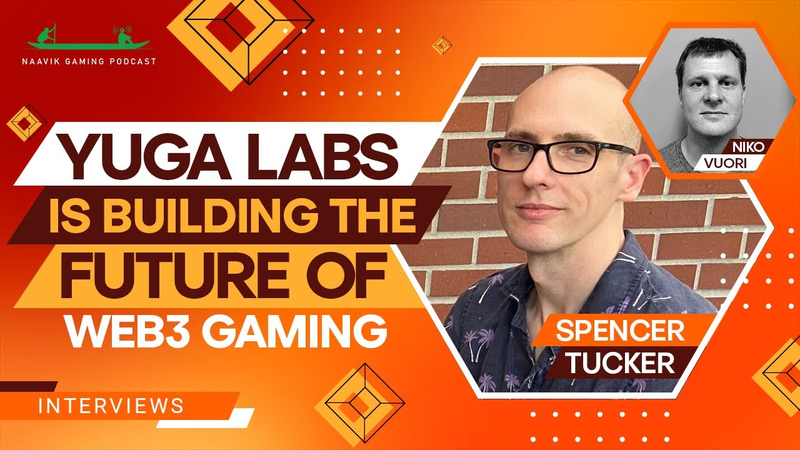
lucky to have one of those heavyweights in the room with us on the Pod with us today so without further Ado Our Guest on the Pod today is the man leading the charge at yoga labs to drive adoption of web 3 games he is none other than Spencer Tucker the chief gaming officer at Yuga Spencer it is great to have you on the Pod welcome yeah thank you and and thanks for having me um big fan of navic I you know going back to mobile game game days I used to kind of read the blog uh pay close attention you guys deconstruct stuff I find it super useful so happy to be here yeah great to hear and listeners if you haven't yet subscribed to the navic pro what a great plug for Mark for my guest today thank you Spencer appreciate it um so with that out of the way let's get into to the episode here and I always like to start um especially with guests like yourself today um I like to get a little bit of background because I find the journey that many of us kind of traditional web 2 developers have taken into web3 really fascinating um and I want to hear from you directly what you know what are you coming from
what is your background uh in gaming and then what brings you to Yuga and the world of web 3. yeah awesome um so I think to really understand my journey you you really have to actually go back even before gaming uh you know I've been sort of a gamer since day Zero my dad's Aeronautics engineer so he has to have like high-end PCS to kind of run stress analysis for rocket engine sort of like stuff um and uh as a byproduct of that I was the fortunate beneficiary of all the old PCS that he passed down so I actually started gaming on a Commodore 64 and picked up Ataris and sort of 486 286 Etc on up to the Modern Day stuff so I'm I'm a huge like gaming collector huge game sort of Enthusiast um but I worked in banking for about eight years so I was at Wells Fargo doing Bank Ops um and somewhere through that process I kind of had a Epiphany moment where I was like do I really want to be doing this for the rest of my life
um and the answer was no uh and so I was like well you know what am I going to do so I started looking around and at that time it was pretty early um you know like pre-2010ish uh like early free to play days um and I looked at all the gaming jobs I was going to game Sutra et cetera uh and there wasn't a lot out there for uh for folks like me um it was like Hey start from the bottom work your way up and I just couldn't do that I had a family I couldn't afford to do it um and I stumbled on this this company that did MMO free to play product like really early on in like browser Games Etc um and I talked to them sort of uh got a sense of what free to play looked like and I was like oh you know oddly enough um one I'm familiar with these types of games from playing them but two the economic model makes a lot of sense to me because they're basically perfect price discrimination models free market economic systems aftermarkets Etc in
some hilarious way even more complicated than some of the stuff you see on mobile today even though it's like you know decades old at this point um but I saw that and I was like you know I think actually oddly enough I'm uniquely qualified to kind of jump into this uh sort of ecosystem and kind of ride this bleeding edge and sort of help Define uh how the space evolves over time and so I took the job big risk moved uh the family um but it was a lot of fun and I learned a ton um you know anyone who's worked in a startup will tell you uh that a month is worth a year um and it definitely felt that like that for me um but it was super awesome to kind of be on the bleeding edge and sort of Define you know stuff for the first time ever um and I did that for some time and then you know as smartphones came online and people started looking at those as like this opportunity for scale which was super obvious I looked at that and I said well you know the games that exist on sort of
feature phones and smartphones are like so much less sophisticated than the stuff I'm used to I mean I'm doing like these hugely robust sort of like free market economic games as as MMOs uh with zero barrier of entry and I think like there's a lot of analogs I can see here in terms of like how these things are designed how they operate the type of game experiences that are evolving um on the smartphone a smartphone kind of like form factor um and I saw an opportunity to kind of get in early and and sort of Drive some of the the kind of smartphone adoption of those free-to-play economic systems to scales that just had never even been thought of before um so I took a job at uh at glue uh at the time I think you know everyone thought it was crazy they they actually thought that I was crazy to leave Banking and get into free play games and then likewise to leave you know MMO PC stuff and jump into Mobile phones and glue was kind of like almost penny stocks at time is like a dollar ten or something like that and they had like
really high fidelity product they pumped them out all the time but they had no idea what games as a service was they had no idea how to operate these like free to play economic systems um and so I really kind of like built their product function and sort of like game systems design strategy from from the ground up um and then like one of the first games that we implemented those systems in and it was a really really simple system it was actually a pretty big learning experience for me like coming from something really complex to a place that had like no experience building this kind of stuff you have to like sort of like temper your expectations and sort of like build simple first um and so that's what we did and we adopted a pretty like basic soft currency sort of Razer Blade model to a game called Deer Hunter um and that kind of like blew up um and was like very viral and and performed you know exponentially better than anything else that they'd done historically and we sort of wrote that wave and just continual sort of you know
step ups and and sort of evolutions of uh sort of the free-to-play economic system within glue and then eventually uh we we had Kim Kardashian that was a big hit we started really indexing into um celebrity IP and I was like well I don't know if I I necessarily believe in the thesis that like social following equates to free UA uh which was kind of the thesis there and so I decided to jump to a company that kind of more represented uh you know where I thought the the industry was gonna eventually evolve to which was uh agree um so they're doing like Japanese games funzio product Etc like more kind of traditional games as a service um like high sort of analytical function and data Insight driven sort of game philosophy um and I I stayed there for uh for a while um and then I was looking at cross-platform as an opportunity there that didn't pan out we didn't end up spending the money on the uh sort of Investments required to to kind of realize that that Vision at the
time um and so I jumped over to scopely I kind of initially as like SVP of product monstation and analytics very long title uh but the scope of that role was basically running their analytics function uh sort of some of the central monstation strategy and product function um and they kind of grew with that company eventually became president of games innovate a lot of Firsts there too including the cross-platform stuff so kind of moving to like browser Plus mobile games and sort of creating social ecosystems and off um off sort of platform revenue streams Etc uh and had huge success with that started dabbling in web 3 because I saw an opportunity there and we'll talk a lot about this but like the opportunity there was disruptive to the industry I was coming from and free to play at that point had become a kind of you know the curve of innovation had gone somewhat asomatotic uh so what we were really seeing was a lot of hyper optimization and you you basically made it or didn't
on a Razor's margin in terms of like what your yield relative to your CAC is um and uh and I realized like you know to break into to kind of a new genre or to have success uh as a new company coming into the space was very red ocean uh it was very kind of like RNG in a sense um and so I thought that there any time a space reaches that kind of Crescendo point it means it's right for for a paradigm shift and disruption so you start looking at like what are the vectors of disruption like what what can we do to reinvigorate the space change the dynamic um create sort of a disruptive um sort of opportunity to kind of flip everything on its head and that's what I enjoy doing so start looking at web3 um I think there were two camps for web three there was the camp of like hey uh valuations are crazy so let's jump in the in the you know in the pond and like play around and like Splash Water um but not really understanding the
value proposition or kind of like the the real reason for for wanting to do that and then there was the camp of people who maybe understood it has some sort of thesis or ethos around you know what might work why it's disruptive why it's valuable from a player's perspective but they they really didn't know how to execute it and the complexities involved in that new technology and kind of navigating both the technical legal sort of logistical space of that was just really complex um and then like when the bear Market hit he saw a contraction right so like all the people who were playing in the pond all of a sudden it's less attractive to play in that pond because a lot of you know dead bodies are floating to the surface uh and there's a lot of pressure and construction um and then at the same time the people who were kind of like generally understood it but didn't really know how to make games um they find themselves kind of in the same position for a different reason it's like well we might understand the space and have us clear value proposition but we don't know how to make games we don't know how to reach this audience um and so it's been like kind of like
very red ocean in that sense but I think it's a very blue ocean in terms of its Innovation potential and so once again you know following uh kind of my history I was like well I'm gonna take this this leap and then dive into a place that I think is well positioned to be successful um to kind of crack that that kind of opportunity space of disrupting the the kind of place that I came from and that was you the labs because it's obviously like the the giant ape in the room you know uh so to speak um and I think like again it's it's like a bear market and people are like what are you doing you're crazy like why would you take that that leap uh from a known space that you're really sort of like um sort of experienced in and sort of jump into this new space and I think like that that kind of um sort of ability to to take the chance and sort of make the dive and innovate um is what differentiates uh sort of leaders in in new spaces and disruptions
and Paradigm shifts and and that's what I wanted to do and so that's that's kind of my journey from Soup To Nuts uh there to here yeah amazing journey and I really do love hearing these uh because uh there are a lot of through lines for folks who've been working in the space for a long time I mean so many of the things you just said resonating with me Commodore 64. that's where I started as well um banking I was an accountant auditor my first career worked for instant young um really fascinated by game economies your jam was MMOs mine was and still is management simulation games um uh the notion that there's these disruptive technology cycles that happen you know on a on an x-year basis whether it's a decade or maybe more in some cases you know for me it was getting started Zynga and then free to play mobile uh our took a detour via voice gaming um and then you know now it's web three so I love this story and it resonates heavily with me and I'm sure it'll resonate uh strongly with our with our listeners as well I love how thesis driven uh it seems like you've been throughout your career so great basis
for starting this conversation um I want to dive straight into to Yuga um because that is that is absolutely what this episode is all about um and I'm just going to start with what you guys I I don't know if it's their Vision but yuga's Vision at least as it's currently stated on the website uh is it articulated as follows and this is a quote it's nice and short shaping web 3 through storytelling experiences and community so very simple three things storytelling experiences community and what struck me about this was that there was absolutely nothing about gaming there's nothing about digital currency digital ownership uh which we typically associate with web3 there's nothing about crypto there's nothing about blockchain Technologies um which is fine I mean you know that's the stuff that runs thing these things but but you know storytelling experiences community tell me why and and why not some of these other things I'm really fascinated by how clean and simple it is and yet doesn't necessarily tap into what made
Yuga you know airport special in the first place by by being a very successful blockchain nft project yeah absolutely so so I think the first thing I'll say is you can't have a game without creative storytelling uh and and kind of community um by definition or at least not a social kind of mass-market game I'm and so I think like gaming still leans into those three principles but I think what's you know to your point what's not captured there is the concept of what happens outside of the community like the the concept of scale right and I think these are two distinctly separate things so I think you guys um sort of core thesis is to support its its core its Community it's kind of it's Anchor Point it's um you know it's sort of most valuable participants uh in a way and and that Community the web three sort of nft community specifically is built on those three principles so I
think for Yuga you know at its core it's still delivering against people that are part of that Community now the question is you know ultimately how do you grow that Community um like what is the path to you know provide that sort of focus to a much broader audience than currently exists um in the community and and one of these one of the things I find interesting and and is somewhat related to this is back to my you know looking back at my history that I described before when I started out in gaming in MMOs uh especially free to play MMOs Community was definitely core uh to those MMOs in fact the games that I worked on you know I'll say objectively looked like garbage uh they weren't that there was no like really thoughtful sort of you know um Fidelity execution I mean there were like pretty Bare Bones because you want free free entry point is like Mass Market therefore like you know Hardware
matters and you don't want to create too much of a barrier of Entry around Hardware Etc um but there's also like a lot of you know quests and things that are fetch quests they're not in a vacuum zoom in a single player sense super interesting what makes the games really compelling and interesting are the interactions and emerging gameplay that results as a byproduct of people interacting with each other in the con in the context of that sandbox that you've created which is the game experience so the game's an overlay it's like kind of the experiential layer it's like the codifying sort of glue uh that connects everybody together under common goals um and under kind of understood like World principles um but the real game is is you and me it's you know our friends our family uh how we interact together how we compete for for kind of notoriety how we peacock and show off and like the kind of dynamics that that exist around that and same thing with Ultima Etc I mean great games are just as much what happens
outside of the game and kind of the interactions between people as they are the actual core experience and the moment-to-moment gameplay and I think like that's a important factor in kind of understanding those three sort of key tenets that that you get in cap encapsulates is like it's it's more about speaking to delivering against the core and providing a really solid experience with like meaning and purpose and kind of fidelity of moment-to-moment interaction and like ultimately leaning into that Community Vibe um but at the same time I think there's a lot unsaid in those three principles uh that we can get into that really speak to like how do you scale it how is it durable how is it sustainable um and how is it related to games and I think games you know to to kind of be a spoiler alert on like probably what I'll say in the future here is is like a fantastic entry point into that ecosystem uh and again I think like that ecosystem is very supportive in an MMO way uh to kind of create stickiness and cohesion and sort of Engagement
retention um but the the entry point I believe um you know is most effective when it comes to kind of something that's like broadly understood in Mass market and that's that's gaming yeah I absolutely buy the the community argument uh and I know obviously I buy that you can't have you know a gaming a good game at least a good game without those three elements um but the community piece I think is really strong we're gonna definitely talk about that Marcus obviously that's one thing that Yuga and uh has done really really well is leaning to community in a very powerful way key question does it scale right and I think we're we're getting to some some teasers around that um you know and I love the idea that you've got this kind of almost like a soul the community is the soul of the game or The Meta game you know it's the interaction between the players and then the game itself is kind of like the scaffolding almost like you know oh here are some rules and here's how we can do these interactions without it just being completely free form um and so that leads nicely into my next question which is I do want to talk about what is this gaming I'm calling it scaffolding I know you didn't but I'm calling it gaming scaffolding what is this gaming scaffolding around this this you know uh the beating heart which is
the community what does that actually look like for you guys um we know we did the deconstruct of dookie Dash um in February um amazing engagement stats like absolutely phenomenal spectacular I'm gonna just rattle off with you here like you minted I think 26 000 passes 25k uniques played um you did 7.7 million dashes in three weeks it was a timed event um so that's an average of 300. per Dasher per person um it was only live for 21 days so on average those who played and of course there's going to be a massive distribution you know um at the high end and at the low end as well but an average of 14 times per day you know and I think each stash is like you know a minute two three you know Max um so but still that's a good amount of time being spent um and you managed to engage a lot of non Yuga non-board ape Community um and the winner actually was a 18 year old Pro uh fortnite player I believe called Mongrel or Kyle Johnson I believe
is is or Jackson is his actual name so really just an incredible I mean small right by modern gaming standards but incredibly highly engaged and that's really I think that Community piece that you're talking to um on this on the on the other end of the spectrum you've got um other side which is this huge scene or at least from the outside looking in is this huge likely multi-year effort looks like it's something you're building to stand the test of time you know on on par with any major brand franchise you know in gaming that's been around for the last you know decades whereas dookie Dash was a three-week like infinite Runner quick thing so it's really interesting to me you've taken two extremes almost as your starting points into gaming um you know one a metaverse project that's probably very expensive and very time consuming is going to take years and then the other looks like you guys got it crank that in like a matter of months which is really impressive uh to get a game out to Market and it worked and it didn't break and the exploits
seemed like they were mostly plugged and the cheaters were caught so two very different approaches and I'm very interested to hear how are you guys thinking about your slate what are the games that you're working on and how do these two very disparate experiences actually fit together yeah yeah so great question uh and happy to to kind of articulate um sort of my perspective there so I think to understand what the vision and the Slate are for Yuga um there's a lot to unpack uh and a lot more than I think people probably realize it's surface level so for example uh when I started uh I mean for context I've been here about eight months um and we started dookie Dash sort of Dev or conceptualization of dookie Dash you know shortly after I started probably a month after I started maybe a couple weeks something I'm trying to remember when I started working on that but I one of the things I noticed you know coming in immediately is we've got to your point like there's a big bet there's other side right and
there's a huge vision for other side there's a lot of complexity there um and there's a huge team dedicated to executing that and at the same time I think you know my point of view is that I think gaming gaming is a word but like the concepts of gaming are so relevant not just for gamers but also for people that probably don't even consider themselves Gamers so when I looked at the space at the web 3 space um I said hey you know a lot of the collections are starting to move in a gamification sort of Direction uh be that RNG with like reveals or kind of like these multi-part processes what sort of inputs and you know outputs and kind of like um uh sort of complicate computation processes and sort of components that are ingested to create something derivative and there's a lot of like Innovation going on on the blockchain ETC so I thought that was pretty interesting um I very quickly realized that like you know outside of our main gaming effort there's not a ton of gaming DNA inherent
in the company um so what I wanted to do is like lean into uh what yuga's really good at which is the community the storytelling uh sort of the engagement but also the solidity Dev the the blockchain technology the um kind of concept conceptualization of those tenets that I think are really powerful like transferability interoperability and interoperability and ownership uh and and I think like those um were things that I thought were super disruptive to the gaming ecosystem we can get into that in a minute um but I wanted to kind of lead with something short simple sweet that could be executed well um that really took advantage of some of those tenants and core competencies of the business um and use that as a jumping off point as an iteration point for like what we do into the future and so like the Slate strategy for Yuga ultimately looks something like let's build iteratively which is something that's novel for
gaming and what I mean by that is not like Call of Duty one two three it's not you know whatever uh sort of sequence of like let's repeat but replace the old thing it's how do you tie them together conceptually against a vertical and then concentrically against multiple verticals and that's where interoperability comes into play so for example dookie Dash you know there's these passes and these game passes are minted these minted game passes are played with the Rarity of the the kind of output of that is relative to your participation in that event and like how successful you are which is pretty novel um and then the output of that is going to be you know a nft that's used as a game character in future content in future games and those continue to evolve um and the games become progressively different but also more complex but they're feeding into each other so this is dovetailing of kind of like experiences so the game itself is not
just the one game it's like the sequence of games and how people interact with those and the kind of evolution of the thing that you originally started with over that period of time now you think about that in the context of interoperability and kind of con concentricity if that's even a word but like basically concentric uh sort of experiences and imagine that you're not just building you know a game for somebody to play a uh with with like kind of the past but the past becomes a Mech and that Max is used in the game and maybe that game Mech is also used in another game in a different context um and so this kind of gets to a really interesting idea right where now content and its value is relative to multiple experiences and collateralized against an ecosystem versus being specific to an individual vertical and this is like fundamentally disruptive to what gamers are used to and I'll describe why um so for example
let's say you bought I don't know a like a character pack in Marvel Strike Force and so you get Spider-Man um Spiderman's utility or game value in the context of that experience is isolated to just that experience and for some finite period of time because by Design all free to play games um even if you know people say this isn't true it's true uh have this kind of obsolescent cycle intended or unintended by virtue of the fact that you introduce new content old content becomes effectively devalued over time um some of that's intentional is to perpetuate sort of a behavior cycle and a velocity of behavior and some of that's unintentional it just as a byproduct of people wanting more content and there's just more choices and more things and therefore you know individual things matter less um the difference between that Paradigm which I think most Gamers don't love over time and the Paradigm of web 3 and what that offers players for the first
time is the fact that spy Spider-Man might be Spider-Man in the context of Strike Force but now Spider-Man's not just Spider-Man in the context of Strike Force Spider-Man is also a different thing in a different context and so that could be Spider-Man as a different character in a different context for a different style of game it could be Spider-Man is now an ability for another character in a different context in a different game could even be something as Extreme as Spider-Man is now a refrigerator in The Sims you know like it's it's that crazy so and I think like that is a really kind of compelling player um sort of like utility proposition it's like hey no longer do you have to worry about this thing becoming devalued in the context of the thing the experience you bought it for because people are always building something new for it why because they care about you as a player you're the most valuable part of that ecosystem and the more of your time and
engagement and kind of retention they can achieve the better off that business is and the better off the ecosystem that you built around that person ultimately is and that's the concept of interoperability now you pair that with ownership and transferability and all of a sudden you've got this Dynamic where you know not only can you invest in a thing because you appreciate its immediate value if the additional con contextual value uh doesn't speak to you as a player you can turn around and sell it or trade it or whatever um and so there's for the very first time ever in the free to play sense you know some degree of kind of like uh gaining back some of what you've put into it it might not be you know yield on top of what you've put in but it's it's greater than zero and like historically games have been a zero-sum game like you buy a thing it's gone you leave the game you've lost all the value like that's no longer the case and that's fundamentally different um so I think that's like super
compelling to kind of think about now how that relates to to Yuga and the Yuga strategy is again you know we want to build experiences that transcend experiences and what I mean by that is like I want to build something for somebody that means more than just the context in which they originally achieved that thing whether they bought it or earned it or achieved it through some other method or were given it or whatever I want them to have this Persistence of experience across tons of different verticals um and ultimately the more we do that and the more we feed those into a persistent durable endpoint the better off we are and so what is the persistent durable endpoint well that in this in this particular instance other side and so other side becomes sort of the focal point of the energy for all this content and these individual game experiences really are meant to achieve kind of like two things uh the first is to build the muscle around live service sort of operational
um understanding for the business of Yuga in this particular instance but also to build kind of a pipeline of content value and an audience that can funnel into that that kind of penultimate longer term Vision that you mentioned is you know multi-year in in Everlasting ideally um and so that's kind of the strategy and so like what are we doing we're building lots of different experiences different games different genres different kind of like play styles that innovate really you know meaningfully in terms of the technology and the way it's executed um and I'll give you a very specific example of that but ultimately feed into the other side and create a population and then demand and kind of an ecosystem and a network uh that also feed into other sides so um something I don't think many people at face value really realize and this is a a good kind of like casement Point um is dookie Dash you know one of the one of the very first questions I asked myself when I built that game was you know I don't know how many Yuga
apes are Gamers right like and what if they're not and I don't know because all their data's on chain I have no way it's like unlike you know free to play games I know exactly who's playing those I have freaking no idea who's playing these games uh by and large um and so I can like subjectively kind of like anecdotally poke around and Discord or like look at Twitter or whatever get some general sense of like who these people are but in an aggregate I can't quantify it in a meaningful way to make decisions around it um and so one of the first questions I ask myself is you know is there a technology that I can leverage here in the blockchain to de-risk the risk of not knowing if these people are going to be Gamers or not because the ecosystem's so small uh and so that technology was warm wallet and delegate cash um and the reason that Mongrel won you know the top prize and the reason that Esports players were playing the game is not because they went in there and spent you know thousands of dollars to get like a sewer pass it's because they were
delegated to sewer pass by people who realized that they didn't want to play or that they weren't good enough and they went out and they created their own networking externalities they created networks around themselves and basically crowdsourced the effort of acquisition and that to me is a fundamentally game-changing way to think about scale and uh kind of acquisition and engagement is imagine when you've got a core of an audience that's super hyper engaged on top of a community that's like really sticky and then you can leverage that Community to basically go out and build networks around themselves and scale your own ecosystem that way like that to me is like a pretty game-changing sort of idea and that's what I wanted to kind of like test out with uh with dookie Dash and luckily you know outperformed what I thought it would do but like that's great you know just lean into it right um yeah yeah I mean what a great answer um Clarity of vision I really I applaud you guys for for having that Clarity of vision and this multi-year plan there
are so many follow-up questions I have uh based on what you just told me but there's just a couple of things I'm gonna hit on first um so the very first point I'm going to make this this dookie Dash episode that we did you know in February um I actually introd that episode by saying I genuinely believe that what you guys have done with Duke even though the numbers are small obviously we're gonna and we're gonna get to that in a second that's my second question here um but the the notion that you could essentially delegate your assets out and create your own network externalities as you mentioned um I didn't think I was and I hope I'm proven right and I'm sure you very much hope you're proven right uh in the future um it is truly a game changer and is probably the most significant moment in web3 gaming my opinion um since Axia right which for a very different reason oxy kind of is the Beast that started it all and then there's been kind of a you know a quiet lull until I think this moment and I think most people don't necessarily realize how potentially significant it
can be so I applaud you guys for having the clarity Vision to go after something like that um and for it to pay off it seems like at least in this first experiment but the second question so uh pat on the back there now but the second question it goes in a slightly different direction which is um you know I love the lore you guys are great at telling the lore and obviously the lore of Jimmy the monkey with a with a key stuck in his anus and you guys are running literally through to to get to get to it um it's quirky it's funny it's very on brand for the board Apes but it's not very massive Market I would argue um and so as effective as I'm sure it was for the existing community and that engagement how do you balance that um what I would argue is kind of a niche toilet humor type con again not in a bad way like I found it entertaining and of course you played very well to your community but how do you balance that against this need to kind of grow beyond that core of the ten thousand twenty thousand holders 30 000 holders across the ecosystem that you guys have built
uh to something much more mass Market yeah yeah uh it's a great question I I think you know to answer that um it's important to understand that Yuga is not just board API club uh it's you know Club me bits other side crypto punks um 10K TF I mean it there's there's a ton of content in the portfolio and not all of it is obviously toilet humor um or or kind of like really edgy I guess is a better way of describing it um and I think like there's you know this this principal kind of idea that like you build for the audience you want to activate um but the concept of how you interact with with with that Community is pretty consistent so the tone might change but the methodology is pretty consistent um and so I think you know how we end up scaling Beyond sort of the niche when it comes to that stuff is to leverage uh
kind of the strength and and how we interact with our community and then leverage the fact that we have all these different verticals that aren't necessarily so narrow um all the time and then we can represent those in different contexts so you know the context of Jimmy the monkey is very true to the board API Club um but the beauty of web3 isn't just that you know the board of yacht club and Jimmy the monkey and dookie Dash exist in Canon it's the fact that there's this almost analog to Lucas's expanded universe for Star Wars that people go out there and build on their own and this is one of the values of kind of web3 in general and like ownership in general right it's like people are out there building kind of concentric sort of ltus to our L1 is the way I describe it um so it's almost like there are universes that are being built uh on top of our universe so like I'll just give you an example you know there's uh like mutant hounds uh is a kind of like L2 to the you know board Apache Club L1 and they're out there actually with Alex and Dennis
um who you've spoken to before like building their own uh their own game right now and I think that just illustrates the point you know that's not going to be the same tone it's not going to be the same sort of approach but it's in the same sort of universe and it's in the same sort of ecosystem and then if those paths lead back to us and we've created this really sticky and engaging kind of community layer um what we've done is we've created like you know Force multiplier of reach that extends just beyond like different game types is the entry point but it's also use of Ip um and kind of the tones that are created outside of ours and we determine what's Canon what's not canon but like the reality is it's it's Community IP in a sense in that like people can build for audiences that that we might not necessarily always agree fit the tone of the the kind of like you know Canon of the lore of that particular vertical of the business yeah it's almost I mean in some ways Community as a service um and it is yeah and it's pretty
powerful if you can get that going right if you can get that that's a flywheel that I will keep on giving as long as you know you feed it the right way which brings me to one of the other questions I had on on your previous answer which is um you very clearly envisioned a world where you have your own IP your own Creations your own games your own house Studios my guess will be that you'll follow given the hires that you've made you'll be following the studio model would be my guest for your own in-house stuff and you can correct me if I'm wrong there or not um but then you you are very much breaking the mold of the gaming industry and leaning into the web three piece which is this community as a service where you're not just allowing but encouraging owners holders community members um to create more content to create games to create lore uh to create events t-shirts you know obviously famously every board holder has their own rights to their to the to the likeness and they can go off and do whatever they want with it almost so I'm curious to hear
how how do you balance those two how much of your efforts are going to be internal and this kind of you know more traditional tried and true bread and butter Studio model um that we know so well and how much is going to be leaning into the community and encouraging that and how will you be encouraging it Beyond The Passion of course which is undeniable um at least as of right now yeah and I I think the answer to that you know truthfully is like to be defined uh to some extent um I'm careful at least mentally not to paint myself into a corner in terms of like what the best method of operation is because we are blazing trails and kind of like doing things for the first time so I think you know be it the studio model or some hybrid model I think like there are proven ways to operate and build and we are leveraging those for sure um but I think like we're not close-minded in terms of like entertaining alternative methods of scale and to your point you know like other people are building content independent of us it has nothing to do
with us at all and you know to the extent they want to be involved with us directly we can have those conversations and figure out like what the touch points are and how much you know we legitimize or not that the content that's created for them but that's kind of the beauty of the ecosystem um and I think you know again also to your point like I I don't think of so like there's a funny word you know metaverse um which I think a lot of people interpret a lot of different ways so you hear metaverse uh when it comes to like meta or Facebook and it's really like a VR sort of like ready player one kind of I think Vision whether the reality matches that or not um and I think there are a lot of people that kind of have that point of view and sometimes it's AR and sometimes it's VR you know when I think of metaverse what I think of is like it has nothing to do with the form factor or uh the moment to moment sort of experience of the thing it has much more to do with this concept
of fantasy reality um and I think fantasy reality is medium agnostic and meaning that like there's no doesn't have to be on your phone doesn't have to be on your goggles it doesn't have to be in a 3D expression doesn't have to be in a 2d expression it's like everywhere and I think like that's a pretty powerful concept too and so if you think about you know screen agnostic platform agnostic experiences that leverage community and social interactions and emergent social behavior that to me is super compelling and so when we think about you know the intersections between how we operate and build product and how we scale and kind of reach uh what we're really thinking about is where where do we want to meet our potential Community member um and like wherever that is needs to be the best place to meet them at that moment right and so it's really about like reaching everyone at their right time on their right platform you know within the context that we've built
um and finding effective ways to engage and kind of convert them into that ecosystem that social ecosystem so in a way it's the technology supports it the thesis or the ethos around the technology supports it um the the kind of like business model supports It games are understood they're great entry points but really what we're doing is we're converting people to a metaverse of you know potential uh sort of brand iteration and participation and people having skin in the game in that process and like I don't know what it's going to look like in 10 years um but what I do know is like we're going to continue to focus on the community um at the core of it and like build a story with them and make sure that they feel like they've got a lot of skin in the game in that process um and I think that that's super healthy and that's like ultimately Again part of the reason I made the jump from you know free to play to hear is because I just see that as like fundamentally uh disruptive to kind of the way that we generally think about entertaining and as a whole yeah I mean it sure is and it'll it'll
be you know I appreciate the honest answer sometimes I don't know how it's going to play out it's just the right answer because a little humility doesn't go amiss um you know when especially when doing something so new and something potentially so disruptive so I appreciate that answer um we'll see how it goes but meeting the community where they're at is is a good starting point good philosophy at least to to go with um leads nicely into into my next question which is I got a couple questions on this actually which is you know you guys made some very senior hires um CEO level CTO level yourself Chief gaming officer you brought um Daniel Allegra from Activision Blizzard he joined earlier very recently earlier this year as CEO um you yourself came uh I think last September give or take something like that uh scopely obviously we heard your story Chief gaming officer you announced Mike Sievers uh he's an EVP at epic games another giant company in the gaming space um he's joining us CTO at the end of this month I think and I'm pretty sure
I've I I was keeping a list earlier but I kind of started losing track a little bit so a couple of other pretty big hires in there as well so my question really is you know what's going on what's the plan here what's the play here yeah I think I think you know um again like I think people look at the that list of hires and they're like oh you guys are becoming a gaming company uh I think if you ask Daniel if we're a gaming company he'll say no I think if you ask Greg if we're a gaming company he'll say no if you ask me if we're a gaming company I would say no too and the reason for that is not because we're not making games we're obviously making games in fact we're heavily indexing into making games but I'm back to kind of my my prior point you know what we're doing is we're building out this Collective kind of like metaverse um and it's really a community storytelling creatively driven uh kind of approach to that and I think you can't meet people on their terms and their medium and their form factor without being capable technologists and
without having an eye for Life Services um and so what I think you're really seeing is like us leaning into uh what arguably is probably the best space for our live service and technology which is gaming um and I think you know when it comes to meeting the person and building communities um that is kind of what what Gaming's about um now they might do it in an isolated vertical or in a silo or whatever um and they might have not not have all these elements that I've talked about before at play but um you know that's really what the business is I think any of us that have worked in gaming for a long time can probably you know relate to this and and feel like probably like pretty commonly aligned that yeah like we are building stories we're building entertainment we're building communities we're kind of interacting with people we're doing it through technology um and we have to be like really iterative and kind of bleeding edge in terms of the technology that we adopt because that's how we survive in in a very hyper competitive space and so
these hires ultimately are in service to those goals and again I think like it's also critical to have people that have like Decades of experience building in a very fluid space when it comes to innovating in a very fluid space that's heavily technology sort of like dependent right so like the blockchain you know as much of all the philosophical kind of operational and strategic stuff I talked about is like very bleeding edge um the technology is also incredibly bleeding edge and it's changing literally every single day and so you need people who are used to that kind of modality um and have a capability to adapt and kind of like take the punches and roll with it um and and that's that's kind of what we're doing is we're hiring folks from you know that mental sort of State um to come in with that level of experience to kind of help Define uh the industry going forward and I think Daniel you know actually spent a lot of time at Google um even before getting into Activision
Blizzard that again just illustrates illustrates my point like Google was not a gaming company but it was a technology leader uh it was a live service provider um and that's again just kind of reinforce in the the kind of thesis there yeah it makes total sense to me uh it does raise yet another risk factor which is you know you're hiring heavily here you've gone from four to I think 100 employees probably more now in a fairly short space of time literally about a year and change maybe um you know you have hired some pretty senior people and zero knock on any of these companies they're all great companies that I admire greatly and obviously leaders in the space and continue to innovate but can become bureaucratic um you know the bigger you get the more bureaucratic Things become and so my question to you on this risk factor is that are you at risk of losing that irreverent you know crypto bro subculture uh the board Apes ethos that like was that's what was the draw for all of these early community members and I I appreciate everything you've said around that's not the only thing you've
got you've got a lot of Brands you're building your version of the metaverse out I buy all that but but there is this truth to you know I came from Sally's using a personal analogy I can't you know I was at Zynga pretty early on and early Zenga had a certain culture and which is not to saying is no longer successful obviously it is still a very successful company but a lot of what made Zynga successful early was that live Ops Focus was the hiring of certain kind of personalities that kind of you know fought with each other but also gelled incredibly strongly and have these lifelong relationships and so there is this risk of hiring quickly and over hiring and hiring from certain kinds of companies that doesn't really work with what made the company successful originally and this happens all the time with all kinds of companies um so how do you maintain that kind of founder-led vision when it's now being run the company is being run by folks from very successful companies with lots of pedigree but nonetheless not necessarily as steeped in that lore uh and as as bought into
the original Vision as the founders inevitably had to be because they're the founders yeah totally um it's a it's a great question and I think like the answer is you know probably threefold uh the first thing is a lot of the original DNA um from the company still exists uh so the founders are still heavily involved um you know I have literally hour-long conversations with uh with like garga you know almost daily uh about this stuff he's very very involved um I think this and and he of course like represents the brands also like he brings kind of that uh historical DNA and kind of focus on what originally made it successful um every time you talk to him I think like in addition to that um you'll look at The Hires that we have made and why they've moved um and this applies to Daniel this applies to myself and this applies to Mike um we left larger scaling more bureaucratic places
specifically for the reason that if you're going to disrupt you can't do that at a skilled business because pivoting on a dime is impossible um and oftentimes you know people aren't willing to iterate and kind of like um sort of embrace the unknown as willingly um and so like I think if you look at all three of us and you look at our histories we might have spent stints um from both early startup days to kind of large scale at these places um but we also have a habit of like after you hit a certain point like we go to the the place that's like you know far down the chain if it's not like jumping from you know Google to uh like early days Google to like um you know uh early days Facebook but it might be like jumping from you know um early days Google to late or like later day sort of Google and then moving
over to like early day you know Activision Blizzard et cetera like you're chasing the Innovation basically you're chasing the kind of operational flexibility uh that gives you the ability to to kind of innovate um and I think like that's a mentality um that we seek out in terms of who we're looking at hiring um and I think also we look for people that lean in right so like my um personal exposure to to crypto and to to kind of nfts happened way before uh I decided to jump to Yuga um and again it didn't come from the same place as you know maybe some of the early people who are in uh for like like total decentralization Etc reasons it was more about like how do I disrupt the place I'm coming from and like what is the value I see as a player of games um through this technology and then that realization that you know to achieve that disruptive sort of opportunity requires you to be at a place that's a little more core to to
kind of the the fluidity and the the kind of innovation Lane uh than the place where you're at and with like less Hoops to jump through and less bureaucratic process so I think those are two factors I think the third thing um you know ultimately is that we embody the DNA um in the daily culture uh and so it's it's hard to lose something that you're like living in real time um and you see it pop up in slack you see it like all over you know pretty much every form that we interact on Discord Twitter Etc um it's it really is like it's the same ethos of hey let's go reach all these new new people and fold them in and make them part of the community you know to do that effectively you have to embody the community and the community is culture and that culture is represented in the company as well as it is outside of the company and so it permeates pretty much everything and so you you it's harder to lose sight of um you know that that kind of like
more edgy Vibe if you're kind of like dancing on it all the time than it is if it's like in the background and you're trying to deliver the edgy Vibe as a product to somebody right so it's more lived in and appreciated than it is productized and delivered and I think like that's a key distinction yeah and follow-on question that all makes sense uh you are also a fully remote company as far as I understand it we are we are too we are too and I know many companies have gone down that path um how has that worked um this is completely a side like but it's more just out of my own personal curiosity and I know our listeners uh have these questions all the time as well which is how do you scale a creative culture remotely when you're growing this quickly yeah and I think you know the answer to that is like pretty simply put um if you're as old as I am you probably remember early days of the internet uh and the early days of the internet were not a it wasn't like hey let's go
hang out at you know whatever that the comic store and play magic I mean that happened of course still in like d d and whatever um it was like Hey like you know let's iirc like BBS or like you know AOL chat sort of channels Etc it's like that remote sort of culture is actually kind of the web 3 culture so I oddly enough it's it it is very well suited for kind of remote work in that sense um as far as how you deliver creative effectively um and kind of consistently and make sure that the Vibes the right Vibe um I think what it really boils down to is like strong interactions and a kind of operating model for remote work that allow for a lot of the kind of interpersonal Connections in real time that you might lose if you're not working in the same place and I think it's just everyone kind of committing to uh you know carve out chunks of their day like you would in a normal office
and kind of be present and sort of interacting in real time in those forums um and kind of like surface things being very really proactive and self-driven I think is a big part of it that makes it effective and then on top of that of course you still want to create those interpersonal connections so there's still the IRL stuff so it's you know it's not like we're only ever you know remote we do meetups we do meetups with the community consensus was like another one you know there was a whole bunch of us out there I think it was like probably 15 20 of the company out there meeting with like holders and apes and like other people in the industry and each other at the same time and I think like that's a pretty powerful uh thing to to kind of help to manage that process and then the other the the last point I'll make on that is I think it's easy to or easier to commit to one model than it is to commit to two meaning that like if you're full remote um it tends to work better than if
you're a partial remote partial you know yeah there so like yeah that's the other part reaching to the choir there absolutely yeah you gotta go you got to lean into one or the other you can't try and be on the fence and do both uh certainly can't do both well um okay well that that's a that's a great answer yeah um I I have a kind of it's it's almost the same question but it's it's not about you the the Yuga company your the employees it's about the community because a very similar type of question or or you know concern really applies there you're looking to scale you looking to scale the company you're hiring employees you're fully remote you're trying to make sure that you retain that you know early ethos and that kind of the the energy the vibe that brought you all there and got you all excited in the first place how do you scale that Community without breaking those ties that brought people together in the first place yeah and I I think it's an interesting question so I'd say the first thing you want to do is not lose sight of the sub self-selected Community
um because they ultimately create the culture around them so like early days um when you're creating a a kind of feel a Vibe for something the vibe and the feel are not just the product of the creators it's a product of the interaction between the creators and the people that have vibed with that creation and they're iterative and evolving and so I think like that's one thing we we really do focus on is like not losing sight of kind of really serving the core at the same time you know how's that scale and how do you keep the durability of kind of that ecosystem I think the answer to that is um to your point there you know there is probably a maximum number of meaningful connections a person can have um but each person has their own maximum number of meaningful actions and I think like unlike you know games uh the acquisition model here is like a little more in my opinion durable in the sense
of retaining that the ethos and culture and Vibe of a community and the reason for that is because you're almost growing uh you know from a core that's that's already part of the community versus like trying to like Source from outside of the community and bring it in so you're not dilutive to the the kind of culture of that Community because you're consistently speaking to them and I think that's what's interesting about this idea of kind of like networking externalities and kind of crowdsourced growth and engagement is it's a very different proposition for me to go out there and acquire a bunch of traffic off Facebook and pump it into a game at the front of the funnel than it is for me to create an intersection between uh you know that that reach mechanism and a person on the other end and that person becomes the conversion point for the ecosystem and what they do is they
embody the ethos and the culture and they impart that ethos and culture on the other person so what you create is a a mechanism that incentivizes the person to do that um and that's that's kind of what I think of when I think of scale at scale from within instead of scale from the outside because the scale from the outside is dilutive scale within from within is is kind of less dilutive it's more concentrated um and so that's kind of the the idea the model and if you take that to the kind of like next sort of logical step it's you can incentivize like very specific sort of interactions so like one of the the the kind of analogies I like to use or examples I guess is better word um for my prior life is when I was doing MMOs um and we would do acquisition on these MMOs through like largely like very un um sort of uh performance-based ways like just straight up like you know like buy out a website Banner or whatever kick them in who knows who they are right the most effective and most
engaging sort of entry point um for retaining a person ended up being literally the entry point for the game having community members sit there with care packages and walk people through the onboarding experience not a fatoui not a like hey here's an incentive to download the game get this free thing and we'll pay for the traffic it's literally having a group of people sitting there having fun and then as soon as somebody populates in the in the scene they're like oh those people look like they're having fun and then somebody proactively walks over and says hey want to come do this thing they're like oh yeah that that looks awesome tell me about it they give them some items what I do with the item answer the questions like that was the most effective sort of uh mechanism now if you can find a way to scale that right because like having just 12 people sit at the spawn zone of an MMO doesn't exactly scale like but if you can find a mechanism to scale that which is definitely something that I'm looking at doing uh and that we're thinking about
very deeply and then you have that representative entry point be reflective of your community the ethos the culture the kind of like baked in Vibe um that I think doesn't just preserve the vibe it creates a way stickier entry point and then kind of like perpetuates that Vibe collectively outwards so I think like that is yet again a kind of like another differentiating factor with like web 3 gaming and web3 sort of like ecosystems versus like web 2 is it's not a you know it's not a race for yield and and kind of Roi against UA to survive it is a race for retention and preservation of community and kind of the look The feel the vibe of of kind of the the experience and that is fundamentally in my opinion way stickier than the kind of like current state of free-to-play gaming which is hyper optimization sort of like spend as much money as you can
pump as many people in as you can and lose sight of kind of the experience as a whole so that hopefully that answers your question but that's that's kind of how I think about it yeah no answers it perfectly um my final question we're coming up to time here so my final question is um you're obviously doing something very ambitious um not just with other side but the entire Vision that we've heard today is incredibly compelling um and you know big for lack of a better word big to build um you've obviously raised a lot of capital outside Capital that brings in expectations in terms of what you need to achieve and accomplish for adventure size returns um obviously gives you a lot of resources with which do those things that you need to do so um on the flip side you know web three and maybe it's a little less so but certainly even as recently as six 12 months ago it's you know it was when moon right and when Lambeau and there's there's this mismatch between how long something ambitious takes and building of actual
enduring value something that will last you know stand the test of time and last long versus hey when Lambo when Moon which is very still very prevalent less so I think now than it was you know um than during the bowl but but still there and so my question to you is really what's next for Yuga how do you balance these expectations of delivering something great but doing it tomorrow um and then building this this you know something this brand that will hopefully stand the test of time for you know not just years but decades to come which of course all the best entertainment products you must have that ambition I mean all the best entertainment products truly stand the test of time for decades even centuries in some cases um and so that's possible for you guys for sure I mean you're probably the front runner to to achieve that um but that's you know it's got away pretty heavily on your shoulders with the expectations uh that are there as well and twitchiness of at least some members of your community how do you tackle that yeah yeah and I think it so
it's a good question I think you know if you unpack it there's a couple things there so the first is like what ultimately is motivating uh the participants in the in the ecosystem the part of your community like what are they looking for and I think like you can deliver iteratively um in a reasonable and sort of within expected timetable uh against some of those those aspirations and those those kind of expectations and so that's part of uh why we you know we've we've got this concept we use called like building in public um we we use it for the other side it's actually an interesting kind of case Point um in you know free to play games you would never build in public in that way because again it's you know it's a it has become a red ocean of hyper optimization where you live and die based on literally percentages higher than your competitors um in terms of their ability to produce
yield uh effective to the the kind of uh UA that they spend here it's different we're not spending UA um and what we want to do is we want to keep momentum you know building over time uh such that we don't we do we it's an interesting mix it's like you don't want expectations to be too high um and you don't want too long of Cycles with nothing but at the same time you don't want to you know go like silent and like not deliver anything um or or deliver too little uh on too frequent a basis and so it's a it's a a real challenge to construct this method of interaction um but if you can do that well uh which is one of the Yuga sort of strengths is is kind of threading that needle of like how do we keep the story relevant moving evolving keep the community engaged allow them to have skin in the game you know create in public allow them to see what we're doing um and kind of have input into like how it evolves um I think like that as long as we can
deliver on that it's uh uh you know it allows us to achieve that longer term sort of durable uh sort of goal um and that longer term durable goal is also you know contingent on our ability to do that short term uh sort of sticky and engaging kind of compelling Loop of like delivering on the expectations of these these community members and meeting the vibe and like keeping things fresh and sort of evolving and so we we definitely think about it collectively um both what are we doing this week what are we doing today what are we doing next week what are we doing next month and all these things feed into some longer term sort of more durable experience um that ideally at the end point is as much a function of the community's engagement and kind of ugc in that sense as it is US creating and so we invest heavily up front and kind of focus on that incremental build up um and kind of like allow people to see what we're doing uh and then the goal is
the end State like we're doing it together and therefore it's like Less Direct work from us because it's collectively work from everybody um and that's that's kind of the way we we continue to thread the needle there awesome well great answer um and great conversation throughout uh this is going to wrap it up for us uh Spencer thank you so much for coming on the Pod today uh I've genuinely truly enjoyed hearing about the vision it's crisp it's clear it's ambitious um I hope you guys pull it off I'm rooting for you really am um moving the web three space forward is you know something that I'm passionate about as well and and you guys are very well positioned too so thank you again Spencer for being on the Pod yeah and thank you for having me it's been great absolutely and a big thank you of course to all of our listeners we'll be back next week with more interviews more insights and more analysis from the weird and wonderful world of web3 and gaming more broadly until next time friends stay crypto curious and feel free to send questions guest recommendations and comments to me my email is Nico navic dot Co and you can
always find me on Twitter at nicothefin DMS are open until next time if you enjoyed today's episode whether on YouTube or your favorite podcast app make sure to like subscribe comment or give a five star review and if you want to reach out or provide feedback shoot us a note at podcast navic dot Co or find us on Twitter and Linkedin plus if you want to learn more about what novik has to offer make sure to check out our website www.navik.com there you can sign up for the number one games industry newsletter navic digest level up your insights with our premium research platform novik Pro or contact us to learn about our wide-ranging Consulting and advisory Services again that is www.navic.com thanks for listening and we'll catch you in the next episode
Summary
Yuga Labs is positioning itself as a transformative force in the gaming industry by transitioning from a dominant NFT brand into a developer of sustainable, community-driven Web3 experiences. The core thesis posits that the traditional free-to-play market has reached a state of hyper-optimized stagnation, creating a significant opportunity for disruption through blockchain-enabled economic models. By recruiting veteran leadership from major studios such as Activision Blizzard and Epic Games, the company seeks to merge high-level gaming expertise with the unique utility of digital asset ownership, moving the sector beyond speculative hype toward long-term, durable engagement.
The company’s strategy centers on the development of the Otherside platform, which serves as a persistent, interoperable ecosystem where digital assets maintain utility across multiple titles. Unlike traditional gaming models characterized by isolated assets and planned obsolescence, this approach utilizes blockchain technology to facilitate a "fantasy reality" where players retain value and participate in content creation. By treating games as scaffolding for social interaction rather than mere entertainment products, the company aims to foster a network where community-led growth replaces traditional, performance-based user acquisition.
Operational scaling is managed through a remote-first, agile framework designed to preserve the brand’s original, irreverent ethos while integrating corporate-level talent. This balance is maintained by prioritizing "building in public" and fostering iterative engagement, which ensures that the company remains responsive to its core community while expanding its reach. Ultimately, the goal is to create a medium-agnostic entertainment ecosystem that scales through authentic, crowdsourced participation, effectively challenging the zero-sum nature of conventional gaming and establishing a new paradigm for digital ownership and social connectivity.