1 free read left. Create a free account for unlimited reading + AI research.
Create free account
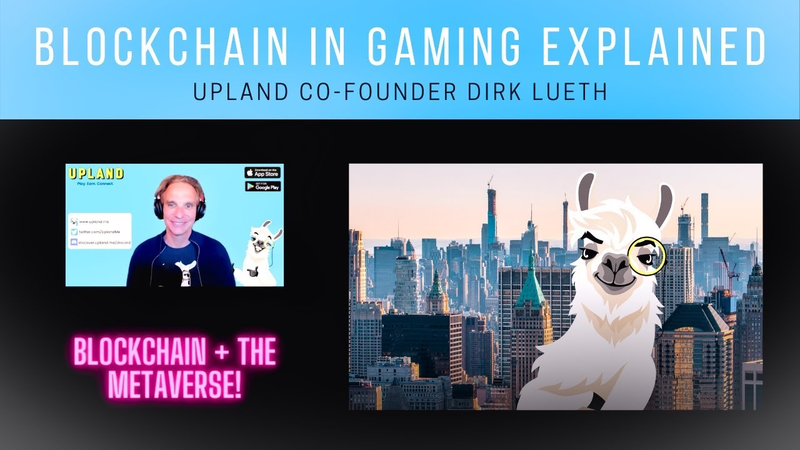
Blockchain Basics In Gaming Explained | Upland's Dirk Lueth
Key insights
6 takeaways- 01The transition from closed entertainment loops to open, user-driven economies is facilitated by the integration of non-fungible tokens, social tokens, and decentralized finance.
- 02Blockchain technology enables true digital ownership by providing a transparent, immutable ledger that allows players to extract tangible monetary value from their gaming activities.
- 03Mass adoption of blockchain gaming is currently hindered by high technical friction, specifically the complexity of managing digital wallets, private keys, and security protocols.
- 04To achieve scalability, developers must abstract blockchain complexities to match the intuitive user experience standards of traditional mobile and web applications.
- 05Upland serves as a model for this evolution by mapping a virtual metaverse to real-world geography, allowing users to purchase, develop, and trade digital property.
- 06The industry is trending toward persistent, community-driven digital spaces where virtual interactions carry economic significance comparable to real-world environments.
Ask AI about this video
Transcript
hello everyone today we are here with dirk lute co-founder of upland upland markets itself as a metaverse of sorts where you are able to buy sell and trade virtual properties in the upland world so the focus of conversation today is going to be about two topics that even as someone who's been in the game industry for the past 10 years i just don't really understand that very well and that is first blockchain applied to gaming and two what is the metaverse but first welcome dirk yeah hi hi joe thank you for having me excited to be here great so i thought we could start with kind of blockchain basics so i'm going to mention a number of terms and just pretend i don't really understand these terms very well and if you can explain them to our audience that would be great because i actually don't understand these terms that well but i thought we could first start with essentially like bitcoin versus ethereum when people
think about these two these two currencies could you explain what they are and what the primary difference between those two are yeah absolutely so bitcoin was let's say the first uh it's a cryptocurrency which was launched a little bit more than 10 years ago now um by someone who nobody knows who or she or this group is called satoshi nakamoto and um the basic idea is this is a store of value where you can exchange you can use uh bitcoins to pay for things even though when i say store value it's probably better to to to just you know to save it and to put it back and you know to for for later purposes ethereum was then developed some years later and under the leadership of vitalik buttering and um this is also based on so-called blockchain technology very much like bitcoin which has invented in a certain sense this blockchain technology and um ethereum has one advantage it has it has a different aspect is
it's actually a programmable programmable blockchain that means you can actually put apps on top of it and that makes it different because bitcoin is basically just a currency while a theorem allows you to put apps on top of it however ethereum also has a as it has its own currency called ether which are traded also on on exchanges great and then what about blockchain itself can you explain in a simple way what blockchain is yes blockchain is a distributed ledger where actually you see um transactions which are publicly recorded you can always look at them up and when i always try to explain the famous you know to explain it to your mother type of thing you know what is blockchain you just pictured that you have uh eight people who don't know each other sitting around one table and person and each one of them has let's say a ten dollar bill in front of them and um so person a now says you know i'm gonna
give now person b a this one dollar this ten dollar bill so all the other people can see it and can verify it yes person a gave it to person b and that's very much how blockchain works and you know you can always see it and it's secure and lots of other things but this is a very not very easy explanation of the idea of blockchain okay and then when people talk about social tokens what is meant by a social token yeah this is actually quite new and social tokens are actually could be relevant for you joe because it's actually for creators and for communities so the basic idea is that you as a person when it's for an individual you do what is called maybe a token sale about yourself you issue maybe the joe token right and then everyone who purchases that joe token then we actually have access to certain things you promised to them so one could
be for instance uh you give them access maybe to a one-on-one call right maybe when they have a certain amount of tokens you have a one-on-one call you can you know only those who hold this token can have that or you can promise maybe we give them you know some future revenues you tell them okay you know the future i'm going to share 10 of my revenues with all the sto token holders so that's that's possible when you speak of a community token which is also kind of a social token is where people will get access maybe to a discord group right if they hold the token and there's a lot of other things it's very much like at the intersection of loyalty token and and so on so that's the basic idea of a social token right and then nft so nft stands for non-fundable token so we were mentioning earlier bitcoin or ethers these are all tokens which are all x let's say exchangeable very much like a one dollar node when i give you the one dollar note the next dollar note exactly looks the same so you cannot tell the difference
and if t is um the non-functional token is really when it's unique take a drawing in the real life so it's only one piece exists for associated with that particular token okay and almost done here so uh second to last is d5 yeah d5 stands for decentralized finance and this is a quite hip in the whole uh let's say crypto industry right now is where actually i own some virtual or some digital assets and i put them somewhere just so as one example in order to maybe collect some interest so i stake my token somewhere and because i stake them those people who did receive them they can do other things with those tokens and i get some kind of an interest back so that's what what is but there's much more to decentralize finances finance as an industry in general is of course the very broad space got it and the final term just in terms
of mining what does it mean to mine whether it's bitcoin or some of these tokens yeah mining is basically the process to verify and i don't want to go to technical here you know blocks on on the blockchain and you have a lot of mining companies who has who have computers and they actually take a look and they verify they do some mathematical puzzles and so on and they do that because for the work they do they actually mine bitcoins and that's the basic idea of of mining and so just generally speaking when we think about what the problems so can you talk about what problems is blockchain blockchain solving which wasn't possible before so as i mentioned earlier with my example when people sit around the table and everyone can see what the others have have been doing and that's that's one of the main benefits now is that it's it's it's transparent i can see i
don't know that really is joe's doing this transaction but i can see an abstract address i know this i can verify that this transaction has really happened so transparency is a very very important asset and i can exchange then also value between different different stakeholders so that is very important and one one thing is also blockchain is a ledger or let's say a database technology when i'm a gaming company before i as a gaming operator i could always change a database entry and you know whatever i want to do however the blockchain it's immutable that means it cannot be changed anymore and this creates another level of trust for players because they know okay this transaction cannot be reversed by anyone who says arbitrarily i don't want this to be happen and so when we think about these capabilities that you just described and think about gaming in your opinion what are like the potential applications of whether it's crypto nft blockchain or to your point you said
that social tokens may be something that's more applicable to me but could you speak about what are the current key applications or what are some of the applications that you're most excited about in the future so um it started out of course being a currency then you have the whole d5 but now it comes and it's already big in in gaming because gaming obviously always was dealing with digital goods and exchange of goods now you're adding this whole component that you can exchange of value and what is completely new with blockchain and this is what was not possible in that way before that players will be able not to just to extract let's say entertainment value out of a game they are also able now to extract monetary value and this is what makes it gives now completely new use cases also especially for for games okay are there any in particular like if you think about current applications of blockchain to games are there any popular applications of blockchain
today so where where blockchain is very strong at the these days is especially in let's say collectibles so where people in in the digital art space so you have a lot of websites that are called soul rare or wearable who are offering you know artists to upload digital art and they can sell that as form as an nft to people who are interested in that art and there are several reasons why people buy that some people just like the art the way it looks others say you know it's maybe some kind of speculation hopefully increases in value and all these these kind of things but the big advantage in that case is because when you when you compare it to the real world art when you have a let's say picasso somewhere and you purchase it first of all you have to go there to to to the place physical location to do and then maybe participate in an auction then you once you maybe bought it then you have to take it with you to transport it in the plane well because the drawing itself will be difficult to transport
but it's way more difficult that's why people say especially in the digital art space there's a huge potential because it's so much easier to to exchange between different different stakeholders um and then the other component is the collectibles what you see currently is that uh you know there's one example is what is right now it's quite big as mba top shots where people can purchase some some unique you know videos uh which are secured on the blockchains so there's a other other possible applications which which makes it really really compelling use case for blockchain in terms of like whether you think about the key risks or the current impediments to wider spread adoption what do you think those are why haven't we seen greater adoption of blockchain in games or in other applications today yeah even though blockchain gives you this new benefit meaning you can extract monetary value but
the way you can extract it is still quite complicated so when you want to purchase something on blockchain or on a blockchain game normally i come later to upland because we do it differently you have to set up a wallet so that in itself is a complicated process you need to understand what the private key is you need to handle so-called passphrases and this makes it super difficult let's say for the average player to to to get into this whole world and that's why you really need to obfuscate this complicated aspect and and and find other ways what people are known what people are using every day and in order to attract and then to come achieve mass adoption so just to kind of dig a little bit deeper into that so is that is it primarily the the interface in which your your kind of whether it's you know like let's say i'm i'm purchasing a collectible and the way in which you actually interface
to to get your collectibles is that the main problem or could you expound a little bit more in terms of the specific problem you're seeing yeah that's the that's a problem i'll give you one example is uh so when you want to purchase something on ethereum um there's a there's an application called metamask so first of all when you you cannot just go there and enter your credit card or whatever what you need to do is you need to first download the metamask then you need to install those those private keys and passphrases you need to do this is what is really complicated people are scared also let's imagine you purchase something and some some of the digital art has been sold for you know a hundred thousands of dollars already and when you lose your private key when you lose your your passphrase this month this is gone right this is really scary for a lot of people right i mean people don't care probably when they lose something for five dollars some of course do right but but uh but if it gets to higher amounts and then and then you you know then
someone steals your private key or so when you write it down somewhere on a paper and someone finds that paper then it's actually it's gone you don't have any protection and that's what what is a really big big barrier for people to to enter of course then they see all the fluctuations and it's now in the mainstream media that price of bitcoin going up and down right now it's going all the way up but you never know if it goes down completely again and that also is another reason why people who are a little bit more risk-averse are not yet entering that whole space so maybe we could talk a little bit more about upland specifically then in terms of could you tell us more about what upland is and then how you're integrating blockchain yeah absolutely so upland is uh so we got inspired by the board game monopoly so everyone knows what that is has played in their young and that was upland is basically upland is what we call a metaverse and we come to later a little bit whether that is a lot more diverse but it's uh it's based on actual addresses
so we're currently live for the cities of uh fresno interestingly that's uh come to a little bit later but new york and san francisco where you can purchase a property um which is when you have a when you zoom in into upland it's very much like a map application you zoom in you see the property borders and you can purchase let's say two three four two three four four post street in san francisco it's very simple once you purchase that property and it's just a parcel you start earning income on it and we call um call that yield and it's uh apex which is our in-app currency so that's that's a very simplistic way of you know getting into into upland but basically upland is based on three pillars play earn and connect so the first one is play that means once you purchase the property we have collecting uh you can complete collections that means you can collect properties which have the same characteristic let's say the same properties
on the same street or maybe three museums and so on and the more ra rare a property characteristic is the you know of course the harder it is to get them and but then also your yield on those properties increases because when you complete a collection you get a one-time boost and again when it's more rare you get a even higher to uh to a three-time boost so that's part of the play another part of the play component is um that we have treasure hunts we have scavenger hunts we have live events in the app so it's always something going on and it's a it's a lot of fun so that's the first uh pillar the second pillar is now where we're currently launching is called earn and this is what is also so new about blockchain is that people are will be able to develop their properties they can put buildings on it or decor and other things very much you know what you have maybe on sims and other places and um eventually people will be able to operate a business in
on their property in in their building so what kind of businesses are there it's just i just mentioned decor so maybe you want to run in a virtual decor shop and that's also very much a big differentiator what upland is and compared to let's say more traditional games that means the players will be running that decor shop and selling maybe a fence saying a virtual fountain or something to other players and it's not us upland the operators and they can sell those assets for either our in-app currency apex or and come to that in a second also or for um for your installers but this urn component can also have other other ideas so for instance maybe you render services to someone maybe someone has a shop and he needs uh someone who sells actually the goods so you can actually go and start earning some money so this is quite important now and we have also what we are launching is called nft galleries um so what we mentioned the
these digital art so you will be able to import art from other blockchains into upland and then run an nft gallery and sell digital art to other players so that's also one type of business virtual car dealerships and all these kind of things which will which will uh launch and then the third component of the play earn is connect you see that also on top here so that means people can go and meet in virtual settings like a virtual coffee shop and virtual you know universities or virtual you know sports arenas and they can meet there you know chat with each other maybe exchange some digital goods and so on so that's what what upland is and upland is available right now on ios android on the web um and as i mentioned we have also capabilities and it's a big differentiator to for users to actually sell the digital goods for us dollars and so just to dive a little bit more deeply so i fully understand what upland is so let's
take that first piece so it sounds like you're saying that you've got specific cities in the upland properties within the upland virtual world does that map one-to-one with the actual physical real world in terms of the property yes but but that the house itself could be different is that right where you would be building your own house and you can kind of but so it's like the parcel of land is what you would be investing in and then you can build whatever you want on top of that is that how that part works yes this is this is true yeah so you basically just you know when i said you have this map application you zoom in and you see the parcel and you have the real world borders property borders right we're partnering there with a with a third-party company who provides us this kind of borders and um and then you can start putting something on there what you want because our slogan has also rebuilt the world that means maybe today there's a skyscraper on in the real world but maybe you put a small townhouse on it so that's that's possible and you can run maybe in
the real world there's a let's say a car dealership but you decide to run a coffee shop there right this is all possible what what you can do however we expect that uh people who own a shop in real life that you know this will somehow merge so when i own this coffee shop in real life maybe i have an incentive to also own the virtual version because now i can maybe get people you know come there you know once in a while uh you know just not virtually but also in the physical world and then do things so it's going to be quite funny uh quite fun to see how people will will blur those kind of things the only exception when we say it can be can be put anything what you want on top of that parcel is when we speak about landmarks but we said okay we still of course once you have the map which looks of course like san francisco or new york but what we also want is that you know let's say there's important landmarks like like you know statue of liberty you know you have maybe you know the with the trump tower which we saw the
new york stock exchange um so so these kind of these are landmarks where we say okay those will look like in real life so we will do three models which resemble the the building in in in in the real life got it and so you can also you get some yield by owning these properties you can actually build businesses in the virtual world but then you also said you're supporting like a user-generated marketplace so people within upland can create items that can then be transacted sold and things of that nature the other part was you're also creating a marketplace where you can sell art and other items from outside of upland so that's kind of interesting you're bringing it in and then you're using the community of upland as a marketplace to buy outside of upland digital goods is that correct that's that's correct yeah so the the idea is really so we we will not buy parcels back as upland right all the purchases and you know supply and demand everything happens
between between the players themselves so if i purchase now let's say the new york stack exchange to give you one example has been sold for 23 000 um dollars or which is 23 million epics because one dollar equals 1 000 updates in our world and um so so this because the new york stock exchange obviously has some some interesting you know business potential and some others might buy it from the from the original first owner and this you can now do for any digital good in upland going forward so when i purchase maybe a nice car right maybe i i drive it in quotation mark virtually for one year and then i decide to play to sell it to another player and i sell it maybe a little bit maybe it's a little bit cheaper than uh then i bought it because i've used it obviously and um and then i can find a find for secondary purchaser market purchaser and kind of and then finally that that last connect piece where you're having people be able to meet within upland and kind of talk and potentially transact is that
the main way that you hope to engage and retain players within upland yeah i mean right now we already have a very very engaged community on discord mainly on discord where where they creating also additional all sorts of content like like of course videos blogs uh rap song podcasts and so on and we want to capture that so if you are somehow let's say also let's say when we take the virtual coffee shop and you are you know maybe a video producer maybe you want to invite some people to to come there and people have then the reason not to watch the video on youtube but they come to your place right you know and we have to see how that evolves right now there's a there's an app which called clubhouse which is super successful uh where people just meet on on audio basis and you know we have very similar similar ideas with different you know different ways of communication maybe some of the you know meetings will be in video some will be just some text some will be in in audio so so that's that's what
drives people always back coming back to to the app but the app in order to retain users it's not this is one big component is this social component which i just mentioned but there's also all this game loops and game engagement points we have so we have it's just fun to be there and to do treasure hunts against other players and to participate in a live event that drives people all the time back and of course when you are putting money or when you're operating a business right you always want to check in you know just like in real life how is my business doing and this is also something which is of course naturally will drive people back into the app so i thought we could next talk about the metaverse and it seems like you have a very interesting product in the sense that you're kind of mixing elements of blockchain and metaverse and so could you speak to i mean we already see some elements of metaverse in terms of land and you know kind of gender user generated content and things of that nature but could you maybe let's start with what what do you think what is your definition of a
metaverse yeah there's a lot of definitions and what's really the right definition for me it's super simple for me it's a parallel world where i take another or maybe the same identity so and we have lots of people might have seen the the movie already player one and that's perfectly a metaverse but the metaverse is also when you when you play fortnite for instance right it's also a metaverse as such however the main differentiator of a blockchain metaphors is that you have this component of selling goods and transferring value between stakeholders or between players that's that's what is new for blockchain material versus right and so within upland could you talk about that in terms of you know how would you how do you describe a plan's version of the metaverse and i i guess we can see the blockchain elements of it but maybe you can elaborate a little bit in terms of what your plans for building out the metaverse and upland are yeah so i mean maybe to add on on the
previous explanations i think meta was also some kind of a mindset so you go in there right and because most of the people associate materials with some kind of virtual reality experience and so on which is probably true but we all know that virtual reality is still a bit further out or you have maybe some 3d environment and so on so but first of all it's something where you go in you start thinking you start strategizing when you play the game or when you meet people and all these kind of things it's something which which takes part of your mind so that's that's that's one thing of the metaverse um in terms of specifically of of upland um that's just exactly the way it is right now now because we are based on the real world now you can purchase um when you when you purchase your parcel now you put a building on it and then others people can walk through the streets see the buildings from outside and then eventually can go into those buildings and then there's something in there either it's a gallery or what have you right or coffee shop and so on and then you can move move around in those stores so
those those places that's what the metaverse makes it so so compelling because you you're taking you know yourself somewhere else but in gaplin's case it's somehow still connected to the real world because i clearly see also um once the whole pandemic and things are over we hopefully go back to normal life and technology advances when you know for that you know those augmented reality glasses will come out one day right so i clearly see also that an upland user maybe one day carries its his augmented reality glasses walks through a street in in his city and then sees a coffee shop but he sees maybe something else what's what's there in real life and can do maybe something else what he could do in real life so he has additional possibilities because of that and that's part of the metaverse it's not just it's not completely isolated immersive experience it can be in upland's case really blend with the real world my last question is really around the potential evolution of the metaverse and
you know you mentioned ready player one for example but in terms of when you think about the upland metaverse what will how do you view the upland metaverse in say five years in 20 years how close do we get to ready player one or what is your eventual sort of end game in terms of the evolution of uplands metaverse yeah it's a very good question so i think in five years we always see how technology also evolves in a certain way right but when we when we when we can pursue our vision and that's a lot of people will play or will be in the upland meta verse i see that in five years many people will be there and spend some of their time there so instead of being maybe on a social network they will be in upland meeting their friends in a coffee shop or new people you know who have like-minded interests and and do some stuff there and participate in some local events and what have you so that's that's something but it's still you know let's say it's still clear that you are somehow in that
you know that let's say artificial you know environment for such you go there and and so on in 20 years however when technology has advanced i see clearly that this is going to be completely blurred so it's not clear sometimes and it might be a little bit abstract are you now in the real world or in the upland metaverse where where are you right now in a certain sense because somehow it's it's just mixed up and uh and you're you're doing different things uh which are just you know it's just it will feel natural um that you that you navigate yourself through those different types of worlds when i when i see the way i see it got it okay well dirk i want to thank you very much for your time so dirk for the audience please do check out upland i think it's a very very exciting product and definitely you know you're at the forefront of of all these new changes in technology blockchain and metaverse and things of
that nature so i think it's very interesting but maybe if dirk if you have a last message for our audience and if folks are interested in contacting you or checking out checking out upland where should they go yeah you see that actually here and oops in my back yeah i'll get confused that's how i know again so yeah you see our internet uh upland.me you can follow us on twitter or join us on discord um so it's really you know that's very easy and you can also of course find us on the app in the ios store google play store so yeah no join join upland join the community it's a great community it's not all about playing it's about socializing with others and i think you will enjoy the time when you when you're there all right great well dirk thank you again for your time and that's it thanks everybody [Music]
[Music] yes [Music] uh
Summary
Blockchain technology serves as a foundational layer for the next generation of gaming by providing a transparent, immutable, and distributed ledger that facilitates true digital ownership. By leveraging non-fungible tokens, social tokens, and decentralized finance, gaming platforms can transition from closed entertainment loops to open, user-driven economies. This shift empowers players to extract tangible monetary value from their digital activities, fundamentally altering the relationship between developers and their communities.
The primary obstacle to achieving mass adoption remains the friction inherent in current user interfaces. The technical requirements of managing digital wallets, private keys, and complex security protocols create significant barriers for mainstream consumers. For blockchain gaming to scale, these processes must be abstracted and simplified to mirror the intuitive user experiences found in traditional mobile and web applications.
Upland exemplifies this evolution by mapping a virtual metaverse to real-world geography, allowing users to purchase, develop, and trade digital property. Built on the pillars of play, earn, and connect, the platform enables a persistent economy where participants can monetize their assets and interact within a social hub. By bridging the gap between virtual and physical environments, the industry is moving toward a future where digital interactions are as meaningful and economically significant as their real-world counterparts. This trajectory suggests a long-term shift toward integrated, community-driven digital spaces that are accessible across all major mobile and web platforms.