1 free read left. Create a free account for unlimited reading + AI research.
Create free account
Wen Metaverse? - The Metacast by Naavik
Key insights
6 takeaways- 01The metaverse is evolving from static 2D interfaces into a persistent, synchronous 3D internet, currently represented by prototype platforms like Roblox and Minecraft.
- 02Interoperability remains a significant hurdle, meaning the industry will likely persist as a collection of walled gardens rather than a singular, open ecosystem in the near term.
- 03While blockchain and Web3 are often cited as solutions for decentralization, a truly open metaverse depends more on the industry's willingness to adopt shared protocols than on any single technology.
- 04The development of the metaverse will be defined by a two-decade tension between the push for user-owned, decentralized infrastructure and the practical dominance of corporate-led platform development.
- 05Current monetization is dominated by centralized gatekeepers, necessitating a shift toward more equitable economic models that grant creators and users greater financial agency.
- 06The primary driver of this shift is a demographic under 25 years old whose social identities and consumption habits are already anchored in virtual, avatar-based interactions.
Ask AI about this video
Transcript
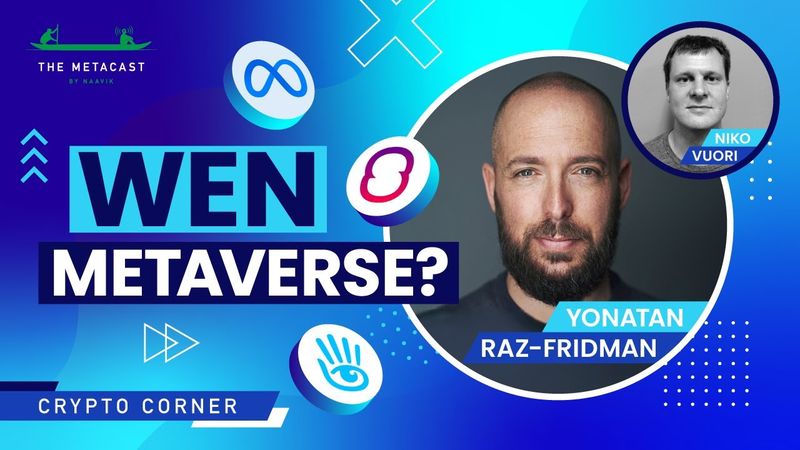
[Music] hello and welcome to the medicast cryptocorner brought to you by navic I'm your host Nick o'vori today we asked the question when metaverse there is a ton of hype around the notion of the metaverse and there's no shortage of companies trying to build it we have lots of operations like Legacy folks like Second Life they've been around for years trying to do this we have huge Tech giants like meta trying to Brute Force essentially their way into a metaverse play by spending billions on it every quarter we have medium-sized players large players spending how you look at it that Target particular consumer segments like Roblox does with with kids and young adults and then we've got newer startups like decentraland the sandbox and a whole bunch of others that are building on blockchain embracing web 3 and making that the metaverse pillar that they're focused on but what really is the metaverse what does it even mean and
many of us by now know that the term itself metaverse was coined by Neil Stevenson in his 1992 science fiction novel snow crash which envisions a virtual reality based successor to the internet and you know people are using digital avatars of themselves to explore this online World which is often uh very dystopian or the real version of it at least is but since then the term has come to mean lots of different things to lots of different people and so to unpack what the metaverse really means um or what we think it means and where we are in this hype cycle for the metaverse we have one of the best thinkers writers podcasters and operators on the subject and that is Jonathan Ross Friedman he is the founder and CEO of supersocial which develops content and games for the metaverse uh he's also the creator of into the metaverse which is a substack newsletter and a podcast which surprise surprise covers the metaverse in pretty much as much depth as you could possibly want so I can think of no better guess than Yan
to answer to the question when metaverse so Jan without further Ado welcome to the pod thanks for having me Nico and appreciate the kind introduction awesome awesome well we're going to Dive Right In Here um and we're going to get to to the first question which is tell me about yourself you know what is super social do what was your journey into building for the metaverse look like um and where do you see it going from here you know what gets you excited and out of bed in the mornings so you know my journey actually started I I would say observing the category already in 2012 when I started my first company cono Computing which was a computer kids can build and code themselves and because I was building a consumer product for essentially that audience right anyone below age 18 I became quite familiar with all the other platforms and software services and applications that existed anywhere from games like Clash of Clans to these new entrants that took over the world by surprise especially Minecraft in 2012 2013 exploded and then later on Roblox
really started to pick up in 2015 even though it was founded in 2007 and so over the last 10 12 years I've seen I had a first kind of first row seat at looking at the category evolving from something that either very much Gamers have played with if it's World of Warcraft and games like that or kids in platforms like Roblox Minecraft and even before that Club Penguin which everyone no don't forget about Club Penguin don't don't fade Club Penguin that was amazing um yeah exactly and that was probably like the first sort of you know 3D kind of Social Network for kids which explains why Disney you know bought it and then obviously in a Disney fashion did nothing with it um and so I had a front row seat over the last decade into the category of virtual worlds and when kovit accelerated uh kovit arrived in you know early 2020 all of these dots all of the things that I've done in the prior 10 years while also being a gamer and seeing the category evolving and also realizing that those kids from 10 years
ago those 10 year old kids who were playing are actually now creating worlds and content on these same platforms like Roblox like Minecraft and you know later on also fortnite creative mode emerged as another Frontier so it sort of was very abundantly clear to me that virtual worlds are going to be so much more than just games they're going to be almost like the next modality of the internet after websites after or iPhone apps not that these are going away but virtual worlds in 3D could potentially become the main user interface the main user experience of the consumer internet and the Enterprise internet in the next decade and I decided early in 2020 to make a bet and start by building a metaverse company that would develop publish and operate these iconic Virtual Worlds by initially starting on the Roblox platform and and there's a lot of reasons why we started on the Roblox platform but that was sort of the hypothesis and why we started the company and what gets me excited is two
things helping to imagine what Virtual Worlds actually mean for the future of the internet what are those experiences that we can build with original Ip with brands with IP owners with Enterprises what are those worlds can be and how do we build meaningful experiences for a new generation of consumers and then the second thing is building an organization that is powered by both people with experience but also the new Creator generation people who grew up on these platforms and building an organization in a DNA that bring these two things together to create those iconic experiences so that's an amazing intro answer uh there is so much to unpack there um you know I've scribbled notes here around all the things you said which are all amazing but all of them you know I'm not saying they're buzzwords because they're real and I know that these are these are things that um you know we can latch on to but there's a lot to unpack right and so maybe the first thing first things first
I mean you've mentioned things like virtual world it's the next modality of the Internet it's the main user interface into the consumer internet um you know those are those sound big big Ideas let's see what actually Lies Beneath so um you know in my intro I mentioned that the term metaverse was actually coined by Neil Stevenson I think most of us know that by now 1992 so not that long ago fairly recently um and you know most recently it's probably been popularized by um Ernest Klein's novel Ready Player one and of course the movies that Steven Spielberg made the novel was amazing if you haven't read it I highly recommend it the movie not so much uh my my personal view I'm sure many people liked it um but I think a lot of people have taken a view of like oh the metaverse is this thing where you put it on your head it's a headset it's a VR world and you go and you escape the real world and you go into this virtual world and you do it through a piece of hardware and then some combination of software um is that the right way to think about it you know what is your thought on the
idea that we need a piece of Hardware that we put on our heads and we exist in this virtual world um is that the right way to think about the metaverse what is your definition of the metaverse so I I would first say what I believe is critical for a metaverse to emerge and then maybe actually let me say what what I believe the metaverse is ultimately could be and we're very very far from that and then I think what what are some of the critical components I'll I'll probably piggyback on some definitions by folks that that I appreciate their opinion and thought leadership as well like you know Matthew ball for example but also you know Dave bazuki team Sweeney firm from from Epic you know people who have a like team and Dave that have actually been building stuff for the past 15 20 25 years when we just uh thought that reading the book is sufficient they actually build companies and build game engines and platform that are now so important on the internet in my mind looking at all of these
thought leaders I would Define the metaverse in my opinion as a network of Virtual Worlds that are interoperable that are synchronous that are persistent where people can also carry their digital assets and identities with them from one place to another and in many of those things these Virtual Worlds can be about games can be about entertainment experiences could be a lot of different things most of which do not even exist yet necessarily which is why this space is so exciting now this may not may or may not actually happen right because when we talk about these other buzzwords that I just mentioned like interoperability like persistency like synchronous there needs to be a whole new protocol layer and internet built on the existing internet to actually enable real-time interoperability where you and I can actually jump from one virtual world in 3D to another virtual world in 3D and they're collaborative and they're open and I can we can carry our assets we I mean these are really really really big
fundamental things that needs to be built enabled collaborated by companies and it may or may not happen no one knows is blockchain relevant unclear yet right however I actually think that for a true metaverse which in my mind is the not only a Gateway into a persistent synchronous expansives hypersocial virtual world in 3D to emerge I think there's another really important component that very few people talk about and it's called real life I actually think that there's not going to be a metaverse that is Meaningful without the connection between real and unreal because I think if all we do ultimately is build a virtual and network a virtual world that are isolated from real life we will end up with something that is quite dystopian where people need to run away to Virtual Worlds from reality and I think we're going to miss on a really incredible opportunity of not only how do we access
these Virtual Worlds these network of virtual worlds but also how that content those identities those digital assets interact and amplify our existence as actual real humans and this is my issue well not an issue this is kind of the other thing of getting excited about these dystopian stories like snow crash Ready Player one which are actually great stories and they do portray in my mind a danger of what the world could look like I mean if we end up really in 2049 and I live in Columbus Ohio where ready to play one happens right if we end up waking up in 2049 and the world looks like it looks like in Ready Player one I mean God help us all that's not a reality we want to actually live in we don't want to live in a world where 24 7 we would just want to run away and have a headset on our head so I think the connection to a positive world is going to be really important to create meaningful metaverse in my mind that connects the real and the unreal to create one symbiotic experience for people with virtual content with virtual
experiences that amplify and is Amplified by real life so that's one thing that I think is really important to call out the other thing is that when we think about these Virtual Worlds at the moment we really need to unpack what it actually means and to today to a large extent they all feel very much like a video game and you know what that's okay I'm nearly not worried yet are we really going to get to that metaverse let's get there as fast as we can I'm quite deterministic that I think some of that bigger vision of what the metaverse could be ultimately will happen could take five years 10 years 20 years what we do have at the moment is metaverse type platforms that in and of themselves potentially enable interoperability carrying your identity and assets and and if you look at platform like Roblox for example you're starting to see that some of those principles that we've outlined about quote unquote metaverse already exist to some extent in these prototype platforms now these prototype platforms are not going to be the all-encompassing internet just like
Facebook and Google or not the internet they are applications that run on the world wide web I do Envision that the V1 of the metaverse in my mind will be this collection of platforms that are not necessarily interoperable between themselves but among them inside them we do enable some metaverse experience and metaverse into interaction and I think that's probably going to be the best and the closest we get to a metaverse within those isolated Realms and then you know 10 15 20 years from now let's see if those things interact with one another well so much more to impact there um I'm going to focus on one thing um because you know interoperability has been one of these big buzzwords um you know we talk about the notion of there's one metaverse to rule them all you know of course and a Ready Player one that's that's what it was there was one metaverse that you know literally did rule them all I'm sure you know Mark Zuckerberg would be very happy if the meta vision for whatever the metaverse is going to be is the one to rule them
all just like you know Facebook is the social network to rule them all essentially um but I think one of the things you said uh that I'm going to latch on to here is we need collaboration uh and we need a protocol layer approach to actually making sure that the stuff is interoperable and I I couldn't agree more with you by the way um you know right now it's very disparate everyone's rushing it's a it's a land grab it's a gold rush um and you know a lot of companies are raising a lot of money or spending a lot of money or both um to try and build their version of the metaverse and of course as of right now none of those are interoperable they're the they really aren't there's no way to take your Roblox assets into the sandbox and vice versa right like it really isn't even if there's like a intention like oh we'd like for that to be a thing so talk to me about this protocol layer piece I think that's super critical because without that color collaboration between all the different players who are actually looking to build this and for there to be some understanding just like the internet you know when the internet first came to be it could have been a series of mini internets that
were all corporate owned or university-owned and it was only because the the open protocols uh enabled this singular vision of the internet to come to being that it came to being there was altruism there was uh you know a lack of profit motive uh like these are all things that are very rare in human existence so how do we get to a you know a singular version of the metaverse and by singular I don't mean that there's just one of them like there's a Ready Player one but a version of the metaverse where you actually can take your assets from one world to another and you can actually interact from one place another and it's not a series of Walled Gardens talk to me about the protocol layer as you see it I mean that's the gazillion dollar question right how does that happen I do want to say on a side note that in the early days of the internet there were companies that tried to I to create a mini internet AOL try to create exactly that which is exactly why they failed because it wasn't possible you cannot contain the power of the internet in one
website and and they learned it and ultimately they failed and today they're worth you know a fraction of a fraction of what AOL was worth in the early 2000 or the end of the the previous millennia and so I think what's happening now is very much an example of what happened back in the day the difference is that we're talking about things that are way way more complex in orders of magnitude more complex because you're talking about a 3D internet that at the moment the World Wide Web is not designed for that type of scale not the world the amount of data the the the the bandwidth that we need in order to enable 3D interaction in real time across multiple devices all over the world I mean we're really talking about a whole new infrastructure that needs to be built but let's put that aside for a sec on the interoperability it's not just about it's not just about how do we enable the end user to move things around I actually think the interoperability starts with the development and the creation side of things and so when we
think about the way you build on Roblox today there is a Roblox engine it's called studio and there is Roblox protocols and there is an infrastructure that is very much closed within the Roblox ecosystem and Roblox doesn't play with other pieces fortnite creative as their own environment it's built on a different engine they're actually integrating the Unreal Engine sometime in the next year into fortnite create Minecraft is a whole different thing let alone decentral and then sandbox and so I think the question starts with how do we make sure that that infrastructure of development and Creation in and of itself is actually interoperable because I think if we get the infrastructure level to be open collaborative example of that would be what Nvidia is trying to do with the Omniverse right they're they're integrating a bunch of different tools blender Maya Unreal Engine you like there is a bunch of set of tools that the Omniverse allows you to integrate because Nvidia is not trying to be a platform they're trying to be an enabler as long as of course you use their incredible computational application
um but nonetheless companies like Nvidia I think are at the Forefront of trying to enable that sort of open protocols um and so I think for me it starts with the creation and development and making sure that the assets I'm creating on Roblox let's say I can actually use those assets in a different platform if we don't have that collaborative environment of development it's going to be even harder and even more complex to enable the users to take something with them because what are they taking with them Nico they're taking assets what are their assets their files what is the format of those files well let's go back to how they were created so when we talk about interoperability and enabling these open metaverse that a lot of people dream about we are going to fundamentally need all these amazing companies Nvidia Unity Roblox Apple Google I mean we're not even starting to talk about those companies Facebook to really want to enable these shared ecosystem just like the World Wide Web was built I don't know how realistic that you know
for that to happen because you're not talking about a bunch of small little startups yes let's collaborative one plus one equals five you're talking about some some big massive companies each of whom is investing hundreds and billions of dollars every year in developing their own ecosystem and so I don't have a good answer of what needs to be in place outside of these companies will just have to uh collaborate and enable those shared ecosystems however just like what I said about AOL and the internet I do believe and this is a hypothesis I do believe that companies and platforms that will not make steps to be more open and collaborative ultimately will not be the winners of the category that's just based on history closed platforms do not win I mean let's see what happens with apple we're seeing now in Europe how they are now being forced to allow app stores within their ecosystem I think that trend is pretty clear that
the world Regulators are going to put a lot of pressure on platform to be more competitive and to enable competition and I think Roblox is just too small at the moment to be in the conversation but it's virtual world over the next five to ten years become more a bigger fundamental role in the internet and I think that's the time scale I'm looking at five to ten years probably you and I can have a more comprehensive conversation I would say in 2028 29 30 20 30 on okay now what we do are we in the right trajectory of enabling an open metaverse because I think the next three to seven years are still going companies are going to be obsessively focused on themselves while they talk to talk about open metaverse so I have two questions here the first one may be a quick one um will this metaverse or this vision of the metaverse that you and I probably both share which is this you know open world where sure there's like different worlds you can pass through but you can take
your assets you can go from one to the other will that Vision have failed if these companies do not collaborate if we do not see that vision of this protocol layer happening over the next five 10 15 20 what whatever number of years it is um will it have failed or is it still possible to have a satisfying satisfactory um holistic metaverse or series of metaverses if that doesn't happen you know one of my favorite equations in life is uh dream minus reality equals uh happiness so the dream is completely open interoperable internet in 3D where we jump around and carrying our identity and and there is one big thriving virtual econ that's a dream now although I'm a dreamer I'm also relatively pragmatic entrepreneur I I don't see how that happens in the next 10 15 20 years I I just think there's just too many complexities of
how this just happens overnight I think in 15 20 years maybe it's more realistic I think what we're going to have until then and maybe for a very long time is a collection of essentially of of websites and platforms that represent the ideal of a metaverse within their little Enclave and I think they're going to be probably three major Platforms in the western worlds I think I exclude China because they have their own they have their own worlds um and I think in the Western World you we will have three to five just like we had three to five big social media companies and I think those three to five companies potentially each of them will have certain metaverse like identity and infrastructure that enables what we just talked about interoperability carrying your identity and so on so forth within their world Garden that is what I expect for the V1 of the metaverse to become and I think that will persist for I I mean I'm not I don't want to predict but
but I think it will persist for at least one or two decades and one more thing and you know what I don't think that's that bad I don't think that's that bad first of all let's be deterministic like it's happening right if we want it or not and I think ultimately what's really going to impact is where people go people will go where they want to be and the reality is that with all of the dissatisfaction on The Economic and Business model of applications like Instagram and Tick Tock and Facebook and Snapchat majority of the world still happily interact in those platforms and those tools so I don't see um Global billion people riots against what's happening which makes me believe that the the next wave of the internet will have a lot of similarities to the to the current uh era of the internet just in a different modality that is 3D with many more opportunities for creators because I think some of these platforms are
definitely democratizing the power of creation and creating wealth and generating income but I think there is going to still be a lot of similarities with how the current ERA of their internet is established until we really reach some fundamental breakthrough in technology policy regulation where potentially things like blockchain and crypto or something else that we haven't even thought about yet that enables a more user-owned internet to come to life so yeah so this actually you just literally just hit even harder on the point that I was going to make now or the question I wanted to pose to you which is um you know the first version of the internet or you know internet 1.0 if you will or web one was a very decentralized Place uh it you know it was a very utopian vision for the internet and you know Against All Odds um it came to be right it's this open web and it's an open protocol and it's anybody can build on it and you know web one was was kind of the almost the Democratic vision of what we're now talking about for the metaverse came to
be web 2 in some people's opinion is a big step backwards because it's a much more centralized version of the internet that's I've got Gatekeepers like Apple and Google and Facebook and you know these huge companies um that essentially own the customer owned the user experience and it's a much more centralized versus decentralized vision of the internet or or experience of the internet for the certainly for the end consumer and my question to you is you know as we talk about web 3 and some of the principles that I'm underlie that which is hey let's go back to this more decentralized vision for you know user ownership let's go back to this less corporate controlled version of the internet let's build a metaverse that's for the People by the people um is that again realistic um in a world where you know when web one came to be that it wasn't really possible to build you know we didn't have these Gatekeepers right there wasn't really possible for these big corporations to control the experience overall AOL tried and as we just you know found failed
right and there were others in that in that same vein um can there be a version of the metaverse that is web3 enabled and maybe this is the question I ask of you here is what does web3 mean to you how fundamental is web3 and by web3 I mean you know this decentralized idea that you know there is no longer a corporate you know gatekeeper for for these experiences how realistic is that is there a blockchain enabled version of the metaverse that actually is possible versus these individual islands of metaverses that we just talked about which again I I agree with you I don't think there's anything wrong with Facebook building their version and second life still you know being around and Roblox doing their like there's nothing wrong with those experiences like if consumers like them like great like that's what that's what you know a choice is all about you know and capitalism is the best version of capitalism arguably is one where there's lots of different versions of something that different people enjoy for different reasons but if we were talking about this this this Uber metaverse does
it need web3 does it need decentralization doesn't need blockchain technologies and crypto in order to enable it yeah look I think it's a great question I would say the one thing that is important to highlight though that in in web 2 right in the year of social media let's say the last 15 20 years what these companies have done like Instagram like especially Facebook let's say the big ones Facebook Google Amazon what they've done is really they took that decentralized internet of web one and they created applications that made it very simple for people to adopt the internet Amazon with e-commerce Facebook with creating you know upload messages and videos and share it with your friends and build a social network Google of course you know with search and later on other companies that have built juggernauts on on top of mobile and Cloud Technologies and and I think what these companies have done they really created a seamless way of for people to adopt the internet first on
desktop than on a mobile and that was fundamental and with that came the power of owning a a pretty big population of users and then because the main business model of the internet in the current fund and its current form is either e-commerce transaction or advertising that's what we get we are the product we are being monetized our eyeballs our attention is being monetized now do I want that to continue to be the case no I I don't however I am struggling to see how financialization of the entire internet is the solution I think we have a very difficult use case of dealing with money is a sensitive thing and I understand that there's a lot of reasoning behind why people would want to have a web 3 wallet and everything will be cryptographically and enabled and so on so forth I just don't think we have seen yet the use cases and TBD when those use cases will arrive where you
can say wow it's going to be incredibly simple for people to do that and to understand why they need that where we're still trying to onboard another half of the world population into Mobile and using e-commerce and and purchasing something with a credit card um now maybe these populations with LeapFrog et cetera Etc but going back to the question you finished with which is do we need blockchain for a metaverse um I no I don't see how blockchain in and of itself is a technology that is critical for the metaverse and here is the reason why a lot of the proponents of blockchain want to use blockchain because it's the answer to all the internet landlords who are closing the internet who want to build an Internet that is proprietary right and everyone is skeptic about what Facebook want to do with meta uh what Matt I want to do with with metaquest and Horizon and so on so forth I'm saying something different I'm saying it doesn't have to be this way because what if these companies can collaborate what if these companies can actually come up and design protocols that enable
what something like blockchain and they may or may not want to use something like blockchain as the underlining technology with all of it all of its advantages and all of these disadvantages of a peer-to-peer Network and the lack of scalability of that and I think that's part of the issue we're having now looking at player one blockchains and how unscalable it is in terms of cost I mean just look at the nft use case you need to buy an nft it costs you 10 times more than the nft to actually pay the gas fees now go convince 5 billion people that actually paying gas fees make sense no he doesn't actually that let alone 5 billion even for 1 million people it doesn't make sense so I think blockchain cryptocurrencies web 3 as the umbrella term for those Technologies I think it's very very nascent and I don't know if I have enough expertise and understanding of those Technologies at the moment to say how big of a role it's going to play I I do believe though that over time
either these companies the leading companies or new companies will need to build platforms that incentivizes in a much more scalable way creators and users either because there is a bigger piece of ownership or because there is a way where users can also monetize assets that they own but again is blockchain absolutely is a prerequisite for that to happen I I don't I don't think so there's probably other solutions that we haven't thought about that could potentially enable that and are it's is it going to be those companies like Roblox epic Facebook Etc Maybe not maybe they're going to be completely new companies which is why for me I think it's important to focus on what is now and how do we take the now and do it better and think Evolution rather than we gotta break everything down we gotta create it's all it's it's Madness
it doesn't work like Shane which is more of a revolution I think a Revolution was the internet the World Wide Web the beginning I think now we have all of that now it's about okay how do we evolve from here to what's the next era of their internet looks like and I am a big proponent of a user-owned internet where users have a bigger skin in the game of where they spend money and how can they monetize some of their assets should they want to because I believe majority of the world is not going to buy and flip nfds that's not what people are going to do with their time and I also don't believe that gaming is going to become you know a play to earn you know I remember a year a year and a half ago when axi Infinity you know Rose there were people who said this is it now within few years 90 of games are going to be play to earn I think people Now understand that at best you know this is something that very few people are going to want to do for income at worst it's a it's a it's a Ponzi scheme and so I agree with the philosophy of
and I'm excited about what does a user-owned internet looks like I just don't think we have the answer yet and I also don't believe it's a prerequisite to enable a metaverse well it's a very comprehensive answer I'm going to push back on one thing that you mentioned there so I'm going to take take back to something you said earlier which I happen to believe in as well which is you know a a fully fledged version of the metaverse is one where you can take your digital assets from one place to the other you the user you own them um you also just mentioned something about users monetizing your assets we're going to talk about monetization in a second separately as a topic um but you know you the user the consumer owning your assets being able to take them from one place to the other um for a fully fledged version of the metaverse it is in my opinion and I think your opinion important um I you know heard you say that earlier uh the reason I was pushing on web3 and blockchain is because that is one of the use cases the blockchain does in at least in theory yes gas fees yes you know scalability these are all issues that can be I think overcome and I'm not going to be the the blockchain Maxi here
but but I will I will just push back on on a point that you made which is um what would the Alternatives be to something like a blockchain enabled solution for users to take their digital assets from one place to the other to actually have true ownership that isn't corporate controlled it isn't controlled by some gatekeeper um I'm open to there being alternative Technical Solutions but they all look something like a blockchain enabled system right maybe a better one I'm open to there being one of those out there um but I I I struggle to imagine a world where if it's not a corporation if it's not a centralized Authority that controls this you know this movement of digital assets between one place and the other well it needs to be a decentralized one and as of right now maybe my imagination isn't strong enough but as of right now I struggle to imagine how you could do that uh without something like a blockchain powered solution no I I I'm with you it most
likely if a decentralized metaverse will emerge whoever the company that is building it if it's an existing company or company that is going to be born tomorrow at the moment with what we're seeing most likely blockchain will play a role I mean I I'm totally there I'm not against blockchain technology quite the opposite it's an it's an it's it's been an incredible technical Innovation there's no doubt about that um and so you know crypto is is a slightly different conversation cryptocurrencies and agree by the way yeah I I when and I just want to say for our listeners anytime anybody conflates crypto with blockchain with web 3 with nfts with like they're not the same thing these are all different applications of an underlying set of Technologies and I get quite annoyed and quite upset when somebody tells me like oh it's all a scam like no like it's a set of Technologies you can use it or abuse it just like with any set of Technologies and that was the big innovation that is still the biggest Innovation right since Bitcoin was
launched which is a decentralized network uh a payment Network a peer-to-peer decentralized peer-to-peer payment Network the underlying Tech which is blockchain that was the biggest Innovation until today there is nothing bigger than that that has been discovered over the last 12 years or 15 years and in that respect I do agree that at the moment in order to enable a decentralized metaverse or a decentralized internet most likely blockchain will have a role to play I just don't think it's blockchain only and also I think it's about it's the companies needs to decide how they are going to integrate blockchain and what blockchain what role blockchain plays in enabling what they want to enable but again let's assume Roblox wants to enable something to do with decentralized um Network and they will use blockchain ultimately they're gonna have to be a collaboration where do where do you go where do you take those assets with you when you go outside of Roblox which again why to me it's not just about one
company all companies are going to have to work on shared protocols in order to enable a true open metaverse because it can't just be one if it's just one then they shouldn't do it and then everyone just stays closed which is why I'm saying I think ultimately the companies that I believe will make the step forward or the companies that understand where the world is going where users want to be which may again may need one or two more generations of consumers and users in order to like look at all the backlash at the moment that we're seeing from you even young people when it comes to things like blockchain and nfts and so on and so forth and so I I think we're really at the here's kind of the thing I think we're really at the beginning of the beginning of the metaverse emerging and what it actually is for consumers for businesses for brands for Enterprises and then there's the whole other layer of what does a decentralized metaverse looks like right so there's two things that are happening at the same time which we're talking about Nico one is the evolution or the transition of the internet from 2D to 3D
and then we have the other thing which is the evolution of the internet from a centralized platform to a decentralized infrastructure and those two things are happening in parallel and they may not take place at the same pace but in an Ideal World in order for you to have access to a network or virtual world in 3D that are persistent synchronous and large scale and where you can carry your identity and assets with you those two things needs to marry together but again for a metaverse to emerge in its purest form you need that but that doesn't mean you can't have a collection of metaverse type platforms that are still probably not going to be bad but they're not going to accomplish the bigger Vision that we all have yeah no I I buy that that's absolutely and you know I think the way you put it there evolution of 2D to 3D uh in conjunction with evolution of centralized to decentralized I think that concept that's a tight way of putting it so if you wake me up in the middle of the night and ask me these are the two things I would probably keep in mind 2D to 3D and centralized to
decentralized I mean these are the two forces that are happening at the same time now call it web3 call chain doesn't matter at the core of it that's what it is yeah no no and I actually I believe in that and I see that as a I see it happening and I also see it as a vision that's worthy of pursuing okay so let's talk a little bit here uh we talked about um uh monetization you mentioned that as well um you know the notion of users monetizing their assets uh in the metaverse you know because it's a more decentralized place you the user you the consumer own your assets and you can take them where you want and that with that comes hey well you can sell them if you want to you can transfer them you can gift them you can you know if it's blockchain enabled you can burn them off the blockchain or whatever um and then there's of course the notion of monetizing the company uh or if it's not a company if it's a the fully fledged version of the metaverse where there is no company you know it's a decentralized version um that that we've actually realized this this amazing end goal that we're talking about
um talk to me about making money you know like that's ultimately what we're talking about here uh who is making money in the metaverse how are they making money in their in the metaverse uh what is the healthiest version of an ecosystem where money and you know transfers of financial value are happening um ultimately all of human society has always been driven by you know these transfers of value whether it's bartering from back in the day to now you know very complex you know Global Financial systems you know money makes the world go around that's what it is you know money money and the metaverse I don't think is going to be any different that has been a human driver from the very beginning so as uh as utopian as as we want to be about this end state of a truly decentralized user-owned user-controlled uh metaverse is how do you actually make money in that world as as grubby as it sounds what does that look like in your mind and who who benefits the most in the
metaverse uh from transfers of economic value yeah it's a loaded question a little bit so maybe maybe let me answer this in two ways one is what could happen and what might what might what most likely will happen right what might happen is that we are creating a really decentralized marketplace where everyone makes money protocol layer makes money because people are building on these different protocols infrastructure of companies are making money like Nvidia because it's built on core technology creators make money platforms make money create creators who create the content platform platform you know basically enable those enclaves of virtual worlds um users and consumers make money because it's a free Marketplace
just like in real life you know today you can go and you can sell you can buy imagine how that happens with billions of people in one gigantic virtual marketplace around the world again excluding China um still pretty large right and so that's what might happen What might happen is that the internet is is so fragmented that these network of virtual world the the 3D internet is really built in a way where everyone can everyone has a skin in the game I think most likely what will happen is that leading companies will always find and seek the way to make more money and even when they portray what type of changes need to happen in the marketplace like for example what epic games has has been proposing for quite a while now where they want to lower the barrier for creation and increase the amount of money that creators want to make but they're coming
to it from the angle of expanding the pool creating a bigger total addressable market so this is not a altruism this is just smart business thinking on what the ecosystem should look like so everyone can make more money and I think that's what most likely will happen I think we're going to still have companies who are techno who make money on technology on selling technology like Nvidia Nvidia is a technology company in its purest form Nvidia makes money by selling you technology that you use to build stuff then you use that stuff to build tools applications protocols platforms right and then you make money by building these platforms either you also have protocols or environments and creators are coming in to build on those places let's think about the wide the World Wide Web The Wider internet and creators come in to make money I think the biggest question is going to be who makes money and how much money
they make what is the distribution of proceeds from the economic activity that is happening in the metaverse that is the biggest question today it's very very very centralized right the platforms make majority of the money creators barely make money I mean on Roblox it's it's it's it's about you know 30 70 of every dollar spent in a game on Roblox goes to the developer 30 goes to Roblox but Roblox also needs to pay the App Store 30 and then if you think about fortnite creative you only make five percent if you sell some skin inside fortnite creative and then fortneck needs to pay the 30 to Apple as well right so there is this entirely convoluted Paradigm of who makes money and how much and I think we're at a very fixated place at the moment where nothing really been changed or innovated in terms of the business model that 70 30 80 20 is pretty much the norm at the moment thanks to Apple right like it or hate it so I think we're going to have to see some business model innovation in order
to enable the ecosystem to make money Beyond what's available now and I think this is where the biggest opportunity in my mind which is creators and democratizing who can build and how much money they can make I think that's a very powerful Trend that is happening and we're very at the very nascent stage of the contribution of creators and developers into what the metaverse can become and I think the platforms that enable creators and developers to really build businesses and wealth are going to be the platform where the best developers the most talented creators come to build and that's to me is going to be the first wave of innovation and I don't know who is going to be that player I think Roblox is obviously a category leader when you think about Virtual World building at the moment this may well change in the next three five seven years yeah this actually very nicely comes into the next question I was going to ask you anyway um you know there's a always a classic chicken egg situation um you know when you're building a platform and you're trying to attract developers um you know content is King as they say
and there's really no reason for anybody to go into a virtual world a metaverse whatever you want to call it um unless there's a reason to be there either all your friends are there in which case you got that kind of social network effect going um or there's great content that you want to engage with um you know Roblox obviously has done it in my opinion a very good job of this are they the best in the business probably um or at least one of the best you know they've made an environment and you keep alluding to it and of course you're building on Roblox um so uh you know they've done a really nice job of bringing creating incentives that bring in developers and users at the same time and creating that virtuous flywheel now hasn't come overnight obviously Roblox is a lot older as a company than most people realize but they have they've got there and they're doing what they can to kind of incentivize developers to create these great experiences which then keeps the players and the the consumers in there creates new relationships and that's your virtual Supply wheel um you know meta is coming at it with
this Brute Force approach um you know Zuckerberg is is hell-bent on creating the metaverse um and he's spending billions and billions of dollars and doing so but by all accounts at least so far it's a bit of a you know Tumbleweed you know floating by there aren't great experiences therefore there aren't great uh you know there aren't that many users you know therefore there aren't developers who want to create and so you've got the negative version of the the flywheel so my question to you here is as these metaverses or the metaverse ultimately gets built what role does content games watching a movie together in the miniverse like you can imagine lots of different experiences obviously you know content and games is kind of where we come from you and I but you can imagine a world or in many worlds in fact Virtual Worlds where you are consuming all kinds of content um and that's the reason you're coming and then you're forming relationships and that's keeping it sticky I'm very very curious how critical you think content gaming other interactive
entertainment is to a successful version of the metaverse and and the ultimate vision of course for that you know holistic unified world that we yeah I have um here is my point of view I think the metaverse is fundamentally going to be a generational thing what do I mean by that if you're under 25 year old today you don't need to think about the metaverse you're already living in the metaverse for the past 10 years of your life because mostly you most likely you've been on Roblox or Minecraft or a combination of both and that means you're already experienced what it's like to live in the internet as a 3D avatar and making friends as a 3D avatar this is going to be the first generation I anyone below age 25 that is going to be shaping what the metaverse become and what's important for them today and I think for the next three five maybe seven years this means the metaverse will continue to be largely focused on interactive
entertainment and games and and that's what I suspect is going to be the short term as that generation grows and matures because they've grew up as avatars and living in these virtual spaces this is going to be the first generation where there's going to be an opportunity to create completely new things that you and I for us it's going to be totally foreign what does e-commerce looks like in 3D in the metaverse it probably doesn't necessarily look like what it looks today how much of an interactive activity and fun and playing games needs to be included we don't know and so to me the next few years are still largely going to be focused on interactive entertainment and gamified experiences it will still feel and look like quote unquote a video game meets social media in 3D e-commerce will come in in the next few years as well so it's going to be that sort of You Know video games social media e-commerce that will be the triangle and it would all still feel like a video game I believe in the next five years maybe more the big Leap Forward is going to be when
there is a a big population of this metaverse generation that is now 30 35 40 which will happen over the next you know 10 15 years and then what is that experience these experiences looks like when they reach that age when they're no longer kids they're now grown-ups and adults and they work and I think that think about that that's why I think of the metaverse as a generational shift it's the first generation that is going to be living in an internet in 3D and what they're going to want is not what you and I have in mind at the moment and so that's why in the short term I believe it still will look and feel like a video game what it looks beyond that this is exactly why I started super social so we can figure that out and and imagine what that what does it look like to live in a in a 3D internet but it will be built on on the Insight of understanding that generation because they're the first one who grew up as a 3D avatar made friends as a 3D avatar
and are building businesses as a 3D avatar I mean if you look at ROBLOX creators among themselves they don't call each other in in their real names they talk to each other in their Roblox username that tells you that this this is the first generation that lives in this virtual world like reality and that's why I think it's still going to take time which is exciting so I know we're running low on time but I just want to throw one quick uh thought out there you know Second Life Second Life obviously has been around for a very long time longer than Roblox and um and Minecraft uh 2003 I believe is when they they got started so we're talking literally 20 years two decades um what role do you think second life has played in this you know wouldn't you argue that the folks who came through in Second Life are actually the first generation that have lived through this metaverse experience you know why in your view do you think Roblox and Minecraft are actually the Catalyst that's going to kick off this next wave this generational wave of enthusiasm and
um you know this lived experience of being a virtual Avatar in a in a 3D World when second life has arguably been doing it for for two decades well first I think second life was an MVP it was a great MVP fair enough a really successful MVP but I think it was an MVP one more thing is that second life was not used most people who have been on Second Life were not kids so their identity wasn't shaped as kids we're talking now about a generation that since age eight they are interacting mostly As 3D avatars that is fundamental that didn't happen in Second Life most people at that age didn't even have access to the internet and second I started at the beginning of the internet there are very small group of users on the internet now it's billions and now you can access Roblox 75 percent of the 60 million daily active users on Roblox access Roblox on mobile and tablets that was unimaginable 20 years ago the scale of exposure to Virtual Worlds completely changed way way bigger around
the world it's at a much higher quality so you can access these Virtual Worlds wherever you want anytime and whoever you are so I think we're looking at a whole different scale and we're looking at Worlds where today six seven euros are already getting into Roblox so their DNA and their identity is shaped very much in 3D avatar mode as much as in reality in form in physical form factor that's quite a paradigm shift in my mind that's and that's a great answer I mean I have two kids they're 11 and 9 and they they live in Minecraft yeah you ask them hey what is the metaverse are you in the metaverse they're like no I'm on Roblox they don't need to explain to us the members they are in it it's just us everyone above 30 who needs to explain what is the metaverse by the time the rest of the world understand what the metaverse is you're going to have couple of billion people who grew up on the metaverse and for them that's reality that's the paradigm shift I'm talking about that's what got me excited about starting super social in 2020 realizing that this is what's happening over the next 10 years 10 15 years
well that is actually a perfect place to end this um what a thought I'm excited one metaverse hopefully we've answered that to at least some degree um John it's been a real pleasure to have you on your energy Your Enthusiasm your uh insights uh incredible um and so hopefully our listeners found that too thank you so much for coming on the Pod really appreciate it thank you no great question I really appreciate inviting me here I also want to say a big thank you to all of our listeners we will not be having an episode next week thanks for the holiday break so in the meantime feel free to gorge on the metacast back catalog uh spend time with family and friends and of course eat and drink more than you know you ought to uh we'll be back the first week of January with more interviews more insights and more analysis from the weird and wonderful world of web3 until next time friends stay crypto curious and feel free to send me questions guest recommendations and comments my email is Nico navic dot Co and you can find me on Twitter at nicothefin DMS always open thanks again [Music]
thank you [Music]
Summary
The metaverse represents a fundamental evolution of the internet, transitioning from static 2D interfaces to a persistent, synchronous, and 3D-enabled digital landscape. Rather than a singular, monolithic destination, this environment is currently composed of isolated, prototype platforms like Roblox and Minecraft. These spaces serve as the foundational architecture for a future 3D internet, driven by a generation of users under 25 whose social identities and consumption habits are deeply rooted in virtual avatar-based interactions. While these platforms are currently dominated by gaming and entertainment, they are poised to integrate broader social media and e-commerce functionalities as the technology matures.
Achieving a truly open and interoperable metaverse remains a significant challenge, hindered by the competitive nature of major technology corporations and the immense technical complexity of cross-platform integration. In the near term, the industry is likely to remain a collection of walled gardens, mirroring the current social media landscape where interoperability is restricted to specific ecosystems. While blockchain and Web3 technologies are frequently cited as the primary vehicles for decentralization and digital asset ownership, they are not standalone solutions. Instead, the development of a functional, open ecosystem depends on the industry’s willingness to adopt shared protocols that transcend individual corporate interests.
Current monetization models remain heavily centralized, with platforms capturing substantial revenue through traditional gatekeeper-controlled splits. Future growth necessitates a shift toward more equitable economic models that provide creators and users with greater financial agency. By moving away from restrictive, platform-centric systems, the industry can foster a more sustainable and symbiotic relationship between virtual experiences and real-world utility. Ultimately, the evolution of the metaverse will be defined by the tension between the desire for decentralized, user-owned infrastructure and the practical realities of corporate-led platform development over the next two decades.