1 free read left. Create a free account for unlimited reading + AI research.
Create free account
Keynote: 2021 was the Year of the NFT: So What Now?
Key insights
6 takeaways- 01The gaming industry is shifting from isolated, 'walled garden' development toward interconnected ecosystems where assets, currencies, and player progress move fluidly between titles.
- 02The metaverse is evolving as an aggregation of diverse, adjacent digital environments that benefit from shared traffic and community interaction rather than functioning as a single, monolithic construct.
- 03Developers are increasingly utilizing a journey-based onboarding strategy that bridges casual mobile gaming with blockchain rewards to introduce non-crypto-native users to digital assets.
- 04Industry focus is transitioning from speculative, play-to-earn models toward long-term sustainability by prioritizing the functional utility of NFTs within game economies.
- 05Sustainable growth in blockchain gaming relies on building community-driven experiences where the ability to recycle and trade digital content provides tangible, inherent value to the player.
- 06Digital ownership models allow players to recoup value from their spending, moving away from traditional systems where in-game purchases represent a permanent loss of capital.
Ask AI about this video
Transcript
[Music] [Music] coming up right now we have got um our our track sponsor animaka brands robbie young is going to talk to us about 2021 was the year of the nft so what now over to you robbie brilliant how is everyone doing this morning so it's interesting i don't know how many of you subscribed to john jordan's mailing list but um he was mentioning this morning that we were in exactly this same spot four years ago and uh and he was talking about how we had kind of been giving the same speeches evangelizing blockchain and nfts and the one thing that just occurred to me was that four years ago we were in the basement and so we've made it to the ground floor finally it only took four
years i just i wanted to give a little overview of kind of what we've been up to in the last couple of years it's been a long time since i've seen most of you in person um we've grown a little bit on our own um we've expanded around the world quite a bit um and so i think we have a reasonable presence in in most territories um you know we've got an active studio business all the way from asia across to the west coast to the u.s and and we're pretty much i think set in most different product categories at this point so we've been doing a lot of stuff across you know with blockchain and nfts obviously we operate on different platforms so we're active in mobile we're active in pc web and then we're also active in console and that's something new for us because obviously this is pocket gamer so we've been gaming in our pockets for a very long time but now we're also on the web and on consoles as well and a lot of stuff that we're doing is cross-platform um so that's an important thing to take
note of and so these are sort of ten of them the major different business subsidiaries of ours focused on different types of games and different ways of approaching what we're doing at the intersection of blockchain and gaming and i think you know one of the things i wanted to do was to kind of remind people of what we've been up to because we're a very active investor in the space so we've invested in many many companies across gaming and the wider ecosystem this includes other types of blockchain businesses you know layer ones layer two scaling solutions wallets defy protocols guilds you name it because we believe in this sector and we believe in supporting the sector in the greatest extent possible but i think what happens is that because we're quite active sorry there's page two um because we're quite active in this sector this gets a lot of headlines and people come to think of us actually more as an investor because you put out press releases every time
you do that and games take a long time to make so we don't put out as many press releases on making games um but there's a reason behind the madness and the reason behind the madness is the network effect and fundamentally if there's one takeaway that i want you to think about from today is everything we do is about shared network effects and that's why we pursue a strategy of both building games through our studio business as well as investing and making strategic investments in people other people who make games because fundamentally what we're doing in the blockchain game business is building on top of open platforms and so we can benefit from the shared network effects of putting together our various game products whether it's you know shared staking events with fungible tokens or you know sort of the holy grail of true interoperability between playable nft content we can bring our communities together and slowly build the metaverse piece by piece
a lot of people have been talking obviously about the metaverse for the last six or nine months and i think from our perspective we view the metaverse not as a single construct but it's essentially the bringing together of lots of smaller metaverses which we used to call games and but the idea is that they're no longer existing in disparate silos where people play this game and that game and the other game but they're now in adjacent silos where we have the potential to bring them together and allow people to play across different content categories bring their nfts from one to the other or at a minimum bring their money from one to the other bring their in-game currency from one to the other and so they can benefit from those shared network effects and one of the analogies i always use because there's concern in the web 2 community people are always thinking well are they going to come and take my customers you know if they accept my playable nfts then all my players will go over there but that's not actually something to be afraid of because the physical world
analogy for that is actually what happens in fast food so if you've ever noticed when you walk through a city like if you go outside every time you see a fast food restaurant on the corner there's probably another one on the adjacent corner and that's deliberate because what ends up happening is more people who want to eat food go to that block and they go so there's an aggregate amount of traffic that increases because it accrues to fast food corner at the end of the day and we see the metaverse as exactly the same thing so what will happen is more people will start to come to shared content experiences as we start to build our metaverse cities closer and closer together so for example we have a project called the sandbox which a lot of people are familiar with and it's a ugc environment and you know on first glance you could think well this kind of looks like it could be the metaverse and we say to people no it's actually not the metaverse what it is is it's a metaverse and if we think about the
worlds as a metaverse we think of the sandbox as a city and we hope that the sandbox is a prominent city like a london or a new york or a tokyo but it's just one city and they're going to be many other cities and other people are building them and lots of people in this room are building them and so we want to encourage people to think about those shared network effects of how we build these cities next to each other because in the course of our investing activity i meet a lot of companies i hear a lot of pictures from people and i still hear a lot of traditional game companies pitching me things that sound basically like a traditional game but with nfts there's a lot of that and it's not that they're just trying to figure out a new way to fund their business because funding games is hard but it's more that they haven't kind of changed their mindset to think to themselves okay now i'm going to create i've seen many of these i'm going to create an ecosystem i'm going to make five different games and people are
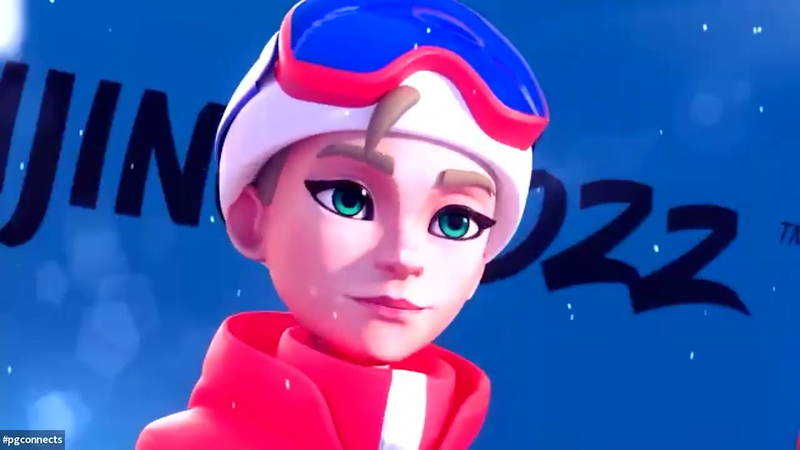
going to be able to bring their nfts between each game but they haven't thought what about other people's nfts what about the other games how are you going to bring their stuff into your game what are you going to do when your stuff goes into their game because they're still thinking of it like a walled garden just a bigger walled garden so i think the the shift in mindset is a very a very important component i'm going to show you a couple of things that we've been working on just particularly to address mobile because obviously this is a mobile conference um so this is a game that we just launched a couple weeks ago um for the olympic games in beijing and it's built by our studio in san francisco and what you see on the right hand side some of you may recognize are those collectible olympic pins that they have that all the athletes exchange at each olympic games so we've created these olympic pins as collectible nfts and those olympic pins act both as a reward mechanism in the play to earn game which is a mobile game as well as a collection mechanic where
people who are just interested in collecting digital merchandise and digital collectibles can participate in that as well and we've created we've created a marketplace on the web with a custodial wallet system so that people can be onboarded easily with credit cards and not necessarily need to be crypto native although they can be here's a view of the different types of games and we're actually launching different game experiences within the app over time we started out with snowboarding and and skiing but we'll be adding more sports over time we can give you a little bit of a view of what that's like [Music] [Music]
[Applause] [Music] [Applause] [Music] so anyway little demonstration that blockchain on mobile is not that scary looks like a regular game um i'm gonna move on and talk about uh arcade so arcade is a game or series of games launched by our studio in central europe and
um the idea behind arcade was to try to think about how we could approach bridging a very traditional mobile category of quite casual sticky games and see how we can build in blockchain because one of the challenges with blockchain is that often people think of nft collecting mechanics and they think of more mid-core and hardcore content where people are constantly upgrading and building armies and doing strategy and stuff so then you start to think well how how can i bring those kind of collection mechanics into something that's a little bit more light something that people don't play for long sessions you know can we actually incentivize them in that way so what we've done with arcade is essentially put together a series of very casual games um all within one app universe and what we do is we incentivize players through play um to earn rewards and these are blockchain rewards based on the gaming token so this is launched by our gaming studio so as you play you can earn gamey
rewards based on your skill and your ability so essentially the the casual play is grinding to give it a less sexy term um and then as you grind and you earn tokens you can then spend those tokens for nft rewards so we've created a series of robots called gbots and these robots can be earned then through the grinding mechanic in the play so what we've done is we've combined games that we know people love that are sticky that have high traffic and then given them a reward system that's essentially layered on top as a metagame that allows them to collect um kme tokens and then g-bots and then the g-bots themselves are going to be the subject of a more sort of midcore game experience where they can then take those g bots and use them in the next game experience because i think the important thing that you have to keep in mind is the subtext is about utility so you want not just the collecting mechanic to be for the sake of collecting but there has to be a purpose for it so some people will collect them
because they're cool looking but on the other hand people will collect them because they have utility and they can be used in a subsequent game so we bring them on a journey essentially from starting in a very very casual play environment to earning gamey token rewards for which they will have a blockchain wallet so we will onboard them to blockchain at that point for which they will then collect gbots as nfts and then they will play in the midcore experience so we we bring them on that sort of light to mid core journey along the way and that's part of the idea um and for those of you curious this is all running on polygon and the last thing i'm going to talk about um because i'd rather just have questions if anybody has questions or comments um this is not mobile this is actually on web but i wanted to show you this because number one it looks really cool and i like to show it to people but number two because as we try to keep innovating in the sector and show people what can be done with blockchain games
here is a aaa game that includes blockchain and nfts and it's out now [Music] currently we have two star fighters available an assault unit and a buster unit the assault unit the csf tier the balance student perfect for mid-range engagement with options for close long-range combat the buster unit the usf kierkegaard is a heavy unit focused on defense and
firepower sacrifices speed and invasion for sheer raw destructive strength [Applause] [Music] [Applause] [Music] [Music]
[Music] so just a couple of words about this um so it's a full blockchain game all of what you saw you know this is an actual in-game footage and all of the robots are nfts they're ownable all of the planets that exist in the universe are ownable as land in the land metaphor and there is actually no in-game token that is being you know like part of a token pre-sale and things like that in fact you need to buy a planet and you need to mine the planet and then the planet will emit tokens and that's how you obtain tokens in the game because what we want to do is experiment with again trying to build community as you know building community is essential to blockchain games and in this manner what we hope is that people have to actually invest
their time and play and mine the resources within the game so that if they want to participate in the token economy of the game they need to invest themselves into the activity because that by that way we hope that they will enjoy the experience so much that obviously they will become part of the game community so that's that's the focus for fandub galaxies so if anybody has questions please let me know you just took the words out of my mouth give it up for robbie please we've got time for maybe just one question has anybody got a particular question in mind that they want to ask yeah nina can you bring the mic to the front yep right at the front here oh [Laughter] mike thanks robbie for a super interesting talk um you mentioned something right at the very end that how blockchain games need communities to work and i think it's it's it's definitely something that's very true and i think um if you think about one of the criticisms that nfts
are receiving from the traditional games industry is that um they are creating a pyramid of gamers whereby the top of the pyramid are monetizing and selling but it requires uh an influx of people coming into the bottom of the pyramids to buy those those assets to make that game economy and and that happens because those nfts are static right and so the value that's assigned to them can only be on speculation as to how rare they are or how difficult it has been to achieve to grab what do you think what's your perspective on that like is there a way that the blockchain gaming community can try and make those nfts more dynamic more changing as to how they are how they are used in the game and therefore better reflect the effort the game has put into the game has put into making them thank you thank you um i would say it's a very good question and it's a it's a common question i think there are two parts to that answer to the answer this question i think on the one hand utility is
absolutely essential and i think we always underestimate what it means by utility because utility is actually limitless because utility doesn't necessarily have to only be provided by your game you can provide as much as you know you go to the greatest extent possible to generate utility within your game for those playable nfts but to the extent that they're playable in other games as well that incrementally adds utility and so then those original nfts should accrue should have more value by dint of the fact that they have more utility that does not always translate to monetary value and i think the second part which i think people don't focus on enough is the idea behind having digital property rights is so that we don't lose everything because we're not just spending money into a black hole anymore it's the fact that there is some recoupable value to the digital items that we own it doesn't mean that they're going to be worth more but in my mind the fact that they're worth something
is a win because if you imagine that you spend whatever 100 a month in games and then you have them all as and today you lose that hundred dollars every month in exchange for time right but once you've spent your time that's it um but imagine in a world where you just got five dollars back at the end of the month it's better than zero and would you be able to convince the world to spend five percent more because they knew they would get the five percent back well if you do that that's 10 billion dollars for our industry in incremental revenue so it's something and i think not enough attention is actually focused on that because people get too obsessed with the idea that they'll make money off of it there's a certain audience that appreciates and is interested in that but just the idea of being able to play a cool game and being able to recycle your content meaning i'm tired of playing this game i want to move to the next one i can sell my stuff for five cents on the dollar that's a win thank you very much robbie
give it up for robbie once again thank you cheers [Music] [Music] you
Summary
The integration of blockchain technology and non-fungible tokens (NFTs) into the gaming industry represents a fundamental shift toward open platforms and shared network effects. Rather than operating in isolated silos, the future of gaming lies in interconnected ecosystems where assets, currencies, and player progress can move fluidly between titles. This transition requires a departure from the traditional "walled garden" development mindset, encouraging developers to build games that allow for true interoperability and cross-platform utility. By enabling players to own their digital items, the industry can move away from a model where player spending is a permanent loss, instead offering a system where digital property rights allow for the potential recoupment of value.
Key strategies for this evolution include bridging casual mobile gaming with blockchain rewards and developing mid-core experiences that utilize earned assets. For instance, casual titles can serve as an entry point, allowing players to earn tokens or NFTs through gameplay, which then gain further utility in more complex, mid-core environments. This journey-based approach helps onboard non-crypto-native users through familiar mechanics while providing long-term engagement. Furthermore, the metaverse is characterized not as a single, monolithic construct, but as an aggregation of diverse, adjacent digital cities that benefit from shared traffic and community interaction, similar to the clustering of businesses in the physical world.
The industry is currently moving from the experimental phase into a more mature stage of development. While concerns regarding speculative economies and the sustainability of play-to-earn models persist, the focus is shifting toward utility and the inherent value of digital ownership. By prioritizing community building and ensuring that NFTs serve a functional purpose within a game’s ecosystem—rather than existing as static, speculative assets—developers can create more sustainable and engaging experiences. Ultimately, the goal is to foster an environment where the ability to recycle and trade digital content provides a tangible benefit to the player, thereby expanding the industry's overall value and reach.