1 free read left. Create a free account for unlimited reading + AI research.
Create free account
Interoperability, Game Ecosystems and Web3
Key insights
6 takeaways- 01Interoperability shifts the gaming industry from restrictive walled gardens toward a decentralized metaverse where digital assets and identities function seamlessly across independent virtual worlds.
- 02Technical standardization, achieved through APIs and cross-chain metadata, ensures that assets remain functional and compatible across diverse game engines.
- 03Interoperable ecosystems are intended to augment rather than replace traditional gaming, establishing digital assets as evergreen components within an interconnected landscape.
- 04The industry is evolving toward a creator economy where developers act as marketplaces for third-party items, increasing asset value through multi-game utility.
- 05Blockchain technology provides the essential permissionless, decentralized infrastructure required to facilitate the movement of digital assets between disparate gaming platforms.
- 06Smart contracts enable scalable economic frameworks by automating complex, multi-party payouts for user-generated content that traditional accounting systems cannot replicate.
Ask AI about this video
Transcript
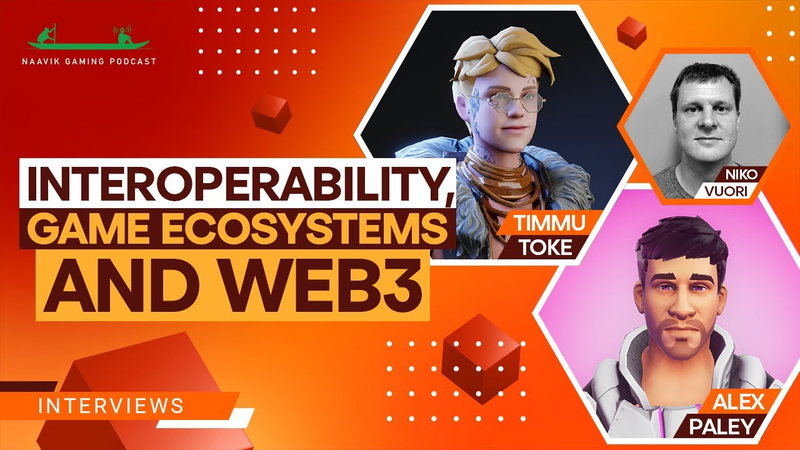
Welcome to the Naavik Gaming Podcast, where it is our mission to explore the business and future of video games. We bring together the industry's brightest builders, investors, and thinkers to keep a pulse on current events, dissect emerging trends in games, share lessons learned, and have a great time. This podcast is also part of Naavik's growing ecosystem, which ranges from free and premium research to consulting and advisory services. For more information, visit www.naavik.co. Now, let's jump into the episode. Hello, and welcome to the Naavik Gaming Podcast. I'm your host, Nico Vouri. Today, we are talking about one of the big topics that many developers hold up as a holy grail for the future, and that is the notion of interoperability between different apps and games, of course. Interoperability is a big word and one that I find quite hard to pronounce, so I have been somewhat dreading this
episode, as I will no doubt massacre the pronunciation of the word interoperable numerous times. But, it is a really exciting topic of conversation and one that holds, in my opinion, real promise for a more integrated future for apps and games and their respective economies and ecosystems, going way beyond the walled gardens we're so used to up until this point. So, to talk more about this topic, we have two amazing guests on the pod who are both blazing a trail towards a more interoperable future and have started working together on this this promise. Uh our first guest is Alex Paley. He is the founder and CEO of Faraway Games. They are the developer of Mini Royale Nations, which is an open economy first-person shooter with about 400,000 monthly active players, so legit game with with, you know, a lot of activity going on. And they also have an integration with the Solana blockchain, which will be touching on in this episode, too. Alex, welcome to the pod. Cool, thank you for having me. Awesome. And our second guest is Timmu Toke. He's the founder and CEO of Ready
Player Me, which is a cross-game avatar platform for virtual worlds and the metaverse more broadly. Timmu, welcome to the pod. Yeah, great to be here. All right, and the reason Alex and Timmu are here is because they recently announced a very exciting partnership between their respective companies, which enables Mini Royale and Ready Player Me avatars to play nice with each other. In other words, they are now interoperable. And we're going to dive into what this actually means in real life for these two companies and what it means more broadly for the ecosystem in this episode because this is somewhat groundbreaking to have two companies working together so closely to create worlds that actually interact with each other. So, with that introduction out of the way, let's get right into it. And we're going to start with just a little bit of background on each of you. We're going to start with Alex. What is Faraway Games doing with your flagship game Mini Royale Nations and what does interoperability actually mean to you? It means different things to different people. What does it mean to you
specifically? Yeah, so basically at Faraway, almost everything we do right now is is focused on interoperability. Like whether that's visual interoperability, economic interoperability, cross-game events and stuff like that. So, what it means for Mini Royale specifically is we demoed what visual interoperability looks like with this Ready Player Me integration. So, all of the season 4 avatars. So, in Mini Royale, you're we're in season 4 right now. All of those Mini Royale season 4 avatars are playable and earnable both inside of Mini Royale and they're now usable in Timmu, is it 6 or 7,000 other experiences right now? Yeah, 7,000 other experiences, which is absolutely wild because it you know, it gives now almost unlimited value for the assets that our players own. So, they spend all this time getting this amazing character from Mini Royale, and now they can take it to all of these other, you know, virtual worlds. So,
we're we're definitely demoing a lot um what visual interop- interoperability means. Uh and then we're also trying to showcase what economic interoperability means. So, we put up a game called Faraway Land, which has like economic interoperability with Mini Royale. It's It's like a base builder, like farm simulator type of game. And you produce things in that game, you produce gear in that game, which you then equip on your Mini Royale characters. Um and in Mini Royale, you produce currency that you can then use inside of Faraway Land. So, it's not on the visual layer, but it still showcases another side of interoperability that was just very interesting to our players. And we're going to unpack, so that's great. And we're going to unpack a lot of what you just said there um later on the episode. Um we're going to go deeper into each of the layers, peel the onion so to speak, um as we talk about visual uh interoperability, economic interoperability, and there might be other um factors as well, which I'm really uh eager to talk to you about as well. So, let's um uh do the same thing
for uh for Teemu here. So, Ready Player Me uh as a company and a product actually predates this latest wave, and I believe actually Faraway uh Games does as well, but predates this wave of recent Web3 enthusiasm uh by quite a few years. I believe you were founded back in 2014, almost a decade ago now. Um and I see you just mentioned you already work with 7,000 developers. Um tell us more about what Ready Player Me actually is, and then what made you jump into the Web3 waters um more recently? And And when did you do so? Yeah, Teemu there. So, when we started 9 years ago, more than 9 years ago, uh we basically saw that people will spend The The bet we made was that people spend more and more time in games and in virtual worlds over time. Um what we got specifically especially excited about 9 years ago, was because uh Oculus was acquired by Facebook and we thought that VR is going to happen immediately. And I was just going to play a huge role in VR and you know, someone needs to build great avatars and make it easy for people to create
avatars. That's what we what we started 9 years ago building hardware scanners initially and then I custom building avatar tech for many big gaming companies like Tencent and Wargaming and HTC and and so forth. So, and then eventually we built Ready Player Me 3 years ago. So, and with Ready Player Me, our goal is basically to connect virtual worlds and kind of push the world towards a more open and decentralized metaverse. And we do that by creating interoperable avatars. So, for end users, for player, we're an avatar that travels with you across many different virtual worlds. And not just an avatar, like we also work with other avatars. We're more like a rails and a platform that makes avatars travel, whatever avatar you pick. And then from a developer's point of view, when you building a new game from scratch for example, you need to build an avatar system. And say building a decent one takes 6 months or even a year or more if you
want to do it well and if you want to monetize it well and so forth. And we take that pain away. We give developers an end-to-end avatar solution they can integrate easily with their game and basically focus on what they do best. And then the avatar and assets they create are interoperable and they can they take part of the interoperable network and they can sell assets that work across many games instead of just their game and so forth. So, we're working with both the developers and end users. Currently focused on on the developer part, so like building great tools, working with a lot of games virtual worlds that need avatars or um which far away we were kind of pushing the the limit of what's possible with Ready Player Me and then like really made like you know for our way our mini Royale avatars travel across worlds which is kind of like the direction we want to go long term and that was the first time we really did it properly. So Um so that was really cool cool to see and I think that's the first time like avatars from a game are actually usable in many other games.
So that was pretty exciting to to work on. Yeah it was sort of wild right? You have this thing that's you you have on your mini Royale home screen now all of a sudden you know it looks exactly the same but it's a third person perspective. It's running around it's jumping in a way that you couldn't do in mini Royale. So like I think interoperability is one of these like weird things where you think it doesn't matter or isn't possible like until you actually see it and then you realize like it's really possible and it sort of really does matter you know. Um because I just made I mean me as like a buyer of those assets I was like I would pay so much more to have something that could travel like anywhere. Like internally we always use this example of I I I buy a Ferrari but it's only you know I can only drive it inside of this tiny little city. Like I can I can only drive it in Baltimore. You know something like that. It's not not a tiny little city. It's it's another city. Um but obviously uh
obviously that Ferrari is going to be worth a lot less than a Ferrari I can drive you know everywhere. Right? So I think the same thing applies to to avatars. Yeah that actually brings nicely to my my next plan question which is which is really just kind of hitting it bluntly on the head here which is you know we talked about interoperability. We we as an industry talk about it all the time and we hold it up as a paragon for what we could be and what we should be in many ways. You know interoperability is a good thing it's spoken of at least. But what is it about interoperability? You've touched a little bit on it here but what is it about interoperability that actually makes games better? Why does it matter that I can take and we're going to talk about the visual part here specifically. We can talk about the economic part later on in this episode. Why does it matter that I can take my avatar or my visual identity from one game to another? I mean, I think for the player, like it is inherently better. Like if if the player prizes ownership, right, of their items that they either paid a lot for or grinded a lot for, clearly they're going
to want those items to be usable in as many places as possible. Just like if I went and bought that Ferrari, I would want that Ferrari to be drivable in as many cities as possible. So, I think like when it comes down to it, all all we do as game developers is we cater to the players. Like what is the absolute best experience that we can create for our players and usually that best experience and that best game design wins out in the long run. Teemu, you're you're hot seat. Yeah, totally. I mean, uh I think when you look at the kind of industry uh as a whole, then uh like interoperability also protects us from kind of a big monopoly player coming along and and like, you know, taking most of the market and making all the rules. That's kind of like, you know, um that that's a possibility that, you know, Meta or someone like that somehow figures out to build uh you know, a metaverse that everybody spends all their time in. And that's like another good good feature.
Um and the other feature is that we'll have a decentralized open metaverse that is uh more like the internet where you can navigate between different worlds and you have a kind of a kind of consistent experience and nobody really owns the whole thing. Um and for that to happen, there need to be there needs to be interoperability and there need to be services and standards and protocols that they have make it easy for people to navigate between those worlds. And um you know, our tools are just one part of that, but uh but there's there there are many things that need to happen um to kind of get to that that world. And like, that will be a much much better outcome than a more centralized world or or maybe there's five big players that build it in a metaverse and then, you know, that's where life exists. Um, I don't think that's a good outcome. Yeah, and I I don't necessarily think that like interoperable games are going to replace, you know, closed economy free-to-play games just the same way that free-to-play games didn't completely replace like amazing
single-player narrative-driven games. But I do think it will allow for new types of games to be made and new interesting types of game designs where there's cross-game events, like different games dripping different items from their own experiences and then, who knows, like you can do cross-game crafting. Tim, this is something that we've talked about before. Like Yes. game A drops item B item A, game B drops item B, and game C you use items A and B and you create this amazing sword or shield or whatever that is really usable there. So, just new types of games I think will be made. Is that the and just like that to add one thing that I mean you like touched on as well as like we believe that when you if you build like an open economy around avatars that exists, you know, next to a lot lot of different games, then as a developer if you're part of that economy, you can actually monetize your game better as well. Um, it's like as an end user, would you rather pay for something that is stuck
in one game or usable across thousands of games than and you know, games you care about? Um, yeah, I think it's obvious that it will like increase the value of the assets people buy and then, you know, it will increase the whole economy around avatars. So, as a developer, it's like you know, if you want to build a very kind of controlled guided kind of a story-driven experience, you probably want to build your own like closed uh because you want to control every part in this story. But if it's more like social and um open and meta verse kind of a experience, then you know, it makes sense for that to be open. Which is how I think more games are trending, right? It's like every game wants to be social because everybody knows the more social your game is, the longer it lasts. And you want to play games where your friends are. Yeah. Yeah, so I'm definitely buying what you guys are selling here. And to be clear, I'm I'm a big believer in this future. And I actually agree with you guys wholeheartedly that I don't think it's going to replace closed economy games. I don't, you know, just the same way that,
you know, free-to-play didn't replace, you know, paid-for games. I think it's a perfect analogy there. I think there's just more and more ways of playing together and separately that are being invented all the time. And you know, blockchain enable some of those, interoperability enable some of those. But I will play devil's advocate for just a moment here and talk a little bit about, you know, what makes closed game economies and ecosystems arguably better than open economy games or open, you know, game ecosystems. You know, the the one thing that they have going for them is the developer can control every single aspect of the player or the user experience, right? It could be more on rails. You mentioned maybe narrative-driven games being a bucket of gaming that perhaps is suited better for that. And so, my question to you guys is, if you're opening up the experience for the visual element, the avatars from other developers, or maybe other types of interoperability with, you know, game A with item A, game B item B, game C combining A and B, which to me is really, really cool, but it definitely could harm the user
experience arguably because you are no longer in control as a developer of the entire user experience. And of course, Apple is famous for controlling, you know, vertical integration, the hardware, the software, everything in the stack. So, how do you think about the risks or potential negative effects of interoperability? And how do they weigh up against the positive? You've touched on a couple, but I just want to hit this head-on because that is the one thing you give up as a developer. You give up control of the user experience um in exchange for this more social interoperable world. And I think you get a more interesting economy that exists. Like you get something that's much closer to the real world where you have a bunch of like disparate parties all making items and you have these complex supply chains that rely on different items created by different people. So I I totally agree with you that like there are some games that you're just going to want a closed economy for because it's going to it for that type of game like where maybe it's like God of War. It needs to be
like a very curated narrative-driven type of game. Like you're not going to want that in an an an interoperable type of game. But if you want something a game that has like a much more complex economy that mimics like almost like IRL types of reactions or types of interactions, you're going to want um you're going to want to make your items like interoperable so you can you know have different people producing different things and all interacting together in a series of virtual worlds. So I think it's it's it's going to be better. I think it's just going to be different types of games, different types of game designs, and different ways that people are going to like interact with each other. Like I just quickly one thing that I think we'll see happen is I think we will see games like selling other people's items. Like just the way in the real world, right? You have department stores like Bloomingdale's,
they sell other clothing brands. Like the Bloomingdale's sells Gucci and Bloomingdale's probably wouldn't be as successful if it didn't sell Gucci, right? And in in these games it could be like I'm selling a game that I'm selling an item in Mini Royale that Teemu makes. And that's like a game now a US the game dev don't have to produce all the content yourself. And now you're taking a seller fee for facilitating that sale for the other brand. So I think we'll see like I said new types of monetization, new types of game designs. Um but yeah. Yeah. And Teemu Teemu you were you're working with 7,000 developers now so you obviously have a kind of a bird's eye view or you know God God mode view of what's going on in this ecosystem. Obviously this is a fairly new integration or really you know partnership that you've you've got with Faraway but what are you seeing from your 7,000 developers in your ecosystem? What are they asking for or what are they seeing in terms of compromises or trade-offs between you know the more open interoperable worlds
that we're talking about here versus the closed game economies? Yeah. So I mean there there like there are games that are more like playgrounds where you want to almost give as much freedom as possible or like a a good amount of freedom and then see what people come up with. And all the kind of UGC driven games are also in a kind of in that way and what they're trying to do is to like make it more open and more free in their economy or in their like ecosystem rather. Um but then they they work so like I think that's that's what's like you know that's why Roblox and Fortnite and all those things are interesting and very kind of long-lasting. Um yeah so there are playgrounds and then there's like there are stories you know or like a very story based games. Like those are not the our our partners. And if you're building a story you want to have a very curated experience like you want to control every part God of War uh for example um but those games might want to export
assets. So uh you can also be interoperable kind of like one way. It could be like if someone wants to buy assets from here and use it in other games like that's cool. Like that makes the assets more valuable still and maybe there's some other games that are not so good at selling assets, but they're happy to import them along with the user that comes from the other game or whatever. So So like there's there's like there can be different levels of interoperability. You don't need to like be like fully open and allow any kinds of assets in. There can be, you know, for visual interoperability there can be dress codes like, you know, there are only certain kinds of assets you allow to come in through our world. Um and so forth. So yeah. There are levels and then there's different approaches like you're building a playground you're open to experimenting but I I think like generally um you know, there's not enough examples and data on like what will happen when you open up your economy of your
existing game. So um you know, with the early um group of of people that are kind of open metaverse minded and are like philosophically aligned with you know, open metaverse and all that stuff. With that group uh our goal is to basically kind of prove to the rest of the earth the rest of the industry that actually improve is your game. It builds a better user experience. It you know, makes your game easier to monetize and so forth. And then eventually needs to become like a no-brainer business decision for people to join uh or open up because it's just like it it makes sense. And and yeah, there's probably some games it makes more sense for than others and so forth but um we're all in this and trying to figure it out. And I think it's obvious that if it if it will be open it will be beneficial for everyone. You know, this this notion of um UGC is fascinating to me. Uh you know, the idea that you could be creating assets in a game that makes it really easy to create those assets and then either exporting those to another game or using them in
another game or selling them inside another game. Um you know, it arguably opens up a whole new vector for the creator economy uh to to evolve for folks who are really passionate about a certain game and and then want to kind of give those assets that they're creating in that game a life beyond that walled garden. Talk to me a little bit more about how you are enabling that. Maybe we start with Timmu on this one because it seems like you're in a pretty good position with these 7,000 developers to actually tap into that. Um I'm fascinated how you would make that work in real life and do you have any examples yet? Sounds like maybe not. Maybe it's still too early, but something that you guys are at least thinking about if not actively working on. Yeah. So, we are we are working on it and we actually, you know, we're working with a lot of brands for example with their also creators of of avatar assets and we work with some individual creators and you know, from a brand's perspective for example, before like you
know, what you make your stuff usable in games, you would have to go to individual games and create a deal make a deal with them, create assets in their spec like, you know, go through this whole thing for each game which is like not doable. So, you could only do it with the biggest games and like yeah, that's like limited. So, now they can come to Ready Player Me as a creator or as a brand and they can get access to a thousands of different experiences with just one integration by creating one asset. So, the open kind of metaverse and interoperability is definitely very beneficial for anyone creating content for you know, for avatars in our case, but like in general. The more usable the content is across games, the more valuable it is and the more people there are that could potentially buy that stuff. And then it's yeah, that's how we think about it. Like just opening it up is going to give creators a more access to that economy. And Alex, I want to hear your perspective as a as a developer specifically. I mean, you know, that
this is kind of what we're talking about here. This partnership is literally that. It's It's, you know, the the avatar is we're doing this? Yeah. That's what I'm saying. So, I want to hear I want to hear that. Yeah. It's It's It's crazy. So, it's like if you go to faraway.com and there's like a become a creator tab, you can literally submit assets. Like a creator can submit assets for Mini Royale and in Mini Royale, we will be selling like creators assets and then the creator gets, you know, obviously their fee every single time it sells. But, the way that we talk to creators about this is saying like you're submitting assets, they are going to be used of course like in Mini Royale they can be bought in Mini Royale. But, they're also used in many other experiences. So, you're not just creating this asset for Mini Royale, you're creating an asset that'll be used in an increasingly large number of places. So, for the creator it's sort of a no-brainer where they're like, "Okay, like I I don't need I don't need a Roblox type of scale, right? I need to create an
amazing asset and I can count on the fact that the bigger this universe of interoperable games and interoperable experiences becomes, the more valuable that asset becomes. So, we have like I mean, we have so many people that like took some of our characters and they made like Ronald McDonald versions. We have some like scare They have like some horror movie versions of some of our characters that I that I see. And then of course we have versions of our characters that I'm heavily moderating and saying, "Maybe maybe not this time." Uh we're not going to let that one in. Um but it's but it's but it's cool because it just like it it changes uh like a the paradigm for a creator because they're not just making something for a specific game. They're making this like evergreen asset that will have increasing utility the more and more games use it. And what we're obviously seeing is more and more games like as I mean, 7,000 developers is is nothing to sneeze at at all. It's a massive number and team I
you can probably speak to just how quickly that number is increasing. But I mean say it gets to 10,000, 20,000 like it's a massive massive value proposition for creators. Over 10,000 to him. Um Yeah, it's wild. Yeah, we added like 800 new companies last year last month. That's very impressive. Yeah. Um There we go. It's actually touching nicely on so Timo, I want you to talk a little bit about your avatar API. Uh I believe you launched it in October 2022. How does it actually work? Like I'm presuming it's making this asset creation just a lot easier for developers. Um I'm presuming that there are other things beyond just avatars that your guys are thinking about, you know, in game assets that are, you know, non-avatars. Uh like items that have functionality, potions, uh consumables potentially instead of just uh durables. So tell me more about what are you What is your vision for kind of the API ification um of asset creation uh starting with avatars uh and going from there.
Yeah, so I mean we plan to be avatar focused for uh a long time. Uh it's a very hard problem to solve on its own and like to create avatars that work in all kinds of different experiences um is very hard. And that's why you know I I'm going to talk about the avatar API as well. But one more comment than that, you know, it's just the avatar is like a naturally persistent part of many experiences or or like virtual experiences you go to. Um and and like, you know, if you go to like weapons and potions and all these other things then they have very different utility in different games and like what if you go from a racing game to a whatever medieval game. Um so like it's it's like a very it's very hard thing to manage. Maybe we'll get there eventually uh but right now we're now we're focusing on avatars and kind of the identity um slightly beyond avatars. But uh it's yeah, and our API. So like why interoperability is so hard is because every game has their own like
technical spec, their own way they create avatars, their own like needs for avatars, so their own animation rig and and so forth. So like the avatar API basically serves the avatar in the spec that the developer needs uh for their game. So like you can have the right LOD, you have the you can have the right rig, animation rig, you can have you can control a lot of different different things around the avatar to get what you need as a developer. If you're building for like mobile mobile shooter, it's very different from a desktop Unreal, you know, whatever game. So so it kind of gives the developer a lot of flexibility. So the avatar we actually deliver into different games is very different game to game technically. Uh but for the user it like looks the same, it feels the same. Avatar API is also delivering the faraway avatars into different games based on what these games need like in the LODs and and so forth. LOD body shapes and things like that that we'll deliver to the avatar API. So even the
characters you like import um kind of like you know, you can get modified to your identity and so forth. So it just gives developers a lot of that flexibility and really makes interoperability um easy or or doable. And you know, we yeah. We've been working on avatars for 9 years. That was the the kind of latest major major upgrade. So we we focus a lot on visual interoperability. Obviously talking about avatars here. I want to and and we've touched we've scratched the surface a little bit on on some of these other types of interoperability whether be economic interoperability or otherwise. I want to dig into that a little bit. And so this is more of a question for Alex I think. You know, as a developer, um, you know, you and I have talked in the past uh about this notion of economic interoperability, you know, between different game economies, not just the UGC like, "Hey, I'm a creator. I'm creating an asset. I can now sell it or use it in multiple different games." But, actually transferring economic
value, in-game value, in-game currency from game to game. Um, tell us more about what that means to you. And obviously, there are tons of risk associated with having other developers potentially touch your economy and vice versa. Um, what do you envision for this future of economic interoperability? Yeah, I mean, there's definitely a lot of risks, which is why we've demoed it like ourselves. So, we have like Mini Royale interacting with Faraway Land like like I was saying, like Faraway Land produces gear. Gear can then be equipped on your Mini Royale heroes, and it gives them like increasing power. And power is something that there's season leaderboards for. This is not like a It doesn't play into like the in-battle experience, but power has other types of benefits like inside of the Mini Royale meta. So, I think we're we're experimenting with more and more stuff around that, but you can say you can say like game A produces item A, and inside of
Mini Royale, you want to say, "You know what? This item, you know, you need this to unlock this quest, right? Or you need this to join this clan, or you need this to get a boost in this, you know, raid." And you can choose like, you know, as as the game dev how you want to ascribe value to other games' items. Um, and I think it just makes things really really interesting, and it'll also allows you to grab other communities that you might have not been able to grab before. Right? So, you know, you know, I'm working together with another game right now. Like all of a sudden, the community that was very centered around that game now all of a sudden cares about Mini Royale because there's use for that item inside of Mini Royale or maybe Mini Royale sources the item for that other game. And everybody needs to play Mini Royale to go get the item that's used in this other game. So, I think it creates like really interesting like I guess I had types of types of game designs, allows for much more of this like these
cross game events, like cross game collaboration. And the cool thing is like once everything is on chain, it's permissionless anyway. So, I don't need to work with you know some other studio. Um I can just say, "You know what? This this this is a cool item. All Bored Apes like come in here and you can play this quest." Cuz maybe I want to grab that community. And I say that community matters for for Mini Royale. But Nico, like you said, there's a lot of risks. I think the the biggest thing that we've been focused on is a an item can only be sourced from one place, right? We're we're we're restricting it. It can be It can be spent or it can be given utility or utility can be given to it in multiple different experiences, but it can only be sourced from a single place. And then obviously that place can control how much they want to inflate the supply of that specific item. So, we don't right now and I don't think for the foreseeable future um we'll have a scenario where like the same item is sourced in more than one place cuz I
think that gives like the then you start entering the danger zone on like a on item inflation. Um but if you if you keep it centered like where one experience is the is the source of a single item, then I think you're you're you're safe. It's like a more measured response to creating like interoperable items. One thing you brought up here, which I'm glad you did, uh and I wanted to talk about this as well, which is what role does uh blockchain technology or technologies uh and NFTs, you know, permissionless, decentralized, what do those have to offer uh the in you know the the the the debate about interoperability. Um, does it I know Alex, maybe we continue with you here a little bit cuz I know you're building on on blockchain, building on Solana. Um, what are your thoughts on how blockchain and decentralization impact this discussion about interoperability? You mentioned the permissionless nature as a starting point. What else does blockchain offer for game economies and ecosystems as it relates to interoperability between different
experiences? Yeah, one I mean the the the like the blockchain is just this big open like distributed database. Right? So, everything exists there and no single like company can say I'm going to take it away. Right? So, I think that's important. So, for for a player, right? If you have this interoperable asset, you never have to worry about the company that made the experience where that asset came from, like that company can't take it away once it's on chain. And if you look at like our Ready Player Me integration, like it really wasn't like that much of an integration. I mean it it was a rather straightforward. All we did is we took our Mini Royale like NFT. We said, you know what? We're going to add a link to the 3D model file that is associated with that avatar. Like all the user's going to do is they're going to go to the Phantom wallet like extension on the Ready Player Me site on the on that on that pop-up. They're going to connect their Phantom wallet and the avatars that they own are going to be playable
there. And they would be we would have been to have it would have been like such a crazier integration if these things weren't all on chain and a person could just log in and Ready Player Me could read like okay, you have this item, cool. Like we have all the information we need to display it and that's it. So, yeah, I think doing this like the web two way would have required such a a crazier integration that it might have not even made sense and it definitely wouldn't have scaled to 7,000 or 10,000 other experiences. Yeah, Tim, I definitely want to hear your thoughts on this, too, because I seems like, at least from Alex's perspective, it's almost critical to have uh the blockchain technology underlying a lot of this stuff uh in order to actually scale. Te- tell me more about how you guys are thinking about it already player me and um how are you uh using blockchain technology to help this uh this scale? Mhm. Yeah, so I mean, like when you when you think about just the problem that needs to get solved for interoperability is like there's an asset and the ownership
of that asset needs to be stored in some kind of database. And the asset needs to be stored in some kind of database. And if that asset is asset is used by a thousand companies, for example, then what like what we know, whose whose database are we going to use? So, like uh yeah, it makes sense to have like a distributed database uh blockchain and store the ownership and the assets there. So, all of these thousand companies can just tap into it and then use the assets in you know, in their games in the way they want. Um so, I think like this is the only way that that you know, that that makes sense. I mean, the other way is that there is a centralized provider like Ready Player Me that like you know, basically uses their their their their database to like make the assets travel. And that's like true for some assets that are not blockchain assets on Ready Player Me today. But uh long term, we want to you know, be the facilitator for those assets to travel and not the the the main the main database necessarily. So, um
yeah, like blockchain is the best way to basically solve that problem. Uh have that kind of shared database that nobody really controls and and everyone can can tap into it. Now, the natural follow-on question there is uh what about cross-chain? And you know, it's it's one thing to you know, have the Solana ecosystem all be tapping into you know, that air quotes database I E, you know, the Solana blockchain. You know, what about ETH? What about Polygon? What about um Aptos? What like you know, there's there are lots of you know, we we talked about the walled gardens. Blockchain is arguably a series of open walled gardens. If you get my gist. There you know, the cross chain element is quite hard to do still to this day. How do you guys think about that cross chain element? You know, Is it something that you worry yourselves about or is it something that I can speak I can speak to it yeah. So I mean at the end of April Mini Royale is going cross chain. So it'll support Solana NFTs and it'll support Ethereum NFTs like 721s. And I asked Teemu like hey is this is this going to work? And
he's like yeah like you know what? This you know, Ethereum uses this NFT standard, Solana uses this NFT standard, but they both have metadata and as long as the metadata has a link or has like some way for you know, for for Ready Player Me to see this is the GLB file like this is a 3D model file associated with that character. That's it. We're we're done. And now the Ethereum NFTs that we're going to mint on April 27th according everything goes to plan. Yeah, those will be immediately playable in Ready Player Me's you know, 7,000 experiences. So yeah, it's just everything regardless of the chain like the the chains all have NFTs and those NFTs all have metadata. So we basically support several wallets and whenever you connect your wallets and have Ready Player Me compatible NFTs in your wallets and we just make those assets usable on your avatar. Wow, I'm I am impressed.
This you know, cross chain is yeah, it really is very cool. I mean cross chain has been one of those big challenges up until this point and it sounds like at least for this use case you guys are you know, tackling head on and and able to actually support that. So I'm I'm very impressed. Yeah, I think for yeah, for a creator yeah, I mean a creator might want to you know, deploy their item on a different chain. Right? So who cares you know, if this item has this metadata and that's you know, all Timmu and Ready Player Me needs to see. So, it's yeah, it's very, very different. Um, okay. Well, I I'm kind of coming to the end of my questions here cuz we've talked about a lot here, but I do want to touch on uh what's next for for both of you guys. Um, obviously there are the sky's the limit in terms of what we could do with interoperability. This is a very noble, very worthy, very exciting first step towards um, you know, that visual interoperability piece. Uh what are you working on next? I'll start with Timmu. Uh what are your initiatives moving the ball forward and up the pitch? Yeah. So, what we're really focused on
now is uh building tools for to make it easy for developers to create content for avatars and developers and creators. So, uh skins, full avatars, uh avatar accessories and things like that that they that they can sell. And that they like developers can sell in their games, that creators can create that developers can then sell in their games. Um, so and that's like content which also leads to monetization, which is like helping developers make money with avatars. And then the the larger like the bigger kind of uh goal is to just like create more proof points for interoperability. Um, it's to onboard more kind of traditional studios that weren't originally like open metaverse-minded um and just join because it's a to no-brainer business decision. I think that's kind of like a good place for the industry to get to is where we go beyond the kind of the early um uh open metaverse um you know, uh yeah, like the the people that are
philosophically aligned with that to like a more kind of a rational business decision or like a no-brainer business decision because as you have enough data and so forth. So, that that's kind of like what we're working towards. Alex. And I guess yeah, so for for us like the the big thing on like the Mini Royale side of things is really this creator program. Like the ability for creators to make interoperable assets and use those in Mini Royale and then a bunch of other places. And I think the the one other area where the blockchain is pretty critical is in payouts, like multi-party payouts, where the creator needs to get paid, Faraway needs to get paid, a seller needs to get paid, the referrer needs to get paid, and we're able to do that because everything is you know, on chain and done through smart contracts with the zero overhead. Like if I was trying to do this back at Scopely, right? It would be the accounting department would probably, you know, go go crazy at me because they'd be sending out wires for for a dollar, right? To a bunch of different parties. And it and it and and it just doesn't scale, right? So, this is a us a way for this is the blockchain is is a a
way for us to scale a creator program, get creators to make like awesome interoperable assets, but also get them paid every single time something sells immediately and all parties paid. So, on like the Mini Royale side of things, it's really all about creators and like UGC. And then a we recently did this announcement around like Serum City, which is a game we're making inside of like the Mutant Ape Yacht Club like universe. Um it's like in partnership with the the Mutant Cartel team. And that'll feature like interoperability, but inside of like the Yugaverse. So, there'll be some some cool things coming up with, you know, items produced in in Serum City that'll be usable in and other games besides or other experience besides just Serum City. So, we're everything we do, right, is just focused around like interoperability and it it might not be visual interoperability in that case. It might be more economic interoperability, but like our belief is that items should have value outside of the game that they
were, you know, originated in. And what we're trying to do is initially create those experiences, showcase like what happens like when you allow for this type of interoperability, what types of game designs are possible, how players react in new and emergent ways. And then we're we're hoping that other people also like make really cool designs that can interact with our economies in ways that we never expect. So yeah, that those are the two big things for us. Awesome. Faraway platform really like enables uh the economic interoperability. And we plan to uh do some stuff as well. Uh but yeah, that that's very cool. More stuff coming. More more announcements coming for both of us. I love it. I love it. The teaser. We'll have to have you guys come back and uh talk more about what comes next. But um so uh I think we've we're almost certainly got a lot of developers listening to this and thinking, "Okay, I like to participate." Um how can they We'll put all the links in the show notes, of course. Uh Teemu, like if
developers want to get in touch and, you know, get that 7,000 number to 10,000 um working with you, uh where do they go and how do they reach out? Yep. Ready Player Me, uh readyplayer.me. That's like the website. And then the docs and everything is there. The developer sign-up is there. It's very easy to get started. Just download the SDKs and check the docs. Uh you can always track me down uh from LinkedIn, for example. Uh I'm sometimes slow uh to answer, but I'll try my best. Um and yeah, like everything is on the website basically for developers. Fantastic. Alex, same question for you. Creators and developers. Yeah, faraway.com. Like you can read all about all of the the different cool things we have going on. And then if you want to uh reach me, I'm pretty good on Twitter. I try to respond the best I can. It's uh it's a paley13. Um but yeah, like would love to chat with like other developers and also creators. Like the the crazy thing is if a creator makes something and that thing
is on the Ready Player Me like avatar rig, that thing is automatically playable in Mini Royale, like instantly. So, like we want more and more creators to realize this and realize that the content they make is going to be seen like instantly by hundreds of thousands or millions of players. So, uh yeah, like please if you're if you're a developer or if you're an amazing artist, 3D modeler, like animator, like yeah, please make cool content. Um and let's get it in as many cool places as possible. Absolutely love it. Yeah, I really wanted to have you guys on cuz this is such an interesting topic and um again, we're barely scratching the surface of what's possible. Um you know, I agree with I think Alex, I think you both made this point early in the in the episode, which is this is not going to replace uh air quotes traditional gaming, um but it could very well augment it in a really interesting way and become a a very large niche um for certain genres of games. So, I'm really excited to see
what you guys do next and I'm really excited to see more developers, more creators um get involved in in these types of initiatives. So, that about wraps it up. Um Alex, uh Teemu, thank you so much for coming on the pod today. Uh again, love the insights. Uh I'm really looking forward to seeing where this goes. Um and I have a one of my favorite expressions is a rising tide lifts all boats. Um and uh what I'm seeing from you guys is very much in that vein of trying to elevate everybody in this ecosystem um through the use of new and exciting technologies and and partnerships. Um so, Alex, thank you for being on the pod. Yeah, thank you for ha- thank you definitely thank you for having me and also, there's any other games that want to run cross-game events or do experiments with interoperable economies, like let's let's do it. I'm more than happy to sit down. Gauntlet has been thrown. Teemu, also thank you to you for being on the pod. Yes, thank you so much. That was uh that was that was that was a great chat. Thank you, Alex. Thank you, Nico. Awesome. And also, of course, a big thank you to all of our listeners. Uh we will be back uh next week with more
interviews, more insights, and more analysis from the weird and wonderful world of Web3 and gaming more broadly. Uh so, until next time, friends, stay crypto curious and feel free to send questions, guest recommendations, and comments to me. My email is Nico at navic.co, and you can find me on Twitter at Nico the Fin. DMs are always open. Until next time. If you enjoyed today's episode, whether on YouTube or your favorite podcast app, make sure to like, subscribe, comment, or give a five-star review. And if you want to reach out or provide feedback, shoot us a note at [email protected] or find us on Twitter and LinkedIn. Plus, if you want to learn more about what Navic has to offer, make sure to check out our website www.navic.co. There, you can sign up for the number one games industry newsletter, Navic Digest, level up your insights with our premium research platform, Navic Pro, or contact us to learn about our wide-ranging consulting and advisory services. Again, that is www.navic.co.
Thanks for listening, and we'll catch you in the next episode.
Summary
The transition toward interoperable game ecosystems represents a fundamental shift away from traditional, restrictive walled gardens toward a decentralized metaverse. By integrating visual and economic standards, developers can create persistent digital identities and assets that function seamlessly across thousands of independent virtual worlds. This evolution is driven by the necessity of providing players with greater utility for their digital possessions, thereby increasing the long-term value of in-game items while simplifying infrastructure requirements for creators.
Technical standardization serves as the backbone of this movement, utilizing APIs and cross-chain metadata to ensure that assets remain functional across diverse game engines. Blockchain technology acts as the essential infrastructure for this transition, providing a permissionless, decentralized database that facilitates the movement of assets between disparate platforms. Beyond mere technical compatibility, smart contracts enable complex, automated multi-party payouts for user-generated content, establishing a scalable economic framework that traditional accounting systems struggle to replicate.
While closed, narrative-driven ecosystems remain relevant for maintaining specific user experiences, the rise of interoperability fosters a robust creator economy. By allowing developers to act as marketplaces for third-party items, the industry is moving toward a model where assets gain value through multi-game utility. These developments do not aim to replace traditional gaming but rather to augment it, creating a collaborative environment where digital avatars and assets serve as evergreen components of a broader, interconnected gaming landscape.