ArticleGameDiscoverCo
Steam: The New 'Wishlists to First Week Sales' Expectations
15 Jun 20201 page~9 min full read
Key insights
4 slides
Key number
Steam games achieve a median of 0.2 sales per wishlist in week one.
The average is 0.36 sales per wishlist. Raw wishlist counts are often misleading indicators of success.
What changed
Full release titles show a higher median conversion than Early Access.
Full release titles show a median of 0.22 sales per wishlist. Early Access titles show a lower median of 0.16.
The gap
Top performers with over 10,000 wishlists convert at 12.3%.
The bottom 50% of these games convert at only 4.5%. External recognition and community engagement drive this gap.
What drives it
External recognition and community engagement are primary drivers of conversion.
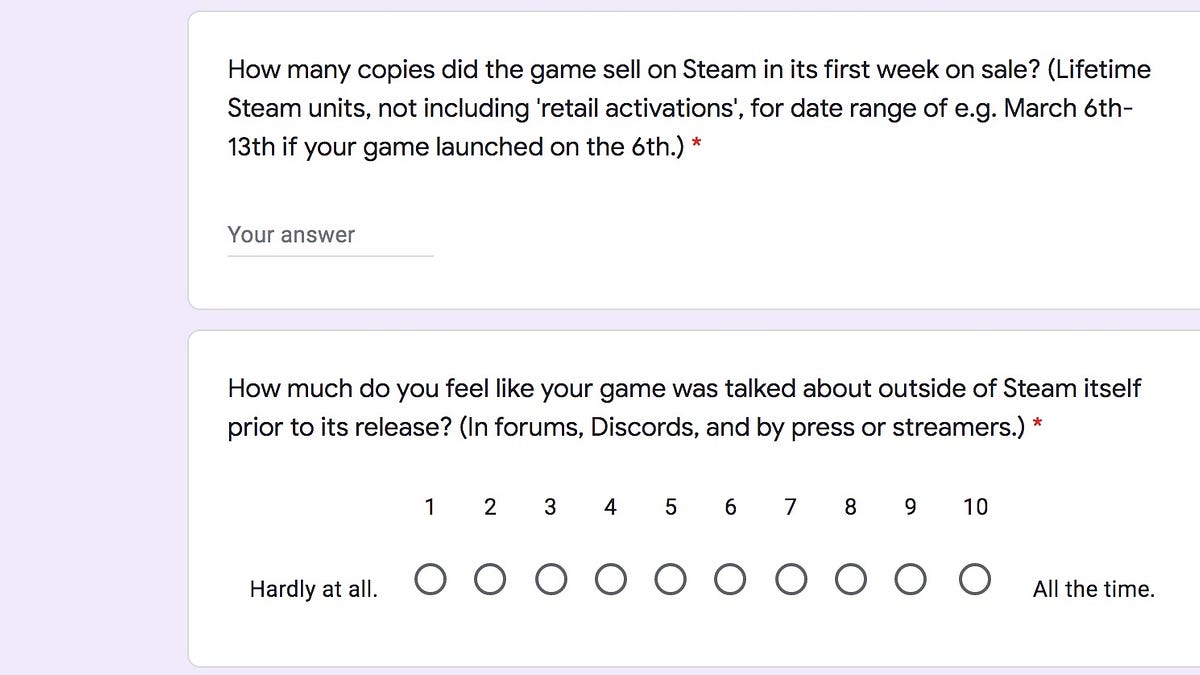
Games with higher levels of discussion outside of Steam demonstrate stronger sales-to-wishlist ratios. Wishlists measure interest rather than a guarantee of purchase.
1 / 4
Ask AI about this report