1 free read left. Create a free account for unlimited reading + AI research.
Create free accountWhitepaper DiGRA
1 free read left. Create a free account for unlimited reading + AI research.
Create free accountWhitepaperDiGRA
The paper argues that ludic pleasure should not be understood solely through players' subjective feelings. It treats it as an outcome of interactions among human and nonhuman actors.
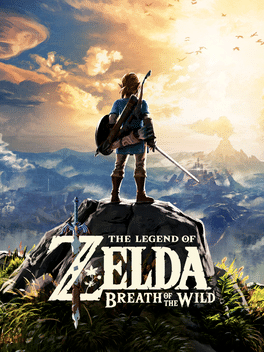
This paper argues that ludic pleasure in videogames should not be understood solely through players' subjective feelings, but as an emergent outcome of interactions among human and nonhuman actors. Drawing on Aristotle's distinction between pleasure as an unimpeded activity and the feeling of pleasurable experience, the author proposes an object-oriented framework grounded in Graham Harman's object-oriented ontology and Jane Bennett's vital materialism. Within this framework, avatars, objects, environments, and platforms are treated as independent actors possessing what Bennett calls thing-power, rather than as passive tools subordinate to player intention. The argument is developed through close analysis of The Legend of Zelda: Breath of the Wild, with attention to how its playthings, including materials, elements, and creatures, combine according to their own physical and chemical properties.
The paper's central conceptual contribution lies in reframing Aarseth's notions of aporia and epiphany. Aporia is read as the expression of an object's resistance to human will, while epiphany arises when an object's affordances become newly legible through contingent interaction. Two illustrative episodes support this reading: the author's discovery that igniting grass with a torch generates updrafts enabling a paraglider ascent, and an observed lightning strike on a Bokoblin that unfolded without player involvement. Together these examples are used to argue that gameworlds sustain autonomous processes even when unobserved.
The analysis is qualitative and interpretive rather than empirical. It relies on a single game, the author's own play experience, and developer statements drawn from a conference presentation, rather than on player surveys, sample data, or comparative case studies. Its scope is therefore theoretical and exploratory, offering a conceptual model for future empirical testing across broader genres and player populations.
Each row is a game or company this document names, each column a document, oldest first. A mark means that document names it. Select a row to see those documents.

DiGRA · 2026

DiGRA · 2026



DiGRA · 2026



DiGRA · 2026



DiGRA · 2026



DiGRA · 2026



DiGRA · 2026



DiGRA · 2026

DiGRA · 2026



DiGRA · 2026



DiGRA · 2026

DiGRA · 2026
DiGRA · 2025