1 free read left. Create a free account for unlimited reading + AI research.
Create free accountWhitepaper International Journal of Serious Games
1 free read left. Create a free account for unlimited reading + AI research.
Create free accountWhitepaperInternational Journal of Serious Games
This framework views persuasive gaming as an ongoing interaction between the game, the player, and the context.
Dynamic process. Persuasive gaming should be viewed as a dynamic process of interaction between the game, the player, and the context, rather than as a closed product.
This analysis establishes a theoretical framework for understanding how digital games function as persuasive tools, moving beyond simple message delivery to encompass the complex interactions between games, players, and their environments. The primary thesis posits that persuasive gaming is a dynamic process rather than a static product, and it categorizes these practices into three distinct, yet often overlapping, strategies: exocentric, endocentric, and game-mediated persuasion.
Exocentric persuasion represents a game-centric approach, where persuasive messages are embedded directly into the game’s mechanics, narrative, and sensory elements. This strategy targets the player’s rational processing, aiming to change attitudes beyond the gaming session by presenting cogent arguments through procedural or visual cues. Conversely, endocentric persuasion is a player-centric approach focused on engagement and motivation. By leveraging tactical, sensorial, affective, and social dimensions, this strategy encourages sustained interaction, often utilizing the peripheral route of persuasion to influence behavior or provide therapeutic distraction, as seen in medical applications like pain management.
Finally, game-mediated persuasion is a context-centric approach where the persuasive intent is exogenous to the game itself. In this model, the game serves as a tool or a catalyst within a controlled environment, where the physical setting, social interactions, and framing of the experience drive the desired attitudinal change. This framework, developed through a critical review of existing literature and analysis of serious games, provides designers and researchers with a structured vocabulary to analyze how various elements of the gaming experience—whether built-in or contextually derived—can be harnessed to achieve specific behavioral or attitudinal goals. The findings emphasize that effective serious game design often requires a strategic combination of these three approaches to maximize impact.
International Journal of Serious Games · 2023
International Journal of Serious Games · 2022

International Journal of Serious Games · 2020

International Journal of Serious Games · 2020

International Journal of Serious Games · 2020

International Journal of Serious Games · 2020

International Journal of Serious Games · 2020
International Journal of Serious Games · 2020



International Journal of Serious Games · 2020



International Journal of Serious Games · 2020
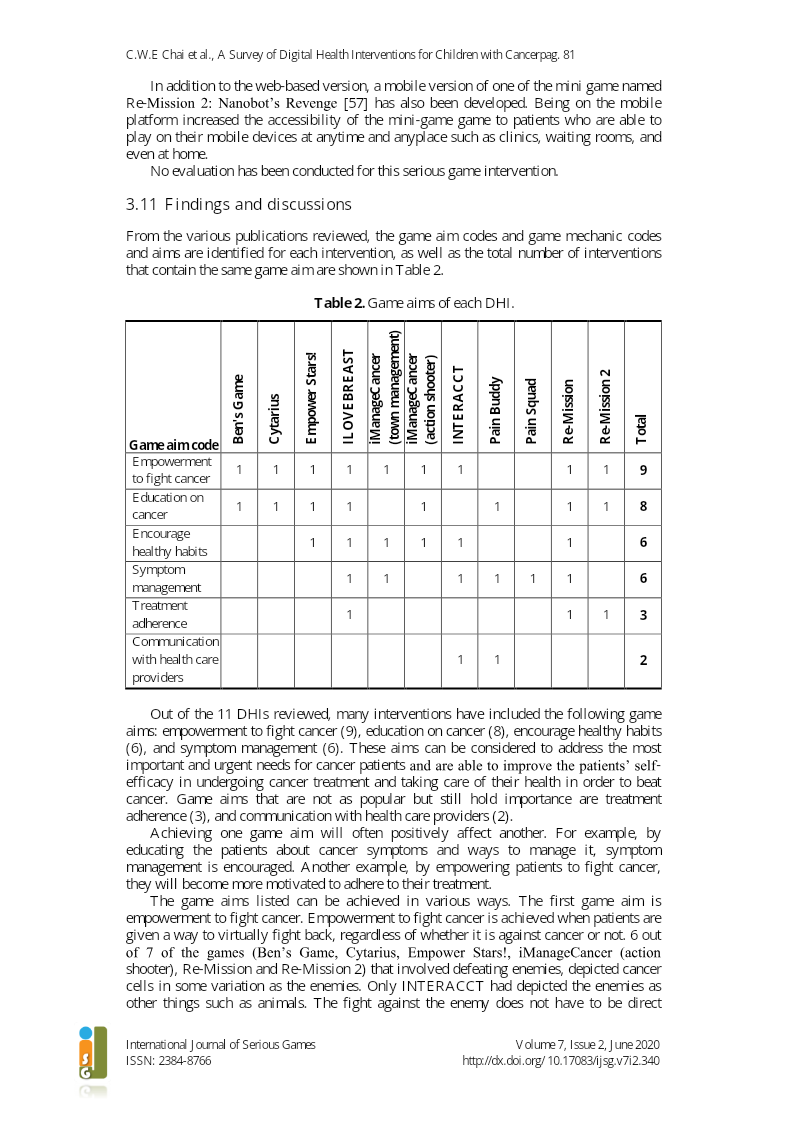

International Journal of Serious Games · 2020
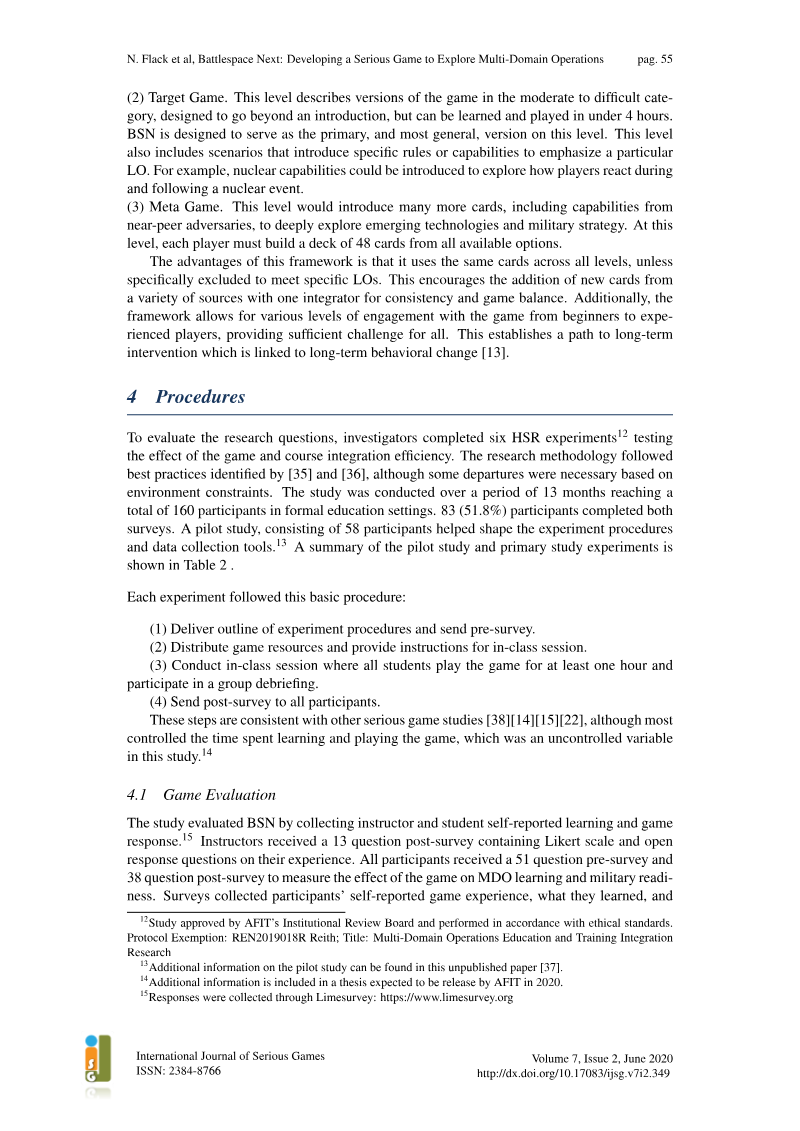
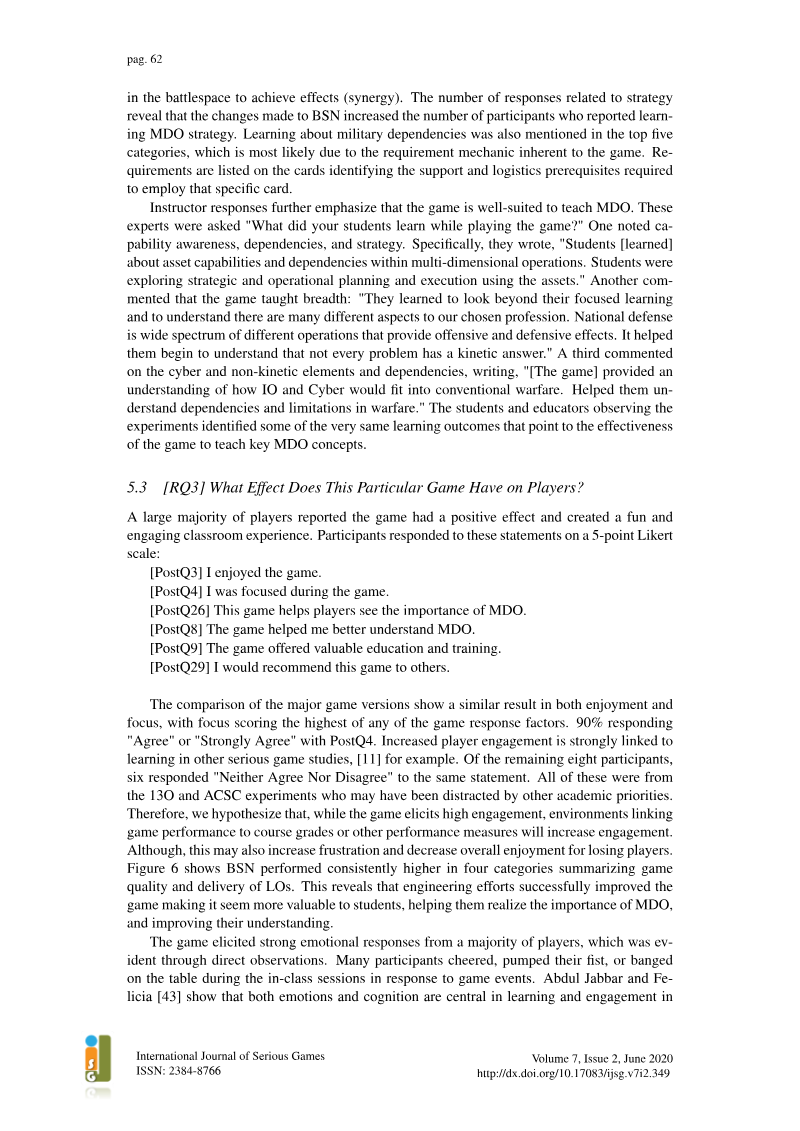
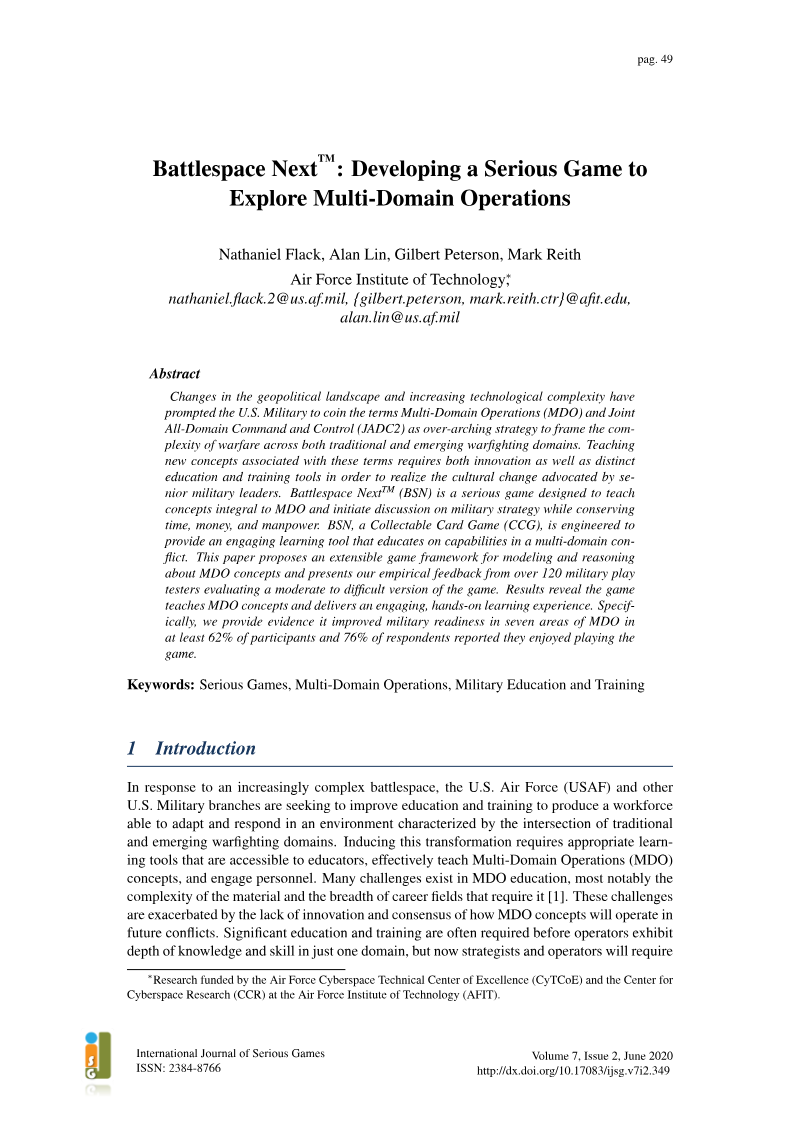
Air Force Institute of Technology · 2020
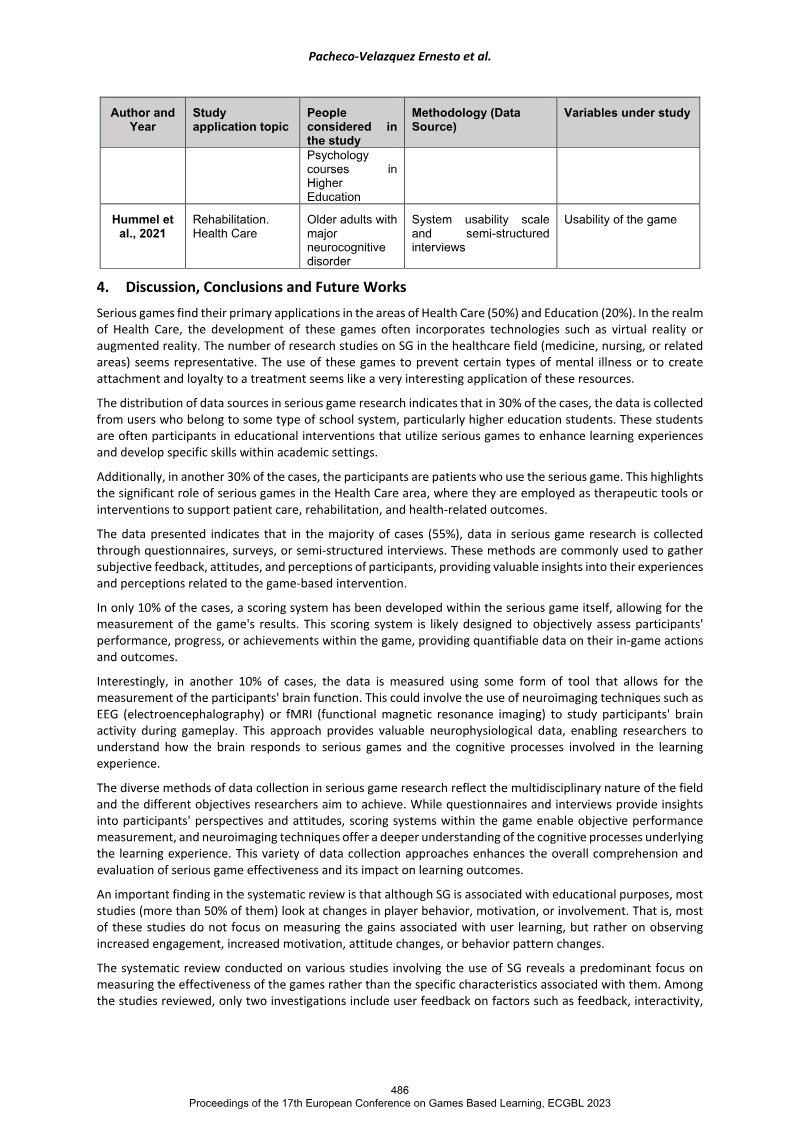
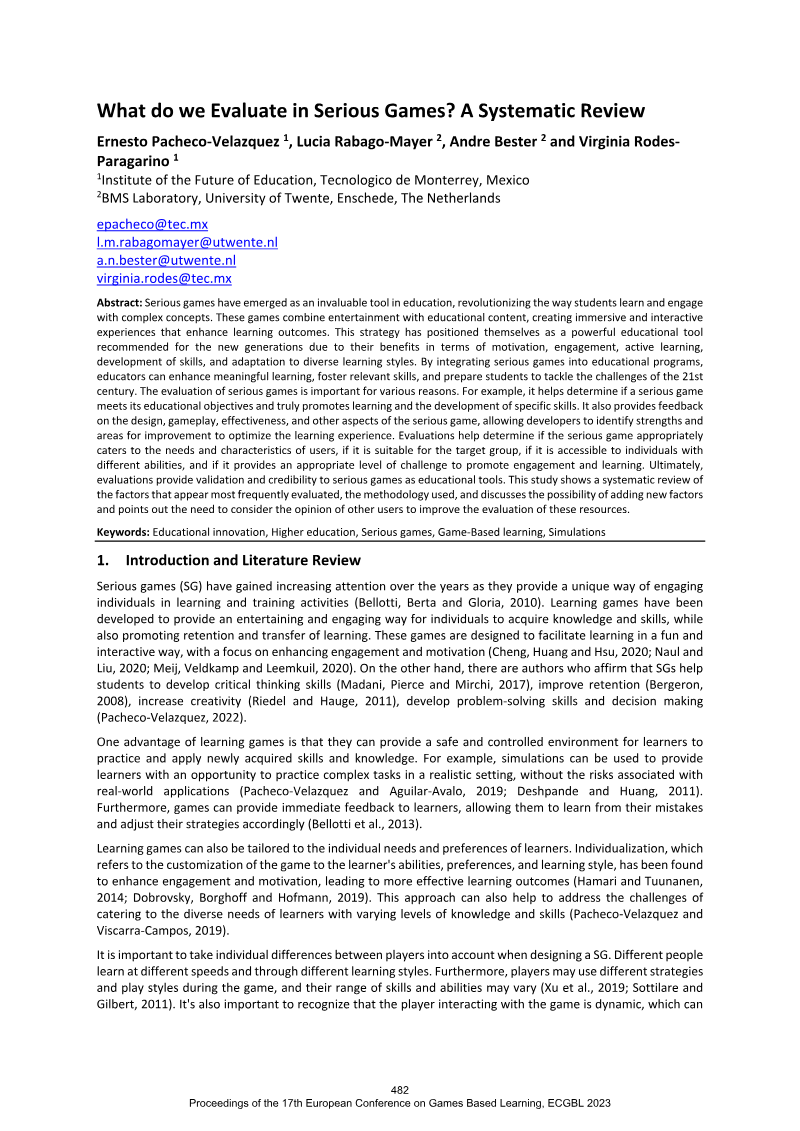
European Conference on Games Based Learning (ECGBL) · 2023