1 free read left. Create a free account for unlimited reading + AI research.
Create free accountWhitepaper International Journal of Serious Games
1 free read left. Create a free account for unlimited reading + AI research.
Create free accountWhitepaperInternational Journal of Serious Games
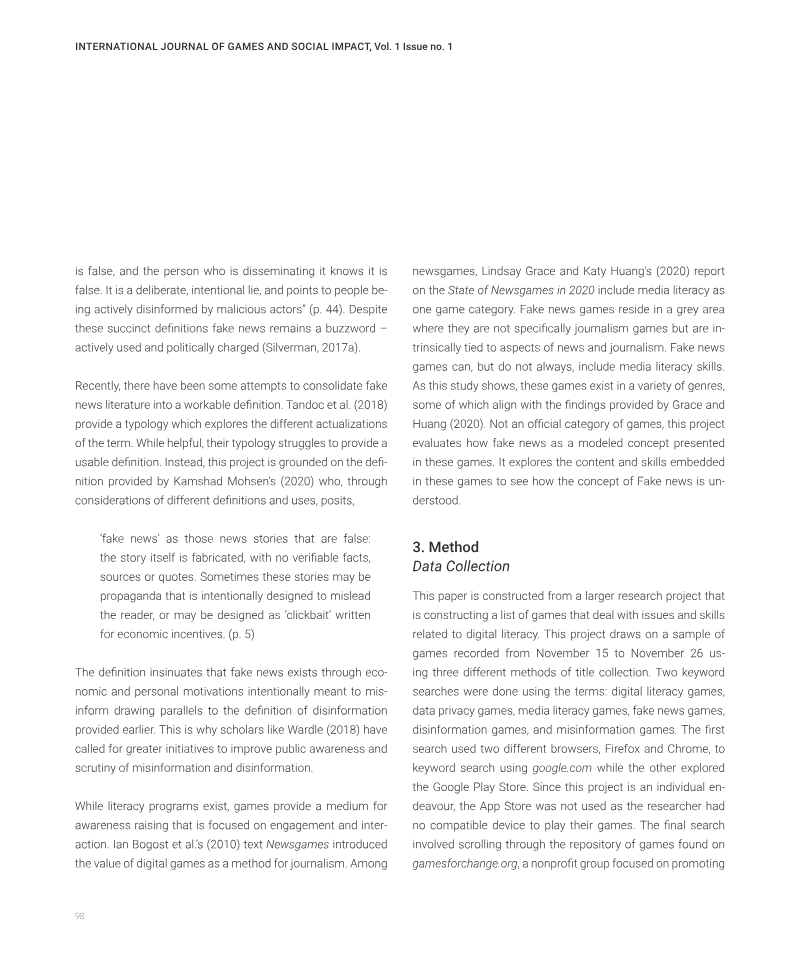
Immersion serves as a fundamental mechanism for enhancing the efficacy of persuasive games, acting as a bridge between interactive play and the reception of socio-political messaging. By examining titles such as My Life as a Refugee and PeaceMaker, it becomes clear that the player’s ability to identify with characters and internalize complex narratives is the primary driver of engagement. This immersive experience is multifaceted, relying on a synthesis of narrative depth, ludic challenge, and spatial realism to foster a sense of first-hand experience that traditional media often fails to achieve.
The research, conducted through qualitative interviews with a diverse cohort of participants, highlights that immersion is a highly subjective process. While narrative elements provide the emotional core, the internalization of game rules and the perception of meaningful goals are essential for maintaining engagement. However, this process is fragile; design flaws such as disruptive user interfaces, excessive complexity, or overly restrictive control schemes can break the immersive state, thereby diminishing the game's persuasive impact. Effective design requires a delicate balance where real-world relevance is anchored by seamless gameplay mechanics.
Ultimately, the findings suggest that persuasive impact is achieved through a strategic combination of emotional resonance and analytical engagement. Ludic elements, particularly time constraints and goal-oriented challenges, play a vital role in promoting critical thought rather than passive consumption. To optimize these outcomes, developers should adopt a specialized player involvement model that prioritizes the cohesion between narrative intent and mechanical execution. By aligning these dimensions, persuasive games can more effectively transmit complex personal experiences and influence player perspectives on global issues.
International Journal of Serious Games · 2023
International Journal of Serious Games · 2022

International Journal of Serious Games · 2020

International Journal of Serious Games · 2020
International Journal of Serious Games · 2020



International Journal of Serious Games · 2020
International Journal of Serious Games · 2020
International Journal of Serious Games · 2020

International Journal of Serious Games · 2020
International Journal of Serious Games · 2020

International Journal of Serious Games · 2020
Air Force Institute of Technology · 2020
Uppsala University · 2025