1 free read left. Create a free account for unlimited reading + AI research.
Create free account
Panel: The K Factor - How Your Campaigns can also Improve Your Organic Growth
Key insights
6 takeaways- 01Developers should prioritize optimizing app store listings, metadata, assets, and keywords over chasing a singular growth metric to maintain visibility in evolving store environments.
- 02The K-factor is a highly variable metric that cannot be reduced to a universal formula because organic uplift is heavily dependent on unpredictable factors like app store algorithms and influencer activity.
- 03Sustainable long-term growth is driven by fostering authentic word-of-mouth and community-driven features, such as clans, rather than relying solely on performance-based marketing metrics.
- 04The pandemic-era surge in organic installs demonstrated that aligning game concepts with broader social trends and social connectivity is a primary driver of organic growth.
- 05Paid user acquisition acts as a catalyst for organic discovery, but the two channels are so inextricably linked that isolating the precise impact of marketing spend on organic performance is functionally difficult.
- 06Dissonant marketing tactics used to capture immediate attention risk eroding long-term brand trust, making consistent branding and live operations a more effective strategy for building enduring franchises.
Ask AI about this video
Transcript
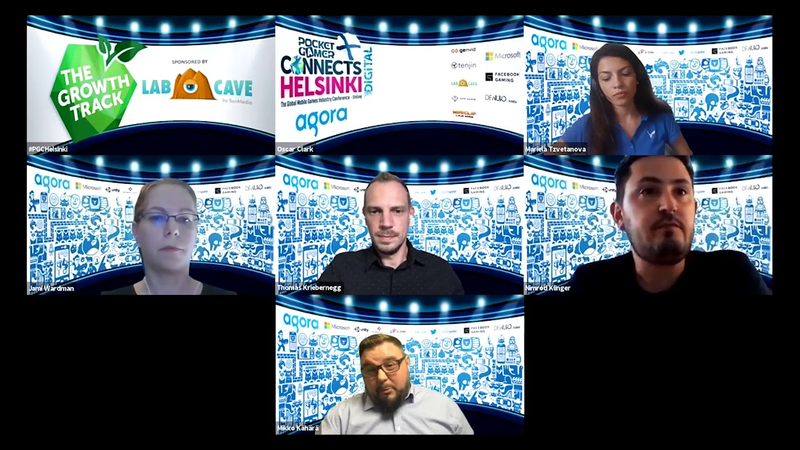
uh so next up we're going to have um uh mariella from interior online thank you uh is going to join us and moderate our panel talking about the k factor how campaigns can be improved uh yeah so how campaigns can improve your organic growth i think is a majorly important thing this idea of synergy uh between the the ad the game the audience that's kind of what i was trying to get to so i'm gonna let you take over and introduce your panel and i'm really looking forward to seeing what you guys come up with thank you oscar i think it's going to be a very interesting panel everyone's joining yeah so we got
jamie thomas nimrod nico and that's all of us because uh sami won't be able to join us today so my aim is to chat you all about the k factor and how your campaigns can also improve your organic growth today so from my position as part of imperial online for seven years it's a game production company i will also try to give examples of what we've seen through the years and let's start with an intro of each and every one of you jamie you go first fantastic thank you my name is jamie wordman i'm from lab cave we are a mobile growth 360 provider we provide a lot of different aspects of growth for a game that may already be in the market or one that is looking to come into the market we focus on app store optimization ad mediation internal publishing
for games we make internally developed and games that are externally developed as well okay fantastic nimrod hi my name is nimrod i'm uh the head of ui at crazylabs uh chrysler used to be tactile in the past um i'm here for around four years i'm managing currently the whole ua and marketing efforts for the hyper casual activities uh tactile the crazy labs we have uh different kinds of games from hyper casual which is the biggest the biggest vertical we're on but we also have casual games ap games uh runners and all the kids games we used to make tons of uh back in the days yeah and also you have an office here in sofia right yes that's right yeah so let's go with thomas hello everyone my name is thomas i'm the ceo of app radar at appradar we specialized in the field
of app store marketing because in the end it doesn't matter which kind of user acquisition you make all the traffic will be directed to the app store and this is exactly where we specialized in in the field of app store optimization as well as apple circuits to give one example we we're helping mobile games as well as apps grow since more than eight years and yeah happy to be on the panel today yeah it will be quite important uh to discuss the aso as well here and uh mikko mick kukahara i'm with uh cuckoo removal entertainment we're based here in kotka finland and i work as a chief commercial officer so basically all things related to growth is really basically on my plate uh i think we are still best known for our tiny troopers franchise it's about close to 45 million downloads over almost a decade on different platforms and different titles
but in the past three and a half years we've been focusing on pixel wells which is a sandbox mmo game with retro graphics and actually a good track record of organic growth as well yeah fantastic thank you for the intro um so let's start you've heard of going viral is so crucial for every game so every developer wants to understand how their apps user base is growing and how to help that and the k factor is one of the topics that uh everyone is trying to understand better with the formula and everything so what is the k factor for uh games and especially for your games uh jamie well that k factor would be the relationship between the paid growth and the organic growth so as you pay for users you expect to see a certain amount of organic users also come along with your paid campaigns
for lab cave we don't find a straight number for every one of our games we have quite a few games in the market and i would say the vast majority do not provide decay factor that is easy to make decisions on to make financial um decisions where we know absolutely what's going to happen and we focus a lot on having the store page look look correct we're constantly adjusting the keywords that the colors to work on our conversion rate you know what what what screenshots are calling to people what icons are calling to people but um even making those adjustments and our unpaid campaigns together we're not finding that magic number um through our games and our data science team looks at data over an entire year trying to find these numbers and unfortunately we haven't been as successful as we would like in this space i will say we have had clients come to us who insist that they have one and when we look at a year of data some of them do but it is not consistent enough where we can say absolutely if you pay for this many additional
installs you will also receive this many um i think a just has a number where they say you should get 30 of companies will get 45 for every 100 they pay for they should get 45 organic um we've just never seen that in our numbers i would love to be able to rely on that but i've just never seen it i don't know thomas i guess because we kind of do similar things do you feel similar yeah yeah uh totally so i think uh calculating the k factor is kind of the really the myth out there i would say the or the the really the biggest challenges probably that we have there because it's just so much complexity that plays into role because uh i mean depending really on which kind of user acquisition channels you're driving traffic and then also really calculating what in the end comes through organically on top uh especially also since the app stores are making the life not really easier also making it a little bit more complicated over the last couple of months and also years in the case of apple where they're also not really separating anymore when you see search traffic
there is not really a split up if this was now search traffic this was organically or if it was paid search traffic uh like it is for example in the new google play console now so also this makes life not really easier i think one of the things that can be done to measure kind of decay factor but it really depends also on the case if it's uh doable is to run a very separated and isolated test in a specific country where you send traffic over to only pay traffic and then you wait a bit and then you see how much organic traffic will last after this kind of uh first step uh this might be a way to find out but also i i think i don't have to tell you if you do it in an isolated market it also doesn't mean that it applies to every market out there so once again yeah a bit more complexity that's what i was going to ask nimrod if they have tried this with a specific country to understand better decay factor yeah so i i would i would say the decay factor is something obviously you you measure on past performance you
can't predict anything that's going to happen based on your actions also k factor is something that changes from game to game from operating system to another even from different countries i mean the k factor in u.s is very different from k-factor in china and the k-factor in us ios is very different from the us android term so so it's something that we we really don't have any any way to to to predict or to base our decision on but we do use obviously the k factor in calculation for our bits we use the the organic the organic installs that are coming um to boost our bids and to be able to uh buy more efficiently so we always try to improve what else what what's there to be improved there if it's the app store listing and maybe tests and everything uh we do see some um like influencers
uh they're doing really well for our k factor either if they're sponsored by us or if it's only like their channel and they're [Music] promoting a game on their own we do see some great miracles app store features is something that really helps the k factor for a limited time um so so for us it's just a bonus to our strategy anyway and it changes the app store featuring something that i want to discuss further more in the next questions and uh miku how about you do you see any kind of k factor for your games we do we do and uh and with pixel worlds i mean majority of all of our traffic is really organic so we don't we haven't done that much ua in the past but we do have a privilege of coming having a long lifetime with it with with
pixel worlds which means that we can we do have data to look at and uh how we calculate k factor is really us looking at more like organic traffic sort of trying to uh minimize the effects of of any sort of influences minimize the effects of featuring in the data that we look and then we just look at organic traffic and how much additional traffic they bring so it's basically just looking at uh the life to average lifetime of of a player and and sort of multiply that with sort of average uh new users for daily active users so so kind of we can figure out a a multiplier of basically one one new organic user is going to bring another one within six months for example but that's this is one one of the uh sort of aspects that we look at there and what we have been doing in the past 12 months it's really sort of stimulating uh organic growth and that's
been how we see that you know when we do ua and influencer campaigns it's really us triggering organic growth to begin with it's uh obviously we do get new users through ua and and uh and influencer campaigns and featuring and all that but the beef is really for us to push the the daily active users level uh level two to a higher degree and what we've seen is that the actually the the percentage of new users uh on a daily basis is quite constant regardless of the size of the um of the markets obviously there are limits to it but uh we haven't really run into those which means that by sort of we've been doing some intern intensives in market to market testing and uh and basically i mean in some countries we we have like every 10 10 of uh our core audience of eight to 18 year olds playing pixel wars daily and that's kind of the measuring stick where we can scale up
the game for from our perspective so it's really yeah the kind of key key metrics there yeah for us as well the simplest way to understand the k factor is to apply during user acquisition campaigns and uh we wanted to see for the web browser games because i want to broaden the prospect not only to the mobile apps but also to the uh pc games so for browser for our browser games when we stopped the user acquisition for a few months we didn't see any kind of changes for the organic registrations which was kind of tricky then we were wondering whether to start the campaigns again but during the pandemic it made sense for us uh how about you jamie did you see any kind of changes in the past months and uh what are the effects of paid user acquisition on organic installs for you we have seen you know a rise in users as i'm sure many companies have seen more people uh coming around to play
um which is which has increased our you know the the um ads within our game and and the money made from our team but not necessarily increase the in-app purchases has been an interesting um interesting bit of data that we've noticed while we have this increased amount of users um and you know again because we're always working on our organics um you know we're continuing to see users come in and more from an organic basis than from a page basis but um but we're just not seeing the same switch over in terms of more users seems like it should bring in more iap and unfortunately for us it has not and i know it's a little outside of the scope of what we're talking about just in terms of k factor here but this is an interesting thing to note from this coronavirus time of this increase of users um but not necessarily always i mean again games are all each game is different that we have but the vast majority aren't seeing that increase in iap yeah and what about you thomas do you think that most of the developers
are experienced some kind of changes in the way organic traffic is coming to their games yeah so i also i can also second the opinion of jaime in this regard yeah because what we have also seen is just the downloads new inserts new users have been up uh kind of through every kind of category i mean since we're also working with apps for sure there were categories like travel apps for example they had a massive crash but when looking especially at gaming and they are at the different categories i would say generally speaking everything went up but also what we have seen when looking at the data is on the one hand yes monetization of those people has been a little bit it didn't go up in the same extent and also on the other hand uh what we have seen that the lifetime or how long do players stick to a game was also massively dropping and uh i can also refer a little bit back to my kind of uh behavior when the potential started and i was also thinking okay now i got some time let's check out the app store and i think i was just downloading
many many games and was trying them out and i am quite sure that i was not the only person with this behavior and i think that also the numbers exactly i think the numbers just show it because people then had more time had more time to try out different things and i think all kind of the numbers that we're seeing is showing are is showing exactly that so i think it has kind in the first you know like it was this hype yes a lot of new uses but then i think over time it was also a little bit of frustration uh yeah but where's the money um so uh yeah i think that sums up quite well our observation that we have seen over the last couple of months okay and nimrod do you see more or less organic installs result from the paid ones for your computer so so um a different from game to game some games had a very big increase uh during the pandemic especially between march and and june um also also saw
like something very unique that happened for the first time since i'm in this industry that the weekdays and the weekends look exactly the same there used to be like a big differences between tuesday and a sunday in terms of the amount of organic installs and obviously uh how well the ua campaigns did um so this what it was a good thing for us uh to be able to to look at every day the same and not are we thinking about what's gonna happen during the weekend now we see uh weekends are becoming more and more significant not as it was in january but but it's not as as it was like two months ago um what we also saw um in july which was quite interesting um his anticipation for games we released a new game in july called tai dai i don't know if you are aware of that but we released it on ios and what we saw is
that uh people it really created a hype uh people with uh ios devices played it for two weeks before it came to android um and then we started seeing on social media and on tiktok comments and stuff like that people with android devices really begging us to release the the android version um so when we did launch it two weeks later we started it with no ui at all and we saw around 60 to 70 000 organic installs a day without doing anything um it's something that we didn't experience before and and i think it has to do something with the fact that people uh are at home and some of the way to communicate uh is by sharing experiences like new games and stuff like that and tie-dye was really hitting some good uh viral effect of work to mouth that wasn't affected by any ua campaign
on android and uh did really well for us okay that sounds interesting i guess you also worked on the way people were able to share uh about the game uh in the social media so that it could actually go viral because that's quite important too and how about you mikko do you share the thought that featuring the app is also a growth hack and have you seen any other changes during the pandemic well well yeah i mean featuring it uh well it's kind of traditional growth hacks was so it it'll boost boost the uh the growth but it's kind of uh secondary i mean the traffic that you usually get from from from featuring is now not not that as high quality as as your sort of primary organic growth which is really worth the mouth and and that's i mean for us i mean our core audience is
uh is really you know gen z and and even young i mean uh school kids mostly and for them obviously i mean sharing their experiences with games with their friends are really really strong so uh and that's our sort of primary source of growth that we we focus on making sure that the kids have a good experience and they bring their friends in and uh and and enjoy the social aspects of the game and and this is something that we actually we did see we we were actually expecting to see a decrease in in organic growth after during the pandemic uh since you know kids are not meeting each other's core because they're locked down but uh it didn't really happen i think uh and i think one of the key reasons that we saw a huge parking activity of the game so basically past six months been looking like from from metrics perspective like a big long holiday or a big weekend so so so we saw uh an increase in session uh daily
session cows we saw an increase in daily active uh time played and uh and it did it didn't have any effect a negative effect in the in the organic growth so i suppose i mean people do uh they play more and they are more active even though they don't meet each other personally they're still more active instead of sharing their experience for the game and what did you do in terms of the uh way people were able to share uh their experience in the game was it just only facebook integration or also whatsapp and other channels where they can actually tell their friends come and play did you have rewards for the uh inviter the invitee no not really i mean i mean most of our audience for example i mean they don't use facebook or anything like that so um it's we introduced a clan function to the game in earlier last year which i think was really kind of a key driver in in bringing the especially introducing
people into the social aspects of the game and um and i think that's that was really kind of the key and we do have a very sort of active community and active forums and all that so so we we do keep and we're producing new stuff every week on youtube stuff like that so it does uh keep people quite engaged and uh and and the kids well and they they found a way to find a way to to really sort of uh communicate with each other on different languages and different forms and stuff that sounds really interesting and uh jamie uh have you seen that the design of the message for sharing is important or there are also other channels where people find a way to share a new game and you don't exactly know which they are i mean there's always going to be a little bit of that right you can't track word of mouth the same way and you know depending on the style of game uh you know we could be a little bit more active on
instagram for example if we're trying to hit more female users um it really is it's not that there's always going to be some idea where there's some traffic where you're not 100 sure where it came from and i think we're going to see more of that coming up um soon with it with within ios especially with some of the changes coming up but um you know most the time we're we're aware uh you know where the users are coming from but you know i think that these i think that these adjustments are of constantly wanting to widen where you're going to find your users are going to become it's it's normal and normal to get that and liking your game especially during like you said during the pandemic time where they're talking about it and maybe uh have you played this one we should we should compare our scores uh roughly my husband and i have been doing that during this this pandemic like what level are you on you know and then you're pushing somebody else to download which is an avenue that you may not have known you have um just families virality and friends yeah
uh how about you thomas uh do you think the app store optimization works here as a factor uh yes uh i totally think so uh because what we have also seen just over the last months is that the traffic to the app stores itself i think in total has just been rising constantly because just of somewhere anymore people think of school kids don't have to go to school i have a smartphone i mean what will they do probably look for new games for example so uh just the traffic sources that was going through the app store was just increasing which also means that the people who were already doing quite a good decent job within the app stores where i also think kind of the the big winners out of just the last couple of months because in the end it was just amplification of traffic of source bringing into the app store and if you have been doing a good aso before so meaning that you have been ranking for relevant keywords uh where players can totally identify okay this is a keyboard this is a game this is a perfect match i want to play this now if you have done this already prior to
the pandemic then it was just really good for you because you had the good rankings already and there out of a sudden was just a massive spike in traffic so to say coming to the app stores same applies for all different other channels within the app store so meaning featurings also are if you uh really nail your featuring uh if you already optimized it a bit fine-tuned it a bit to really attract more people also then also more users clicked on it the conversion rates were higher but uh when talking about featurings i think it's also very important to say that there is a difference between featuring and featuring because it is a difference if you're on the first page the first game that is being featured or if you're in the games category of the subcategory of the sub category on the third page so there probably you won't get that much traffic in comparison so therefore i think it's also quite important uh when talking about featurings to also identify where are you featured which you can easily do with an operator by the way yeah i absolutely agree here
because from my personal experience it's quite important how exactly you fill out the form when you want to get a featuring and which countries you actually chose for this because uh and where your game is popular and what you've done for the app store optimization before the featuring so you're quite right here and nimrod you mentioned about uh your new game in july uh going viral so what do you think that made it go viral i mean in terms of the design or something that you did right many people would ask you that questions yeah i mean uh when working at the hyper-casual industry you're required to release new games all the time um it's ideas is the hardest thing to do in in that in this industry because you have so many competitors new games are coming from your competitors all the time so you need to always find uh what's trending what's new what
people like uh we made it a habit to to be on youtube on snapchat on tick tock uh everywhere people post content and see what's trending what's uh working well um and tie dye for example is an example of a trend on on all the social media platforms that uh had millions of views and people are making their own tie dyes at home and uh it seems very fun and easy and people want to wear the the clothes that they die so we thought yeah why the heck why won't we make a game out of it and see see what's going to happen and it's probably one of the best games we've made so far in every single aspect in download in ltv in um k-factor like everything works really well for this game and it's very important to be very precise
when you're coming to the aviation process and and and try to think not what you think is fun but what your audience might think is fun and and see what they like at the moment and not not always try to dictate what is the next trend but always look what is the current trend and right on it yeah and uh mikko can you share which is the game that you believe had the most of the k factor for your game portfolio oh yeah well pixel world's hands down i mean um well tiny troopers games i mean the audience was was a bit different i mean we were focusing on strategy game fans that are generally you know males or 30 to 40 something like that who don't really speak about the games they play to their friends or anything like that so it's really kind of more reliance on
other alternative sources whereas the uh with pixel was really the audience is this is really the key of uh of of the organic growth yeah i absolutely get it here with the male audience because we struggle a lot uh from their opinions in the forums but i actually don't share anything positive most of the time so it's quite a tricky audience uh and it really depends on the platform for us so uh most of the questions that questions i see from the audience are related to how exactly you calculate the k factor i think we discussed it a little bit but if you'd like we can spend a bit more time on this question is there anyone who can add something and there is a formula i don't remember it by heart but eventually if you run a user acquisition campaign and you
buy 10 000 installs but eventually you see 12 000 installs coming in you have this additional 2000 installs that came from in indirectly from from your campaign uh but they're with correlation to what you did because they didn't exist before you opened that campaign so because of that extra 2000 installs your k factor is now 1.2 k factor should be higher than one and obviously the higher the better yeah thank you for this because it's quite important to clarify it before before going further so um you mentioned it once uh so my other question uh is no matter how old an app might be there's always the chance for k factor in my opinion but is it the same from your experience i mean everyone here has different kind of perspective maybe we
can start with thomas yeah so generally speaking when talking about how old is in game and now especially looking at the app stores what we have seen is totally if you have one let's let's call it an older app store entry this means that you created your app a couple of years ago and you have it within the app store and you're still working on it you're still updating it uh people out there see it's still alive and it's nothing like a zombie or it's already completely dead uh if this happens uh what we see within the app stores is that also the app stores tend to give older games tend to give all the apps a bit more of strength when it comes to the topic of app store optimization in terms of ranking for keywords because one of the reasons is just that you have this one entity that already has a lot of historical downloads and historically downloads are also a ranking factor within the app stores for kind of different things for example like how visible are you and specific keywords and so therefore from this perspective
they hold the game and as mentioned it needs to be still alive and people also need to see it as still alive the better in terms of your absolute optimization yeah uh and mikko have you uh seen it for an old app of yours some kind of organic traffic well i mean you can say that pixel was just quite quite uh quite old but we do see a lot of players who have been with us since the beginning so so for more than three years and uh since we have that base of people who are i mean a long retention tale they do obviously impact others as well so so there's like this uh a constant effect of having a certain degree of k factor in with every 3 10 user but yeah i mean tiny troopers for example i mean we we did see about three and a half million of downloads last year and we haven't really touched the game in four years so so basically on
on it's very twilight so john troop is too i mean on mobile so so so it's there i mean people do enjoy the brand and and and enjoy the uh the concept that we that we have uh if if it's relevant so so i guess it's like the longevity of the brand also the affects the k factor absolutely and are you still um on windows platform and do you see the same effect there um so on pc uh yeah i mean what we've seen yeah pretty much follows the same kind of uh patterns yeah yeah because i remember that one of our partners game troopers that are our exclusive publisher on windows were giving us always examples with tiny troopers which is uh quite nice that we are here and can catch up on this as well so i wanted to to ask jane here um if she knows something more about
the google play uh beta calculating new changes from this year because it quite uh made us actually uh do some changes in the strategy uh can you share more about this sure i will say that google can do whatever they want so this is just based on what our team has researched so far in the console and we'll see what actually happens when the official console comes out but what we're seeing right now is that the google ads are being put into the search and explorer traffic um and the reason that that's going to be an issue potentially going forward is while they're giving you a lot more information than we had before and being able to break down kind of where your traffic's coming from those google ads are paid traffic and so being able to say exactly what was your organic traffic what came to you without a paid acquisition campaign will be that much harder to determine based on the information because they're putting them together when you're taking your channels that
are usually the channels you would go and look at for your virality i mean how are your explore channels working how are how are people finding your game um and then your search channels to know what's going on with your metadata when you add paid traffic into that it just really muddies the waters of trying to figure out what's what's happening what is what is happening with my app how are people responding to it in the stores um and then there's also uh the retained installers report appears to uh be missing from the latest version so i mean right now for our team trying to figure out where users come from what they're responding to and then how what we can do to adjust further there's some concern internally about this but i will say on the other side you know if you're you know putting together your ua campaigns with your organic campaigns which you should be doing anyway you should be you know a cycle of aso and user acquisition campaigns this may end up being a good thing in the long run because you're going to be having these um really strong ads within google that will let you know maybe
if your metadata is working quite well in terms of your how your user acquisition is going forward so um it's just a lot to take in right now it's a lot of new information that we're you know the teams are are digesting and figuring out how do we move forward with um you know being able to show you know potential clients that come in what traffic we were able to bring to them by the adjustments we've made becomes a little bit harder um but overall for us in the games that we publish we're kind of excited to see the additional information that the console is providing yeah i was about to ask actually thomas if he sees it as a positive or negative thing those changes in terms of app store optimization yeah so both i would say is the answer to it uh yeah the the downside is that it will be harder just to really figure out okay what is now really organic and what isn't so that's i think the big downside but on the other hand i also have to say uh and i assume people that are spending time within the google play console can very much relate to this
the changes in terms of user experience and also ui and all this stuff is really great with the new console compared to the up to the old one because i think in the old console it was from time to time quite hard to find exactly what you have been looking for and so therefore i think just in terms of usability it has been a major step on the side of on the side of google which also will relate to that you will be able to easily analyze what's really going on you will be able as jamie said to really also dig down more into user acquisition strategies but i also think really do go more into retention and stuff like this as well to really get a bigger picture of what is happening from kind of the true source so to say from google from with official numbers so therefore i think yeah both on the one hand bad that we are losing information on the other hand great because i think user experience just made a massive boost yeah i guess we just need to adapt to the new changes as every every time uh happens
and what about new nimrod how do you actually track your uh k factor uh what do you use as a tool um we are using obviously our mmp uh slider to to check all our installs uh in order to see the whole picture of our ua efforts our organic efforts and we're integrated in into our bi into many many processes so we don't have any specific iso tool that will allow us to do that but i mean everything calculated based on the total numbers we see from rmp um obviously we do a lot to to improve our k factor with all the a b tests in the store and uh and we don't take it for granted we don't say okay this is my k factor now and this is how it's going
to be forever we always test and optimize uh keywords like everything possible we can't say that definitely something worked even though it was green on the test and it passed and everything you don't you don't necessarily see the results right away but uh this is a constant uh improvement some of our games are three four five years old and they still need to be updated with new keywords and uh from time to time you need to change their icon or the screenshots and you just don't let them die in the store and by by the fact that we also do that on a weekly or monthly basis for some of the apps we are able to maintain apps to live longer and to still be generating us good amount of money and profits okay so i don't think that we have much time left for the questions but some of
them were answered um so i guess what's left is uh to discuss if the k factor is related to the effective cpi oscar do we have time for this okay so mikko can you share your thoughts about this well well yeah it is and we've been doing um i said we haven't done that much you know user acquisition or or anything like that but when we have it's been basically country by country kind of burst campaigns and uh and lifting up the the the daily active usage base and we do see uh the effect on the ecpi so so it it comes with a bit of a delay so so basically we we get uh if we really burst um new users in in in like on a week two week period we see an uh a gradual increase
in organic growth over the over the next month so it's kind of follows follows after one to three week uh cycle but it it always kind of pops up into the same area so if we look at the ecpi we need to sort of look at looking uh look at the longer period of time not just related to towards the time period when we actually do ua or other campaigns okay um so let's uh sum up uh that actually uh what you need to have in order to see the k factor is a quite nice game which can go viral by itself on the first place and of course to work a lot on your app store optimization on the way it can be shared and like you all of you said um actually to um to see uh country by country if this factor is uh incentivized but
by anything uh related to your user acquisition campaign so that you can work on this locally and reach the right audience actually with it so uh thank you much everyone for participating i think it was a great topic and uh we added uh for a lot of information for the developers that well that was great stuff and actually one area i'd like to throw in um so i'm a big believer that the closer your live operations is with your user acquisition the more you use the key same messages the way you use the events and the communication of the activity of the game the better effect you can have in in your k factor uh is that something other people have seen or is it just me that's that's finding that does anyone want to comment on the connection between the live running of the game and the actual user acquisition and whether it's a uh for us that's really kind of the key how we how he um
creates marketing creators so we want to create usually you use like you know kind of influence type video creatives that look like you know you're actually an influencer playing the game and we usually use our community manager who's who is producing uh live content of the game on streams and videos and on a weekly basis so the idea behind that is really to to introduce the the players to the actual look and feel of not not just the game but the community of the game and the methods of the game from from early on no absolutely that's exactly what i'm talking about and another thing i found really interesting is when you kind of effectively kind of empower the players to support that process and incentivize them to do that now that's not possible with every game don't get me wrong but i think you know like the time troopers type stuff and i think it's really kind of a key way of of thinking about how games work i mean nimrod
you're nodding away there is that agreement yeah i do i do agree i i also think one thing that will that is really important is to have your own ip it's easy to say but very hard to do but if you look at the subway surfers and the candy crush and talking tom franchise uh they have their own ap and they're doing really well on the organic side even without spending a lot of uk i think subway surfers are not doing anyway but they were the top charts a few weeks ago just by by the virality of the game and we see for some of our games that uh if we have for example run sausage round with which is three years old um with 130 million downloads 90 million downloads are organic the the ip of the game is very important to uh to be recognized and the fan base of the app is something that is very important and you need to keep it and maintain it
and you mentioned subway surfers and i i did two hours of consulting on subway surfers which was completely useless i just basically said i love the game and but what i think fascinating about what those guys did uh is that they really did listen about the the what what people could look forward to and i think in their they're a really good example of where they tie in their kind of user acquisition with the ongoing engagement of the game that kind of visiting a city visiting a country that kind of travel that real sort of connection with the players ambition as well as the marketing i think that's really pivotal like you say the fact that they've got their own ip to do that and they're authentic with it i think he is magical definitely yeah thomas you know you know you you you guys have any good thoughts on that uh yeah i would i mean uh maybe to to bring in a little bit of a different perspective because we're also working together with apps so not only games and on the upside what we see there is
i think this refers to very well is also the branding effect so it is really about on the game side you build up your ip if you're an app you try to build up your name so you like the people know you out there in the beginning they will probably know you for ah this is this dating app but later they will say oh this is tinder and i think this is the kind of the same stuff that applies here because also once you have this big brand once people know you by name then also a lot of you know like organic use acquisition will just happen in comparison so the same well there's another factor there i think which is like when you get that branding right you become the verb for that app exactly exactly i'm going to get a viewer of the verb and i think a subway surfer is a genre uh i mean you know a candy crush sort of surfer i mean argue candy crush is more difficult because we've got bejeweled as the historical phrase for that but i mean i think there's a real kind of thing about branding which i think very few uh mobile games people are focused on and i think that's because in some ways
arguably user acquisition have been so successful because we can see money spent users install return on have an investment it makes anyone whose job it is to get users so much simpler to get promoted for one's a better phrase to get your bonuses if you're a brand person if you're trying to create up the you know the become the verb of that game genre that's a much harder thing to measure as that much harder thing to get promoted over totally and i think that authenticity and the social connection you know social media connection is so key to getting that balance right but um you know maybe maybe the the positive of the um idfa uh going away could be that we actually have to spend more time marketing i'm friending with you i guess so um yeah marianna do you guys have any views on this sort of kind of broader marketing or socialization side yeah actually uh with the new game that we handle siege
world war the second this year uh we worked a lot on the branding in bulgaria because we are a well-known company here the biggest bulgarian game developer and it was quite important how we're going to introduce this game to the audience um and we saw that actually they uh all of the users that are so loyal for uh 15 years here and they know us just because we are bulgarian company they were willing to to try the game just because it's from in very online now and we saw lots of organic growth in bulgaria just because of a simple announcement of an upcoming championship that was involved with an influencer and i actually think that uh working with influencers that understand your game and have played it and know how to build a community
inside the game uh is crucial for the branding and if you're doing it locally like we did it here for bulgaria because we didn't want to ruin our brand because it will uh then uh be a topic that's discussed when we try to um to have new talent coming in in our company uh it was uh yeah quite a tricky job but i think we did it well yeah so yummy do you have any kind of thoughts you want to add to that and my only thing that i was thinking is everyone was talking about how logical it is to you know build your brand up and to have creatives that work with your live ops was about like what playwrights does how they have ads that mean that you do have the same character but the game is nothing like it and they're incredibly successful so there's also got to be some of this um playing against the normal sea of what you see other people doing because um there's there's users who maybe would
respond to that and they want to play that game they come in then they're like oh this is a fun game to play now that i'm here um it's just it's interesting it's interesting the thought process if you want to go with what everyone is doing and what is logical or if you want to totally buck the trend and try something different that's a really fascinating error i wish we had more time to go into it because i i think that what you've hit on there is why those things really work is when they're surprising when you're shaking people out of expectation and i don't think that's necessarily odds with the kind of use of live ops connection i think i think the ability to use dissonance appropriately and resonance appropriately is a subtle part of what makes communication marketing communication so important and being a brand that's associated with that is great the problem is when you become associated with bait and switch and therefore not trusted and i think that's one of the biggest problems with the kind of like you say a clarix kind of model is it's great if you're going to get attention but what point does it become damaging
to the brand and if brand is going to become more important and i don't know if this is true or not i'm not making any references to player x but clerics myself it's just i think there's a really interesting dilemma that's got to be thought through when you're taking that strategy they've done an amazing job with that great well done for them other people trying to follow that they may not understand why that worked and i think that's the thing that we as marketing people as growth people have to consider is not just that it worked but why it worked and to be true to that does that make sense absolutely yeah cool well on that note thank you guys so much uh really great panel uh mariella thank you so much for hosting that that was fantastic you
Summary
The K-factor, defined as the ratio of organic to paid user growth, serves as a complex and highly variable metric that defies universal application across the mobile gaming industry. Because organic uplift is influenced by unpredictable variables such as app store algorithms, influencer activity, and platform-specific featuring, developers should prioritize the optimization of app store listings and conversion rates over the pursuit of a singular growth formula. While paid user acquisition can act as a catalyst for organic discovery, the two channels are inextricably linked, making it difficult to isolate the precise impact of marketing spend on organic performance.
During the pandemic, the industry experienced a notable surge in organic installs, highlighting the importance of social connectivity and community-driven features like clans. This period underscored that long-term growth is less about performance-based metrics and more about fostering authentic word-of-mouth and aligning game concepts with broader social trends. For established titles, maintaining visibility requires a rigorous approach to App Store Optimization, including the consistent updating of metadata, assets, and keywords to ensure relevance within evolving store environments.
Ultimately, sustainable growth is rooted in the development of recognizable intellectual property and the cultivation of a loyal player base. While some studios experiment with dissonant marketing tactics to capture immediate attention, these strategies carry the risk of eroding long-term brand trust. Instead, the most effective growth strategy integrates live operations with consistent, authentic branding. By prioritizing community engagement and high-quality user experiences, developers can better navigate the challenges of modern app store discoverability and transform individual products into enduring, category-defining franchises.