1 free read left. Create a free account for unlimited reading + AI research.
Create free account
How offline advertising can boost your mobile and digital acquisition performance
Key insights
6 takeaways- 01Only 4% of gaming brands currently use television advertising regularly, while 71% of the industry discounts the medium entirely.
- 02Nearly 50% of skeptics would consider television advertising if provided with evidence that performance can be accurately tracked and optimized.
- 03Effective measurement requires moving beyond standard attribution windows to account for the 'afterglow' effect, organic uplift, and long-term baseline shifts that occur after a broadcast.
- 04Television functions as a trust-building mechanism that, when synchronized with social media, significantly increases ad recall and purchase intent compared to digital-only strategies.
- 05Brands can test television advertising in smaller markets with entry-level budgets as low as 20,000 pounds.
- 06Media channels should be categorized into a tiered strategy consisting of 'stars' for activation, 'volume drivers' for mid-tier reach, and 'awareness builders' for large-scale impact.
Ask AI about this video
Transcript
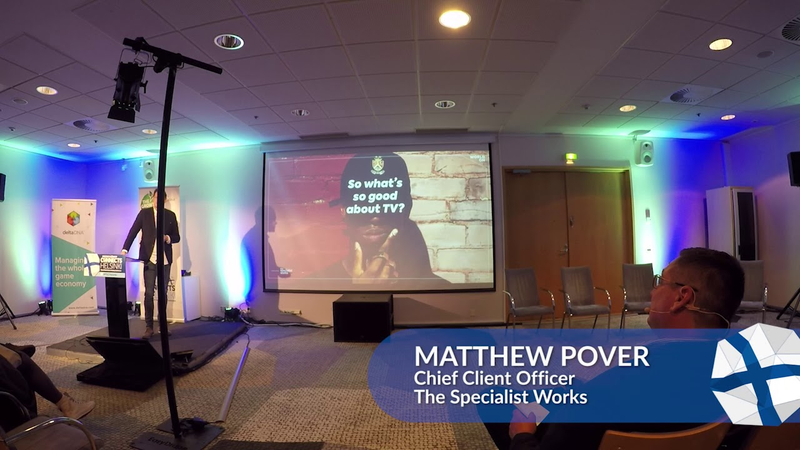
[Music] everybody I'm Matt and from the specialist works my surname isn't power its pover but it would have been really cool to be called from that power I'm sure so who are we we help ambitious gaming brands to grow around the u.s. Europe and beyond we work with probably more gaming brands and any other full-service media agency out there and we have a borderless approach so whatever media you need whatever strategy you need wherever you need it we're there for you guys we do all the stuff on that kind of flour diagram over there so it includes offline and online we do creative as well but a lot of the gaming brands as Mike just just referred to have their own digital in-house teams and so we very much dovetail with their offering so that we give them what they need and we don't try and teach them to suck eggs so it's very important we
collaborate and integrate with the in-house teams and also the business business insight teams and all the tools are compatible as well we've done campaigns across 27 markets in the last 12 months and we are currently at the last count 210 people in various places around the world as well and I'm gonna talk to you about two main things today primarily TV but there's obviously other offline channels that can help supercharge your mobile you a and also how not to attribute TV because I think there some people out there I've got their own I've got their own ideas but um I'm going to talk to you a little bit about that in more detail so here we are at Pocket Gamer we teamed up with Pocket Gamer and did a research study and asked the loads of games developers and publishers whether they use TV and what their opinions were about TV and so on I'm actually the only 4% of games brands that use TV regularly to promote their games 12% use it occasionally 13% might think about it at some point potentially
so that left kind of 71% of games brands who actually have kind of discounted TV wouldn't really consider it but actually when we asked them if they would consider TV if we could prove to them you could track it analyze it and optimize it then almost half of them said sure yeah let's let's let's have a look at that so that's exactly what I'm going to try and do with you guys today talk about that in a little bit more detail so a lot of you will have you know tune adjust and so on and those platforms have their own kind of TV modules within them and they're also compatible with platforms like TV squared and analyzer and so on but actually the way that all of those systems at the moment is a tributing TV broadly kind of looks like this so excuse me your organic installs are bumbling along a TV spot drops and then this is that the principle there's a huge uplift in in installs above the
base line and within an attribution window thus the the installs that basically driven in that period get allocated to the TV spot or the closest TV spot and actually that that model that kind of shape of response really only only really applies to web response rather than app store response because the distance between seeing a TV spot and then jumping on your phone and checking and checking something out online you get an immediate time stamp and that immediacy of tip-up of TV to e-commerce sorry TV to online in terms of e-commerce and digital brands like that where you're just searching up a website it does look like that so you do get an immediate surge in response but actually when you're driving action into an app store it's different you've got a they've got a search for you they've gotta find you they've got a start start the install and then they've got to open the app open the game before the
timestamp gets fat gets fired off into the system so that you know depending on where you are what the circumstances are what howhow into the show you are will mean that there isn't a nice smooth predictable a machine learning to the response like there is with with drive to web so you need to measure it differently and that's not kind of how people are doing at the moment one of the ways that we also know about this is when we work with electic on promoting Clash of Kings in the UK we put a great big Marky spot in the 2 a.m. showing of the the launch night of Game of Thrones it's 2 a.m. in the UK simulcast in the US and that one spot cast 100 K hundred thousand pounds - at 2:00 a.m. because so many people tuned in to watch that season premiere the same programme was shown actually at 9 p.m. the next the next evening in the UK which is much more civilized for most people to watch but so few people watch
that that spot only cost 50 K so that gives you an idea of the how into the show people were and because people were so into the show in the ad breaks they were kind of commenting and talking about it with their friends on social media rather than responding to to the ad so they absorb the message of the ad and actually what we saw is 40 minutes later then we saw a great big surge it surged in performance then we saw the response come through and that's where all everyone started installing playing the game actually so it's really important to take these kind of these kind of behaviors into account and I know you guys in Helsinki love herring but the data that you're seeing is a red herring because you can't optimize your TV campaigns using this data you can't optimize the day of weekday part channel program and creative variant using this system so we see TV very much as being integrated with your digital activity and so integrated campaigns require integrated measurement
in order to really fully appreciate the effects and that's where the system that we've developed in-house there isn't available apart from virus which quite convenient for us called KO dusim comes in and what that does is it analyzes and visualizes all this stuff so it looks at the total effects beyond the attribution window it looks at the campaign afterglow because if you've done a really good campaign your baseline is going to be changed for it for quite some time after the campaign finishes so you're gonna have a new a new normal after the campaign and that can get attributed back and then you look at the system can then look at the supercharging effect on mobile you a of the TV and the other offline act and depending on the size of that campaign that will drive a different different ratio between paid and or paid and organic installs and then anything else that you're tracking in your mobile analytics platform you know da use reactivations and so on we can track that and then attribute that back appropriately to the media that drove it so anyone wants any more detail about
this we've got a guy everyone's got a guy haven't they and that's a guy or a certain Hadron Collider go we've got a certain Hadron Collider guy it was involved in the Higgs boson and all that to your physics chap might you get out you get on one with that guy so what's so good about TV why am I stood here talking about it to you guys well first of all I think it's slightly dangerous because we all spend a lot of time on our phones and it's dangerous to think that because we as a community behave in a certain way everybody out there does the same thing we need to basically look at look at the trends and the consumer and the consumer behavior in the different markets so actually people still love TVs people still love getting together and watching TV as it's broadcast yes you can do on demand yes you can you can binge binge Netflix or whatever you want to do but actually the key we're basically just consuming more audio-visual content via different different means every day so you know this is stat they're about Europeans and
Americans on average from deloitte in the UK we know that on average people watch 3 hours and 20 minutes every day I mean who those guys are they've got that much time to spend watching TV but that's the average across all age groups of course a lot of the gaming audiences depending on the type of game would be a bit younger and therefore they watch a little bit less linear TV but linear TV does derive a supercharging effect and it just means you need to be careful about your planning and your buying so you're not wasting by broadcasting shows that loads of other people who aren't your target consumer are watching so I talked about super charging your digital UA but don't just take my word for it Facebook have been promoting this fact for quite some time the lots of studies incentives measurement and so on and then Nielsen last year that a study that showed the effects of the individual channels of just using Facebook just using TV on an ad recall and purchase intent and you
can see Facebook on its own is three percent on recall and one percent purchase intent and TV six and eight but combining those two and it really drives out recall it really drives memorability and cut through and you know significantly it drives that intent to purchase so and you know people are more likely to act as a result of it and the other great thing about TV that potentially escapes digital is that increasingly digital isn't as trusted is other channels so traditional media like TV newspapers and so on you can see from the Trust Barometer their over time you know traditional media is just just growing in terms of the trust and and that's at the expense of some of the other digital channels and in particular trustworthiness of different individual medium TV and broadcast video they're at 61% versus social media down at 38 you know so that's why combining those two effectively with cohesive campaigns across the different platforms drive stronger response and then again
critically the likelihood to purchase by medium you know TVs a massive stimulus for that and can help you reach audiences that you wouldn't ordinarily reach via the digital channels where you're harvesting inbound interest effectively so a little bit about TV and how how best to approach it for you some helpful hints if you will if you will one of the most powerful ways of optimizing TV is to align it closely with consumer demand and their and their consumption habits so we call it flighting but basically having the right amount of TV on at the right times and the bad days of week that day parts and so on is really powerful and you also need to be able to find your audience and find which shows that they're that they're watching and they're there and that they love and you need special tools in order to profile all the different channels and different date parts and so on to make sure that you can you can find them and then target them effectively and in terms of targeting we find there's so much
difference in terms of the performance that gets that gets driven by different programs so it's not just a TV station or channel you need to go right down into the granular detail particularly on the biggest bigger channels because you can burn through a lot of cash you know I said 100k for that launch spot in Game of Thrones there and then finally back to my initial point about attribution it's important that you attribute appropriately depending on the shape of the campaign if you've got a more performance shaped TV campaign it'll have a much less pronounced effect on your mobile UA but you know chunkier bigger brand more ambitious and and talked about TV campaigns drive a much bigger effect over other channels so it's important to be able to analyze that as the campaigns going because TV TV like digital can be optimized while the campaign is running a lot of people think you've got to set and forget a TV campaign and certain agencies tell you that's what you got to do because it's easier but actually if you're across the
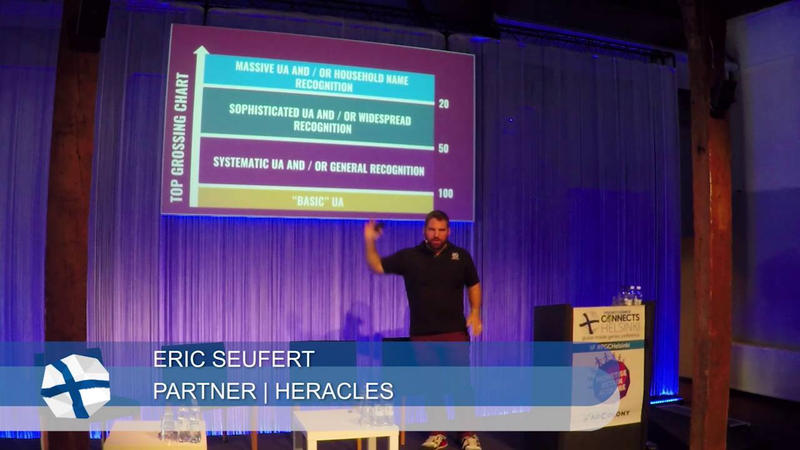
data or your agencies across the data and they're changing stuff as they're seeing it and they're synchronizing your digital stuff to the TV activity more importantly as well then that drives the strongest overall impact and a little bit of technical stuff about strategy now and planning just just to sort of get under the get under the skin of the TV the TV stuff in different markets we use the performance perspective it's a kind of a flexible planning approach and what it what effectively it does is it takes all the TV channels in any particular market and it divides them into three distinct channel groupings based on the percentage share of viewing which is this yellow column to the audience that we're looking for and here we've just used all adults just to give you a flavor of the overall dynamics of the UK market is an example so efficient star channels are channels that deliver less than 1% share of viewing to the audience that we're looking for so you put different audience in there and these channels will jump around and
within this framework there are 182 of these of these channels in the UK and when you add them all up that's 21% of the total viewing in the UK so you you kind of quickly fill these up if you want to have a decent-sized campaign but these are really efficient because people aren't that into the content they'll kind of watch different kind of habit honours kind of all paper TV and they'll be happy to go off and search you up and install install the game while they're watching the show so they're very good at reminders or activation or activating action and then further up this pyramid we've got the volume drivers and these 1 to 5 percent share 19 of these channels in the UK and that's 32 percent of the market and these are a bit bigger and you get different kinds of shows at different times of day and different kinds of people tuning in to watch these different shows so from this point and up it's really important to really focus down on program level to get maximum value from everything and then at the top of the of the pyramid are the
awareness builders and these guys drive very strong volume really get your game talked about really drive strong brand search effects and also drive shot chart position if you if you plan the campaign in a really tight compressed compressed period and as the name suggests they do build brand and brand effects have a longer-term impact so if you're game you know you're if you're releasing new things and we work with rocket League for example there'll be promoting rocket passes and they're obviously available for a limited period so you know if you're going to keep coming with different partnerships and different offers and you want to get them out to the tee or to your players and also use them as an acquisition vehicle then these channels are massively important and so using these three groups you can kind of describe the shape of campaigns and how they respond to different different briefs if we're looking for absolute efficiency we're not trying to drive a great big mobile you a halo effect you
just want to dip your toe in and spend you know a little bit of money just to see if there's an effect from TV then you probably have a shape that's kind of a bit like this where you'd have a lot of efficient stars some volume drivers and a very select number of awareness bill the channels on the other side you've got kind of a more brand building more confident more ambitious campaign where you've got to land with stature in the territory a really drive volume and you kind of really got geared up a bit like the netmarble stuff that the chap just talked about where you've got a celebrity you've bought all that you bought all the licenses out for globe online exposure and you really want to land with stature and that's that would involve much more in the awareness builder category and there's obviously shades shades of grey all the way through here but so TV and the strategies that you employ can be really flexible to fulfill whatever the outcome that your tribe and we also make ads as well so I'll just play you an example some of this stuff when it comes to TV
at the specialist works it's on like Donkey Kong [Music] working with 30 games companies [Music] broadcasting in 27 countries we know what's important getting more players and keeping them playing for weeks months years and if you want creative solutions from busting blocks to blockbusters
[Music] check out the specialist works the specialist works were it's game on thanks guys thank you very much I just um actually don't leave yet because I have a question for you okay how much money does it take to actually make a statistically significant difference on my business I don't have hundreds of thousands of pounds to spend on an ad for my rather pathetic little game what do I what's been and I can I can adjust well it depends on the market so if you're if you're if your market agnostic and you can choose any market you'd pick a small market so that your spend would have a larger effect but you know if you're testing in a small market you
could you could just you could spend as little as twenty K and see a measurable difference on your business and then use that as a platform then to build out and scale beyond that alright so if I've got two K where I'm at the wrong order of magnitude yeah yeah okay move the decimal point a little bit okay so 20 and up and you can do some really good work for them yeah yeah you can start to map thank you very much appreciate X [Music]
Summary
Offline advertising, particularly television, remains a potent but underutilized tool for scaling mobile user acquisition and digital brand growth. Despite the dominance of digital-first strategies, research indicates that only 4% of gaming brands utilize television regularly, with 71% discounting it entirely. However, nearly half of those skeptics express interest if provided with evidence that TV performance can be accurately tracked, analyzed, and optimized. The primary challenge lies in the measurement gap; while web-based e-commerce shows immediate, predictable spikes in response to TV spots, mobile app acquisition involves a more complex user journey—searching, installing, and opening an app—which obscures the direct correlation between a broadcast and an install.
Effective TV strategy requires moving beyond standard attribution windows, which often fail to capture the "afterglow" effect or the delayed surges in performance caused by social media engagement and brand awareness. Integrated measurement systems that account for total effects, including organic uplift and long-term baseline shifts, are essential for optimizing campaigns. By categorizing media channels into efficient "stars" for activation, "volume drivers" for mid-tier reach, and "awareness builders" for large-scale impact, brands can tailor their media mix to specific goals. This tiered approach allows for flexible budgeting, with entry-level testing possible in smaller markets for as little as 20,000 pounds.
Ultimately, television serves as a critical trust-building mechanism that complements digital activity. Data shows that combining TV with social media significantly increases ad recall and purchase intent compared to using digital channels in isolation. By synchronizing offline broadcasts with digital UA efforts and employing granular, program-level optimization, gaming brands can achieve a "supercharging" effect that traditional digital-only campaigns cannot replicate.