1 free read left. Create a free account for unlimited reading + AI research.
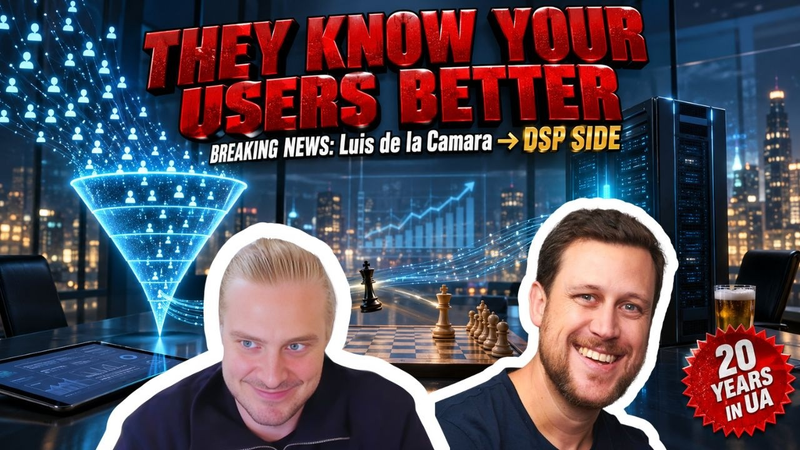
Create free account🎯 20 years' experience: Luis de la Camara on WHY the networks know your users better than YOU!
Key insights
6 takeaways- 01Analyzing eCPM decay curves allows developers to distinguish between players driven by in-app purchases and those driven by ad-based revenue, enabling more precise audience segmentation.
- 02Developers should tailor the player experience to the acquisition source, such as adjusting ad frequency specifically for users arriving from rewarded networks.
- 03Mobile developers must transition from adversarial competition with ad networks to a collaborative model that leverages the superior user-behavior data held by demand-side platforms (DSPs).
- 04Studios should prioritize direct-response performance marketing over broad awareness campaigns to avoid the risks associated with inflated cost-per-install (CPI) metrics.
- 05Sustainable growth requires moving away from reactive, short-term budget adjustments toward long-term partnerships with DSPs that utilize rigorous incrementality testing across channels like connected television and search.
- 06Smadex is positioning itself as a top-tier DSP by focusing on a high-touch, white-glove service model and technical transparency to differentiate from larger, less personalized competitors.
Ask AI about this video
Transcript
And it was actually like one of the examples specifically that I thought was really interesting was around the actual incentives, right, and the milestones. Shout out to Leak. This was from her presentation where showing the actual incentives that they'll have in their rewarded app, but actually showing them in game as well. And that actually producing more of a motivation for those players to actually go and chase those goals and therefore the overarching performance of that cohort specifically being better.
It's the dice [music] drops. Knowledge made of golden eyes. Failix with ads making those coins rise. Jack up designs worlds chasing the sky. We're the two and a half gamers. The midnight crew talking UA advers and game design too. Mat [music] feel shak bringing the insight. We're rocking those vibes till the early daylight master eyes on the prize. Tracking data through the cyerspace skies. Felix colors like a wizard in [music] disguise. Jack lift us to the high. Two and a half gamers talking smack. Slow hockey stick got your back. Ads are beautiful. They like the way.
[music]
Clean it fast. Don't delay. Uh-huh.
Ah. [music] Aha. Ah. [music] Ah. Hello everyone and welcome to a very special podcast of the Two and a Half Gamers Podcast. As you can see, today is a very special episode because we have a very special guest. And as you know, the best things about going to conferences is you get access to people who have been in the industry for a very long time who actually talk about things in an open way. To try to emulate exactly that feeling, we've actually invited Louie to come on the podcast today, who has more experience and I think he knows what to do with it. Uh he's been on a couple of our podcasts before and they've always got a lot of views. So today we're going to riff and have a little free jam about what we see kind of as working in the industry. But without further ado, welcome Lou to the podcast. Do you want to give an introduction to yourself?
Yeah, thanks Felix. It's uh it's great to be on the on the pod again. You know, one of the most important podcasts in the industry. I know a lot of people on the marketing side and even outside of marketing are are big fans of the of the podcast as I am. And and so it was a privilege and honor to be on here with you guy with with you specifically this time around. And actually it's funny cuz I think you and I uh met many many years ago when you were in um uh when when you came to Dundee actually.
Yeah.
We had we had you know and when I was out and now play. Yeah. So anyway so so my name's Luis. I've been in the I've been in the games industry for 20 years. I started in AAA gaming uh for the first sort of six years of my career but then in 2013 moved to to mobile. I've been in mobile freeto play at many companies including Gameloft, King, Scopely, and most recently the last 5 years at ROIO. Although I a few weeks ago left Roio um cuz I needed I needed to try something new. So yeah, it's been uh it's been a wild ride. Been lots of different great
experiences, met some amazing people over the years. Have learned a ton from all those people and hopefully here we can uh jam a bit and share some knowledge.
Perfect. Yeah. What the one funny thing is I think I remember from you is like you're great at sharing knowledge when you're three pints deep then it's like really useful stuff I'm able to get right
yeah it's the it's like spinach for Popey is the it's the beer in my case now
all right so where do you want to start by spilling the beans like what were you kind of involved with in your final weeks in Roio and what type of things are you seeing working in the game industry right now particularly or that's working particularly well
yeah so like I mean my my role as I Edia just just just finished a couple weeks ago. Was there for 5 years, got to go through all sorts of different uh chapters of that company, you know, including an exit to to Sega, which was also really interesting. Like um I've been through a few few companies having been sold to other companies and every time it's a it's really an interesting experience. I was CMO of a company that
got acquired by Scopi at one point. So, so I've seen this a few times around, but I would say the the last area of focus a lot was trying to figure out how to sort of bridge the world of brand marketing um and 360 marketing together with performance and UA and growth in a in a in a more complicated mature market. And I think that's something that I wish I could come here and say I have the secret sauce and the solution for everyone, but the reality is that it's um it's it's not simple. It's not easy. I think you know in [snorts] this industry we are in a way very privileged to have the most incredible expertise on on performance marketing use acquisition but it also comes with the fact that it means that we're very direct response driven and how we measure marketing how we think about our investments and so breaking out of that even in a company uh with big brands like Rov King etc is very complicated and and it's uh yeah it's really hard to measure the impact of marketing outside and I think that was kind of the last big battle I was trying to figure out uh trying to
conquer is like how do we how do we kind of go beyond just pure UA. How do we go multi multiscreen? How do we go um multi-touch attribution? How do we think about things like you know the full funnel and of the of the user journey and have multiple touch points with with our with our potential players and our audiences in a way that will be ROI positive. And I think that's something that I was still try we've been still trying to figure out and I don't know we'll ever fully crack. I think it's quite interesting you saying that right because I see the point of large companies having to do both brand and like performance marketing but like where I've been going deep and deeper right is basically the old ways of ad monetization are dead right everything died when you moved to header bidding only but the biggest insight I think I've had is that you need to realize as a gaming company today that the UA networks know simply way more about the users than you ever will and if you accept that fact that essentially means that you can dive super deep on segmentation if you just
go like hey they know more than I do and let's use that to our advantage right because multi-billion dollar algorithms from Facebook Meta and Google all put together if you look at it and see the output of it basically tells you quite a lot about the users at least that's what I've been going super deep at I don't know if you've tried something like that at Romeo
no I think I think that's it's a great point Right? It's like are we trying to fight, you know, they're experts in building algorithms to find the best users, right? And and the most high quality users. And I think one thing that we learned in a recent sort of experiment that we did when we did try to go a little bit broader was that at the end of the day, like, you know, our CPIs, you know, got inflated of course and so you know, the the amount of installs we got for the amount of spend was not not great, right? Because, you know, there's a lot of uh people that we end up targeting when we go broad in sort of a call it more awareness marketing. uh going kind of more midfunnel and there you see that you know there aren't not you know with with mobile gaming specifically I think people really there's a mindset of like
I want to play a game now and I'm I'm I'm interested in a specific type of game and I think that that's the amazing expertise of the algorithms that that the the you know the DSPs and the ad networks have right is the ability to find those users that are that are ready to go right that are ready to play and they're ready to play something very specific and so what we've what we ended up discovering was that when we did get installs, even in those broad campaigns, the users that we did get were very similar to the players that we would have gotten like in terms of high quality, right? It wasn't poor quality. The players that we actually did get, they retained well and they engaged, etc. But the difference was that we're actually paying a much higher cost because at the end of the day, we were, you know, serving impressions to a much wider audience with a lot of people that did not install who were not interested, potentially would be interested later down the road. And so either the solution is be very patient with your with your kind of going further up the funnel and and do more of an always on type of thing that sort of hopefully primes people for later direct response use acquisition or you know like you
said just go straight deep and really kind of go and partner with uh the best ad networks and partners to to find the best users. I think the one of the reasons you know people look at going beyond is because you know CPIs are can be high and and so you know a lot of people are trying to find ways to find users beyond the typical auctions right but the reality is the DSPs and the uh ad networks really know how to find the right users wait today's episode is brought to you by PVX partners developers now have a new way to fund their marketing it's called PVX But if you're scaling your gaming business and need more capital for UA, here's the deal. Your credit limit grows with your marketing performance. The higher your ro is, the more credit you will have available. It's dynamic, flexible, and scales as fast as you do. Just check out pvxpartners.com/cards and scale your UA with PVX card. again, pvxpartners.com/cards
and get your PVX cards to scale your game. Thanks BVX for sponsoring this episode. Yeah, one of the things right if you think about if you take a step back that I think is the most fascinating insight I think I've had for quite a while is that there's mainly three main type of UA campaigns that target users these days is IP optimized, blended optimized and adoras type of campaigns. If you have a game that actually has admon, if you start tracking the average revenue you get on a user level between the impressions, one thing you can use as a quality signal for IEPs is basically you track the curves of how quickly the eCPMs decrease because basically if you're targeted primarily by AP campaigns, the curve tends to be a lot more shallower. And if you're targeted mainly by ad revenue campaigns or ad re row campaigns, the basically the eCPM between impressions really falls off at
a greater rate. So a lot bigger drop off. So if you know the average percentage of decrease between users, you can basically work out if they made purchases in the past or not. And
interesting.
Yeah. Yeah. It's like a great when you
Yeah. Like it is so many of these things. But you were at the you were also at the the UA society last week. They must have talked about a couple of these hacks as well, right? Anything?
Yeah, actually. It's funny like
Yeah. Well, well, I mean, I I don't know how much people want want to share what's there. I mean, UA society likes to be a bit of a close group. And actually, it's the first time I've been to one of their one of their summits. Um, and really liked it. So, anyone who's in the UA landscape, I definitely recommend uh trying to be part of that that world. You know, it's really it's really great. Smart people getting together. And you know I was talking to Peggy and Saltz recently about the the fact that you know I'm a product marketer in my background right so for me like having to learn UA and being as technical and as smart as a lot of those UA folks has always been a bit intimidating and it's been something
that like you know going to these types of places and learning from them is is is super eye opening. I would say that to answer your question directly some of the key things that I found really interesting is is looking for new avenues of growth on what you can do. So there was great presentations around around trying to think of like the best way to to share this things around segmentation as you said for example right like if I know that certain players are coming in from certain types of campaigns how do I serve the experiences in a way that is you know is going to be so for example I think there was one example that was used around rewarded networks right so how about serving I think one of the things and you know I I don't want to sort of
if if you're paying okay I translate because I I think I know where you're getting at, right? If you're buying from a rewarded network, you're physically paying people to play your game, right? They probably shouldn't have the same cool down timers on ad revenue.
Did anyone say revenue? Oh, yeah. This episode is brought to you by Fastpring,
the no drama D2C partner that's been scaling with mobile publishers for over 20 years. They're fast growing, profitable, and seriously reliable, which is more than you can say about most vendors in this space. Anyway, whether you're launching a new web store, replacing your current D system, or adding a backup plan, Fast Spring is here for you. Visit fastspring.gg to set up your web store today. Fastpring.gg. Hello, Fast Brain. Thank you very much, guys, for sponsoring this episode.
As someone who's coming from a pristine AP campaign from Apploven, so you might, if you have a puzzle game, hold off on showing ads to like X level, 18, let's say, but if they're from a rewarded network, they should probably see an ad within the first 30 seconds of starting to play the game.
Well, and and and it was actually like one of the examples specifically that I thought was really interesting was
around the actual incentives, right, and the milestones, right? not h not like copying I think this was papaya so shout out to Leak if I believe this was from her presentation but where you know showing the actual incentives on you know the same incentives that they'll have in their rewarded app but actually showing them in game as well and that actually producing more of a motivation for those players to actually go and chase those goals and therefore the overarching performance of that cohort specifically being better. I mean that was just a very concrete example but I don't you know again not not here to recap all the all the kind of great knowledge that was shared but as that that to me was the big theme is looking for ways that you can actually you know think about growth purely not just purely at from a you know UA bidding side but also what do you do with the actual user journey and experience and what are the other things that you can do in terms of the the with the product as well tied to your user acquisition um and of course of course on the admon
um as well. And then of course hybrid hybrid monetization is is very much a thing. And then you know retargeting was a topic that was really interesting. So you know that doesn't go away. CTV now being something that more people are doing incrementality testing you know more and more important than it has been in the past. Of course it's not easy to set up incrementality tests. So I think that's a point of friction as well. So yeah, some really great negative information that that for those people that go and participate in those summits are really interesting.
Nice. Cool. What what's the latest with retargeting? Like it's a world I haven't been in for a very long time. Like what's going on there and what's kind of working? What's not working?
Well, I mean I think like um again I'm not an expert I would say on retargeting, but you know what you see is um retargeting through paid channels is is becoming more of a is is more important. So I think historically people would rely a lot on push inapp messaging, email and I think you're seeing you're seeing now people to move some of their efforts and energy to to
other kind of paid formats of retargeting and as said the multi multiscreen right so actually not just looking at mobile retargeting but actually looking at a connected like performance connected TV retargeting as well. I think connected TV generally speaking is a is a big theme as as especially those that have really great search optimization and and and especially if you have a brand it's very important as well as if you're in a vertical that maybe is limited in some channels and if you look back like on game king roio right like when you do brand campaigns compared to performance campaigns like h how does it work is it good like I'll never run a UA campaign, right? But basically, it makes sense there, right? If you have a brand, but like how do those users usually stack up? Cuz I know in the app store, organic users always get a negative premium because they're worthless to the networks because they have less data attached to them. So
basically, usually they get a lower eCPM bid. But I don't know how it works for these large companies.
Well, I mean, the first thing is like I mean, where to start with that? I I maybe I start with what's the power of brand and I think the main power of brand what's demonstrated is is is lowering CPIs right when you when you when you're running when you're running performance marketing. So the stronger your call it awareness and familiarity with your product is the normally the better that that CPI is going to perform. And we've, you know, I've I've run many tests in the past where we've done, you know, so call it vanilla themed games and then branded themed games and and and the CPIs on install based campaigns. Um, and even later on, performance-based campaigns are are much are much lower. Um, when you have a a well-known brand, of course, like historically, you'd get a lot of organic traffic. I don't know that's as much the case anymore. You know, organic is is something that's it's complicated for everybody nowadays. I would say organic probably comes more now from being at the top of the charts than it is, you
know, at a sustained in a sustained manner more than specifically having a great brand. So I think that's always the the the complexity is like where do you invest in brand versus where do you put your money towards performance? I think the way you think about brand investment is more about long-term, you know, do you long-term do you want to continue to have a sustained call it advantage when it comes to CPI? I think when it comes to things like app store, like call it app store ads and and similar, I think it's always hard to know what's cannibalizing, right? So, I think with legacy IP like Angry Birds or like Candy Crush, two IPs that I've had the privilege to work on, it's always very hard to know,
you know, if I'm running App Store ads, is it because I'm just having to defend my own my own brand from other people bidding on them, which then starts to be a question of like, is that, you know, is that is that kind of IP infringement by the by the app stores, you know, and then there's the question of, you know, how incremental is it really, right? So um again I think incrementality testing
when you I think when you go beyond your breadandbut user acquisition I think that's where incrementality testing is really interesting because whether that's you know whether that's something like uh looking at search and the incrementality of search especially if you have a brand or if you're thinking of things like oh I'm running multiple multiple channels at once what is that impact of the different channels together or even the or even like you know going to the big screen in the living room as well with with connected TV, right? So, I think uh in all those situations, yeah, incrementality testing something like that that is going to become more popular and is already starting to become more popular.
You know, like who is really good with live ops? Kinoa because most mobile games leave serious revenue on the table and it's almost never the game, it's game ops. So, Kinoa is here for you. It's system for mobile games, flows, live segments, inapp messages, push AB
testing, all in one place. You know, go there kinoa.ai, book a demo, see what your game is already leaving money on the table. What what's the best practices right now for incrementality? Let's say if you, you know, you have a big budget and you're starting a new DSP, like is it still doing the bursts or like is it turning it off or like everyone starts to argue, right? because everyone's worried about like click attribution and click like stealing for the attribution, but like what's the best practices these days?
I I like I don't like there's there's people listening to this podcast that are much much more smart than I am on this topic. So, I don't want to pretend that I'm an expert on that. Um, but I would say that from uh you know, I think one of the cleanest ways is a turnoff is turning things off, right? But you have to do it with a like a sizable enough cohort. You need to do it for a long enough time. And of course that's can be expensive, right? Because if you turn off something that's performing very well, that actually is can be very detr detrimental, right? And I think that's always the challenge as I said like I'm
not I wouldn't consider myself by any means an expert in the in the tactics and the details of setting up tests. Um fortunately or unfortunately I don't know however you want to look at it. you know, being an executive, I don't get my hands as as dirty. But as some of the the experts that are probably listening right now, but but what I would say is that those types of topics are the things that make it hard for people to sort of justify doing incrementality tests because you have to do it long enough and you have to do it with a sizable enough cohort. You need to do it in a clean in a clean way. And often that can be expensive, right? either just because you're running something that you don't trust and that's obviously costing you money or the opposite, you're turning something off potentially that is that you believe is high performing and and actually might be sort of a missed opport you know an opportunity cost of of that. But I would say the more simple your setup is probably the better the better results you're going to get. I think that's just a general rule of thumb for anything when you do AB testing, whether that's product level AB testing or if you have
if you have incrementality testing on the on the marketing side. I think the more simple your test can be, the more making sure that you have that statistical significance and not trying to do small tests, right? I think I think in the general rules of AB testing, you know, if you're not going to if it's not a big swing type of test, the reality is it's the likelihood of that actually um giving you learnings that are attributable at scale is is small.
Cool. So, let's shift gears a little bit here. So, UA with these piece, you have Maloko who's now in pretty much gone direct top four network probably right now on Applov1. There's rumors of an IPO. You have liftoff with bungal obviously that went public a couple weeks ago. DSPs are killing it right now and I know you have some news in this space as well, but uh do you have any tips for doing UA with DSPs to our listeners? This episode is brought to you by Potencus. And if you're a mobile game publisher tired of leaving money on
the table, listen up. Potencus is a premium ad network built by people who have actually been on both sides of this industry. Game publishers, agencies, successful exits. So they get it. Here's the thing. Potentus has direct deals with Amazon, Apple, Coca-Cola, Vodafon. It's not programmatic. It's direct. Those budgets land in your game at premium CPMs. No middlemanex. And they're handle everything with their in-house team in terms of the critics. Plus, they've partnered with playable maker VW. So they will take brands YouTube videos or static images and actually turned into playable or reverted video proper interactive format built for gaming inventory brands getting a gaming native creative publishers are getting a higher CPMs everyone wins. Head to potencus.com to get started or check their creative portfolio in the link in the show notes. Thank you very much Potencus for sponsoring this episode.
Yeah, so so you're right. I think the DSPs are doing very very well which is why I'm uh I've decided to actually go to come over to the B2B side. Um and I'll talk about that in a sec. But the reality is the way I thought about it when I was on when I was you know running marketing as an executive on the game side on call it the client side for me the the one thing that I thought was very important is to have a very strategic approach to the relationship with those bigger DSPs with so again whether that was well not to name names but but any of the big the big names that you've you've discussed having a strategic focus and looking at both what's the roadmap that they're rolling out, right? So, what from their from their side, what are the different product improvements, algorithm improvements, uh new products, let's say, that they're that they're bringing out. How are we as a partner going to be part of that journey? How do we make
sure that um as a partner, as a as a client, in that strategic in that strategic relationship, we are looking at ways to have more patience when it comes to thinking of our spend. How do we how does the how does the DSP or network actually help us with onboarding even sometimes financially right if it's if there's a risk there I think one thing that that a lot of people on the B2B side don't understand about the client side is that UA managers and UA leads and there and therefore the the the the VPs they have these long backlogs of things to test right and I think on the positive side there is a real hunger and willingness to try out new But on the on the flip side is the back like the the list of of of networks, you know, should I be should I be testing Tik Tok more? Should I think of doing stuff on X? Should I be, you know, onboarding this new DSP? Should I be doing retargeting? Should I be doing CTV? Should I be doing, you know, more incrementality testing? Should I be, you
know, should I double down on on on the big, you know, Applovens and the Googles of the world, right? Like so I think like you know and not to mention all the all the growth backlog things that are happening on the product side as well as we mentioned before around like what can you do with segmentation and things like that. So I think that the more there can be a strategic relationship between the client and the and the partner, the better there is a way to plan that out and so that there's a strategic plan and then that strategic plan has a has hopefully u leads to like long-term sustainable growth rather than just turning on and off spend which is what often happens with UA managers where they see performance they scale it up they see a dip they they turn it off right and and then ultimately you know there's a lot of learnings that get lost along the way and it doesn't become very sustainable.
Cool. So now to your news, huh?
Yeah. So So first of all, thank you guys for giving me the opportunity to share share this with with the industry. So you know, as I said, after 20 years in in in B TOC on the on the client side,
in the game side, I'm actually moving to Smatex uh as their new chief marketing officer, working alongside with great folks like Phil, Jordy, Judy, Steph, and many others. And so, you know, for me, it's it's a new challenge. Um, it's been something that I've been thinking a little about. And to your point about the incredible growth that's been that's happening on the on the DSPN network side, the reality is that as the market matures and and uh marketers, not just in gaming, but across apps and i gaming and other and other verticals start to become more sophisticated in their marketing, there is more opportunity for growth for these bigger platforms. And um Smatics specifically was a company although I'm I'm going to have to work on some uh brand marketing I'm sure um in terms of the brand and getting the knowledge out there about Smatics um you know yet you know they're obviously not apploving yet but but the goals and the ambition are there the technology and the behind the behind the the engine is
incredible and also just the the total the the commercial team that I'm going to be able to be part of. You know, for me, they're they're some of the best folks out in the market. And um you know, I got to a point in my career where I want to work with people that I enjoy working with and I want to try something new. I think one of the best things you can do in your career is always kind of go into something that you're unfamiliar with. Be a little bit in the in the uh call it in the deep end and and learn how to swim quickly. And so [snorts] yeah, I hope my my colleagues on the B2B side are going to have uh some patience with me as I learn the ropes of B2B after as I said two decades in B TOC. But but yeah, really excited for the growth potential that Smatics has. You know, they they're they will be uh top three, I'm sure, within the next few years. And that's my goal is to help them get there.
All right. So if you see Louis again asking what the QPS of Smadex is and then ask him again in two years. For those who don't know, QPS is queries per second, and it's how you measure the size of a DSP. So, it's basically the
yard stick for any DSPs. But before we wrap up, I'm sure Louie would agree to me here that you can say basically reach out to loumaddx.com if you want to go live with any UA campaigns or if you have any questions and he'd be more than happy to answer any questions you might have. Right.
Yeah. Actual email is lu.delamersmatics.com Dela cameramanx.com is a bit long. So probably the easiest way is hit me up hit me up at hit me up on LinkedIn. Um it's probably the I'm I'm pretty active on LinkedIn. Happy to to yeah explore what Smatics can do to help uh you grow. And I the one thing I will say is is you know having worked with lots of DSPs and a lot of ad networks on the client side. One of the things that really uh made it interesting for me to come over to to Smatics was the ability to like the trust right and the trust and the openness and the white glove nature of it. I know that's something that frustrates some people in the industry with some of the ad networks. I won't name names, but but I think that's something that will really set us apart is our ability to be quite white glove
in our approach and make sure that, you know, that that the client is taken care of and that their their growth is at our interest. Thank you so much for stopping by, guys. Uh don't forget to sign up to our Slack group. We have over 5,000 people in the industry in there. If you have any questions, this is a great place to ask them and we can help you out to grow. But this has been another fantastic episode of the Two and a Half Gamers podcast. Thank you so much for stopping by. Bye-bye. [snorts]
Summary
Mobile game developers must shift their user acquisition strategy from adversarial competition with ad networks to a collaborative model that leverages the superior data capabilities of demand-side platforms. Because ad networks possess deeper insights into user behavior, developers should prioritize direct-response performance marketing over broad awareness campaigns to mitigate the risks of inflated cost-per-install metrics. By analyzing eCPM decay curves, studios can effectively distinguish between players optimized for in-app purchases and those driven by ad-based revenue, allowing for more precise segmentation and higher-value player identification.
Sustainable growth in the current mobile landscape requires moving away from reactive, short-term budget shifts toward long-term partnerships with DSPs. Strategic success depends on tailoring the player experience to the acquisition source, such as adjusting ad frequency for users arriving from rewarded networks, and utilizing rigorous incrementality testing to validate performance across diverse channels like connected television and search. Balancing brand-building investments with data-driven performance marketing remains the most effective method for lowering acquisition costs and maintaining a competitive edge in an increasingly saturated organic market.
This strategic approach is central to the evolution of Smadex, which aims to secure a position as a top-tier demand-side platform by emphasizing transparency and a high-touch, white-glove service model. By focusing on client-centric growth and robust technological infrastructure, the platform seeks to differentiate itself from larger, less personalized competitors. This transition reflects a broader industry trend toward B2B partnerships that prioritize technical precision and long-term brand development over the volatile, short-term tactics that have historically dominated mobile user acquisition.