1 free read left. Create a free account for unlimited reading + AI research.
Create free account
Doing a lot with a little – Mobile user acquisition on a budget
Key insights
6 takeaways- 01Prioritize user retention to ensure daily active users (DAU) compound over time, treating the game as a business that scales infrastructure only when performance metrics justify further investment.
- 02Prioritize firm-level economics by ensuring daily revenue consistently exceeds daily marketing spend to maintain solvency and avoid the high-risk, long-horizon capital models used by larger studios.
- 03Mitigate the lack of statistical certainty in small data sets by bidding against short-term, high-confidence LTV metrics rather than attempting to project unreliable 180-day LTV figures.
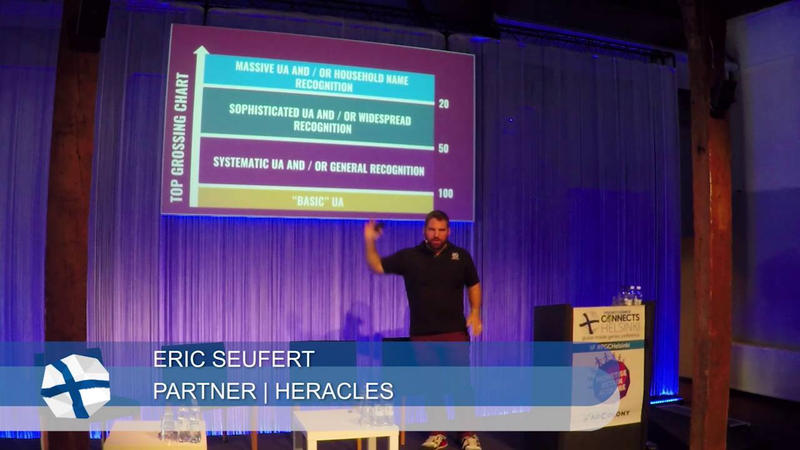
- 04Shift growth expectations from attempting to force a top 20 grossing rank at launch toward achieving a stable position in the top 100 through iterative, data-driven optimization.
- 05Focus limited budgets on a small number of major ad networks rather than spreading resources thin, which allows for higher data density and more reliable optimization of ad creatives.
- 06Implement a disciplined reinvestment strategy by committing a fixed percentage of daily revenue back into marketing to ensure sustainable, incremental growth without overextending cash reserves.
Ask AI about this video
Transcript
[Music] good morning I'll get started so the title of the presentation is doing a lot with a little leeway on a budget and when I say budget here I kind of I don't mean necessarily like the amount of money or spending but kind of just the general amount of resources that you have for for doing you a so about myself partner at a company called Heracles I and I own the site mobile dev memo comm so I think before I talk about what it kind of looks like to do you a without a lot of money it'd be good to talk about what it looks like with a lot of money right so just kind of understand that
model of thinking and then kind of back into a less ambitious model so if you think about like how a big company thinks about you a if we kind of want to picture it here you've got on the left like this huge reserve of cash that they have in the bank and then they have this sort of like idea of what the lifetime of the product is and then let's say that in soft launch they did they determine that the sort of unit economics were profitable at scale so what do they do right they kind of launch the game and here you've got like the blue line is dnu and the yellow line is da you right so they're bank vault is the amount of money they have in the bank is decreasing right and so they're kind of like pushing new users into the game at about the same rate every period let's say day or week or whatever and da you is so they tested the game in soft launch and and retention was strong and so da you is compounding and so as you know they're they're bringing in more users the bank vault is decreasing right because they're spending money because
they're spending more money than making right but the da you is increasing over time because they've got good retention and at some point da you gets above the Nu right and it gets really about di you D nu and maybe at this point they start making more than they're spending on a daily basis and so the bank vault starts going up and up and up and then the rich they're making lots of money and they're making a lot more than they're spending every day and now they've sort of replaced all the money that they spent over this course of kind of building a da u base and they potentially could even have the D nu level set at a place where it's basically a steady-state system they're bringing in the same number of users that are leaving every day they're making more money than they're losing every day so they're kind of like in this perpetual state of making lots of money and that's kind of how a company with a lot of money thinks about it right so they're not necessarily thinking about when they recoup the money on traffic acquisition right because that's how you know that's how the
calculation is done right this LTV CPI calculation it's that's basically the crux of it is am I going to make more money in the long term then I'm going to spend right now right so well you have to have all that money in the bank to basically front the acquisition of the users and then you recoup it over time but a big company with the huge bank balances and think about that because they've got this huge bank balance all they really care about is if this LTV number is higher than the CPI number they don't care about when that money gets recouped because they've got enough to front the money for a long time by the way I've decided to change this to the new logo of my company I think it's more indicative of what I help help people do so kind of given that I think some people kind of face a question of like okay well these big companies they can launch all these games but really it's just kind of luck right I mean you don't know you soft-launched about stuff and you just see what works and some stuff just kind of happens to strike a nerve or resonate with people and it just sort of luckily becomes a
hit game right but then if you look at the top 20 grossing games this was from like a week or two ago like none of this really looks like look I got an argument on Twitter with this guy who works out like this giant like creative agency and he was kind of saying that oh you know it's it's just luck you got to put push a bunch of stuff out in the App Store and and one you know there's there's all these different factors that go into whether it becomes a hit and you can't really control for those but if you look at these you kind of none of these seem like they were lucky like Pokemon has a huge brand attached to a game of war they've spent a ton of money promoting it and they already had a big user base mobile strike sorry mobile strike they had a big user base and they spent a lot of money on it Spotify kind of just grew over time and it also had a big desktop body and candy crush saga I mean if you could say any of those have gotten here by luck it's probably candy crush saga but still it didn't get to top 20 by luck I mean it got to top whatever by
luck and then they moved it to top 20 through like building a business out of it so none of these were really just lucky they were kind of the result of operating an app as a business right I mean maybe you know for whatever reason they didn't plan on the mechanics that made it resonate with people but once they realized that those mechanics did resonate they didn't instantly become top twenty grossing games they pushed a lot of money into marketing to get them there right and you know that's kind of borne out by the fact that you know spending in on mobile digital ads is kind of set to increase through 2020 and it's also I think something that discourages a lot of smaller studios right we'll look at all this money that's being spent and this ecosystem like how can I possibly compete and if you look at this this list I don't have money to compete with these people at this scale but you're not really competing with them at that scale anyway because they you know they didn't start out there you're kind of competing with them at their start state which was not top 20 grossing and so you
kind of have to think think about the launch of your your game that way so what's the tactical difference for a company without a lot of money or little without a lot of resources - - you know those companies with the big big balance sheet that that kind of followed that that process that I outlined before so the long-term unit economics the LTV CPI way of thinking it's it's it's relevant to you and you should think about that but it's not it's not sort of like an immediate issue what's more immediate is your firm level economics which are we making more every day than we're spending right or every month or whatever because we've got this sort of like limited balance sheet and we can't front acquisition costs endlessly right we can only fund so much we can only front basically as much as we can recoup and that probably isn't at LTV CPI parity that's probably at a much lower point but I mean this is kind of like an existential threat right I mean if you
only think about LTV CPI and you're a small company without huge balance sheet you could spend yourself into bankruptcy and so the other kind of point is you know if you've got less money to spend on acquisition then you're getting less data about how your game performs with certain you know cohorts of people in certain kind of targeting settings right on on your campaigns and so you've got less certainty around how those cohorts perform and so you have to set lower price points I kind of illustrate that here so this is kind of like a crude LTV example it's just four points and I mean that I just these are arbitrary this isn't like an LTV curve it's just arbitrary points on a curve but I'd the whole idea was I created a distribution around the LTV function and then just mapped these four points and I only had I think of some small number of the sample size that each point was really small right so like at day zero or they want to have like whatever 100 users because 100 users came through but then a day 180 it
goes out to I only had 5 or something because it was just mapping out an LTV curve right and this is the 99% confidence interval right so because it could at any given point in time you've got less data a day 180 than you do for day one because you fewer people have played that point and so this is like you know a limited data set this is the look these confidence intervals are huge all I did here was multiply the number of data points that I generated at each point by 10 right so this this company has ten times more user data they've had ten times as many users go through that funnel and they're at you know day whatever so at day 180 they've got ten times as many data points that day 182 the other company does and the confidence interval is a way smaller and so that's a much more actionable number right I have much more confidence in this number at day 180 then the other company does because I've had more people go through and like my confidence intervals on my model of shrunk right and just to kind of hammer the point home
the first company has weight the first company has weight less data is way less certain about de 180 right and so they don't really know if they're bidding properly when they when they you know bid with their ltd model set a day 180 the second company has much more information right so what should the first company do the first company actually shouldn't bid out today 180 they should bid at an earlier point the LTV curve where they have more confidence right as they get more data in they'll get more confidence but they're going to get less data in on any given cohort because we're bidding lower so the idea here is that you kind of focus on incremental growth gathering data building confidence and increasing spend and bids right I mean the idea here is not to just blow your game up if you've got this limited balance you can't do that anyway it is sort of like incrementally grow it and I created this kind of diagram at casual connects so I'm just sort of borrowing it but I think you know for my kind of vantage point of working with a lot of different developers across this the size spectrum
right big huge developers to really tiny developers I think you could hit top 100 grossing game which is sort of basic QA and when I say basically I mean like you know you've got maybe one person two people covering this sort of like big key networks right you're not doing every single affiliate you're not doing every single agency or whatever you're covering like the sort of four or five basic like big networks that have like a lot of volume and you know they have some infrastructure but a lot of it's just like pulling data out of the network interfaces and you know putting it all together in Excel this isn't like some huge UA operation but I think you can get there you can sort of like increment only grow your app if it performs I mean if the game is good right if the game works you can incrementally grow it to top 100 grossing right if you've got strong retention that retention start growing it actually monetizes you can do that which is basic you a and then the question is okay how far can this in the game is what it is so how far can you grow it right as you add more UA infrastructure and you sort of get more data you get more confidence how far can
you grow it is it top twenty potential or is it top fifty or whatever is it just top hundred or not even that but I think you know if you think about it this way then like you sort of don't try you know if you've got limited balance sheet in like you know you don't want to roll the dice in your company any single game and you spent a ton of money and see how it works out if you want to really approach it like a business you just you can grow up into the grossing ranks you don't have to either get there at launch or you know forget about it so how do you accomplish a lot of you a with limited resources focus on slim yields at conservative LTV estimates so bring in as many players as you can with a high confidence in profitability make sure that you're compounding da you so make sure that your retention isn't broken and every time you bring in a new cohort you're actually increasing the size of the user base you're not just sort of replacing users that are turning out and don't split attention across many networks focus on the handful of large ones and optimize asset creatives so you
know you've got this core set of networks that can provide big volumes you you focus really you know kind of intently on making sure that you're at your ad creatives are optimized and you grow your spend that way I think a mistake a lot of people make is they just say okay I need to operate off across every single Network because I'm getting such small volumes on any given network but if you're getting small volumes on the big huge networks all you're doing is adding more manual work on top of what you're doing you're not going to fundamentally change the trajectory of your game fix the game fix your your ad creatives get get get them to work on the on the big you know core network so you need them to work on and then add on top of that so be disciplined about reinvesting in the marketing yes you need marketing no you cannot just stop spinning right now set some sort of reinvestment target and stick to it so I mean I've seen companies they say ok we're going to reinvest 50% of all revenue sort of all in that revenue every month back in the
marketing fine whatever if you've modeled that out and it works for you do it but stick to it don't as your revenue grows don't then say hey we're gonna take more and more off the table and and and you know pay ourselves more you're not going to grow that way and have a plan so you need to kind of set well basically need to build a model that tells you okay like where do we want to be cash flow wise how much do we need to spend to get there and then you know with that set of metrics that you're optimizing for track against it maybe should make sure that you know you don't trajectory to achieve that so kind of with that said I've been working on a tool for a few months called Agamemnon it's a campaign optimization tool for UA managers it models cash flow schedule against income and expenses and traffic growth and there's a closed beta starting today and I created a beta code for everyone here it is super super beta it may not work I think it works it's buggy but you should
at least be able to open it anyway I created the beta code 450 uses is free doesn't cost anything so if you want to give it a try please do and if you encounter any bugs please feel free to email those to me and that's it that's the end of my talk thank you another superfast talk I love it so we get the questions and anyone have any questions or should I just dive in as I listen to do that and all I don't want brave enough to ask the first question was it just down to the guy in the Hat again I heard that's good so um I think really interesting and I'm genuine is because I'm I have my own gain the rock crusher game were working on with almost no budget for marketing of course even though I've spent all my my life telling people you've got to spend money on marketing you know is there a kind of default number at the moment for with the level of starting marketing a game needs to get into that for the basic top hundred game or is
that aiming to lower give any sort of kind of for particularly indie guys where would they would you say is a base minimum point start in terms of how much budget I should be playing with what top 100 100 us depends on how your game monetize decide it I think I'm just trying to think of any and it's a basic start point do you think people if they're not even starting this level to forget about it I mean you see like an amount of money that's worth your time in spending I would probably do like a one-week campaign at like 200 a day or so okay just to see what you mean 1400 is not like trivial to throw away if you're you know coming out of pocket but I think that's enough the problem is you need you're gonna spend time optimizing stuff and you don't I mean that money is kind of a write-off yeah so if you're just right out of the gate you know not nothing's been optimized nothing's been tested I mean yeah maybe if you did 200 a day for
a week and that would really get you some data I'm presuming yeah that good you a decent amount of data and then you could sort of make some decisions there but I would just put that all into one network and like maybe one or two assets I'll cinch it because I've had people suggesting a similar kind of price point but across Marx when it was just to get enough data just know which networks are giving you the the best effect is we you seem to be thinking actually it's more no no no because you don't you don't want to split your budget across networks then you're just getting noise yeah you need to get enough data from any one network to shut up the game even worse so be focused and get you know the data from what you can afford it sounds what you're effectively saying yeah you want to diversify it when your budgets really big right but if your budgets really small then there's no reason to recycle getting enough data to make decisions on yeah so and again it sounds to me like the key thing is to get the data first before you start really putting serious amounts of money in yeah you don't need to spend money on that either I mean you you know you especially put it on Facebook I like to different things that don't even you can promote them for ten dollars whatever to see what people click on more not exactly I'm anyone else gonna question
I think we'll leave it there then um so all right thank you very much that's great [Applause] [Music] you
Summary
Mobile user acquisition (UA) for studios with limited budgets requires a shift in strategy from the high-risk, high-capital models used by major industry players. While large companies leverage massive cash reserves to front acquisition costs and recoup investments over long time horizons, smaller studios must prioritize firm-level economics—ensuring daily revenue exceeds daily spending—to avoid bankruptcy. The primary objective for budget-constrained teams is to achieve incremental growth by gathering actionable data, building confidence in performance metrics, and scaling spend only as profitability is proven.
A critical challenge for smaller studios is the lack of statistical certainty in their data. When sample sizes are small, confidence intervals for long-term metrics like 180-day lifetime value (LTV) are too wide to support reliable bidding. Consequently, studios with limited resources should focus on bidding against shorter-term, higher-confidence LTV points. By concentrating limited budgets on a few major ad networks rather than spreading resources thin across many platforms, studios can generate enough data to optimize ad creatives and make informed decisions. This focused approach prevents the accumulation of "noise" and allows for a more disciplined, iterative growth strategy.
Success in this model relies on maintaining strong user retention to ensure that daily active users (DAU) compound over time. Studios should establish a clear reinvestment plan, such as committing a fixed percentage of revenue back into marketing, to sustain growth without overextending. Rather than attempting to force a game into the top 20 grossing ranks at launch, smaller developers can effectively reach the top 100 by treating the app as a business, prioritizing data-driven optimization, and scaling infrastructure only as the game’s performance and revenue justify further investment.