1 free read left. Create a free account for unlimited reading + AI research.
Create free account
AppAgent meets Small Giant Games: How to create a media plan for a global launch
Key insights
7 takeaways- 01If top-of-funnel performance is weak despite strong core gameplay, developers should be prepared to overhaul the game's visual identity to better align with target audience preferences.
- 02Media planners should select soft launch test markets based on population, affluence, and genre-specific relevance rather than relying solely on traditional, high-competition regions like Canada or Australia.
- 03Soft launch phases must prioritize testing hypotheses and establishing baseline KPIs, such as cost per install and conversion rates, to ensure technical stability and accurate lifetime value modeling.
- 04Developers must maintain consistent daily active user growth during the soft launch to generate the statistically significant cohorts required for reliable performance modeling.
- 05Effective acquisition strategies require an agnostic approach that integrates major platforms like Facebook and Google with video ad networks and geo-specific channels to capture a comprehensive user profile.
- 06Internal data analytics capabilities are essential for maintaining control over budget allocation and performance modeling in the highly competitive mobile gaming landscape.
- 07A successful global launch requires a data-driven media plan that balances aggressive user acquisition with iterative product development based on real-time performance metrics.
Ask AI about this video
Transcript
[Music] good afternoon everyone the greatest is such a jam-packed room for our five such children auntie will cover the media planning and how you can get ready for the global launch my name is Peter Fodor I'm a founder of a pagent mobile marketing experts for hire we help companies to grow on mobile through marketing strategy data analytics creative services and user acquisition and we work for example for you know games like Sonic Starbreeze and also small Jon games where auntie works on table color and please tell us if you want about what you do who you are and then you can progress to our topics and better chair Oh grab a chair first okay so on typical is my name I work at small giant games I've been a small giant now for a good year and a half and before that I spent
almost five years at Rovio in various roles starting in licensing and then some finance related support and then after that got the opportunity internally to move over to work on mobile games and mobile games marketing and that's where I sort of found my place in the world and now I'm with got the opportunity to make some good connections and from there move over to two small giant games to work on important puzzles are our most recent recent game that's not being doing too bad lately the company was founded in 2013 and you're about 30 people now how big is the marketing department the marketing partner now consists of you a lead to you a managers and to motion graphic designers so a total of five so still rather lean team let me compare your achievements the game is doing extremely well will show you 10 seconds
of the gameplay for those who don't have seen it yet and then we will tell you how the game is doing because what auntie and is cheapest team at mahjong games achieve this amazing so it's basically much free mixed with RPG elements it's out for almost year and a half and what's great about it is that it was awarded by Google recently and also you achieved to get into top 10 grossing in US charts it might seem as an overnight success but the opposite is true this is your third game two previous sort of failed what have you learned from these past experiences well they failed in the sense that they did teach us that what we really want to do and what we really need it as a company was to do a pivot of what we were doing before so we made a game called odd wings and then we made
another game called rope racers that were multiplayer games and really focusing on being very casual being very sort of add monetize based and and really trying to create beautiful beautiful design well created game design well created art and and focusing on that side of the pie but then at some point we noticed that while they were great products in what they sent out to achieve they didn't get that commercial level of success that we wanted so then we just had to look at the market we did a rigorous process of what is currently in the top 100 grossing that was our plan how do we get to top 100 grossing in terms of games and how do we do with it in the US so we did a lot of soul-searching I did a lot of market analysis in terms of genres in terms of gameplay mechanics art everything and then we ended up with this niche of combining simple approachable match 3 gameplay with a more deep sort of meta
game in terms of collecting heroes Korea beating monsters collectively with teams adding more sort of boss fights all kinds of things that you can test out for yourself downloading embers and balls you mentioned success benchmarks how do you set KPIs for soft launch well for soft launch of a game I'd say your primary needs as a marketer so thinking primarily as a marketer is listening to your product team that's that should be objective number one and two and three and five because they're the product team will be able to really say what is needed in order to test hypotheses for yourself to try out various things in creative try various things of app store but primarily you're really serving the needs of the product in terms of does it run does it scale is it able to achieve the goals that is
necessary for for to scale up at some point until you the market is set some own KPI such as conversion right in the store or CPI whatever else or are you looking at software more holistically in terms of the overall performance and the lifetime value versus the cost per acquisition cost I would say that in the very beginning like for during the soft launch odds are you're not gonna make money on your campaigns so unfortunately that's just true and and in the very beginning you're really looking at aids or in the product be making sure product has everything they need and then after that you can measure CPI in your genre there's a couple of good good ways of figuring out for example chartboost has some really good free tools available for gauging CPI then and then you can go to your favorite represent the favorited unity representatives get the view of
the market in terms of really reviewing your category and but really conversion is a very important thing you can do great things with low conversion can do great with high but really during the soft launch you'll get to get some level of marketing realities but not really I want to sustain the game first I mentioned that you struggled a bit with conversion rates and that led you to complete redesign of the game and comes to packaging so how it looks and feels so tell us in few words about the change from there rather like hardcore look to more casual style which is now what is in the App Store in Play Store right so the the image up here is a sort of the left side images from the beginning of our soft launch where we really aimed to go at a very sort of specific niche so quite male-dominated quite sort of frowny and very sort of serious approach to creating an RPG game
which you can see there's a lot of dark colors there's a lot of sort of attacking main person that's coming at the player and and obviously a male hero that that's so creating more of our aggressive feel and then during testing we noticed that that it's probably a bit too expensive it's probably not really getting us where we want to go so then we have a genius pair of founding art directors based in based in wonderful city of lumber in Finland and they sort of turned us around and we got to a point where what can we do to make it a bit more approachable so we went with a lot lighter color palette a lot sort of a lot more smiley so you can see on the right there's a couple of like more approachable looking faces there there's a female eat very sort of noticeable at that with red hair and everything so definitely came out for us from the marketing point of view but also for our players I think it's more engaging to really go for something approachable I
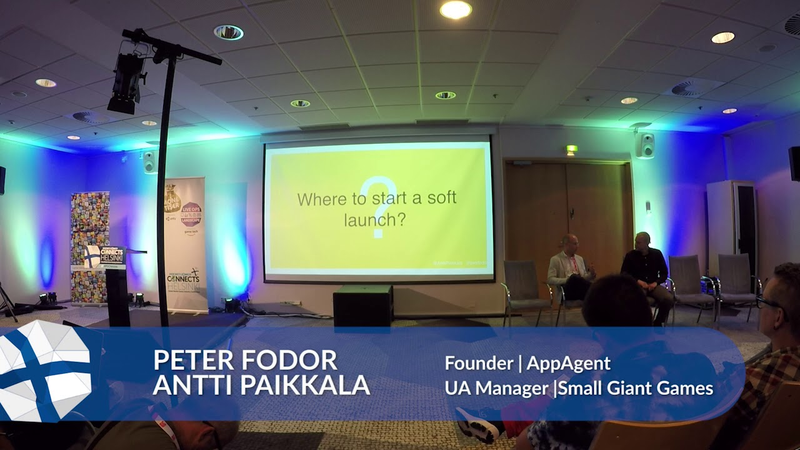
would my true sense to some studies unti mentioned that the gay metrics were pretty good whereas the top of the funnel I was where they struggled the most which led them to the conclusion that the problem is not in the product itself rather in the packaging and then you tested several concepts which finally turn out to be this new visual style so let's go to the question where to start a soft launch shows your approach when it comes to selecting test markets and then also in general when you are launching the game globally you also have to take some countries so what's your methodology and which data you use for the selection process I think we can actually move to the next slide even here so there's a quite a bit of background research that you want to go through here so looking into geo population looking into a fluency of a country looking into potential targeting can already test well either on Facebook or then rewarded
networks or whatever that you can do at an early stage but generally you want to kind of find a feel of really a fluency spending deaf depending a force on the game type for us as an IP to a game it's it's necessary but also not going the obvious way of only looking at Canadore looking Australia because those are really competitive markets and pricing might might surprise you especially if you're on a lower budget sure the next question goes to the acquisition itself that basically two approaches how to acquire is that during the soft launch either in like waves or cohorts or to have a continuous number of DEA use what do you prefer and why I'd say that especially for a soft launch it's especially during a soft launch is important to keep the rates as even as possible again for product to make sure that they have a solid foundation of
testing things but also for you it's it's much more measurable it's in its for marketer it's always important to stay consistent and consistency is what you want to go for how you define that a certain threshold of di use you want to keep throughout the soft launch like 5,000 10,000 50,000 just to give some ballpark figure to the audience we should add fifty thousand daily actives in a soft Florence but it can be challenging to find that level but really you want to be at least in the hundreds in terms of new daily installs to be able to build that build that daily active space and then you can start experimenting and start doing at least some level of well not fully mathematically viable cohorts and at least having an idea cool so how many networks do test during soft launch I assume that you start on those two biggest ones Facebook and AdWords but you also mentioned that you very quickly start testing video networks so what's your approach at which stage you broaden your channels
and how many are you've tested by the end of the soft launch well ideally you want to test as broad as possible even in the beginning so launching with the launching with social networks launching with universal app campaigns launching with rewarded or I should say video ad networks as well because then you'll have an idea when you if you if you've set up your analytics right you'll have an idea of the profiles of the different users you get from all of these so you know you want to go pretty broad so upwards of five partners like from the from the very beginning how many you use today we're depending on on bit of time of the year we're currently running up even up to like ten networks at the time not always so here's your simplified overview of metrics for different networks which is what you do most of the time and running soft-launched comparing different channels how they perform so tell us more about this what's your general approaching the main
KPI you look at right so the chart here might be so return on adspend might be a bit more ambitious during during a soft launch but I wanted to keep it here just for like consistency of running campaigns so here in the chart you'll see a couple of ways to evaluate fairly consistently the performance of a network so how much how much money you spent how many installs you got for that and then calculating out CPI and then from game analytics point of view looking at your pay rate and you're just measuring out based on your modeling what your LTV ends up looking like and then when you have LTV you have cohorts and then the more time elapses the more accurate your model becomes and that allows you to may then measure return on ad spend a bit more effectively your user base is all around the globe they also use some regionally specific networks such as my target in Russia at
some point you definitely want to so that completely depends on the profile of your game so we're going for a pretty broad audience and my target has has definitely been my should say my target or or WeChat or fiber or any specific like very quite geo-specific acquisition platforms can be viable for you but I'd say in the very beginning all you need is a couple of the bigger players out there that can address or Wonder variety what about your budget splitter I hear quite often that the vast majority of budget is spent on Facebook and Google Ads whereas in gaming it might be true that also video networks play a big part over the media mix howdy today for you and what would you you're generally recommend to the audience where to start and which networks you would recommend to test at first place sure so from our point of view we've always had the mentality of not really
being that or being very agnostic in terms of wherever we see value that's where we're gonna buy so whether or not that means Facebook or Adwords or something else that's where we'll we'll sort of exploit that network and try to make sure we spend as much as possible which usually means that we're getting as much value out of it as well if our modeling is correct and and if everything goes our way so I wouldn't necessarily be able to give you an answer on that talking about modeling marketing analytics is something what you need to have to run efficient campaigns you developed your own tool could you imagine doing your job without marketing analytics using just attribution provider or Facebook business manager and how early in the life cycle you need to have such to in place to do a good job I could imagine it I wouldn't want to imagine it it is it is quite challenging to be frank there's a lot of good providers of
analytics tools out there we decided very early on we're building our own just because we control the day I thought we can we don't have to share everything in from the very beginning to a third party of course we do now with attribution and all that but it's it's just very important for you to keep control keep data and also you more you're able to create your own models more efficiently with with everything built in-house so it is a toll but it for us it was definitely worth it great if five minutes left for now time is running up so last couple of questions what are the major components of the global launch plan from your perspective and how many territories and also channels would you recommend to use for the first month and also if you can advise the audience about the budget necessary to successfully launch an ambitious game like yours sure we're gonna have the the chart the chart is so you see what goes on here a support good
so here's a hypothetical very simplified model of a media plan so so from the very beginning that the budget is we're gonna dictate very much of what you're able to do so for a lot of studios this means that either its internal funding is it is it some kind of seed round some kind of other amounts that your CEO or finance team or or whoever sits on top of your pile of money is gonna be able to allocate to you and that's of course then done an internal process of as a marketer trying to get as much money as possible because we're confident in the product but really you want to start where with your soft launch you want to start where your Intel is the strongest is this gonna resonate in english-speaking markets is this gonna resonate in a higher fancy kind of market or is it gonna be more wide in terms of approach so based on that traditionally you'd probably if you're a
western developer also you're gonna be focusing your launch on the US so then according to according to the best practices either you had in the past or what you're most defined hypothesis is you want to go country by country start with a bigger bigger Geo's bigger sort of prices as well because you're not only competing against yourself you're competing against the market so that dictates CPI again chartboost for example it races for that and then just being very realistic of what you can spend and and turning it out even as simply as here it makes makes a big difference when when you're planning on how much you can spend let's assume that you will launch a game next week for how long would you create a media plan and how flexible you will be adjusting to new data coming in or let's say impactor featuring and other aspects so would you follow the plan rigorously or change it after three days of the global launch you'll
probably see like market realities very quickly after a few days huh so there's one how much volume you're actually getting but then to how much you're able to spend and like how much is left area budget so I'd say you based on that after a few days you'll have a good idea of what the next few weeks are going to look like and then after that you just have to sort of ask your finance team and your management to b-b-b make make themselves available with with additional budget if it looks like this is really gonna work out that's just the case you'll have to have to unfortunately make this day my very last question for today goes to your recipe for the global launch success if you can address three major components of your success or your general idea about what's necessary to succeed in today's very competitive environment sure so one thing would be the the work
you do during like even beginning the soft launch is really scoping out the market really understanding what you're up against and and based on that create a product that you're comfortable with number two is is basically based on that create a plan create a strategy create a media plan based on the best possible knowledge that you have available based on let's say talking to networks let's say learning on your soft launch goals and based on the abyssion you've been able to make with your product and then basically thirdly you just need to have a lot of money that's that's B be ambitious and be honest with yourself that launching up big especially big new game is gonna be expensive that's that's what's gonna happen like the in the long run you're gonna have to be consistent with
marketing that's from a marketer that's at least my point of view there are of course organic growth story is there's massively profitable organic companies that do lots of them dollars that way but that's just what I've seen and that's a wrap thanks thanks for coming thank you [Applause] [Music]
Summary
The media planning process for a global mobile game launch requires a disciplined, data-driven approach that balances product development with aggressive user acquisition strategies. Successful launches are rarely overnight successes; they are the result of rigorous market analysis, iterative testing, and the willingness to pivot based on performance data. Developers must identify a clear niche by analyzing top-grossing titles and aligning gameplay mechanics with audience expectations. During the soft launch phase, the primary objective is to serve the product team by testing hypotheses, ensuring technical stability, and establishing a baseline for key performance indicators such as cost per install and conversion rates.
A critical component of this strategy is the packaging and visual identity of the game. If initial metrics indicate poor top-of-funnel performance despite strong core gameplay, developers should be prepared to overhaul the visual style to better match the target audience’s preferences. When selecting test markets, planners should look beyond standard, high-competition regions like Canada or Australia, instead prioritizing countries based on population, affluence, and the specific genre of the game. Maintaining consistent daily active user growth during the soft launch is essential for generating statistically significant cohorts, which in turn allows for more accurate lifetime value modeling.
Effective media planning involves a broad, agnostic approach to acquisition channels. While major platforms like Facebook and Google are foundational, integrating video ad networks and geo-specific platforms early on provides a more comprehensive view of user profiles. Because the mobile gaming market is highly competitive, internal data analytics capabilities are vital for maintaining control over performance modeling and budget allocation. Ultimately, a successful global launch requires a combination of deep market research, a flexible media plan that can adapt to real-time performance data, and the financial commitment necessary to sustain consistent, high-volume marketing efforts in a crowded landscape.