1 free read left. Create a free account for unlimited reading + AI research.
Create free accountArticle Niko Partners
1 free read left. Create a free account for unlimited reading + AI research.
Create free accountArticleNiko Partners
The market generated $5.37 billion in 2024.2% year-over-year increase. Growth is projected to moderate to 1.8% in 2025.
The video game market in Southeast Asia represents a significant, albeit complex, growth opportunity for industry stakeholders. Despite facing short-term economic and political headwinds that have slowed growth in specific nations like Indonesia and the Philippines, the region remains a vital hub for gaming, driven by a young, tech-savvy population and high engagement with esports and social gaming platforms. The primary objective is to provide actionable insights for companies seeking to navigate the region’s diverse linguistic, regulatory, and cultural landscapes.
Market data indicates that the Southeast Asian games market generated $5.37 billion in 2024, reflecting a 5.2% year-over-year increase. While growth is projected to moderate to 1.8% in 2025, the market is forecasted to reach $6.47 billion by 2029, with a five-year compound annual growth rate of 3.8%. The gamer population, which reached 285.82 million in 2024, is expected to expand to 324.4 million by 2029. Annual average revenue per user (ARPU) is also anticipated to rise, reaching $19.96 by the end of the forecast period.
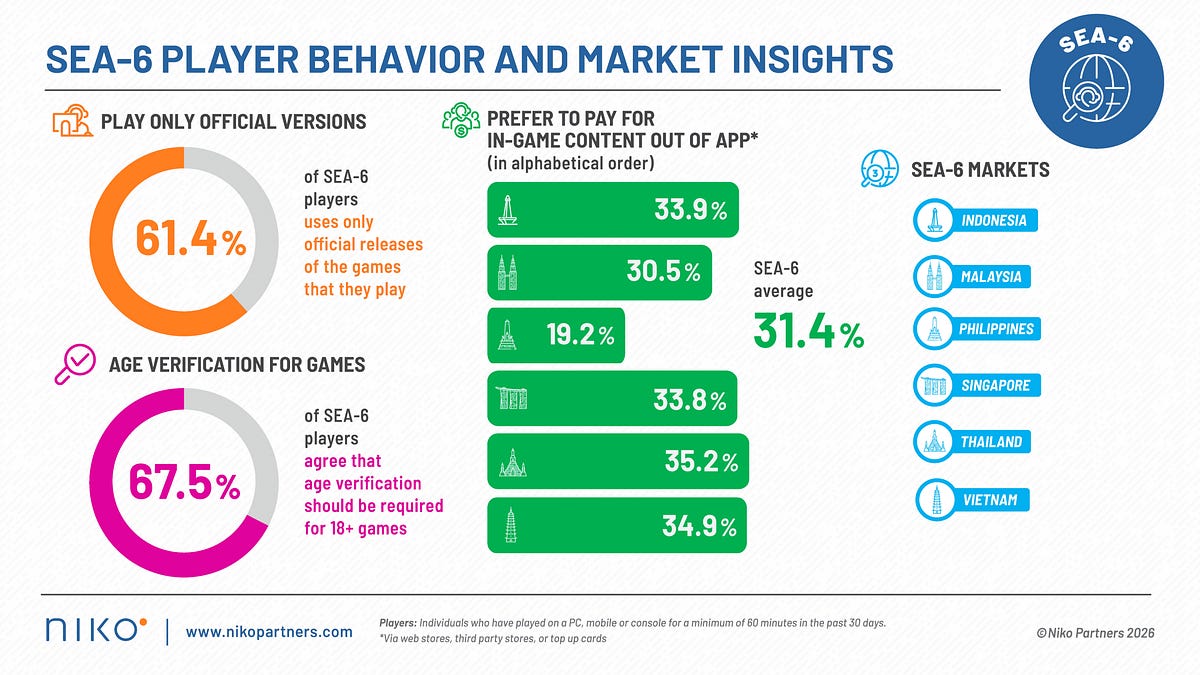
Methodologically, these findings are derived from a combination of market modeling, five-year forecasting, and a survey of 3,131 gamers across the region. The research highlights a shift in consumer behavior, noting a decline in average weekly playtime to 15 hours and a rise in the proportion of non-spending gamers. To succeed, companies must prioritize localization, particularly regarding language and payment infrastructure, as digital wallets remain the preferred transaction method across most of the region. Furthermore, the high demand for social features and livestreaming integration underscores the necessity of tailoring products to local preferences to capture and retain market share.

Niko Partners · 2026
Niko Partners · 2026
Niko Partners · 2026



Niko Partners · 2026
Niko Partners · 2026
Niko Partners · 2026

Deconstructor of Fun · 2026



Niko Partners · 2026


Niko Partners · 2026
Niko Partners · 2025
Niko Partners · 2025

Niko Partners · 2025
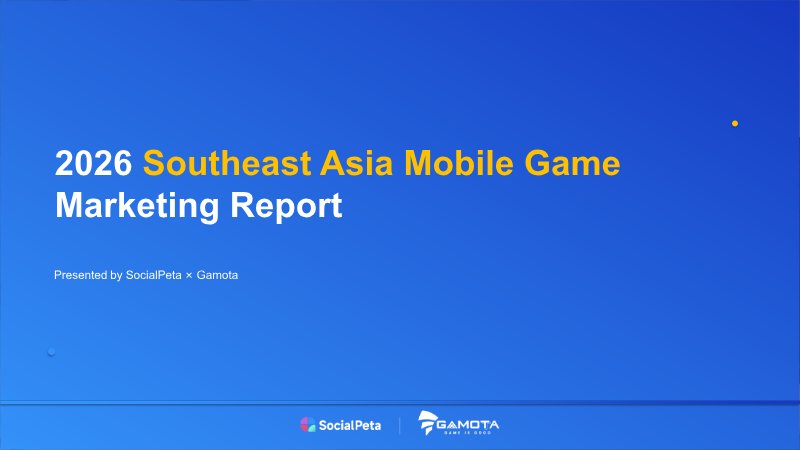
SocialPeta · 2026