Key insights
5 slides
Key Milestone
India's gaming market surpassed $1 billion in annual revenue for the first time in 2025.
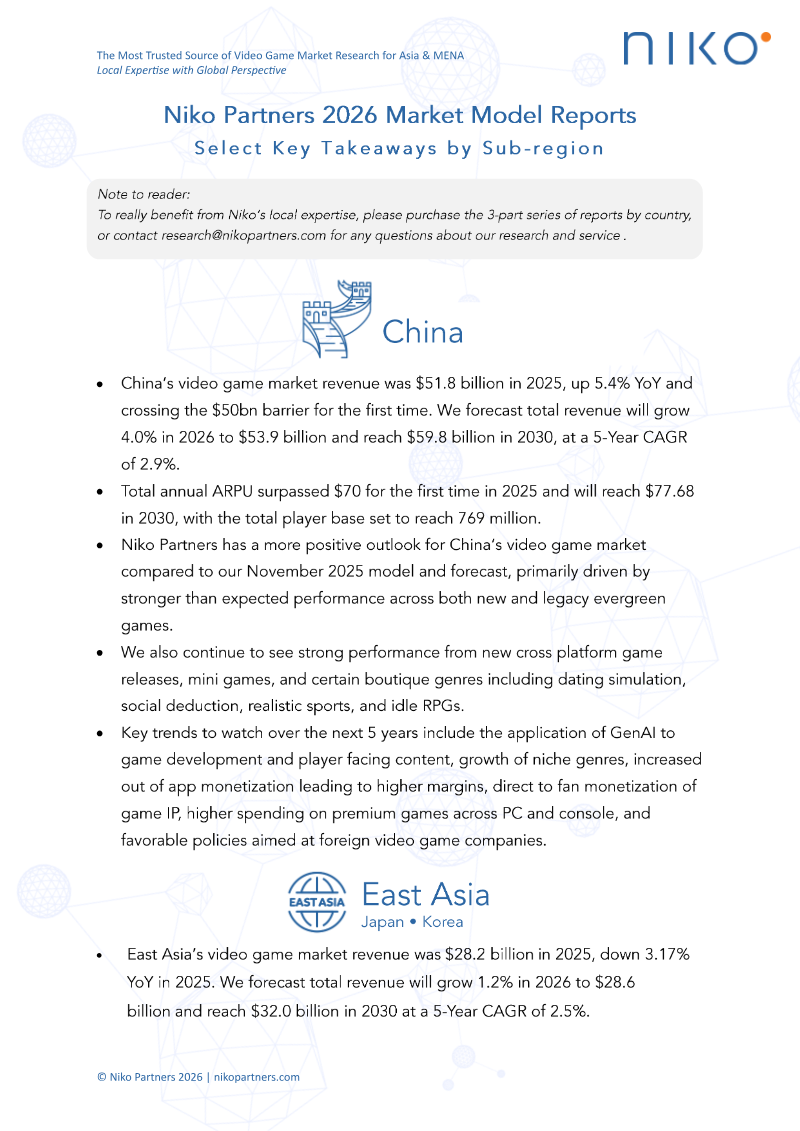
The market reached $1.04 billion in 2025, representing a 14.8% year-on-year increase. This establishes India as the fastest-growing video game market among those monitored.
$1.04 billion
India's gaming market revenue in 2025.
- Projected revenue by 2030
- $1.77 billion
Player Base
India's gaming player base is massive and continues to grow significantly.
The player base was estimated at 511 million in 2025. It is expected to exceed 550 million in 2026 and reach over 700 million by 2030.
Demographic Shift
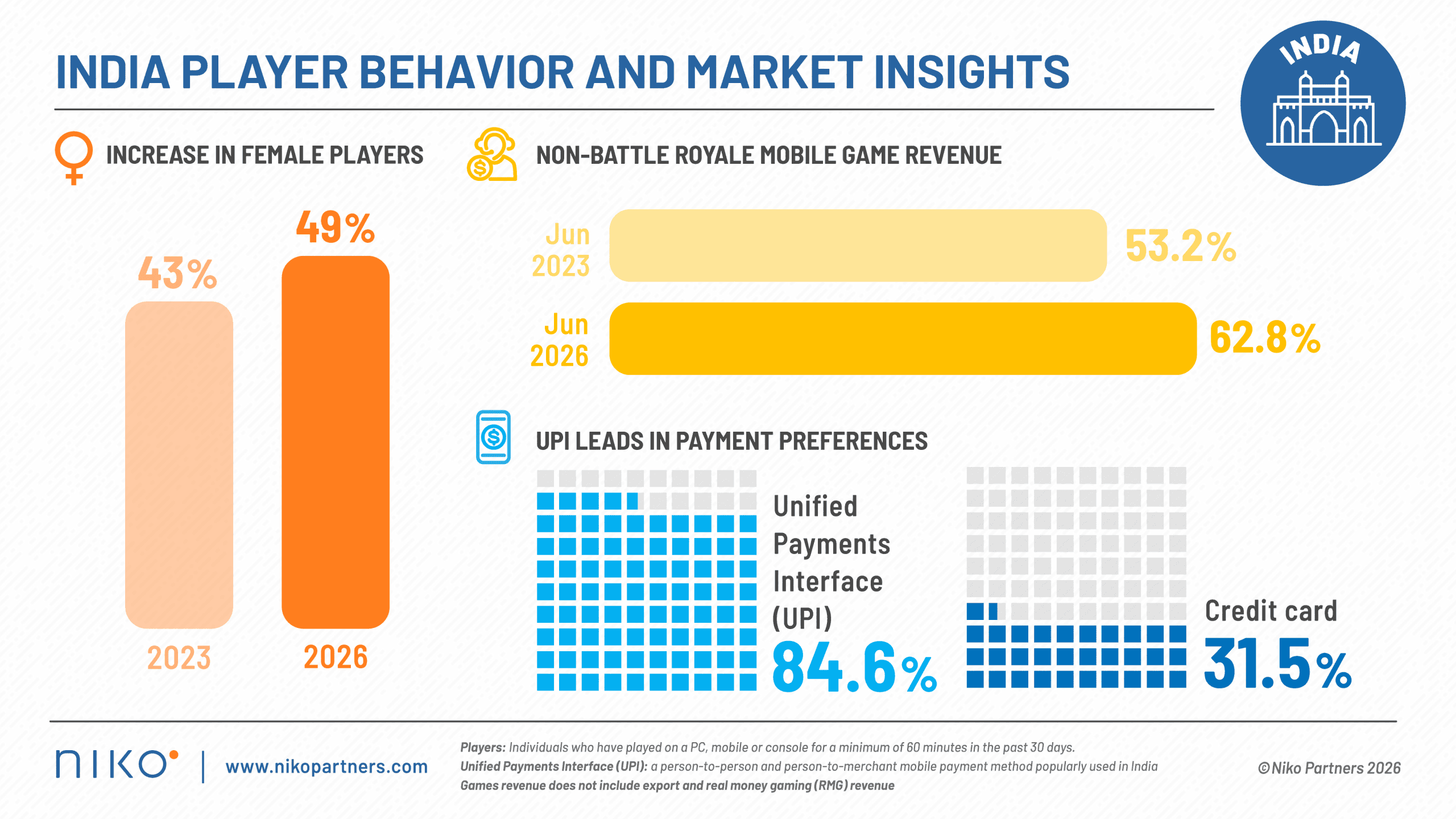
Female participation in Indian gaming has significantly increased.
Female gamers accounted for 43% of players in 2023.
49%
Share of female gamers in India in 2026.
- Share of female gamers in 2023
- 43%
Content Diversification
Mobile gaming revenue is diversifying beyond traditional battle royale titles.
Non-battle royale games increased their share of mobile game revenue from 53.2% in June 2023 to 62.8% in June 2026.
Payment Preferences
UPI is the dominant payment method in Indian gaming, with a strong preference for third-party purchases.
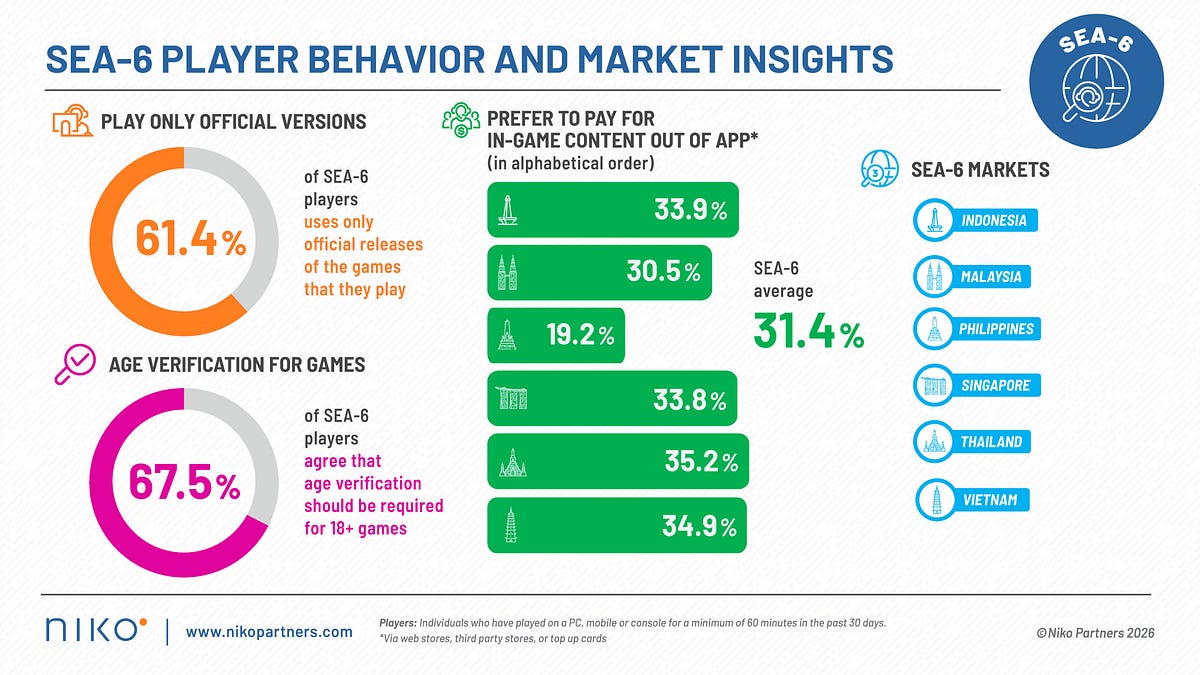
84.6% of players use UPI for gaming transactions. Additionally, 31.5% of players prefer purchasing in-game content outside traditional app stores.
Like choosing a direct flight over a connecting one, many players prefer direct payment and purchase methods.
1 / 5
Ask AI about this report