Key insights
6 slides
Market Size
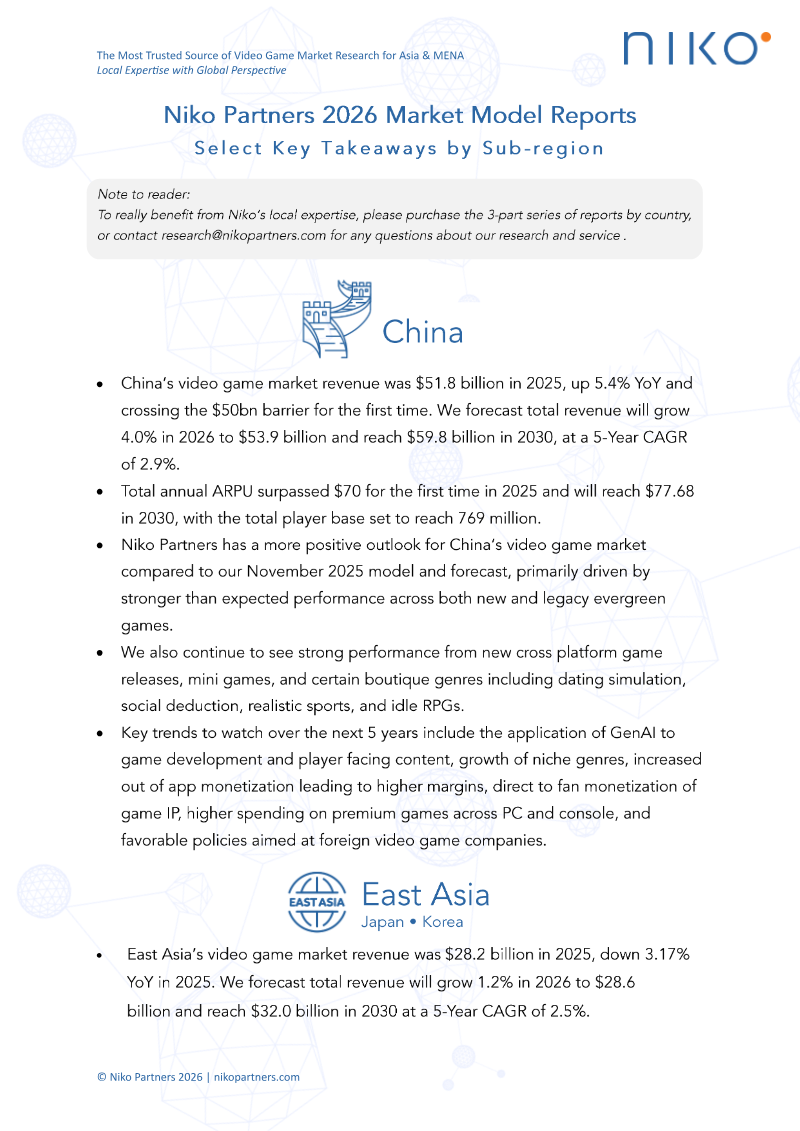
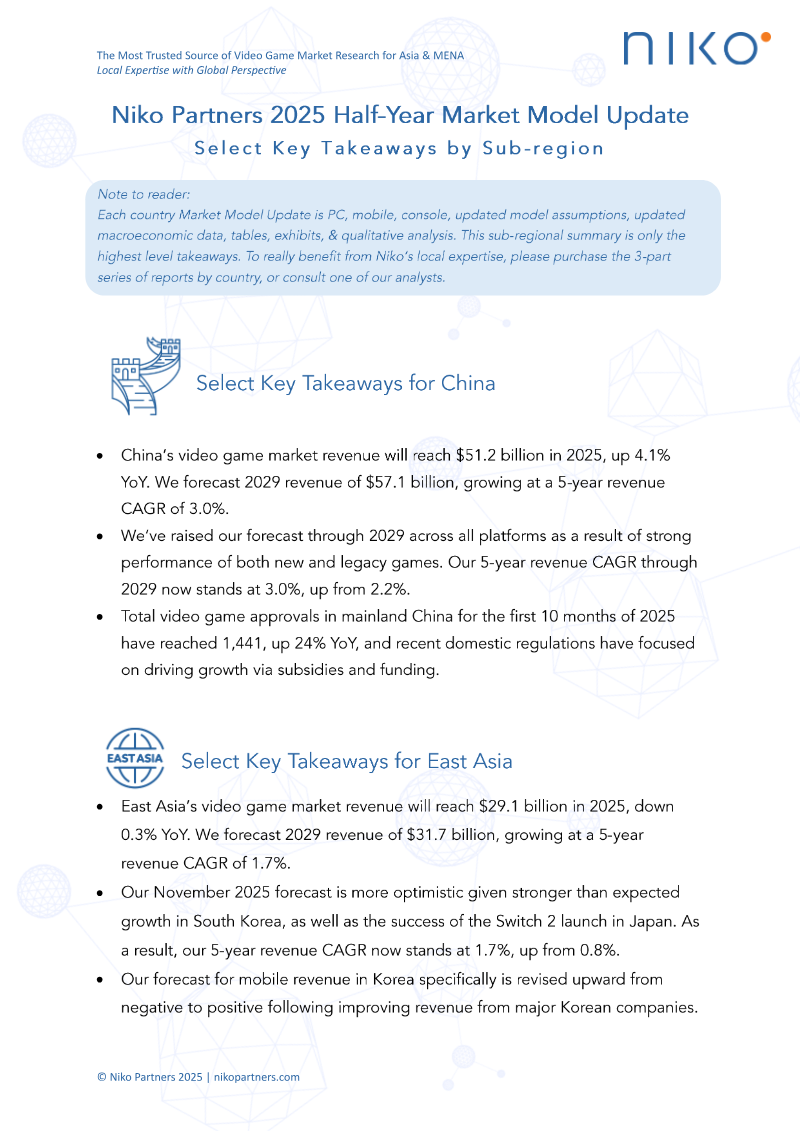
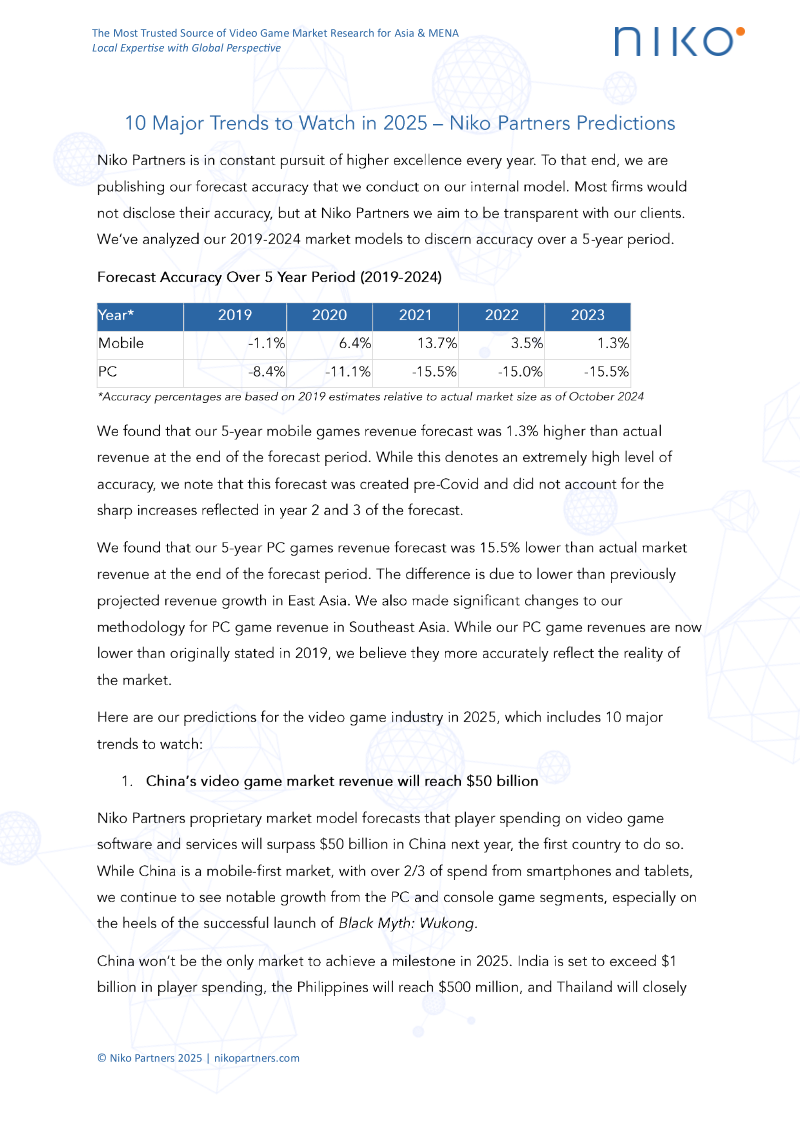
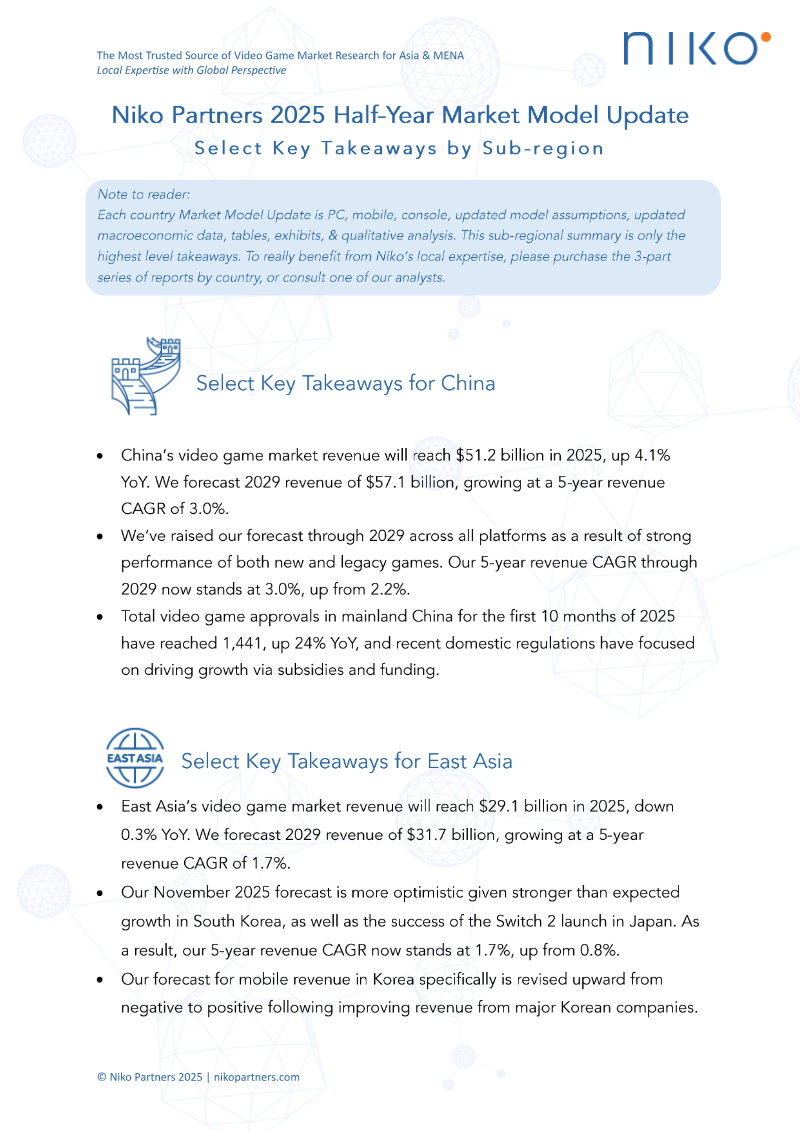
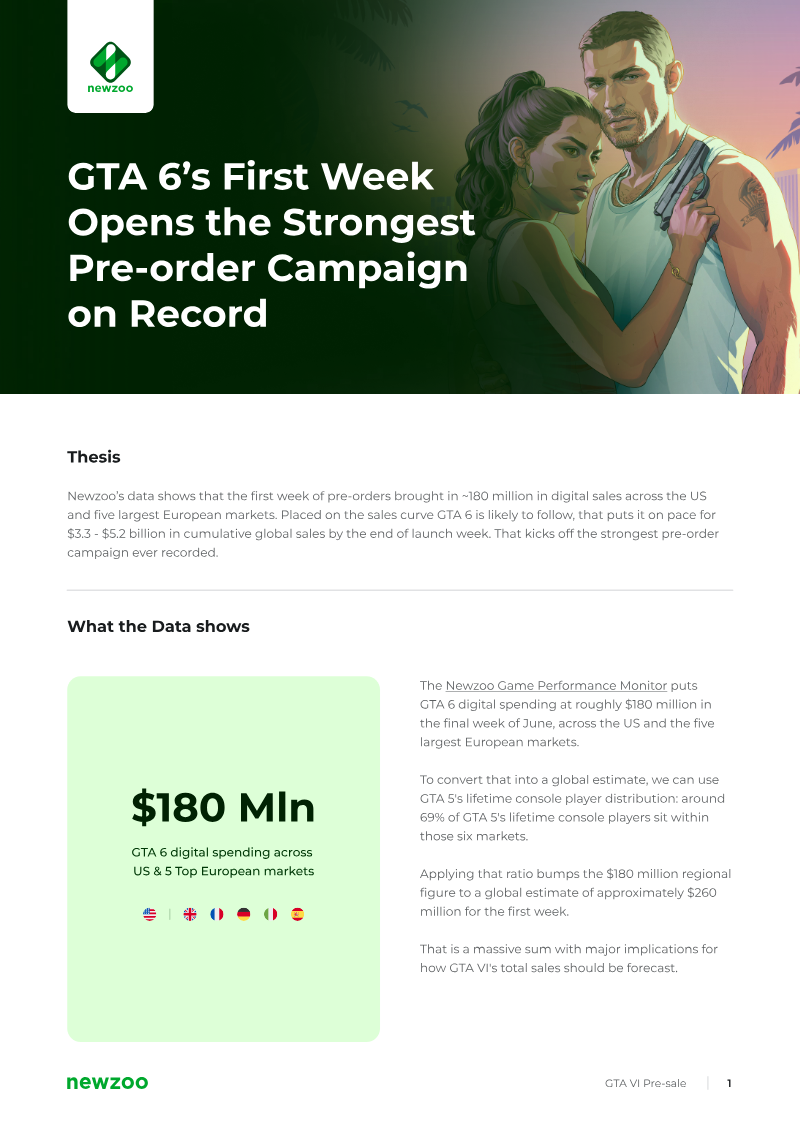
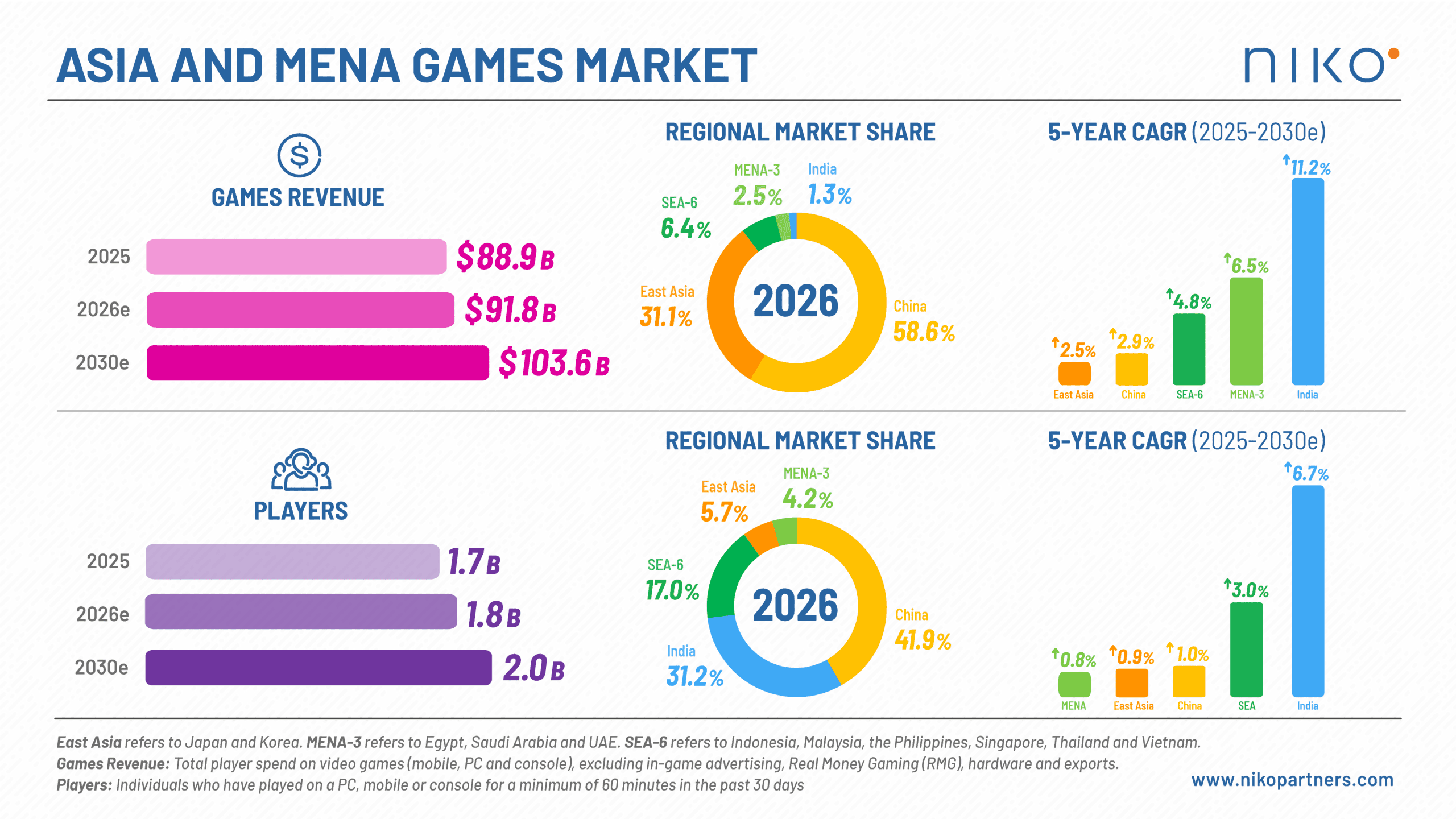
The Asia and MENA video game market is projected to exceed $100 billion in revenue by 2030.
The market is expected to grow at a 5-year Compound Annual Growth Rate (CAGR) of 3.1%. This growth occurs despite global economic volatility and geopolitical instability.
$103.6 billion
Projected revenue for Asia and MENA gaming market by 2030.
- Revenue in 2025
- $88.9 billion
- Projected revenue in 2026
- $91.8 billion
Fastest Growth
India is the fastest-growing market in the Asia and MENA region.
India is expected to reach nearly $2 billion by 2030, with player spending growing at an 11.2% 5-year CAGR. It will also see the fastest player growth alongside Indonesia and Vietnam.
MENA-3 Expansion
The MENA-3 region is the second-fastest growing by revenue.
This region, comprising Saudi Arabia, UAE, and Egypt, is projected to reach $3 billion in player spending by 2030. It is also expected to see an annual ARPU increase of $10 over the next five years.
Demographic Shift
Female players now constitute 42% of the region's gaming population.
The total player base is forecast to grow from 1.77 billion in 2026 to 1.99 billion by 2030.
Player Diversity. Female players now constitute 42% of the region's gaming population, an increase from 39.5% last year.
42%
Share of female players in the region's gaming population.
- Last year's share
- 39.5%
Monetization Shift
Direct-to-consumer monetization is emerging as a significant structural shift.
Additionally, generative AI is increasingly utilized for development efficiencies, though player acceptance for generative AI in core assets remains nuanced.
Evolving Strategy. Direct-to-consumer monetization is emerging as a significant structural shift in the Asia & MENA gaming ecosystem.
Console Impact
The Nintendo Switch 2 is significantly driving console growth in Asia & MENA.
Sales of the Nintendo Switch 2 are nearly 70% higher than the original Switch's launch-aligned performance.
Think of it like a sequel to a popular movie outperforming its original at the box office, driven by wider distribution.
1 / 6
Ask AI about this report