Key insights
7 slides
Market Size
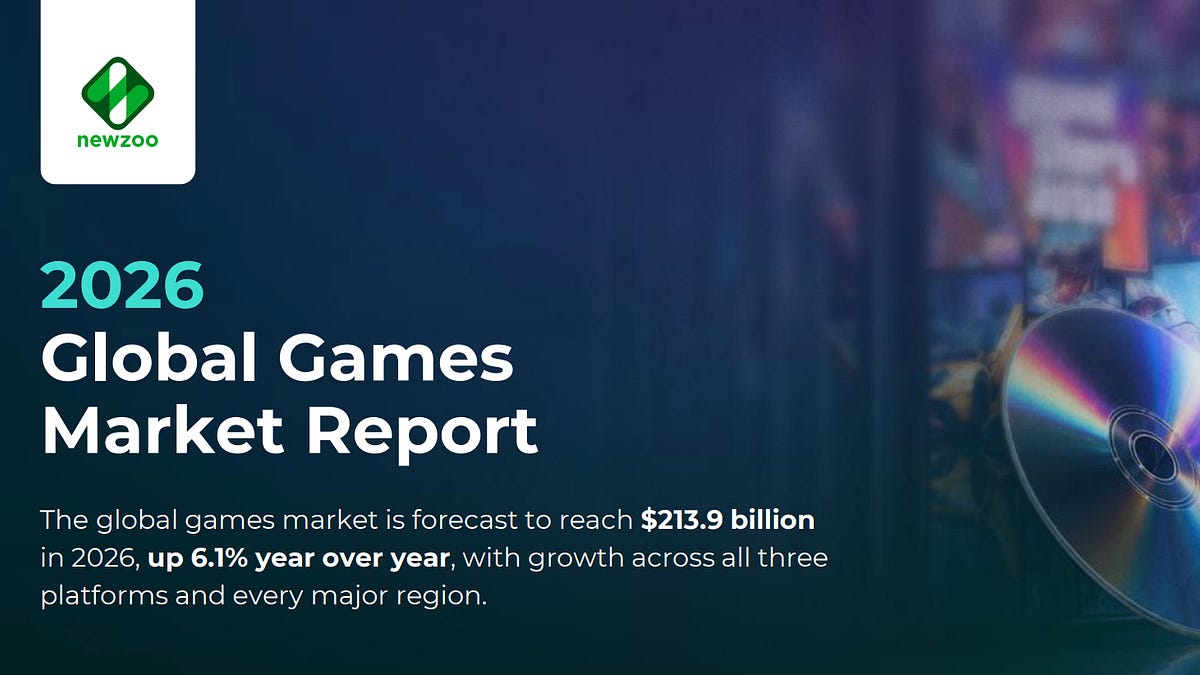
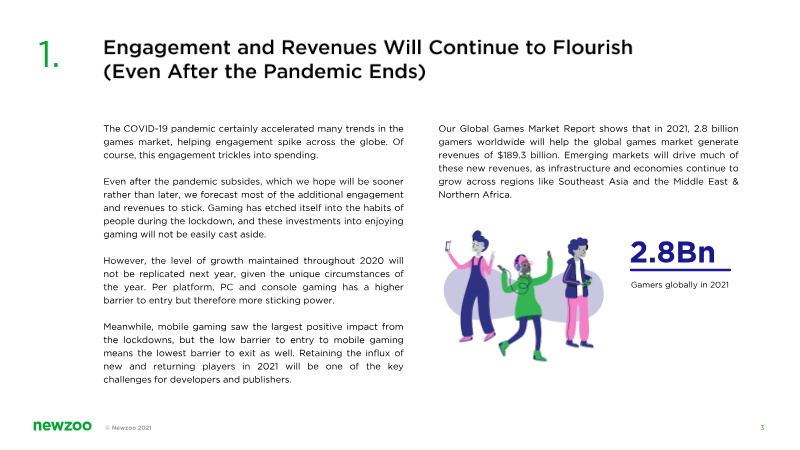
The global games market is projected to reach $189.3 billion in 2021.
This growth is supported by 2.8 billion gamers worldwide. Pandemic-driven engagement habits are expected to persist.
Platform Evolution
Games are evolving into social platforms for virtual events.
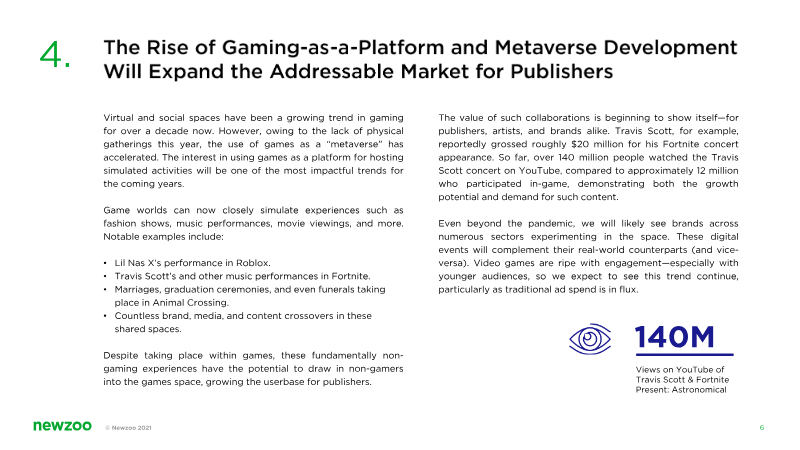
This 'metaverse' trend is accelerating, evidenced by collaborations like Travis Scott’s Fortnite concert. This concert reached over 140 million viewers on YouTube.
Think of games becoming like virtual concert halls or social clubs.
Cloud Gaming
Cloud gaming is entering a growth phase.
Major players like Amazon, Google, Microsoft, and Tencent are leveraging web-based apps. This allows them to bypass mobile store restrictions and deliver high-fidelity experiences.
Esports Diversification
Esports organizations are diversifying into lifestyle brands.
They are also adopting content-creator strategies to mitigate revenue risks. This reduces reliance on traditional tournament structures.
Player Demand
Consumer demand for diversity is rising.
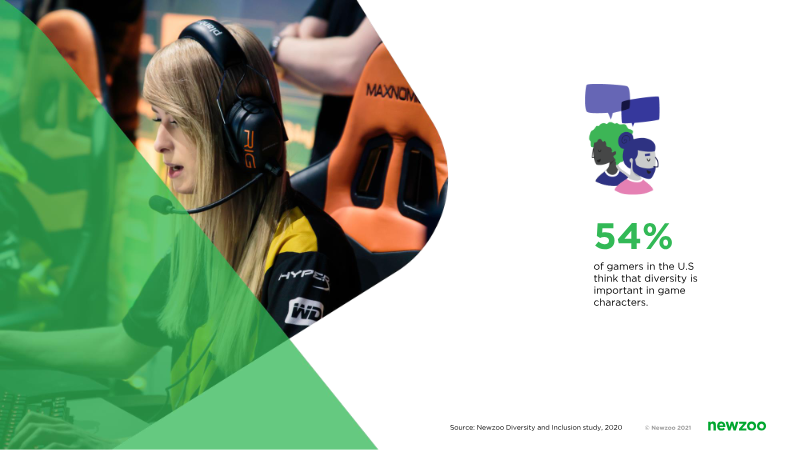
Approximately 50% of players in the U.S. and U.K. desire more inclusive characters. They also want corporate stances on social issues.
IDFA Impact
Apple's IDFA removal will disrupt mobile user acquisition.
Publishers will need to diversify marketing channels. They must also prioritize first-time user experience (FTUE) optimization.
Like a sudden change in traffic laws, publishers must find new routes to reach their audience.
5G Adoption
5G-ready smartphones are expected to reach 16% of the active market by end of 2021.
Adoption is projected to climb to 43% by 2023.
Page 16 of the report16%
Share of active market for 5G-ready smartphones by end of 2021.
- Projected adoption by 2023
- 43%
- Devices by 2023
- 2.1 billion
1 / 7
Ask AI about this report