Loading the document
1 free read left. Create a free account for unlimited reading + AI research.
Create free accountWhitepaper Ludic Language Pedagogy
1 free read left. Create a free account for unlimited reading + AI research.
Create free accountWhitepaperLudic Language Pedagogy
The Medical English Escape Room offers a pedagogical framework to integrate gamification into higher education. It aims to improve content recall and encourage collaborative problem-solving.
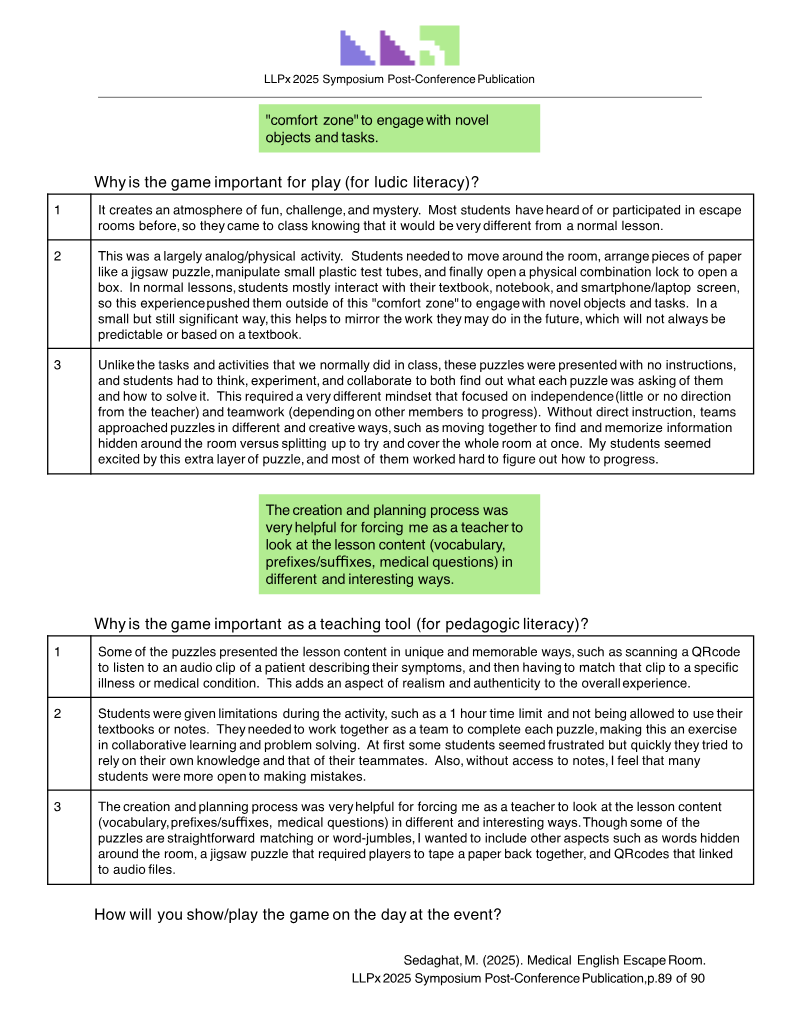
The Medical English Escape Room serves as a pedagogical framework for integrating gamification into higher education, specifically designed to review medical English curriculum while fostering student engagement. By transitioning from traditional, textbook-based instruction to an immersive, analog-focused environment, the initiative aims to improve content recall and encourage collaborative problem-solving. The activity challenges students to apply medical vocabulary, prefixes, suffixes, and diagnostic questioning in a high-pressure, time-constrained setting that mimics real-world unpredictability.
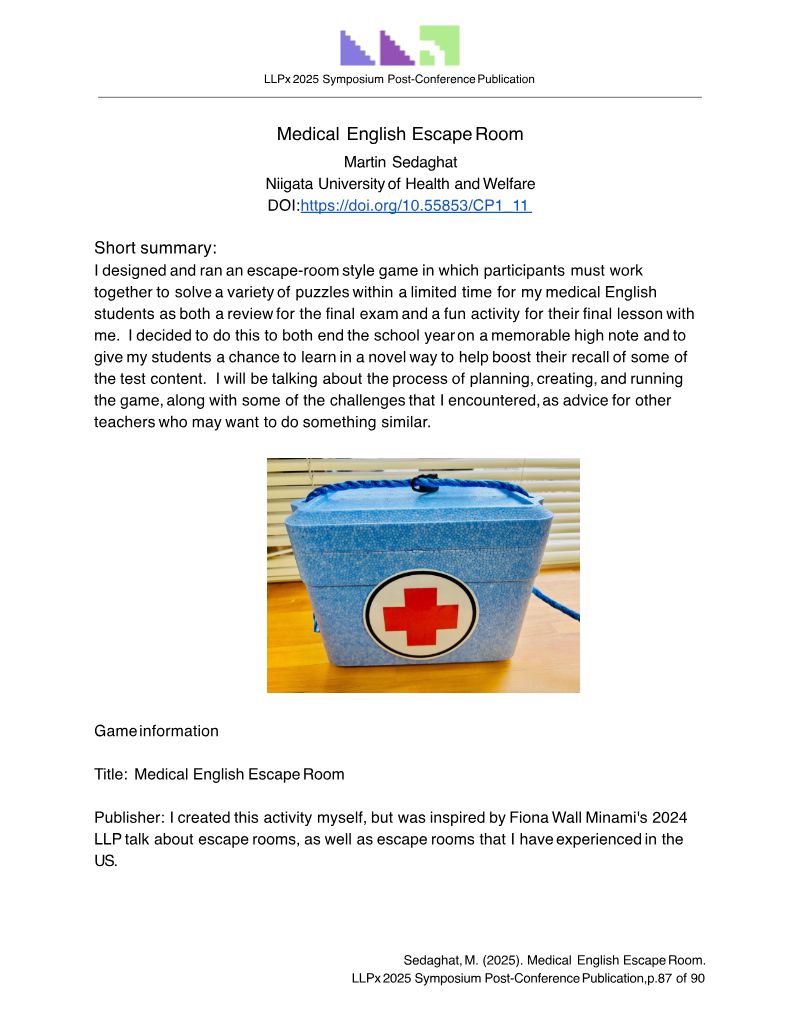
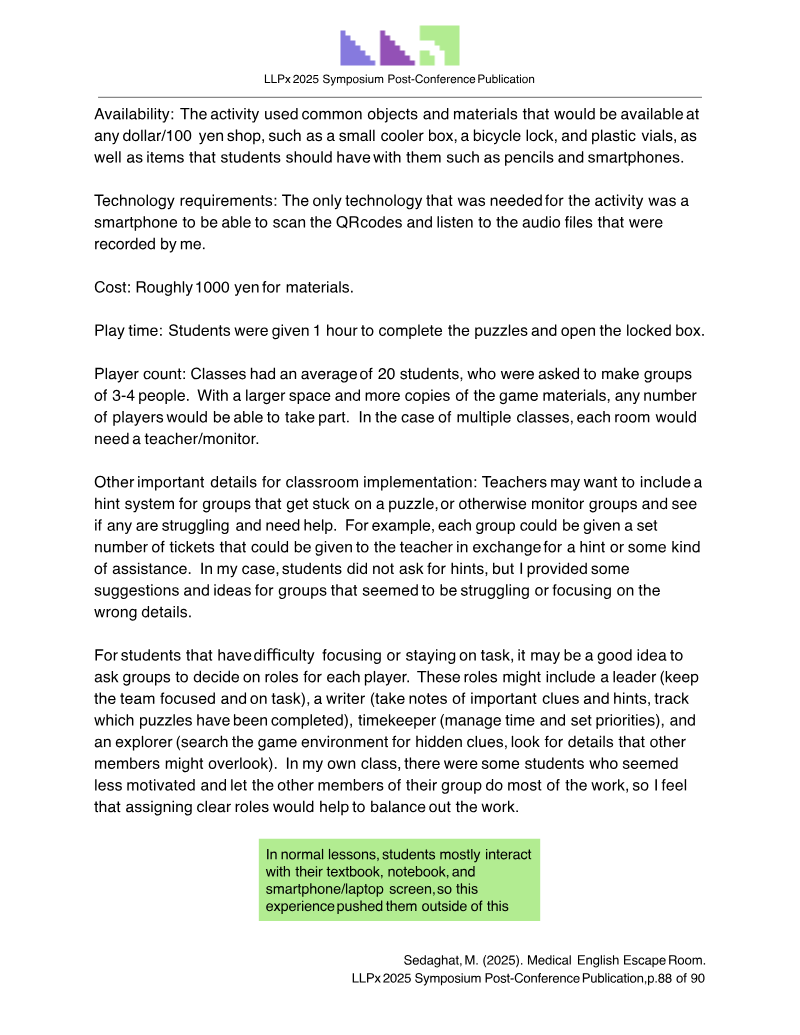
The implementation involves groups of three to four students working within a one-hour timeframe to solve a series of puzzles using physical objects, such as combination locks and medical props, alongside smartphone-integrated QR codes for audio-based diagnostic tasks. With a low barrier to entry, the project requires minimal technology and approximately 1,000 yen in materials, making it a highly scalable model for diverse classroom sizes. The methodology emphasizes student autonomy, requiring participants to navigate tasks without direct instruction, which forces reliance on peer collaboration and individual knowledge rather than static notes.
Key findings suggest that the escape room format effectively pushes students outside their comfort zones, promoting ludic and pedagogical literacy. The absence of textbooks encourages a higher tolerance for trial and error, while the physical nature of the puzzles enhances memory retention. To optimize participation and ensure equitable contribution among students, the inclusion of assigned roles—such as leader, writer, timekeeper, and explorer—is recommended to mitigate passive engagement. Ultimately, the process of designing these puzzles provides educators with a creative lens through which to reframe standard curriculum, transforming routine review sessions into memorable, interactive learning experiences.
Ludic Language Pedagogy · 2026
Ludic Language Pedagogy · 2026
Ludic Language Pedagogy · 2026
Ludic Language Pedagogy · 2026
Ludic Language Pedagogy · 2026
Ludic Language Pedagogy · 2026
Ludic Language Pedagogy · 2026
Ludic Language Pedagogy · 2026
Ludic Language Pedagogy · 2026
Ludic Language Pedagogy · 2026
Ludic Language Pedagogy · 2026



Ludic Language Pedagogy · 2026
Ludic Language Pedagogy · 2025