1 free read left. Create a free account for unlimited reading + AI research.
Create free accountPresentation Ludic Language Pedagogy
1 free read left. Create a free account for unlimited reading + AI research.
Create free accountPresentationLudic Language Pedagogy
This analysis examines a pedagogical framework implemented at Meiji University in Tokyo, where a seminar class is structured as a professional game design studio. The primary objective is to foster student engagement and academic rigor by shifting the classroom environment from a traditional lecture-based model to a practical, project-oriented workspace. By framing the curriculum around the creation of educational games, the instructor provides students with the agency to develop tangible products, conduct real-world experiments, and engage with external stakeholders, thereby bridging the gap between academic theory and professional practice.
The methodology centers on creating a "playground" for students, characterized by high levels of autonomy, low-stakes feedback, and collaborative problem-solving. Students work in teams of four to design games for specific target audiences, utilizing weekly diary entries to reflect on their progress and receive personalized guidance. The curriculum integrates learning theories, research methods, and game literacy, requiring students to produce a final thesis based on either experimental data or a documented design journey. This approach draws inspiration from constructionist learning principles and corporate structures, such as those found in the Valve Corporation employee handbook, to encourage an entrepreneurial spirit and professional accountability.
Key findings indicate that this studio-based model significantly improves student focus and the quality of output compared to traditional seminar formats. By allowing students to choose their own projects and collaborate with external institutions—such as schools or private companies—the course provides meaningful, career-relevant experiences. While the instructor notes challenges regarding varying levels of student participation, the framework successfully promotes critical thinking and practical skill acquisition, demonstrating that a studio-like environment can effectively motivate students within a university setting.
Each row is a game or company this document names, each column a document, oldest first. A mark means that document names it. Select a row to see those documents.
Ludic Language Pedagogy · 2026
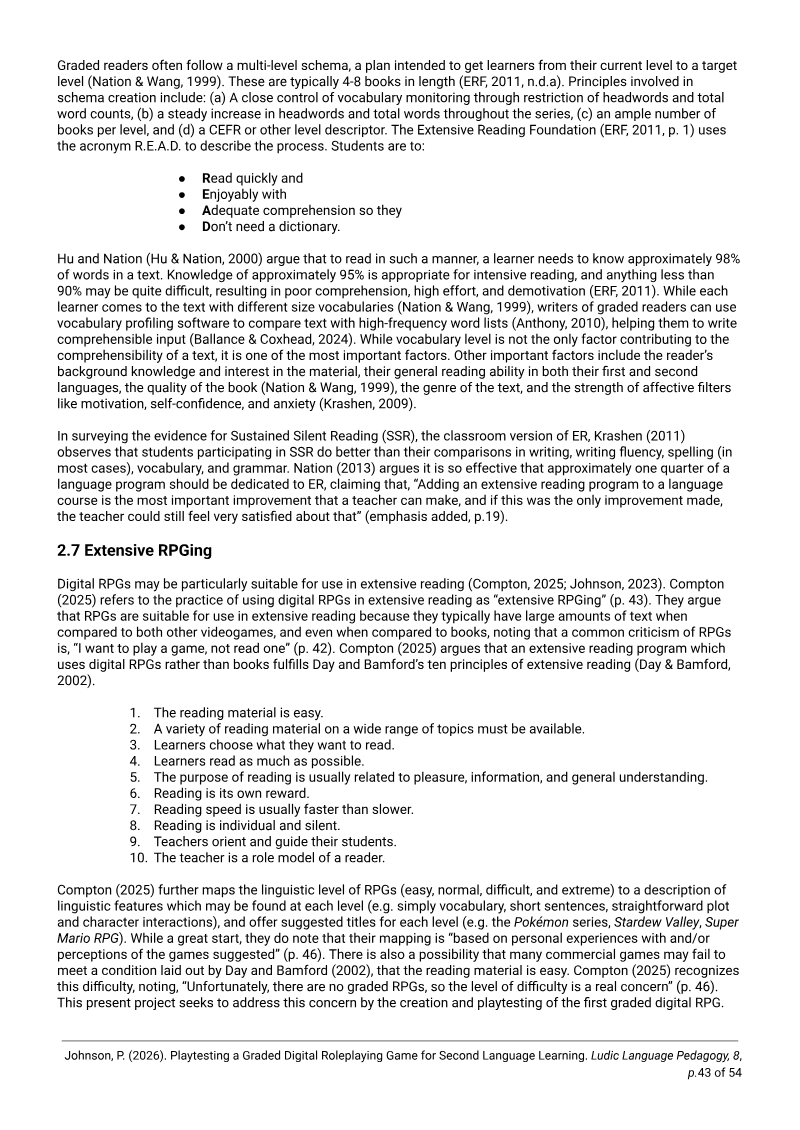
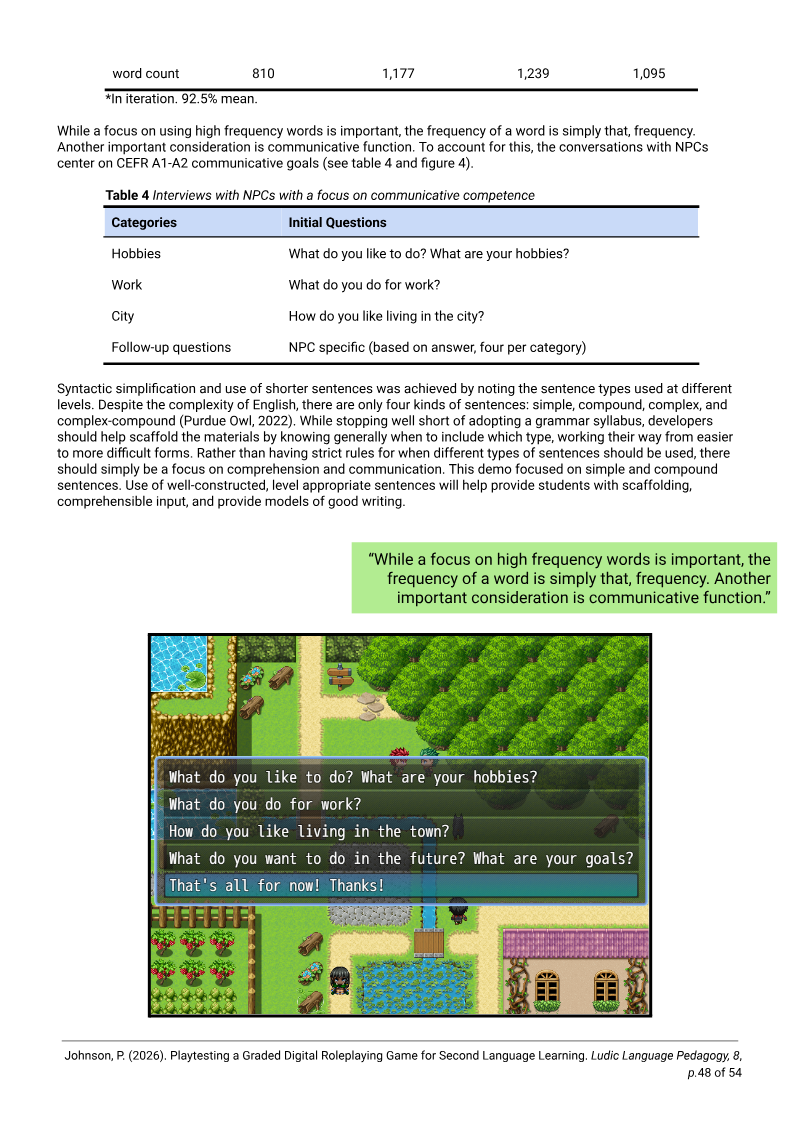
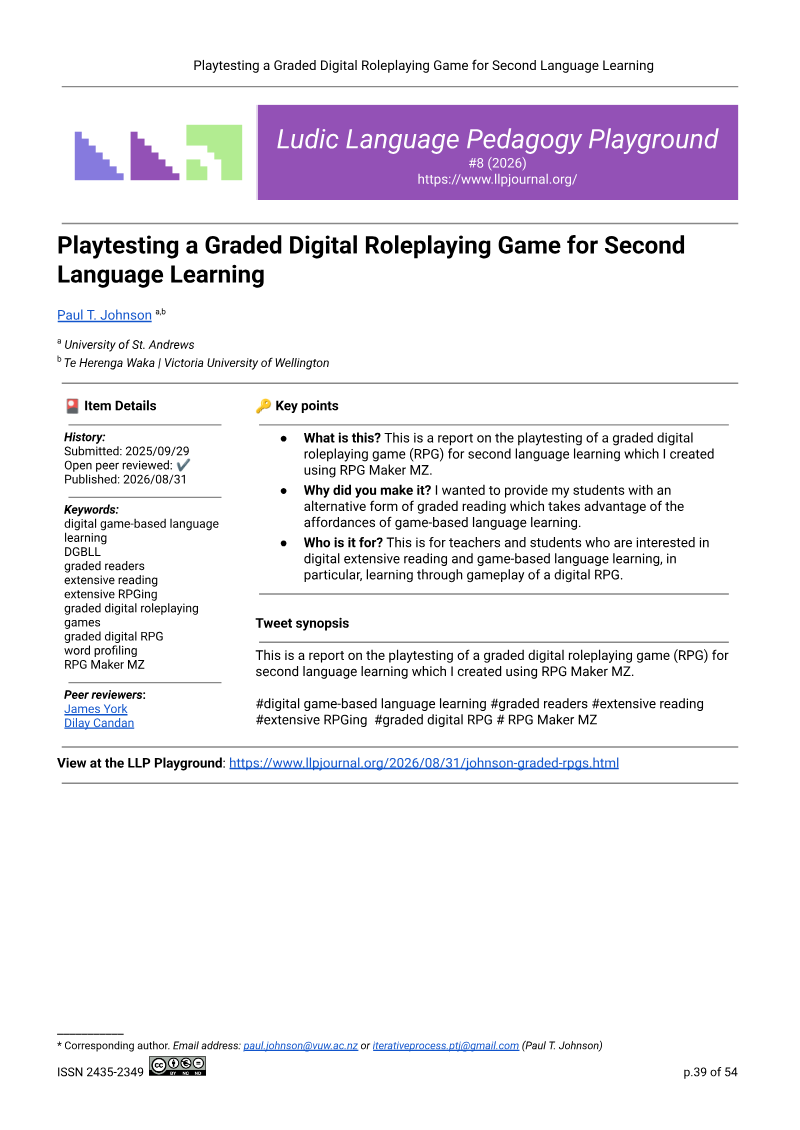
Ludic Language Pedagogy · 2026
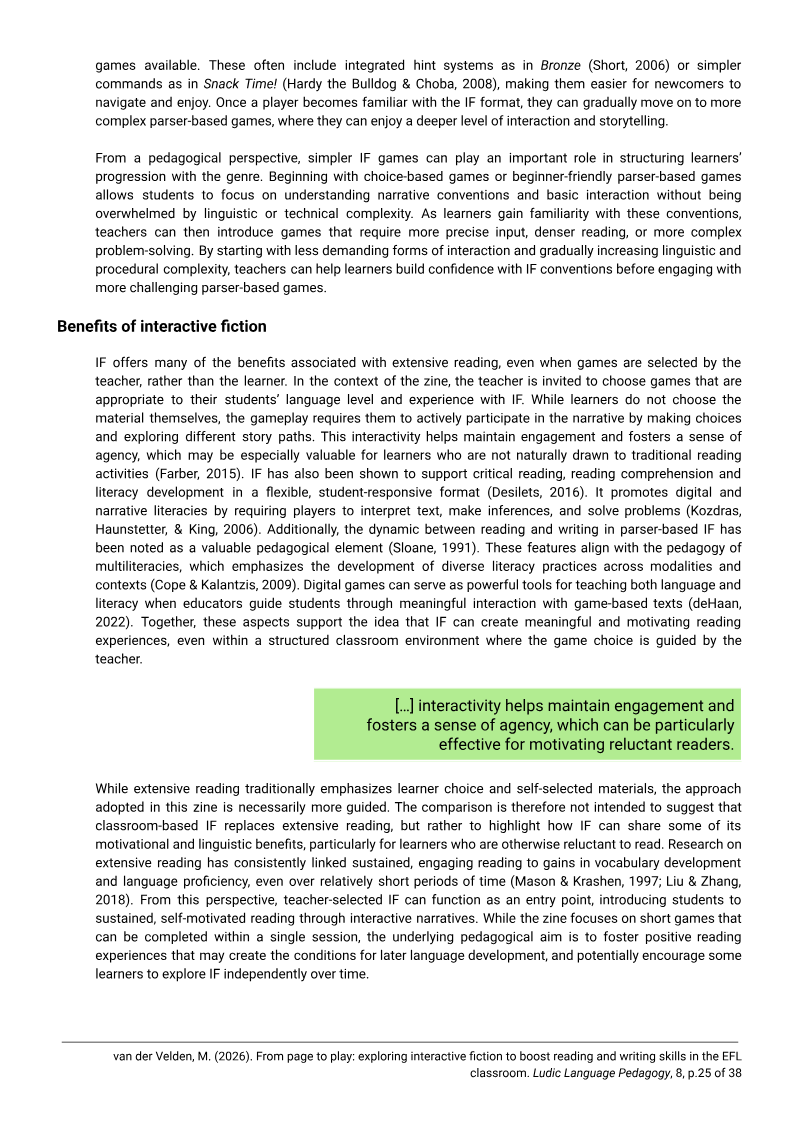
Ludic Language Pedagogy · 2026
Ludic Language Pedagogy · 2026
Ludic Language Pedagogy · 2026
Ludic Language Pedagogy · 2026
Ludic Language Pedagogy · 2026
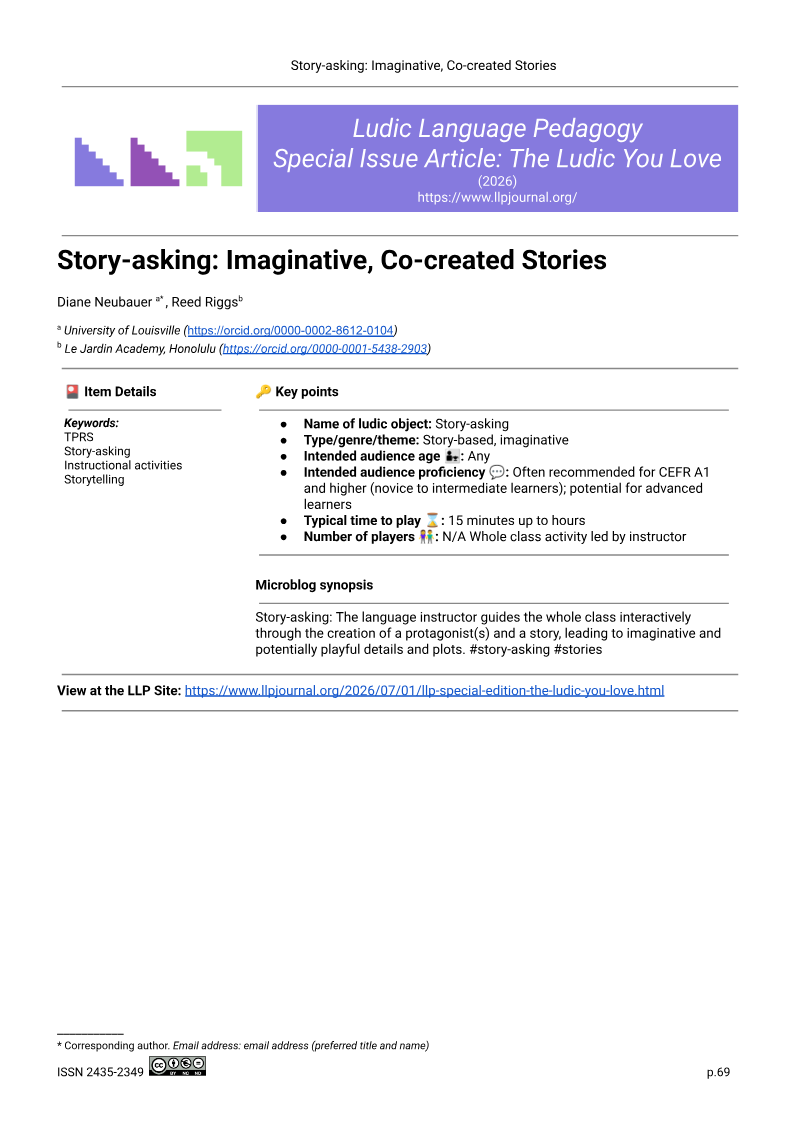
Ludic Language Pedagogy · 2026
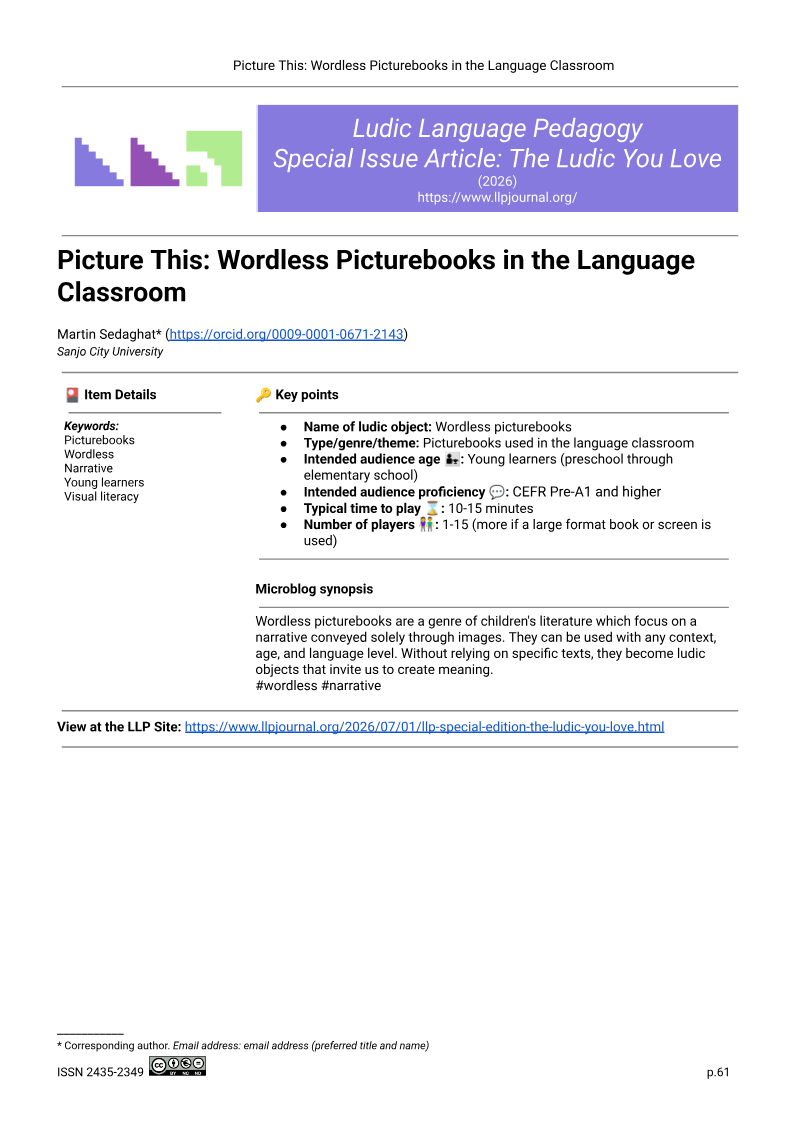
Ludic Language Pedagogy · 2026
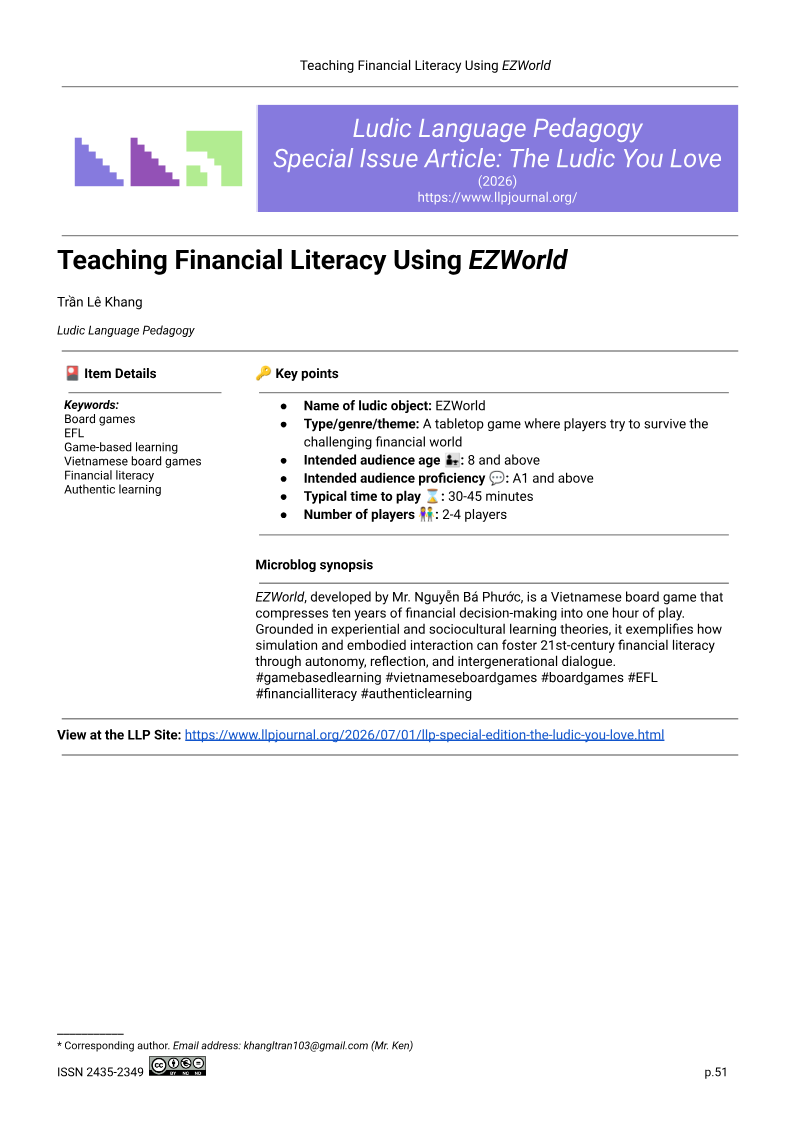
Ludic Language Pedagogy · 2026
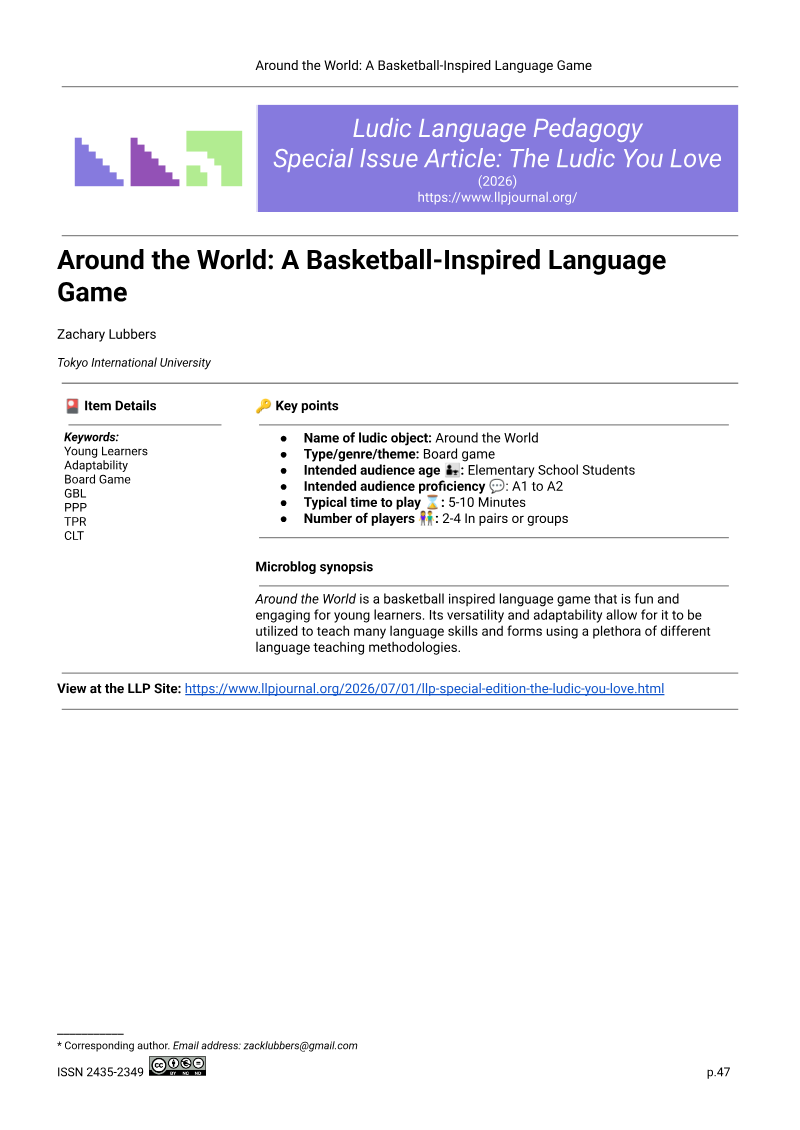
Ludic Language Pedagogy · 2026



Ludic Language Pedagogy · 2026
Ludic Language Pedagogy · 2019