Loading the document
1 free read left. Create a free account for unlimited reading + AI research.
Create free accountWhitepaper Ludic Language Pedagogy
1 free read left. Create a free account for unlimited reading + AI research.
Create free accountWhitepaperLudic Language Pedagogy
They foster cooperation and collaboration.
Key Benefit. Breakout games improve communicative competence and collaboration in intermediate to advanced EFL learners.
Breakout games serve as a highly effective pedagogical framework for fostering communicative competence, cooperation, and collaboration among intermediate to advanced English as a Foreign Language (EFL) learners. By integrating principles from Task-Based Language Teaching, these interactive experiences encourage students to engage in meaningful negotiation and target language use. The primary objective is to transform the classroom into a dynamic environment where linguistic skills are applied through collaborative problem-solving, moving beyond traditional rote instruction to create immersive, goal-oriented learning scenarios.
The success of these games hinges on the precise calibration of puzzle difficulty and the implementation of robust scaffolding mechanisms. When challenges are poorly balanced, students may experience frustration, leading to unproductive behaviors such as game hacking or a retreat into their native language. To mitigate these risks, educators must employ strategic support tools, including structured hint systems and defined role assignments. These interventions ensure that students remain engaged with the material while maintaining the necessary social pressure to drive target language production.
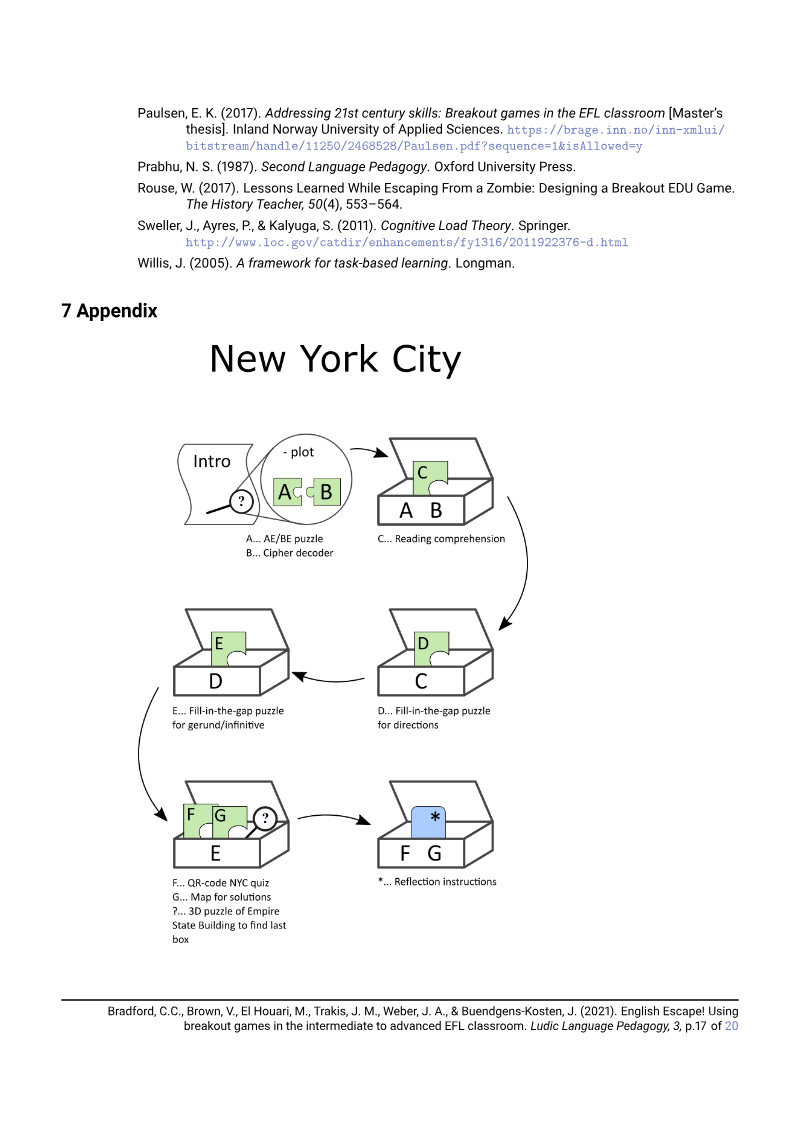
Practical application of this methodology is demonstrated through specific thematic modules, such as those centered on Shakespearean literature, urban exploration in New York City, and narrative-driven mystery. These examples illustrate that when game design is intentionally aligned with pedagogical goals, breakout activities provide a powerful vehicle for language acquisition. Ultimately, the research confirms that while these games are valuable tools for higher-level learners, their efficacy is contingent upon the careful management of instructional expectations and the provision of flexible support structures that adapt to varying levels of student proficiency.

Ludic Language Pedagogy · 2026


Ludic Language Pedagogy · 2026
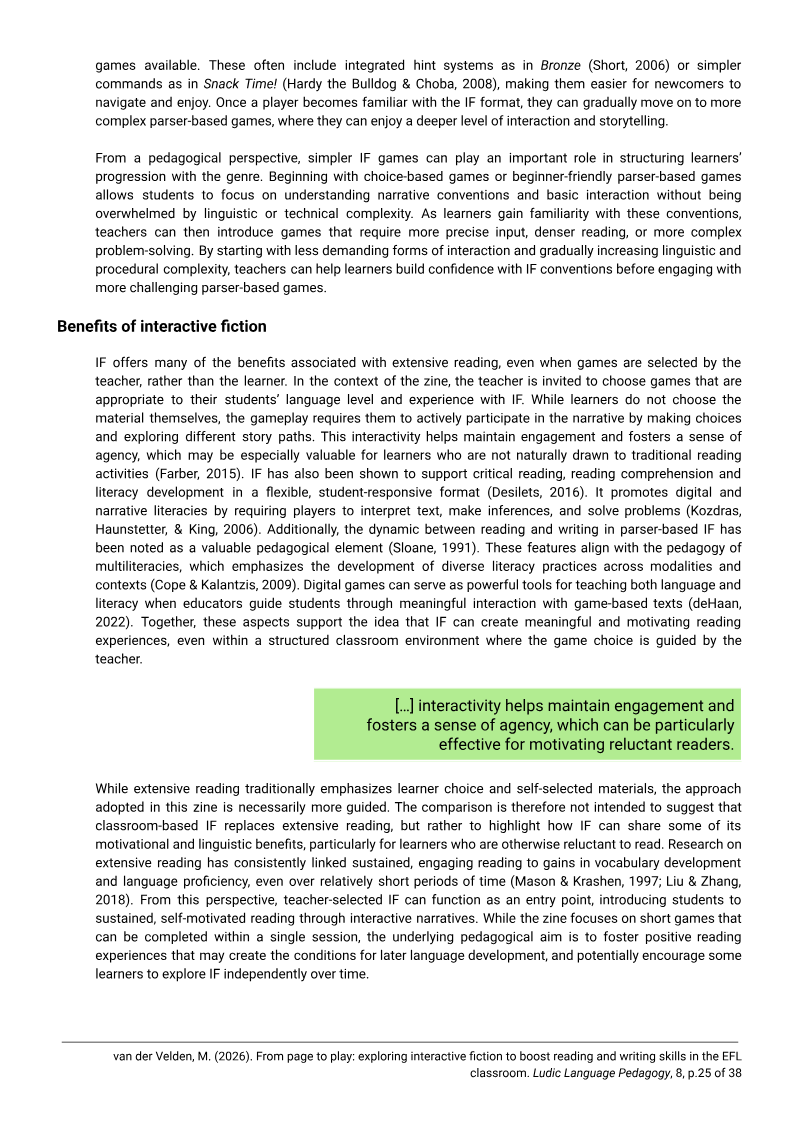
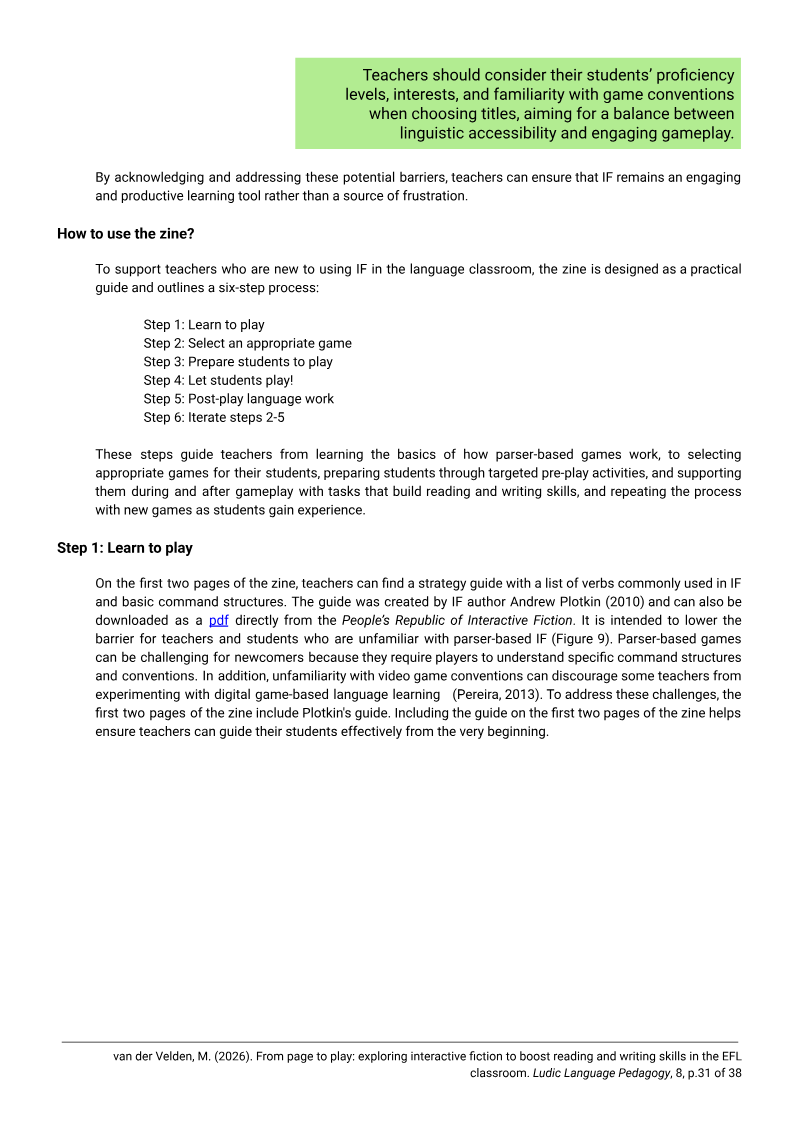
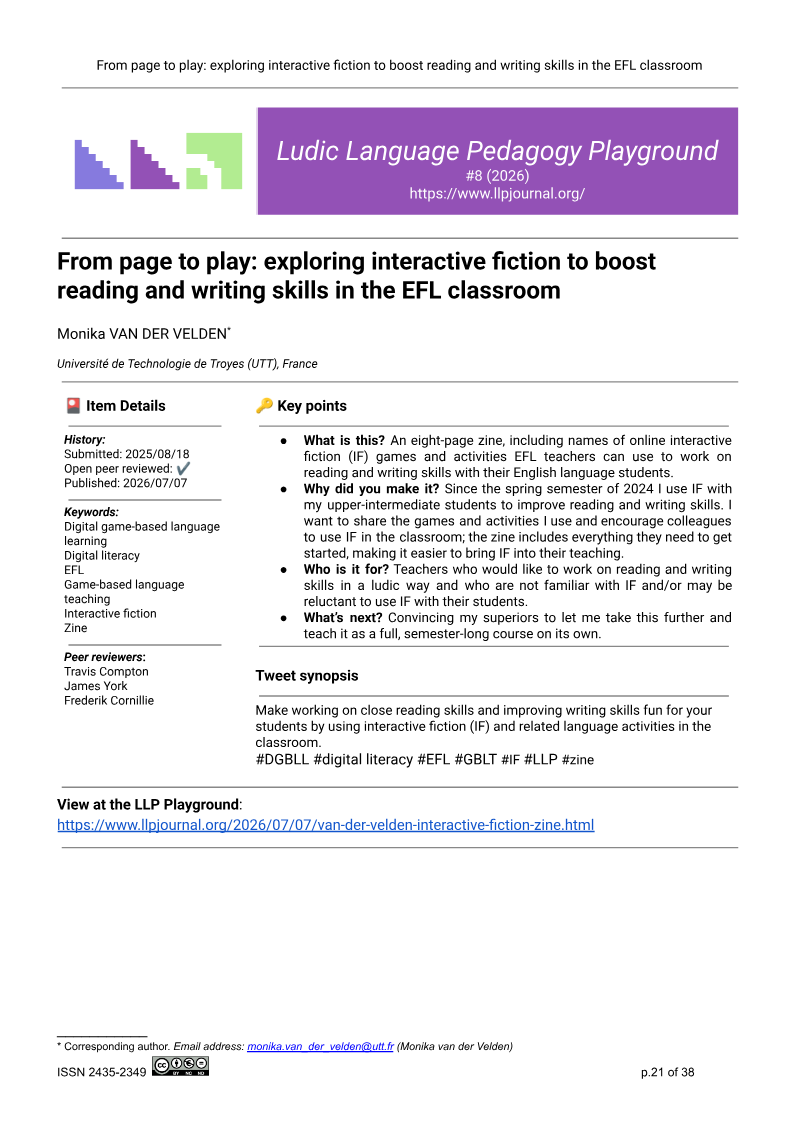
Ludic Language Pedagogy · 2026

Ludic Language Pedagogy · 2026

Ludic Language Pedagogy · 2026

Ludic Language Pedagogy · 2026

Ludic Language Pedagogy · 2026
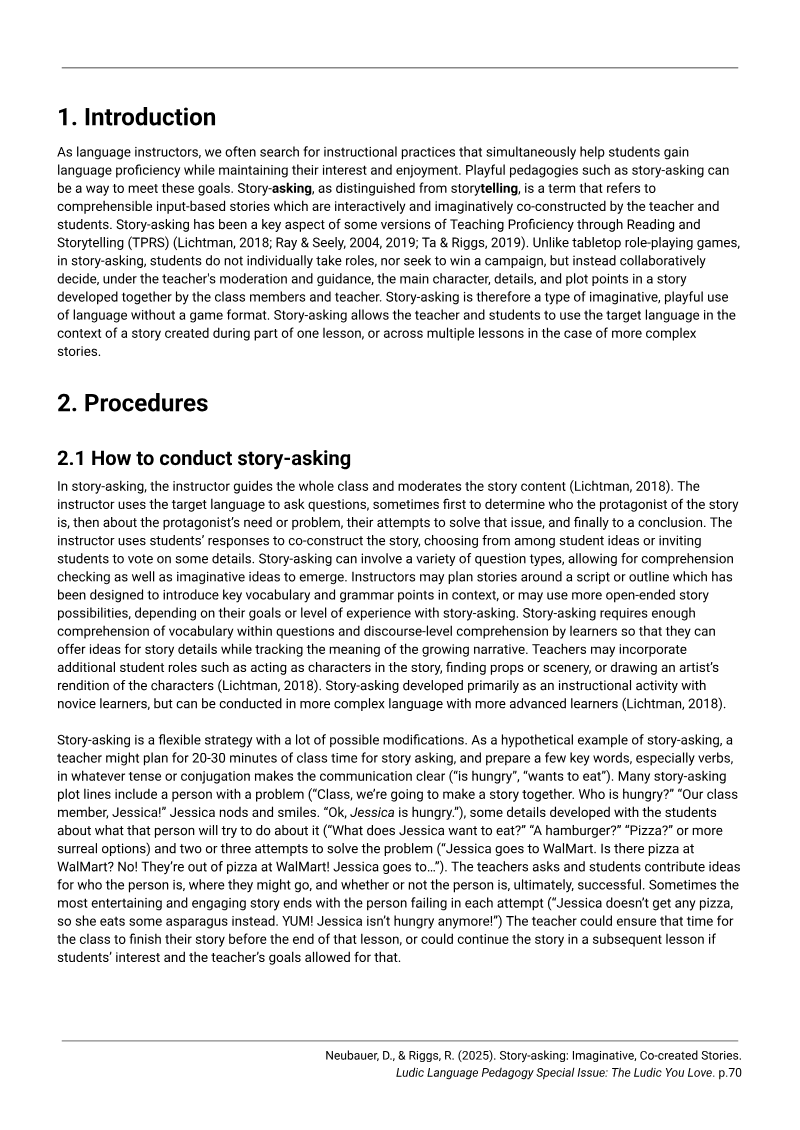

Ludic Language Pedagogy · 2026

Ludic Language Pedagogy · 2026
Ludic Language Pedagogy · 2026

Ludic Language Pedagogy · 2026



Ludic Language Pedagogy · 2026
International Journal of Serious Games · 2019