1 free read left. Create a free account for unlimited reading + AI research.
Create free accountWhitepaper Ludic Language Pedagogy
1 free read left. Create a free account for unlimited reading + AI research.
Create free accountWhitepaperLudic Language Pedagogy
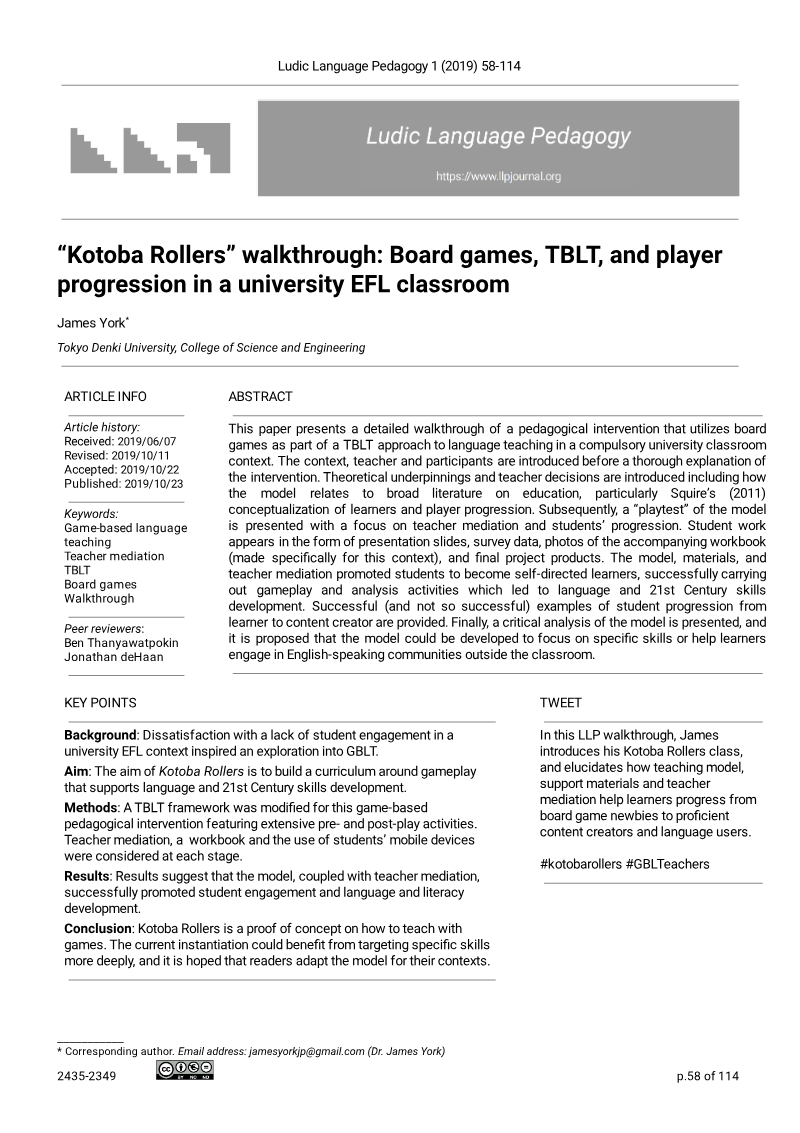
This pedagogical analysis explores the efficacy of using tabletop games as a foundation for language learning, critical thinking, and creative expression in an informal educational setting. By utilizing Jenga within a Japanese community center, or Jidoukan, the study demonstrates that allowing students to engage with games in their first language (L1) before transitioning to a second language (L2) provides a scaffolded approach to vocabulary acquisition and rule modification. The primary thesis posits that game remixing—the act of critiquing and altering established game rules—fosters student agency, investment, and deeper linguistic engagement.
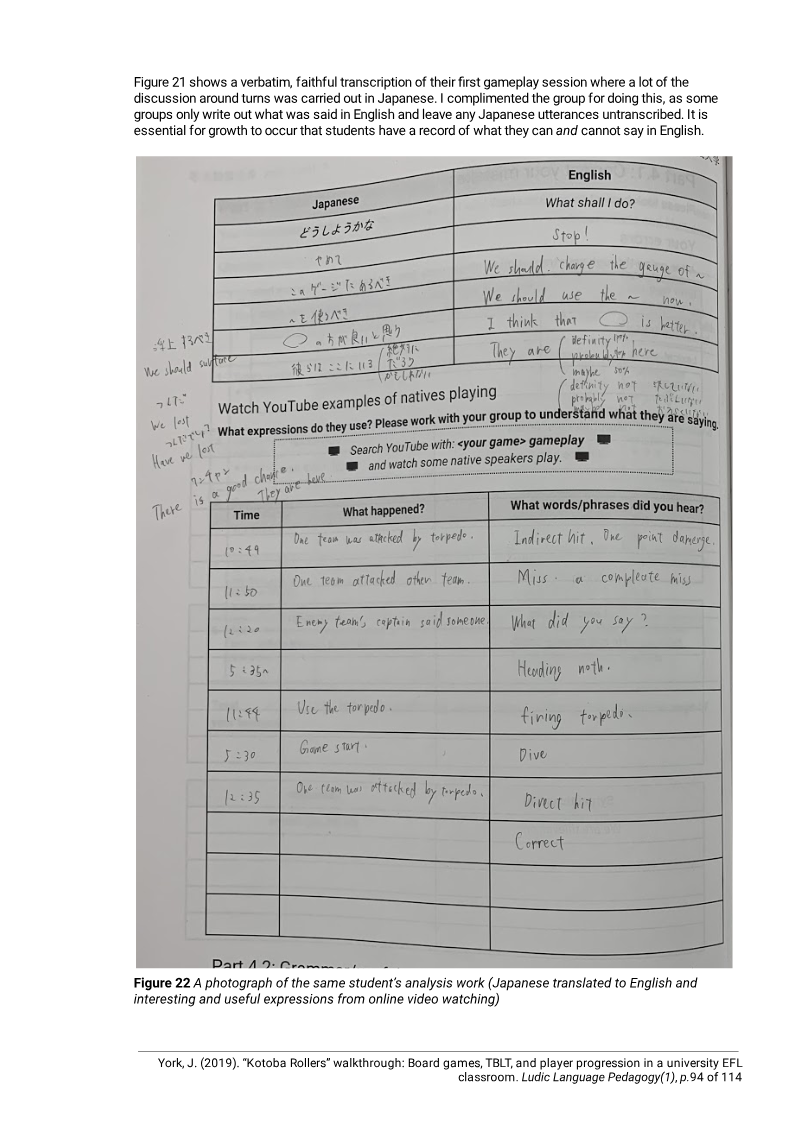
The methodology involved a qualitative, observational study of a small group of elementary school children. The instructor facilitated a process where students played a familiar game, expressed their opinions in Japanese, translated key concepts into English with dictionary assistance, and ultimately collaborated to rewrite the game’s rules. This process transformed the standard Jenga experience into a student-designed activity, which the participants subsequently played and evaluated. The findings suggest that this "third-space" learning environment effectively bridges the gap between play and academic development, as the game acts as a mediator for interaction and communication.
The study concludes that educators should prioritize student-led game modification over rigid L2-only instruction. By leveraging the familiarity of tabletop games, teachers can create a low-pressure environment that encourages students to analyze systems and articulate complex thoughts. While the activity proved challenging for some participants, the overall results indicate that game literacy and rule-remixing are viable, scalable tools for language pedagogy. The approach is recommended for further application across various age groups, particularly as a means to build common ground between teachers and learners.
Ludic Language Pedagogy · 2026
Ludic Language Pedagogy · 2026
Ludic Language Pedagogy · 2026
Ludic Language Pedagogy · 2026
Ludic Language Pedagogy · 2026
Ludic Language Pedagogy · 2026
Ludic Language Pedagogy · 2026
Ludic Language Pedagogy · 2026
Ludic Language Pedagogy · 2026
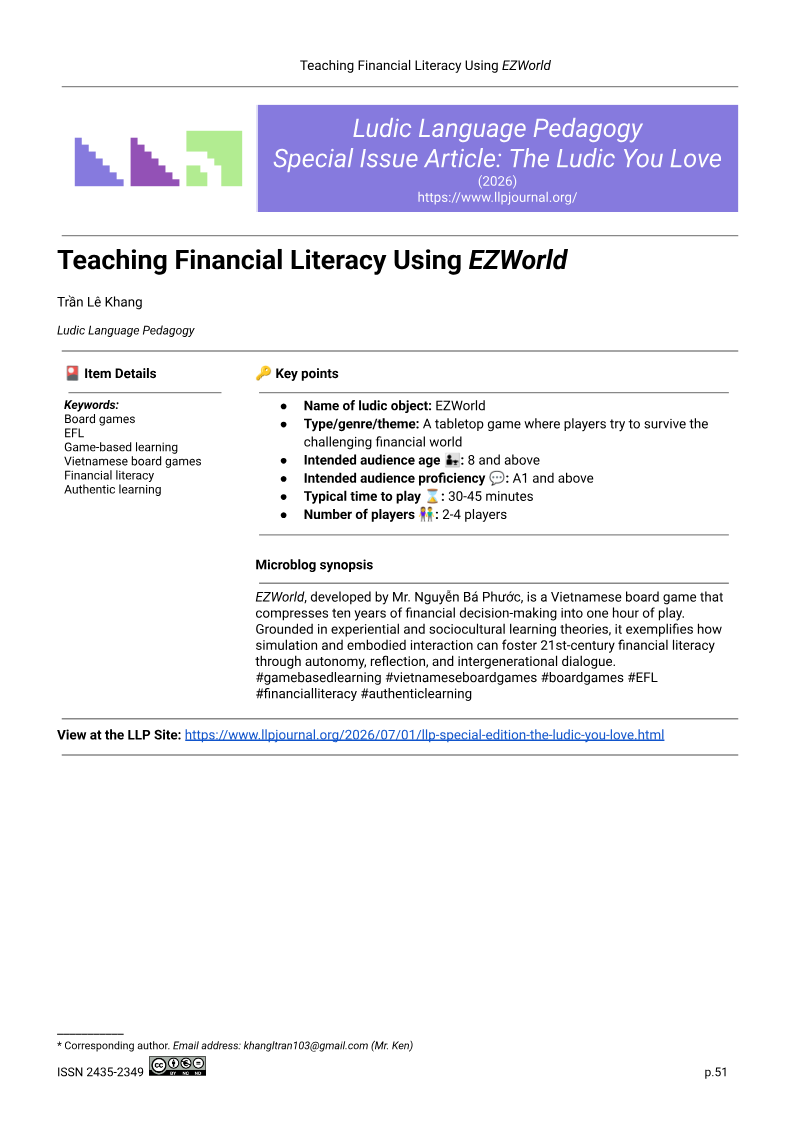
Ludic Language Pedagogy · 2026
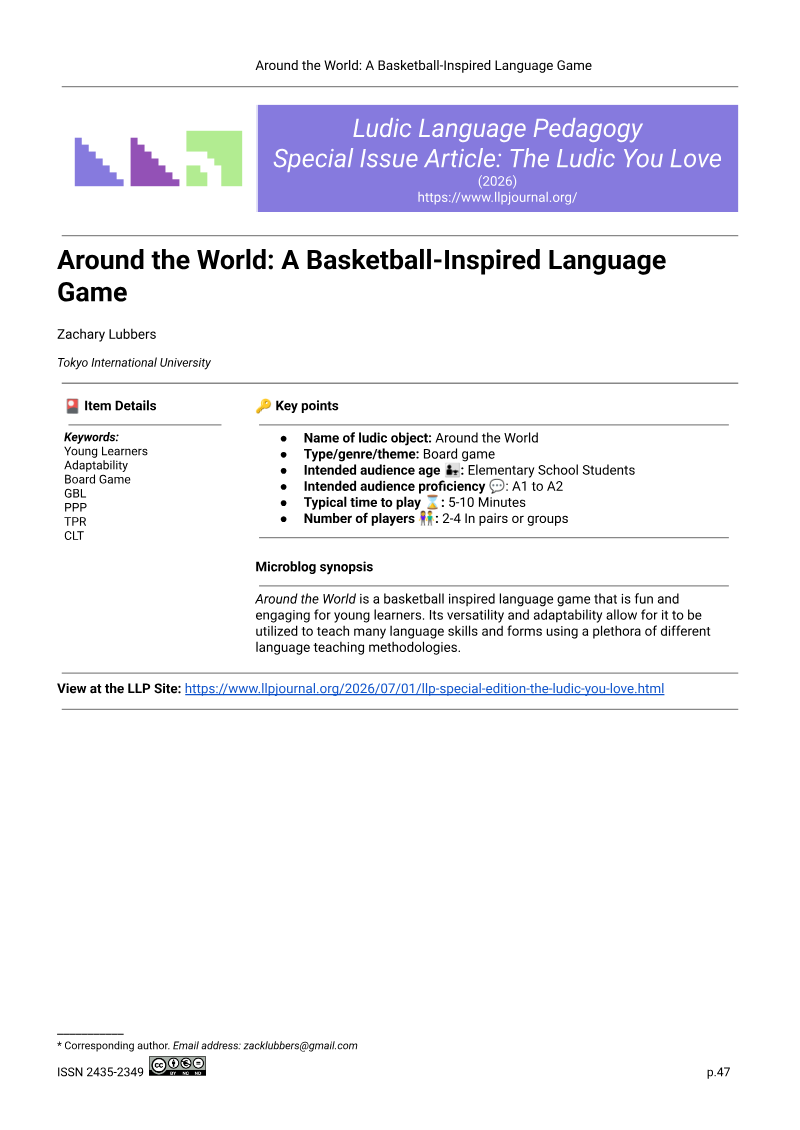
Ludic Language Pedagogy · 2026



Ludic Language Pedagogy · 2026
Ludic Language Pedagogy · 2019