1 free read left. Create a free account for unlimited reading + AI research.
Create free accountArticle GameMakers
1 free read left. Create a free account for unlimited reading + AI research.
Create free accountArticleGameMakers
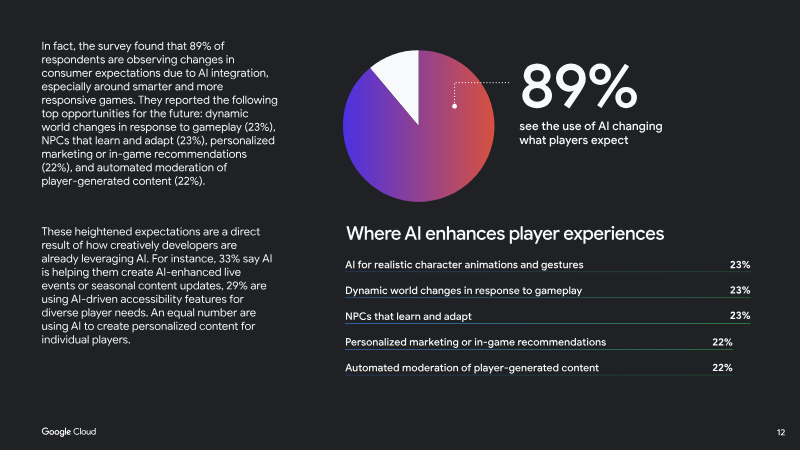
AI can speed up discrete features like animations or shaders by up to 30 times.
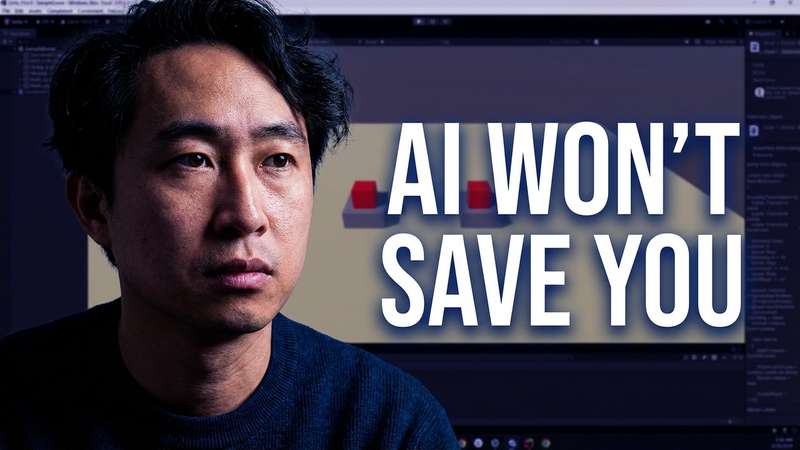
The integration of artificial intelligence into game development offers significant productivity gains for isolated, technical tasks but fails to address the fundamental challenges of creative direction and market success. While AI can accelerate the production of discrete features—such as animations or shaders—by up to 30 times, it remains ineffective at managing core architectural systems. Relying on AI for foundational code risks creating unmaintainable, fragile structures that hinder long-term scalability. Consequently, the industry is witnessing a shift where AI lowers the barrier to entry, resulting in a flood of mediocre titles while the most successful games continue to be defined by human taste, strategic direction, and effective distribution.
The core thesis posits that the games industry operates on an exponential power-law distribution where the final 20% of development—the creative judgment and mechanical refinement—determines commercial viability. AI tools effectively streamline the initial 80% of production, but because games require deterministic logic to function as engaging systems, probabilistic AI models often struggle to provide the necessary player experience. The most successful developers in this new landscape are technically capable designers who possess the creative intuition to guide AI tools while maintaining rigorous control over the game’s core architecture.
Ultimately, the bottleneck in the modern gaming industry is not production speed, but rather the ability to secure player attention. As development costs deflate, the competitive advantage shifts toward studios that prioritize organic distribution and creative risk from the outset. Rather than chasing raw velocity, the most resilient studios are those that adopt a disciplined approach to iteration, ensuring that speed is directed toward a clear, high-quality vision. In an environment of content abundance, the ability to build an audience and deliver a polished, intentional experience remains the primary determinant of long-term success.

GameMakers · 2026

GameMakers · 2026

GameMakers · 2026

GameMakers · 2026

GameMakers · 2026

GameMakers · 2026
GameMakers · 2026
GameMakers · 2026

GameMakers · 2026

GameMakers · 2026
GameMakers · 2026

GameMakers · 2026