VideoThe Game Business
Major media outlets will not have Nintendo Switch 2 reviews at launch
15 May 202541 min video
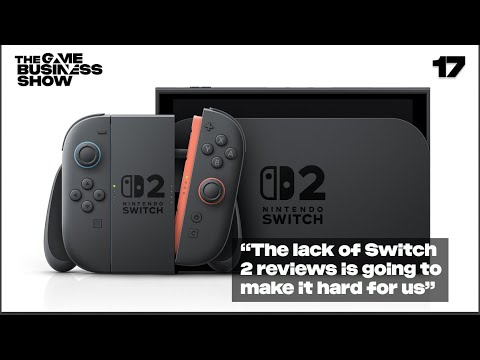
I've found out in the last 24 hours that there are four journalists, two of them very very senior journalists in the games industry, told me that Nintendo aren't doing review copies of the Switch 2 units. We've reduced our series and PlayStation 5 sales volume of about 700,000. [Music] Hello and welcome to the Game Business Show with me, Christopher D. In this week's episode, Nintendo set modest targets for Switch 2. Gamers in Germany are getting older and our big topic looks at how the year is shaping up. Now we have details on both Switch 2 and Grand Theft Auto 6. Plus, we'll talk about some of the growth areas in video games. And to help me to talk through all of this is a friend of the show and one of the industry's leading analysts. It's Pierers Harding Rolls. Welcome, Pierers. Welcome to the show. Thank you very much Chris. Great to be here. Always a pleasure to speak to you. Yeah. Um well, before we do start talking, I do have a little news, a little story of our own to share. um the Game Business Live which takes place on Monday, June 9th, Grammy Museum in Los Angeles. Um
we've already announced our speakers earlier in the week. We had um you've got Leslie Benzes at Build a Rocket Boy, but he's best known for being the lead producer on Grand Theft Auto 3, Vice City, San Andreas 4, and five, as well as being the president of Rockstar North. He now owns his own studio, and he'll be talking about the journey of that studio, uh which is about to release his first game. We have a great panel looking at the crossover worlds of IP and games featuring Lisa Burgess the GM at Netflix. We've got John Height the president of Wizards of the Coast and Pete Wanut I think that's pronounced right president of interactive technology at Agbo that's the company owned by the Russo brothers. We also welcome Matt Piscatella the executive director of Sakana who'll be looking at the macro conditions specifically in the US market. We're just about to announce or announcing today that Blizzard's Pywin Yao, who's the executive producer of Diablo Immortal, and Shannon Williams, the senior director of Mobile Blizzard, has also joined the bill. They're using their experience with Diablo Immortals to discuss the roles that mobile can play in helping traditional AAA PC and console brands reach global audiences. And they'll talk about how they navigated Western mobile
stigma versus eastern enthusiasm, what comes next for the game, and sort of mobile in general. Um, so that's our other session that we're announcing. We may have another announcement in the newsletter, but at the time of recording that hasn't been confirmed yet. So, it's looking really good. Um, there's two ways you can attend the event. You can apply for and purchase a Summer Game Fest industry ticket, which gets you all sorts of stuff. As well as the event, you get Playdays, you get some food and drink and valet parking, there's a gift bag, there's a reception, all sorts. So, that's $500. But, if you just want to come and see our conference, you want to come along recording of the show, you can apply for free tickets. You only have to week to register for free tickets. May 20th is when we're stopping registrations. If you visit www.thegamebus.com in the top bar of that website you will see the tab TGB live event. Click there it will tell you everything you need to know. That's my ad out of the way. Pers you're not going to be coming are you? You some of your team might be there. That's right. Yeah. I'm not over that time of the year but I have got several team members are very interested in attending. So the lineup
sounds great. Very impressive for your first event. Yeah. Well it's been I would love to tell you it's been easy. like a rapid turnaround. Yeah. Well, we announced that first actually. We're doing this first, but we will obviously launching this brand at the same time and it has been um it's been a little bit hectic, but um the industry supporting it and people are coming and we will be ultimately recording it all. Listeners and viewers and readers who are not in the room, we will be distributing this stuff over the following weeks. So, before we get to our main topic, which is sort of about a report that Pier has been working on, it's sort of financial season in the video games industry. Uh, we'll delve a bit more into that actually I think next week when more of the financials have come out. But so far they they're broadly pretty good. EAS was very positive, better than I was expecting. Capcom's is obviously fantastic. But there's been a few surprises in there. One of the big surprises for me came with the Nintendo financial results. Nintendo estimates that they will sell uh sell in rather 15 million Switch 2 consoles by the end of its financial year, which most analysts seem to
believe it's it's quite conservative. When questioned about the estimation, Nintendo CEO Shintaro Fukawara, I always get that wrong for, you know, you know what I mean, said Nintendo Switch 2 is priced relatively high compared to Nintendo Switch. So recognize that there are corresponding challenges to early adoption. He adds, we are taking steps like bundling software with the hardware to accelerate adoption in the first fiscal year, aiming to get off to the same start we did with Nintendo Switch. Additionally, the tariff situation in the US or a possibility of a recession did not affect our sales volume forecast either. In order to achieve sales of 15 million units, we will need to manufacture the hardware in quantities greater than that. Our first goal is to get off to the same start we did with Nintendo Switch, and we're working to strengthen our production capacity so we can respond flexibly to demand. Pers, is Nintendo being cautious here? I think a little bit. I mean, obviously, there are quite a few unknowns, aren't there? I mean the whole tariff situation is is an unknown you know how it's going to swing back whether it's going to actually be
implemented what impact it's going to be they made a valid point about the price point but everything is more expensive now and I think the OLED came into the market at $350 $350 I think so it's got to be more expensive than that so it seems at 450 it seemed like the right price point in effect for the new product I don't I think that's going to really put off people certainly in the first year of adopting the platform. I think people that are into Nintendo, they love the products, they love the brand and everything and they'll be willing to spend that amount. I don't see it as a major impact. Our kind of forecast for actually people buying the console for this year is a little over 13 million. Mhm. Which is slightly ahead. It's not dissimilar, but it's slightly ahead of the original Switch. Well, I think Nintendo's accelerated quite a bit since then. you know, their brands are bigger. They've got 128, I think they said they've got 128 million active players um over the last year.
That's a very different scenario than when they were Wii U when the Wii U going into the Switch and the 3DS going into Switch. They didn't have anywhere near that level of players. Mario is huge and Pokémon's huge, but they weren't as strong as they are now. So, I would I would have expected a faster adoption. Well, they've actually um yeah, I think that's the argument is you've got all these more active users, so you should be selling to a kind of bigger audience and hopefully that would be reflected in the uptake. You know, our forecast, we're playing it relatively cautious, but then it looks like Nintendo's doing the same thing with their 15 million for the first year. There's a few unknowns. I don't think they really understand how it's going to transition from from a switch to a switch two in terms of the product evolution and stuff. And then you've got this whole kind of backwards compatibility situation which means that you know conceivably people might want to hang on to uh the switch is still relevant in the market to an extent. Do you is there potentially an element of Nintendo losing a little little bit of
confidence here because they haven't got the value message across I don't think for the Switch 2. The consensus is that is expensive. There's these headlines that say getting Zelda on Switch 2 will cost you $90 or $90 I think it was. When the reality is you've already got the game and you've got a Nintendo Switch online membership, it will cost you nothing. Those are the value arguments. You know, you can share your games now using Switch 2. There are things about it that make it a better value deal in some ways. They seem to be lost drowned under the headline prices. There's that bit to it. You know, when Mario Kart Direct was flooded with comments of lower the price, lower the price, lower the price. You've got that sort of online noise. I do feel it's died down a little bit and I don't know if the price rises at Xbox has sort of done something there. Yeah. The other thing is you've got an awful lot of fuss over these game key cards and the fact that a lot of the games aren't on the cartridge. You've got people questioning the lack of innovation in the hardware, which I don't think they're really fair. I don't think you do. PlayStation, Xbox don't seem to get that quite so much, but there's a bit of that going on. I think Nintendo fans are on board. I think
people who love the Switch will want a Switch, too. So, that's my belief on it. But I do wonder if Mario Kart alone without a big single player Nintendo game cuz I know you can play Mario Kart single player, but it's not it's not Mario. It's not Zelda. I do agree to an extent. Um, but if you've been following what's been in demand or what's been demanded by the player base, they've always, you know, they've talked about an upgraded switch for yeah, several years now. I mean, that has been massively in demand. So, they've done what really the fan base wants, deliver an improved switch. I agree that there's some sort of magic missing there in the context of we like to see an entirely new kind of Nintendo experiences which combines the kind of hardware with the software and you get something magical in that respect. So there's a little bit of magic missing because of this more kind of evolutionary development of the hardware. I think there's another bit that worries me a little bit in that I felt this way for the first Switch. I was a bit worried about it and then like in the week and the two weeks before the event, maybe it was in the week before
it launched, there was so much hype around the Zelda game and then it sort of just became this big thing. And it's a few times I've seen Nintendo games sort of come out of the gate quite late and it may be the case of Switch to it. But I've found out in the last 24 hours that there are four journalists, two of them very very senior journalists in the games industry told me that Nintendo aren't doing review copies of the Switch 2 units. Now I'm sure some of the biggest sites must be getting one. I find it mad they wouldn't be. Now I understand the reasoning Nintendo's given is because of there's going to be a big major day one patch. And I guess that it could just be that Switch 2 is coming in hotter than you might expect. you know, it's not actually, you know, from a software side, it's not ready yet, and it's not going to be ready for review in advance. But I I've had publishers come to me and say, "Have you heard about Switch 2 units at all?" One publisher said to me that the situation is is such that they do wonder if they'd have been better off not being part of the launch lineup so they could get cuz they're really confident in their game. They could have got some reviews out there. I don't know if they really think
that. I'm sure it's true. you know, you take it at face value if it's about patches and it's about patches. But the idea of there being a Switch 2 release and most of those games are not getting reviewed and I just think that's going to harm that. But we obsess with launch, don't we? And it's actually Donkey Kong's out in July. There's a Metroid game as a Pokémon game. By the time we get to Christmas, which is always the massive, massive crucial period. Yeah, that is the important period. So I mean obviously launch is important but in terms of the importance of how the year is structured then the end of the year and getting some momentum going into the end of the year is obviously the most important thing and obviously it's freed up to an extent because of the delay to GTA 6. The GTA 6 proposition is not just a software proposition. It's an upgrade to PlayStation 5 and Xbox series proposition. And obviously people that are not spending on those may be kind of more tempted by a switch too. Lovely segue moment there. Let's talk about the topic which is AMP is just about to release uh its updated uh predictions for 2025 and looking at key growth areas for the industry in general. It's in a
new report that is uh either it's probably not out yet. It's about Yeah, it's it's it's on the cusp of arriving. Yeah, cuz I guess it makes sense to do that now. We now know what the Nintendo Switch 2 is. We know roughly what the games are coming out for. You know, had the delay to Grand Theft Auto. I put Grand Theft Auto 5 in my notes. Uh GTA 6. Um um you're predicting quite small growth uh now for the games industry in 2025. Yeah, this is spending on games content and services. So it doesn't include hardware, but across all all device categories, all channels, all monetization models, just spending, not advertising revenue, we're we're predicting around a 1% growth this year. So pretty shallow in that respect. and that is reflecting a hit of shifting GTA 6 into 2026. And obviously that boosts 2026, but it's it has a knock-on impact on 2025. You know, the hope was that the console sector was going to be one of the key drivers of some growth this year, but that's that's obviously been
reduced quite significantly by the delay. You've got some numbers here where you think, was it a $2.7 billion hit on console business, 700,000 fewer console sales? Is have I got that right? Have I read that right? Yeah. So, our sort of before and after with GTA 6 coming and then obviously delaying into 2026, we've reduced our series and PlayStation 5 sales volume of about 700,000. And we've also reduced sales across those platforms in terms of sales volume of games by about 20 million. And that amounts to about 2.7 billion of impact. So, it's quite significant. Yeah, you'd expect people to spend on other things if they haven't got, you know, they haven't got the money to spend on GTA 6 or buy a new console if they want to play it desperately, but that kind of transferral will not be entire. We're sure there's going to be a significant downward impact. I agree with you in that I think the Switch 2 is going to benefit a little bit from this partly because it's almost got there are some PS5 games coming including from
Sony and obviously Xbox you know they will sell units around Christmas like they always do but they don't have that big thing to push the hardware and maybe if you're thinking of getting a console for Christmas there's Switch to I I've always had this argument that um Switch Switch has an older audience and I think people realize but also the people that grew up with GTA are parents today buying consoles for their children. So you've got that element to it as well. But do you expect Switch to actually be taking some of the audience that would have gone to PS5? Yeah, I think it's kind of naive to say because GTA is a certain audience, a certain game that people will not be spending on kind of alternative products. I mean, they may spend it on other forms of entertainment. They may do other things. They may go to the cinema or whatever, but you know, they're all in the same sphere of entertainment spending and also spending time on content. And there's a broader kind of competitive analysis that can be done here. And I'm sure there is a lot of crossover. Uh certainly in our consumer data shows that the ownership switch is often seen as a kind of second device for for
owners of PlayStation 5 for example. In key markets, the overlap of ownership is quite significant. So there are in the same competitive sphere even though the the content is not necessarily the same. They're they're battling out for the the same cash. It's a bit interesting this year because there is a Madden which hasn't been on Switch in the past. EA have started putting the Thief or EA Sports FC the actual proper versions of those games on Switch now. It's not the legacy edition. You've got games like Cyber Punk. There's a from software game. I don't know if this year's Call of Duty will be on Switch too, but obviously Xbox signed that agreement with Nintendo. Definitely getting closer. Definitely getting closer to each other in terms of the third party support. Yeah. And the third party sport is really important because obviously as you already said, the first party lineup is okay, but it's it doesn't have Zelda. It doesn't have a Mario platformer, you know, the third party stuff is going to do quite a lot of the kind of encouragement to buy into the platform. Um, how do you expect publishers to react to to that GTA delay? And I asked that because I was actually surprised 2K Games has announced that Mafia is coming out. Their new Mafia game, The Old
Country, is coming out in August. um which is rumored before but I was actually surprised they didn't use this opportunity to a bit later in the year you mean yeah just push it a bit late you got that space now quite a congested window that August September window I don't expect we're going to see many games be pushed forward I don't think I don't think development's that kind of easy to to maneuver at the minute and we've already seen that Amy Hennings Marvel game has just been delayed into 2026 I think we might still might see some delays but I'm interested how you see um um GTA uh impact opens up a window doesn't But yeah, at this stage, how easy is it to really kind of significantly adjust launch windows, especially when, you know, you're banking on hitting at a certain time? You know, you're expecting revenue to be coming in. Is it realistic to be delaying those? I think we discussed this before. It's not just about launch timing and stuff, which is obviously important, but it's about, you know, being able to be heard in in in what is an environment which will be kind of
dominated by GTA 6 whenever that hits the market. Yeah, it's about discovery, finding audiences, getting people aware of your content, and getting it discovered as much as the kind of launch timing and stuff in in respect to this year, I think. So, it's a definite boon, definite benefit to other companies that are looking to launch in the second half of the year. You know, I look at the Fallout TV series at the end of the year and Bethesda did a great job of capitalizing on the first series. I think I think you'll see diminishing returns on the second series cuz I think a lot of people jumped in on that first series, but not in terms of viewership of the series. I mean, in terms of game sales, but you know, maybe there's an opportunity now for those sort of activities and things around legacy games. You know, I talk about Matthew Old Country. Maybe it should have launched in October or November now that GTA has been delayed, but you know, there's no reason why they can't launch in August and then do a big push around it at the end of the year around Black Friday. That that whole second season impact is a really interesting question at the moment internally cuz we're, you know, we're trying to track what the impact is of the second series of Last
of Us. You know, whether it's going to drive similar engagement compared to series 1. Yeah, we're looking very closely at that. I think, you know, some of it's around obviously the interest and popularity of the series. If it's not quite delivering how people expect, then I think that will have a knock-on impact. You know, picking up on on some of the still obviously people really like it, but I'm not sure the story line is is a little bit controversial in in terms of how it's progressed. So, yeah, there's some people that are are not enjoying it as much as they did the first season. Yeah. Well, change that dynamic, haven't they? cuz the was the twist. It's interesting cuz IGG did a report on something very similar to this and um obviously The Last of Us Part Two TV show. There was a there is it their PC release of I'm trying to remember now of a version of the game was just before it. So they had a thing to tie into it. What I thought was really interesting was um first of the Halo TV series did quite decent stuff for Halo, but the
second series didn't really because I guess winning over the audiences or attracting audiences. They sort of they did it with the first series. But also, you know, it's worth not Fallout Sony done a few things around to tie in with the TV show or film versions of their stuff. Fallout really went for it, you know, with the discount on the game and it was all the subscription services and it's fired at the top of the chart. Anyway, that was a successful synergy. Almost an aside, where do you see the growth coming? You've got a bit of growth in the year for this year. Where do where's it coming from? Well, regionally it's coming from the kind of non-traditional region. So, Southeast Asia is looking pretty good. Uh the Middle East and Africa is looking pretty good. Obviously, they're smaller numbers as a whole, but the growth is is better. This year we're expecting pretty much flat performance in Europe and and well western markets more generally. Mhm. Um Asia as a whole it has because it's such a wide expanse has many different markets which are kind of up and down.
China uh I think will continue to grow but it's not really high growth. Japan and South Korea look more benign. They look you know um like they're not going to do anything too significant. And in terms of platform performance, so device categories and stuff like that, well, things were looking better for console, but obviously we've had the delay, so we're expecting that to be relatively flat. Mobile, I think what's interesting about mobile is we had we had pretty good growth last year at mobile. Actually, we estimate around 4%. A lot of that is obviously driven by the the app store performance. So, Apple App Store and Google Play, but there is like this building kind of off app store monetization also, you know, instant gaming in in browsers and uh other mobile channels which are starting to monetize and that will become a more significant and less tracked part of the market. So we have to be kind of aware of, you know, those other elements in in
the context of how it's performing as a whole, the mobile gaming market because just looking at the App Store versus and Google Play doesn't necessarily give you the full picture, right? I think I think Epic like estimate as much as 50% of if you if you're off for discount via going directly via your Exodus store or whatever, I think they estimate like up to half of the sales might come off the app store now. Yeah, I think that's probably a little bit ambitious. I can't I may have got the number slightly wrong. Um it might have been but it was I mean it depends how how um effectively they get players back onto mobile and and playing the game if it comes to you know in terms of app store and stuff. You know there's kind of tradeoffs in in strategies of getting your player base or the certainly the people that invest the most off off your platform. You know, some of the examples we see in which tend to where it tends to be most active and is doing very well in the social casino space, for example, percentages are they're not as high as 50%. I don't think I think that's
probably a very big stretch goal, I would say. But you have to give users kind of incentive to come off the platforms and that's one of the challenge and that's the impact the margin. But well, yeah, but it isn't isn't because you know if you set up an Exodus store your fee to Exodus is 5%. Whereas if it's on App Store, your fee is 30%. You got that 25% bit to play in, haven't you? In terms of offering a discount to to users, you're giving them a an incentive which is, I don't know, 20% or something to to come off the app store or to monetize. I mean, what what is interesting is that the kind of um integrated solutions where you can ch you can select where to spend within the game, within the normal kind of native app environment. I mean, I think that's when it becomes really quite convincing is that you can select a payment yeah event whether you do it through IP on the app store or if you if you get directed off onto the web store or whatever but it's it's much more integrated if you can do that kind of in
a very seamless way then I think it's it's really quite significant it's definitely an interesting point that we've got to in respect to the market looking at the market this year so far and like video games this is the UK video sales and this is unit sales have dropped between 10 and 15% this year. I haven't got the exact figures. Is that physical and as well digital? Physical and digital. Yeah, it's just units though in US in terms of revenue which factors in all sorts of stuff like subscription DLC microtransactions. So Kana reports that revenue was down 7% in terms of in software and all that kind of stuff spending on games and hardware is down 32% for the first quarter of the year. It's similar on global level. The the drop in in Halbo is similar. Yeah, it's it's pretty it's pretty brutal and obviously it's might get harder with these price rises, but obviously there's been successes. We've had, you know, schedule game, Once Time to Wilds, Elder Scrolls 4, Obedian Schedule One. Yeah. Yes. It's repo. Uh yeah, Split Fiction, Expedition 33, Kingdom Come: Deliverance 2. I actually went on your um your
system and I looked at last month in April accord data purely looking at games that were released this year. So, not looking at legacy games. There's no Fortnite or Call of Duty anywhere in this. I went back and um there were 15 titles that had over a million players in April, which included some of the ones I basically mentioned above, but also there's things like Rematch and Atom Fall and that new Runescape game. Um and South of Midnight, those sort of things. A lot of subscription games. I actually went back to the same time last year. I wonder how that compares. Also, exactly 15 games in April that had really a million players. Yeah, I haven't actually tracked the number of new games. I mean, I think there were some good games last year. This year there's been a kind of I think a mix of games which is quite interesting. Obviously the different you know types of companies that are making the games from Indie from single developers. Well that's you know people people have been going like oh you know everyone should make games like Expedition 33 now because you know that was a big hit and that was a small team and blah blah blah. Yeah. But we also just had assassin relatively small team. Yes. Yes. But we also had Assassin's Creed
and we also had Monster Hunter Wilds and we've also had Kingdom Come Blueprints 2 which have multiple hundreds of people working on those games and they were hits. Um, and yeah, sure you've got Split Fiction and Blueprints and and is it blueprints? Blueprints. Yeah. I mean, I think the the question is it's the kind of risk level. So, if you're taking a long time and you're a lot of people are working on a title, the risk is obviously going up exponentially every time, depending on what game it is and whether it's a sequel or a follow-up or whatever or part of a franchise, but if it's a it's an original IP, obviously it's everything ratchets up in in terms of the uh the risk. So, if Expedition 33 was a flop, the fallout would not have been as significant, say, as Monster Hunter Wilds if that was a flop or Creed was flop. you know, there's such big bets now that, you know, it's it's that kind of risk profile where you've got to assess, you know, how much funding is going in. We talked about last year about PlayStation and Concord and they there's a lot of analysis talking about, you know, they've made a mistake going
into live service. Live service is too hard. But then that ignores the fact that less than 6 months earlier they launched or 6 months earlier they launched Hell Divers 2, which was a mega hit and was a live service game from PlayStation that followed the exact same release structure. The game mate was different obviously. unpredictable to an extent. I mean there's a lot of sort of you know unpredictability you know it's hard to to really understand if something obviously you can listen to kind of feedback in the in the right to launch and understand kind of social activity and how people are feeling about the product and stuff. So it gives you an indication but if a product takes 5 years to produce then you only get to that point year 6 months before the release. So, you know, getting getting interest and building interest and understanding really what the feedback is um is is is a major risk and challenge. In your report, you had a stat which is quite nice because it actually ties in with another story that I read just earlier today where you said 32% of over 55s game in the US which mean there's a big
opportunity to grow the market there in terms of attracting older gamers and and there was this report that came out from Germany. A study reveals that the average gamer in the country is now over 39 as the sort of gaming population um just generally gets older. As someone who is also getting older and plays games, I'm very mindful of the fact that so many of my I think there's two sort of parts of this conversation, right? There's the older generations that don't game at all and never did. And they're I would argue they're quite challenging audience to reach because they probably didn't grow up with gaming. It probably wasn't part of their absolutely social circles. I think they're, you know, they're not gaming natives. And then there's probably people I've got this now because I'm in, you know, about turn 40 and I've got a lot of friends who have families and things. You're not old, Chris. Um, yeah. Well, certainly there weren't 40-y old gamers when I was a kid. Not really, not many. But these are people that might have grown out grown up with game, but they've lapsed out of it. You know, it's games a bit long. It's a bit complicated. They don't have as much time for those. And it seems to me that particularly that last area, the industry's efforts to reach
that audience has been like remasters and remakes and ports. Yeah. A lot of nostalgia and stuff. Yeah. Well, here's the thing. I like I like to think that as gamers get older uh that they're still open to new experiences. I don't think I don't know. Is gaming like music where we all still listen to the same songs we listen to when we were teenagers? I think that's definitely uh you know a nostalgia kick and stuff and and remembering back to how you had a great gaming experience. You want to kind of recreate that. Um but yeah, I I I don't see why not. You know, I think this is a great opportunity. You look in the US, uh, we're forecasting the, um, over 55 population to be 113 million, I think, uh, by 2030. I think it's around 103 now. So, it's it's a growing part, you know, growing cohort within the total population. And a lot of these people have got, you know, significant funds to and and more spare time to to spend on, you know, entertainment and stuff. Um but I think it is
about it. I would like to think that we can create experiences which allow you know easy on boarding to more complex gaming experiences or more in-depth ones which prove to be engaging in in respect to the actual gameplay and therefore the people playing the games are more willing to spend on the games. Um, so I think that one of one of the things is that we're not effectively monetizing that a even we're reaching them. It's it's more kind of light touch I would say. Um, so there's an opportunity there I think to um, you know, promote more engaging content which drives more kind of monetization. Um, but I I certainly think that, and you're totally right, you know, as people age up into these older age ranges, um, I pooed myself in that, we'll be we'll be looking for engaging experiences and and willing to spend and we our understanding of the game space is is much more because of
our experience in in in our younger years, you know. Yeah. I'm hoping that in 10 years time I'll have more time to game and but I don't know. Will I just want to replay old games when I was a kid? Or will someone makes me shorter, sharper? Well, that's it, isn't it? It's about the kind of accessibility, the accessibility. It's also kind of connecting with people where they're spending more of their time. Mhm. So I think inevitably it's it's about kind of smart devices and stuff because you know the penetration of smartphones so high not necessarily going to go and buy a console when they're in their 60s but they're certainly willing to kind of look at it different apps on on smart devices but I also think um you know the connected TV environment is really important because they're spending time watching lots of videos lots of game um lots of video content through Netflix and whatever else And I and I guess this is where the argument comes in for Netflix and reaching new audiences with their game gaming offer. Yeah. You know,
that's an important place where they need to be able to find games and that that's what the kind of streaming solutions are starting to do. Is it convincing lots of older players to try out games? I don't think we're kind of reaching any sort of tipping point yet, but it's is definitely an interesting part of the sort of dynamic. Some of the other things you mentioned in your report, you've got the um you talk you about Switch, you talk about the opportunity for Switch, and we've already touched upon that a little bit, but you also mentioned PC gaming handhelds, which I know in terms of audience size, it's quite a different scale to to Nintendo, but you you've got some, you know, you're thinking what Steam Deck might be around what 8 million in a couple of years. Yeah. I mean, the numbers are not, you know, they're basically being sold really to existing PC gamers that just want another access point to their content, which means that potentially you sell more games or you spend more in game. Well, you spend you have it's that engagement piece, isn't it? Right. Yeah. people that are going to buy a Steam Deck or a PlayStation Portal or whatever are the people that are Xbox are doing the handheld as well are going to be people who are the most engaged
audiences anyway and they the ability to play longer and then theoretically spend more and and so even though it might be a small number of actual sales uh it's revenue potential might be in terms of ecosystem could be could be pretty pretty good. Yeah. And we've seen Steam keep you know continue to grow there's definitely you know increasing demand there. What's interesting is that obviously it's becoming more of a console experience. So, you know, as the console platforms become more PC- like in terms of their infrastructure and the types of components they're using, everything is is kind of converging in a way. Is it sort of bringing in entirely new players that wouldn't game necessarily? Um, probably a few, but I just don't it's, you know, the the price point of the devices. Obviously, the Steam Deck looks okay value. when it first launched, people were like, "Gosh, that's quite pricey." Um, but in terms of other kind of third party devices by all the PC manufacturers, they don't have this whole kind of software potential sales
opportunity. Um, so the price points are seem to be sort of rising up. They're not that cheap. Um, and I think that's reflected in the uh the adoption which at the moment is is is I would say is a sort of niche within a within the specialist gaming space. It's not big numbers. I'm um wary of going through your deck slide by slide and then people won't feel to need to download and read it. What do you think is the key takeaway though for you? There's loads of cool stuff in here around the wider entertainment market and the impact there and the there's stuff in here around um um Roblox and userenerated content and being on those and then how to let leveraging IPs and remakes. There's loads of stuff in this report. But what do you think's E bit? I generally see as a more kind of fragmented environment when when we're looking like obviously all companies are looking for growth. They're looking for pockets of opportunity within the market and there definitely are opportunities in the market but under a kind of
topline very shallow kind of growth rate uh for the total sector. Obviously you got to kind of work within those kind of parameters and it's not just about you know you can focus on one area and obviously try and make that work for you but I think it's it's trying to build a kind of more comprehensive approach and and trying different avenues to pull together what is could be a kind of substantial return for you in terms of your content strategy. So it's a bit more fragmented. I think you have to probably think about aggregating a few of these opportunities and building them into your kind of strategy and how you're going to market and stuff and overall that should be a more kind of viable strategy I reckon uh in the current climate. We don't have, you know, and it's kind of been well commentated on, we don't have something that's going to hit the market which is going to really return the kind of growth trajectory back to the pre-19 2019 growth, you know, that we saw. We
we have various technologies which are simmering away and they're starting to accumulate and do things whether that's kind of new distribution with cow gaming um whether it's the use of AI and in various areas I mean it's being used all over the shop. Yeah. And the the third aspect that everyone talks about you know which hasn't come to fruition yet is is kind of VR and AR and that that is not about to create a whole new growth for the space. So you know and I think that's why the focus is on these smaller better potentially smaller growth opportunities and ongoing growth opportunities but also building up strategies which help with growing the bottom line as opposed to just revenue. And I think that's a lot of the focus is on margin growth and getting more value out of your IP and content. you know, building up more holistic franchise strategies and seeing where else um in the different value chains for entertainment you can bring your IP and and make it make it have an impact and
generate revenue. When I'm a little bit stressed out a lot about this is when we going talking about basically we're talking about doing everything just doing really well with everything that we've already got and working out how to be more efficient, how to make the most of your IP, look at the look at the areas where there's might be opportunities and try and look into that and there's nothing which is all fine but when you've got something like tariffs come along which threaten to pull the rug under, you know, I just Sony's just obviously there's that pause that sort of reduction in tariffs. still very big tariff on China and Sony has said they've got 3 months worth of PS5 consoles stockpiled in the US but now they're sort of talking about whether or not they'll have to raise prices because of a because of it and there's even a prospect of making the consoles even or at least partly in the United States. I'm not quite sure how you would be able to do that easily particularly as so many of the components aren't even in the US. I mean I'm just hoping that that things get rode back and we don't have this situation and stuff. Yeah. after 90 days or whatever it is when they they've done their assessment and stuff. Yeah, I don't I do think that's um kind of
viable really. It's an ongoing strategy is quite quite a challenging one. I would say I do think yeah, it's a bit concerning when you when we're talking about trying to deliver the margin and this is why they're talking about price increase because they're all very focused on yeah margin. That upsets me a little bit and and it doesn't cuz I know it's important. I can see everyone talks about how much revenue the video games industry makes. I'd love to know if anyone knows how much profit the video games industry makes. I imagine it's uh will make for an alarming figure in the opposite way. So, I understand it's important and everyone seems to be focusing on how can we get our existing users to to spend more or increase more or increase prices, which I get that's just that's important in the market at the moment, but I worry that that's setting us up longterm as an industry in a negative way when we should be trying to grow our audiences, reach new people. There's still lots of people that don't game. There's still lots of people that are in the Roblox or Fortnite ecosystem, so they do game, but they're very much in in one game. You talk about the people who are sort of like the older that don't that don't game. And there's people who are in the middle there that perhaps lapsed out of games. They don't have as much time for it. And we're
still seeing new generations come through. There's still a huge opportunity to win over new customers. Um, particularly for the console side of things. And yet, and yet I worry the price rising, which is important for the margin, is preventing that sort of general audience growth, which I still think is possible. Yeah. I mean, it's different in different markets. It's obviously different for different parts of the device category and ecosystems obviously very important for the hardware of console but in the context of investment we're with not thinking about necessarily the bottom line we've got um a lot of activity for say for example in the Middle East which is one of the key kind of growth areas there's a super young population which is in gaming increasingly you know an increasing amount but there's lots of investment going on in that context with trying to build up local industry ries. I mean, we haven't really even talked about the kind of content drivers and you know, conceivably we might have another type of kind of content genre that sparks off something or is a kind of hybrid of other things which might generate a bit more interest. The thing
is it's not going to be the huge kind of growth Yeah. kind of tiger for the whole sector, but there's certainly some opportunities there. I mean, I think one of the most interesting things is this kind of wave of more kind of cultural narrative content. um which I'm sure we're going to see a huge amount more of after the the success of Latmouth Wukong certainly from Chinese but I think that's in effect sent a message to a lot of kind of more local regional industries which are thinking oh yeah what kind of content can build every time I speak to India or Italy or anyone in the games industries like that even you know Italy is relatively different market they always go how can we make our black myth you know France is sort of viewing exhibition 33 as their as there sort of and it's like there there's there's there's a lot of people asking that question. Now I'm I'm relatively optimistic and you quite rightly said you know it's a problem with analysts when we're talking about the market. We can only base it on what we know and what's happened in the past. We can't predict where you know this time last year I was predicting a really tough start to 2024 and I because of
course I couldn't I didn't predict L divers. I couldn't predict power world. That stuff's almost impossible to to know. You never know where those stuff's going to come from. But I'm conscious of the time peers. Um we've we've rabbit we've we've rabbited on. That sounds really dismissive. We've um we've uh we've we've talked for for a while. We I know we could talk for hours and we often do. I know you've got to get your report um over the line and into uh into people's um got a few bits to follow to finish up, but yeah, it's going to be um freely available. So, um I'm hope that Chris can post a link at some point when it when it does go live. Yeah. Anyone that's tuning into this will obviously have the ability to be able to download it because it'll be a it's kind of a a free report which we're putting out there. Yeah, I mean it's I've seen an early version of it. It's very very good. Uh well, thank you Pierce for joining us. Thank you for tuning in once again. That's it for today. Um do join us if you're able to come to LA on June the 9th. Do come along to uh the game business live. You can find out all about that at the gamebus.com. Uh but
before then, we have a we have two shows next week. You better tune into. And tomorrow we will have a special bonus newsletter with a major games CEO uh for you to check out. Uh until then, thank you for tuning in.
Auto-generated captions from YouTube — names and numbers may be misheard.
Nintendo is adopting a conservative strategy for the upcoming Switch 2 launch, targeting 15 million units in the first fiscal year. This cautious outlook stems from elevated hardware costs and economic uncertainty, further complicated by the decision to withhold review units from major media outlets at launch, likely to accommodate pending day-one software patches. While the broader gaming market faces a significant downturn, with hardware spending dropping 32% in the first quarter, the Switch 2 is positioned to capture consumer spending displaced by the delay of major titles like Grand Theft Auto 6. This delay is projected to cause a $2.7 billion loss in console-related revenue and a notable reduction in PlayStation 5 and Xbox Series sales.
The global gaming landscape is currently defined by fragmented growth and a shift toward margin improvement rather than broad expansion. With traditional Western markets experiencing flat growth, industry stakeholders are increasingly targeting non-traditional regions such as Southeast Asia and the Middle East. Additionally, there is a strategic pivot toward the 55-plus demographic, who possess significant disposable income. To engage these players, companies are prioritizing more accessible, shorter gaming experiences and leveraging mobile and connected TV platforms to bypass the limitations of the traditional console ecosystem.
Ultimately, the industry lacks a singular growth engine to return to pre-2019 performance levels. While handheld devices like the Steam Deck maintain engagement among core audiences, rising hardware costs and a focus on short-term profitability threaten the acquisition of new, broader demographics. Success in the current climate depends on maximizing existing intellectual property, implementing efficient content strategies, and investing in culturally specific, high-impact titles that resonate within emerging regional markets.

The Game Business · 2026

The Game Business · 2026

The Game Business · 2026

The Game Business · 2026

The Game Business · 2026

The Game Business · 2026

The Game Business · 2026

The Game Business · 2026

The Game Business · 2026

The Game Business · 2026

The Game Business · 2026

The Game Business · 2026
Deconstructor of Fun · 2026
Two & a Half Gamers · 2026

Newzoo · 2026
The Game Business · 2026
The Game Business · 2026

Two & a Half Gamers · 2026

Deconstructor of Fun · 2026
The Game Business · 2026
Deconstructor of Fun · 2026
Naavik · 2026
The Game Business · 2026
Newzoo · 2026
Comments