1 free read left. Create a free account for unlimited reading + AI research.
Create free accountWhitepaper DiGRA
1 free read left. Create a free account for unlimited reading + AI research.
Create free accountWhitepaperDiGRA
The study extends ritual theory to single-player simulation and management games, where everyday repetitive actions may carry emotional weight.
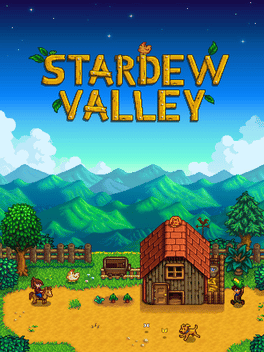
This study examines how the sacrifice system in Stardew Valley's Community Center reconstruction generates a sense of belonging among players, arguing that everyday, low-threshold game rituals can produce emotional attachment comparable to the special ritual events studied in massively multiplayer games. Drawing on classic accounts of play and ritual by Huizinga and Lévi-Strauss, the author positions single-player simulation and management games as an underexplored site for ritual theory, where repetitive daily actions rather than festival events carry symbolic and emotional weight.
The research employs a qualitative design built on in-depth interviews with 27 Stardew Valley players who had logged more than 30 hours of gameplay, recruited through Xiaohongshu, a major Chinese social media platform. The sample of 16 women and 11 men spans ages 18 to 40, multiple regions of China, varied occupations, and different personality types, and interviews averaged about 1.5 hours each. Analysis followed grounded theory with NVivo coding of 15 transcripts, yielding 1,277 initial codes that were consolidated into seven core categories, with seven further transcripts reserved for testing theoretical saturation.
The findings identify two entry points to belonging, symbolic design (the dilapidated Community Center and the approachable Junimos) and flexible, self-paced mechanics, and describe a two-way relationship in which labor endows sacrifice items with personal meaning while players come to see themselves as guardians of their homeland rather than heroes. This belonging extends beyond the screen through social sharing and reciprocal effects on real-life patience and stress relief, forming a self-reinforcing cycle moderated by factors such as repetition fatigue and mandatory plotlines. The author concludes that such rituals can inform emotional game design, while acknowledging the need to test the findings in other single-player contexts.
Each row is a game or company this document names, each column a document, oldest first. A mark means that document names it. Select a row to see those documents.

DiGRA · 2026

DiGRA · 2026



DiGRA · 2026
DiGRA · 2025