Key insights
4 slides
The launch
A synchronized global release replaced the traditional soft-launch phase.
37GAMES GLOBAL deployed Last Asylum: Plague internationally at once. The game secured 5.7 million Android downloads within the first five weeks.
AI infrastructure
AI automated up to 85% of creative production for the launch.
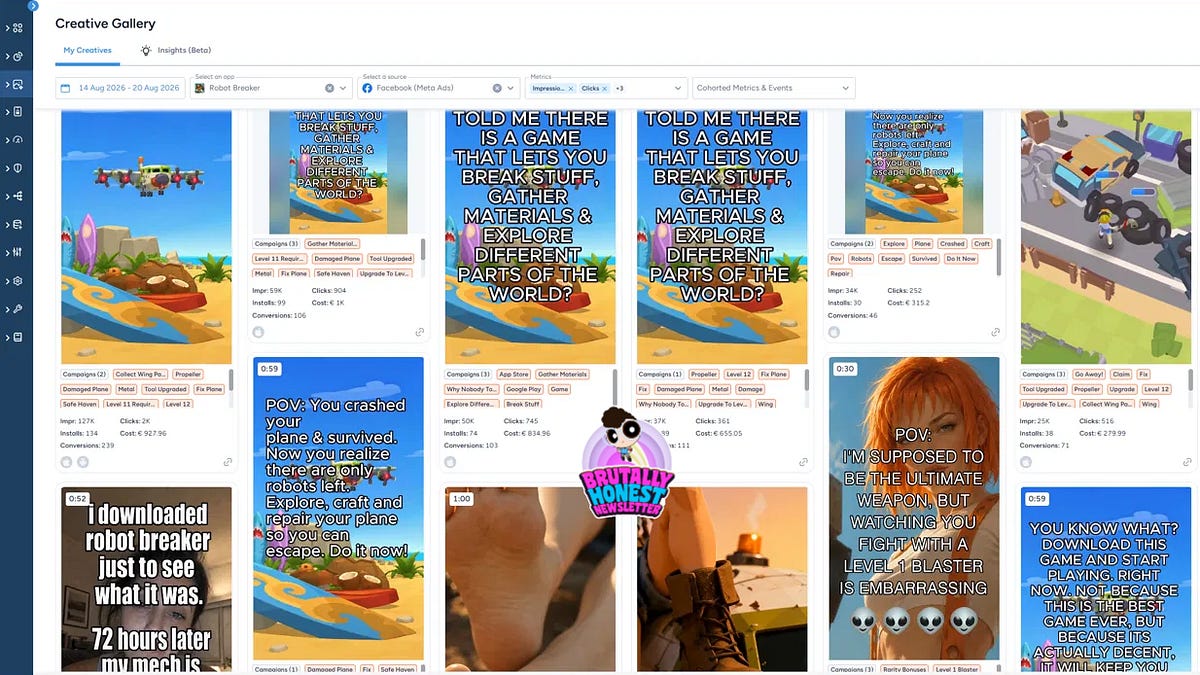
The publisher deployed over 3,300 unique video and 2D assets during the game’s inaugural month. This volume relies on AI to generate the vast majority of content.
Industry trend
Automated creative pipelines are becoming a competitive necessity for publishers.
The strategy reflects a broader industry trend toward leveraging automated production. Publishers use this to lower cost-per-install metrics and improve day-seven return on ad spend.
Design philosophy
A hybrid design philosophy synthesizes proven mechanics into a high-retention system.
This approach minimizes risk while maximizing player engagement.
Hybrid design. The game synthesizes proven mechanics from successful titles to create a high-retention progression system.
1 / 4
Ask AI about this report