1 free read left. Create a free account for unlimited reading + AI research.
Create free accountWhitepaper Ludic Language Pedagogy
1 free read left. Create a free account for unlimited reading + AI research.
Create free accountWhitepaperLudic Language Pedagogy
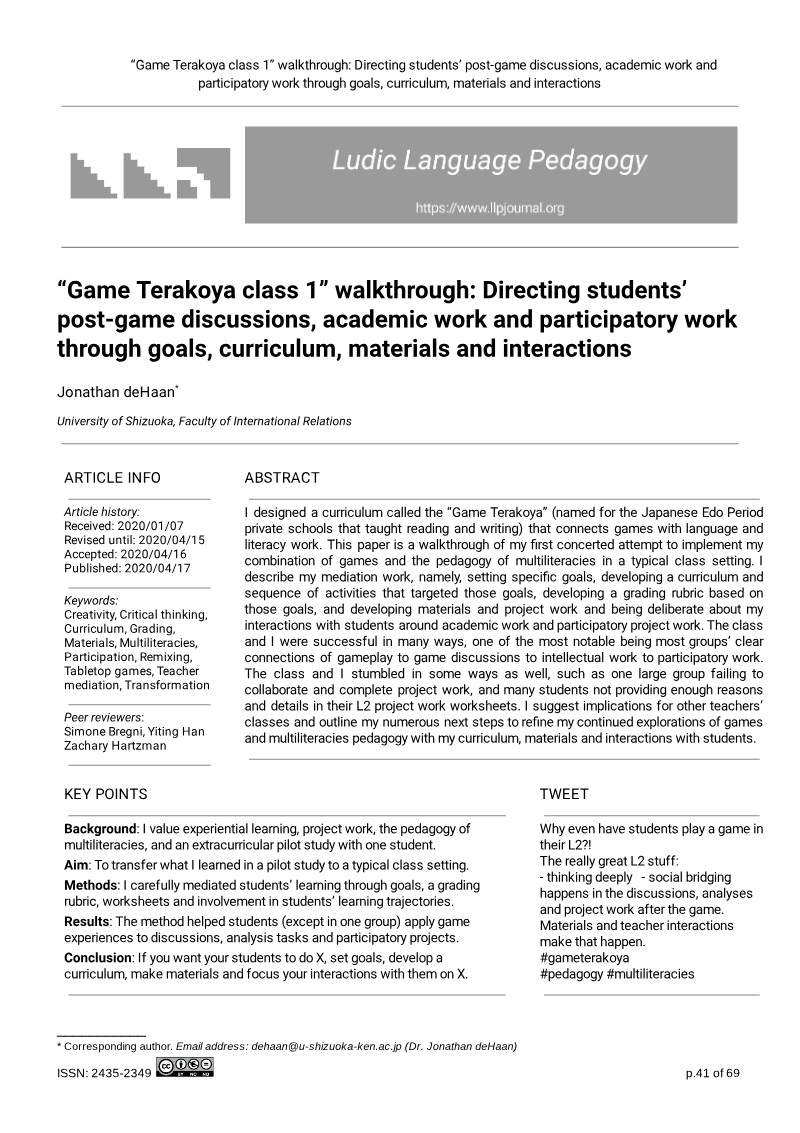
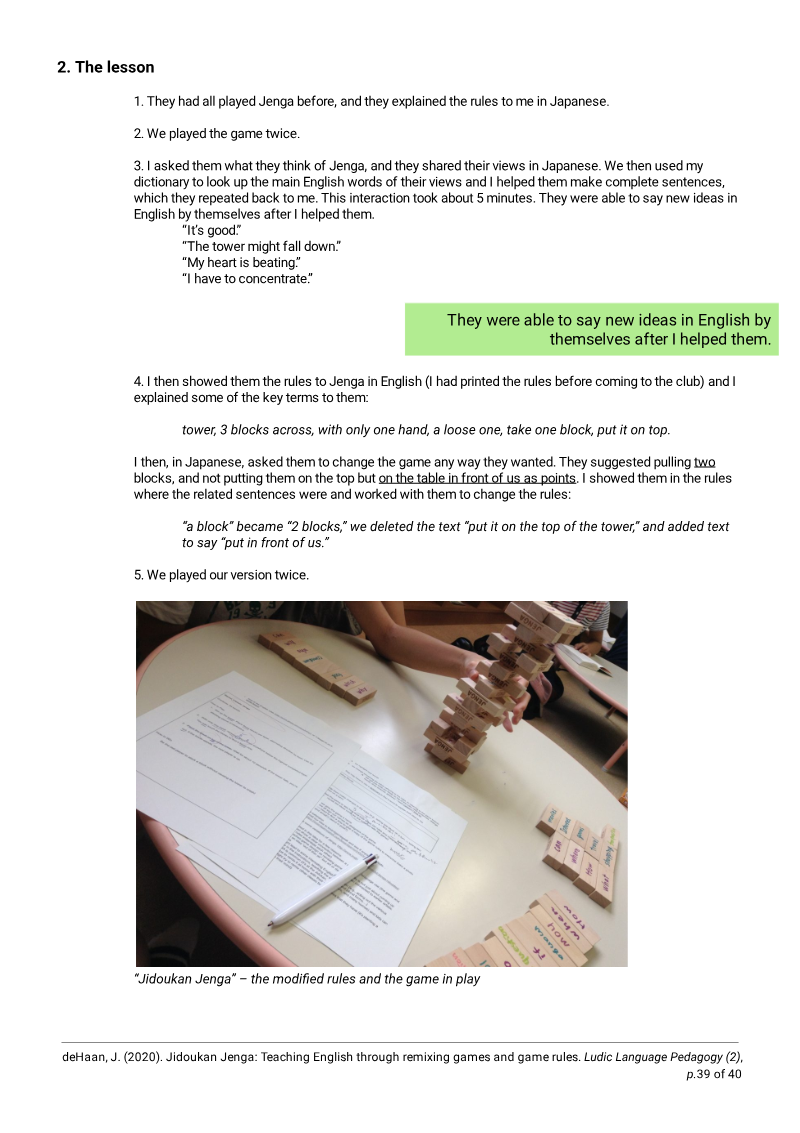
This model integrates tabletop board games into university EFL curricula. It aims to transition students from novice players to autonomous content creators.
The Kotoba Rollers framework establishes a pedagogical model for university-level English as a Foreign Language (EFL) instruction by integrating tabletop board games into a Task-Based Language Teaching (TBLT) curriculum. The primary thesis posits that board games, when supported by rigorous teacher mediation and structured non-gameplay activities, serve as effective vehicles for fostering student agency, collaborative communication, and 21st-century skills. By shifting the classroom dynamic away from traditional, static textbooks toward a student-centered, game-based environment, the framework encourages learners to transition from novice players to autonomous content creators.
The methodology relies on a structured progression cycle that balances receptive language processing—demanded by complex, text-heavy rulebooks—with productive language tasks. Key findings indicate that while students initially rely on their native language to navigate game mechanics, consistent instructor intervention, the use of visual aids like flowcharts, and systematic error analysis based on the Pareto Principle significantly increase English-language production over time. The integration of smartphone-based research and video-based scaffolding further enhances digital literacy and communicative competence, proving that gameplay alone is insufficient for acquisition without these deliberate, scaffolded support systems.
Geographically situated within a university EFL context, the framework functions as a flexible proof-of-concept rather than a rigid curriculum. While the model successfully promotes engagement and collaborative learning, it currently faces limitations regarding targeted linguistic needs analysis and measurable proficiency gains. Future iterations of this approach require more precise evaluation criteria to ensure that the focus remains on specific skill development rather than broad, student-led exploration. Ultimately, the framework provides a viable, adaptable blueprint for educators seeking to leverage the cognitive and social demands of board games to improve language acquisition and student autonomy in higher education.
Ludic Language Pedagogy · 2026
Ludic Language Pedagogy · 2026
Ludic Language Pedagogy · 2026
Ludic Language Pedagogy · 2026
Ludic Language Pedagogy · 2026
Ludic Language Pedagogy · 2026
Ludic Language Pedagogy · 2026
Ludic Language Pedagogy · 2026
Ludic Language Pedagogy · 2026
Ludic Language Pedagogy · 2026
Ludic Language Pedagogy · 2026



Ludic Language Pedagogy · 2026
Japanese Association for Role-Playing Game Studies (JARPS) · 2025