1 free read left. Create a free account for unlimited reading + AI research.
Create free accountWhitepaper Ludic Language Pedagogy
1 free read left. Create a free account for unlimited reading + AI research.
Create free accountWhitepaperLudic Language Pedagogy
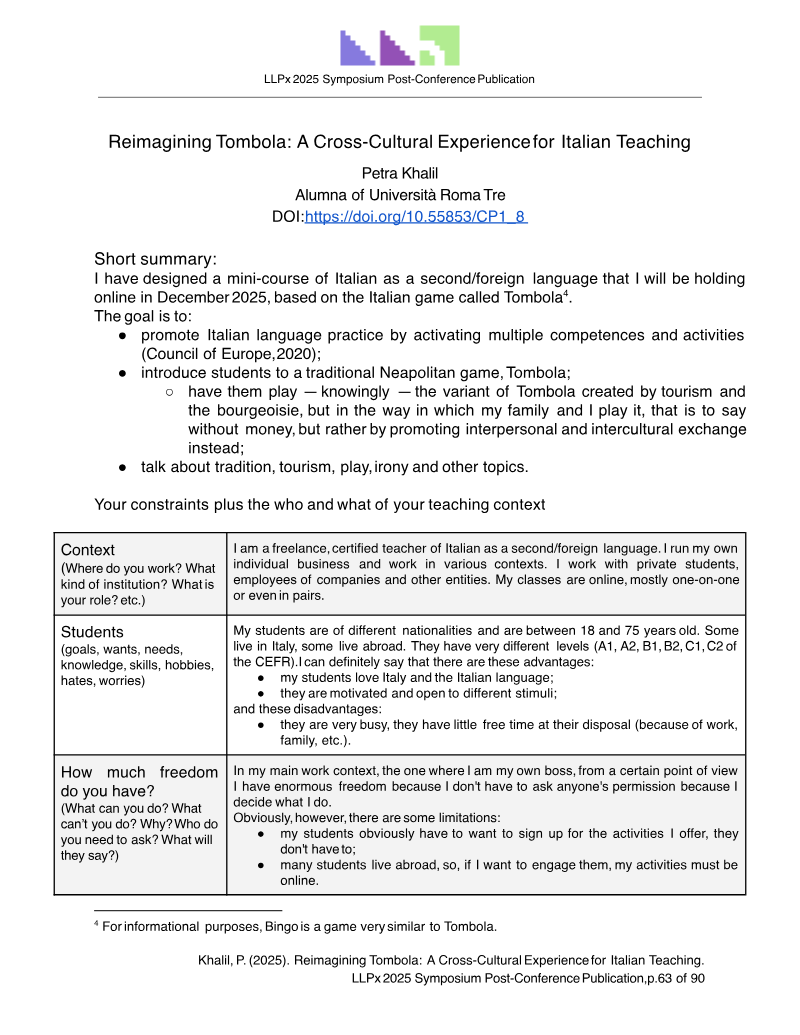
Scheduled for December 2025, this initiative aims to leverage the traditional Neapolitan game for cross-cultural exchange and language practice.
This initiative outlines a pedagogical framework for an online Italian language mini-course scheduled for December 2025, centered on the traditional Neapolitan game of Tombola. The primary objective is to leverage the game as a vehicle for cross-cultural exchange and language practice, moving beyond simple gameplay to explore the anthropological, historical, and social dimensions of Italian culture. By adapting the game for a global, remote student body, the project seeks to foster a sense of community among learners of varying proficiency levels, ranging from A1 to C2, while promoting authentic interpersonal interaction.
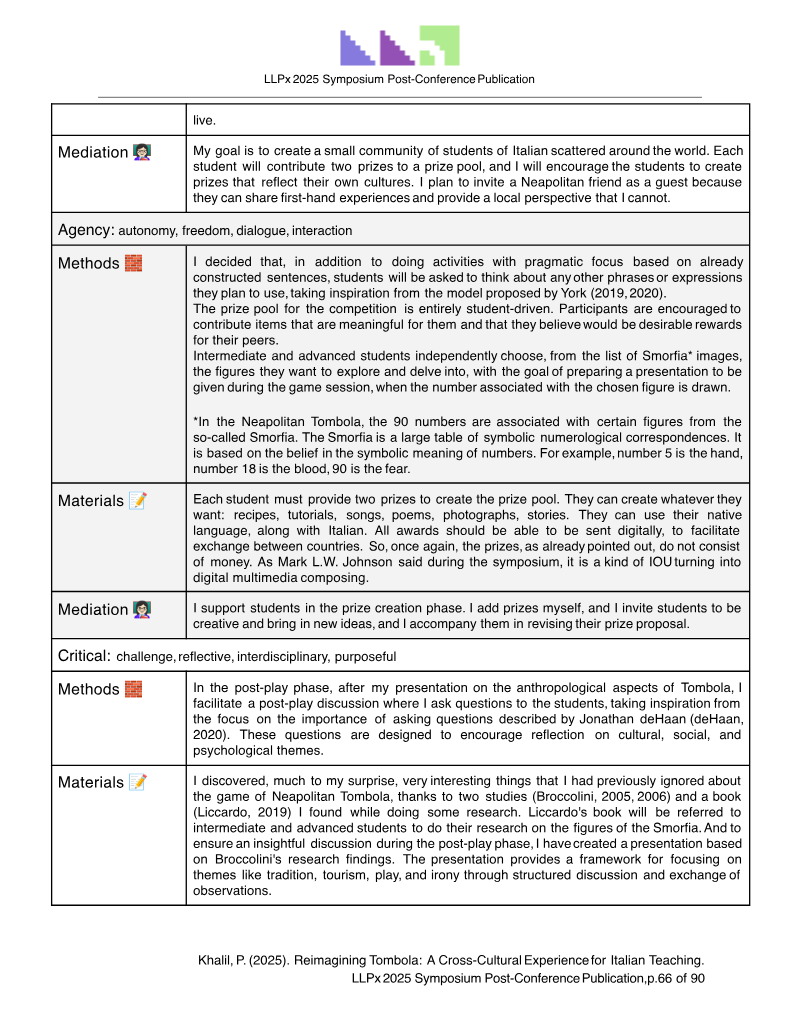
The methodology is grounded in Task-Based Language Teaching (TBLT), utilizing a structured sequence of asynchronous pre-play activities, live gameplay, and reflective post-play discussions. A key innovation is the removal of the traditional monetary stakes associated with Tombola, replacing them with a digital prize pool where students contribute personal, culturally significant items such as recipes, songs, or stories. This shift is intended to encourage creativity and deeper personal connection. Furthermore, the curriculum incorporates the Smorfia—a system of symbolic numerological correspondences—to provide intermediate and advanced students with opportunities for independent research and presentation, thereby enhancing their oral proficiency and cultural literacy.
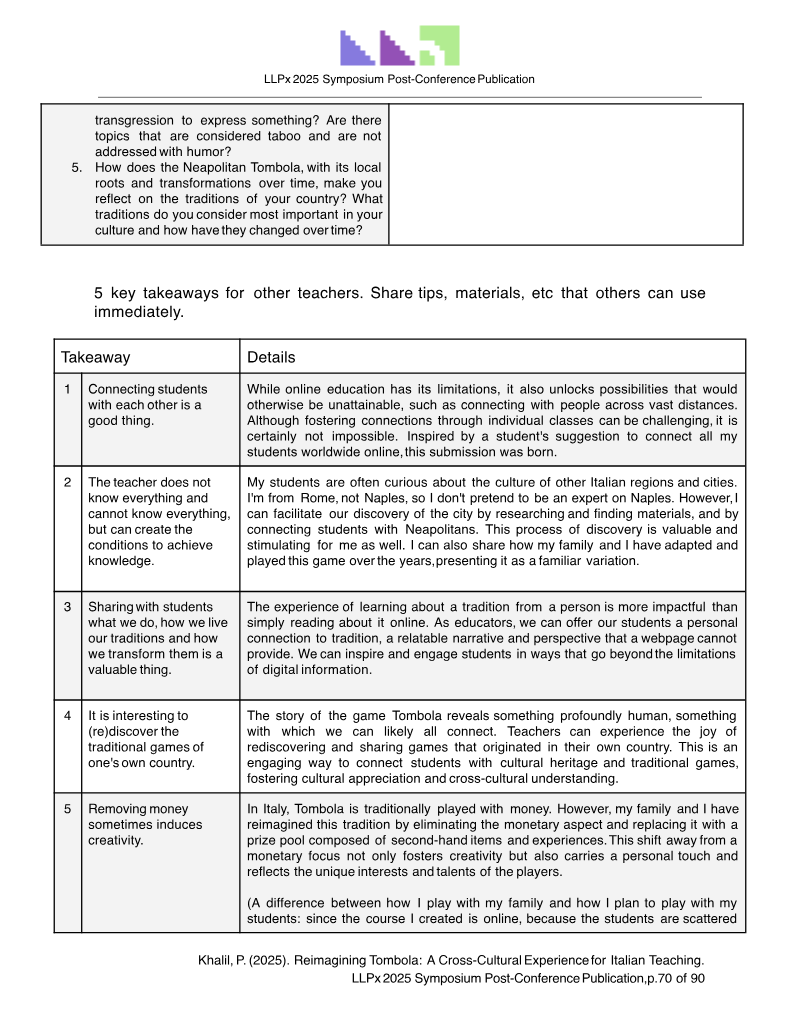
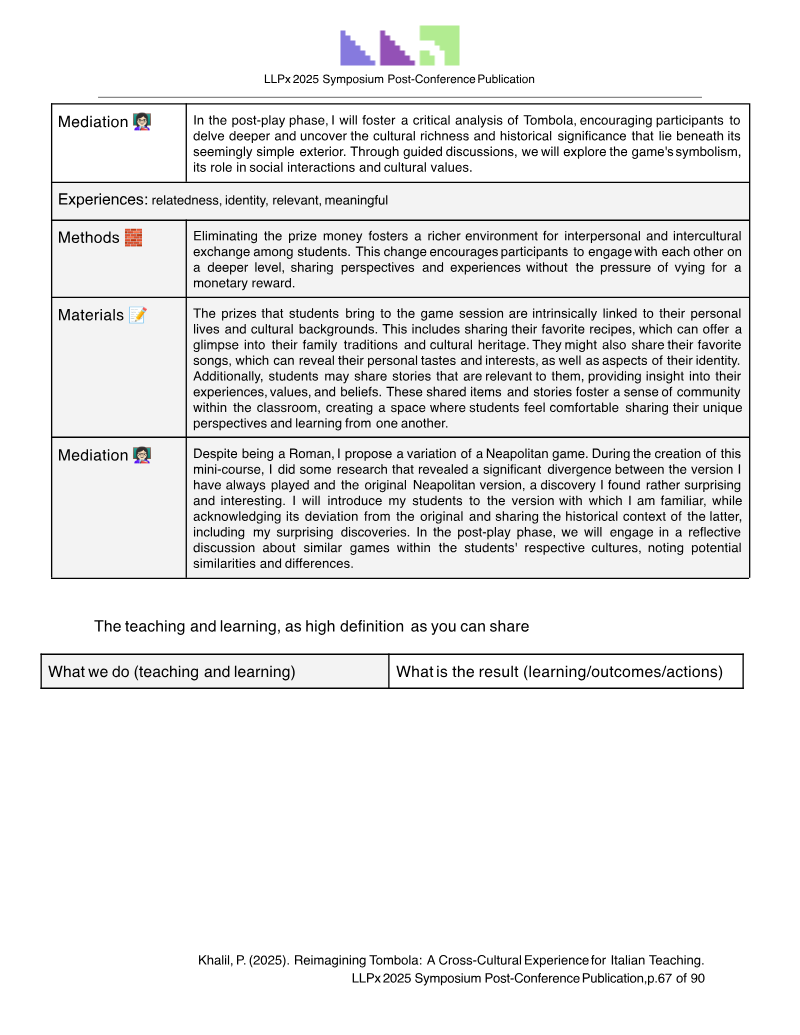
The project emphasizes the teacher’s role as a facilitator of discovery rather than an absolute authority. By acknowledging the distinction between the "touristified" version of the game and its authentic Neapolitan roots, the instructor models a critical approach to cultural heritage. The initiative highlights the potential of online education to bridge geographical divides, transforming the classroom into a space for meaningful, transcultural dialogue. Ultimately, the approach demonstrates that traditional games, when reimagined through a pedagogical lens, serve as powerful tools for language acquisition and the development of global intercultural competence.
Ludic Language Pedagogy · 2026
Ludic Language Pedagogy · 2026
Ludic Language Pedagogy · 2026
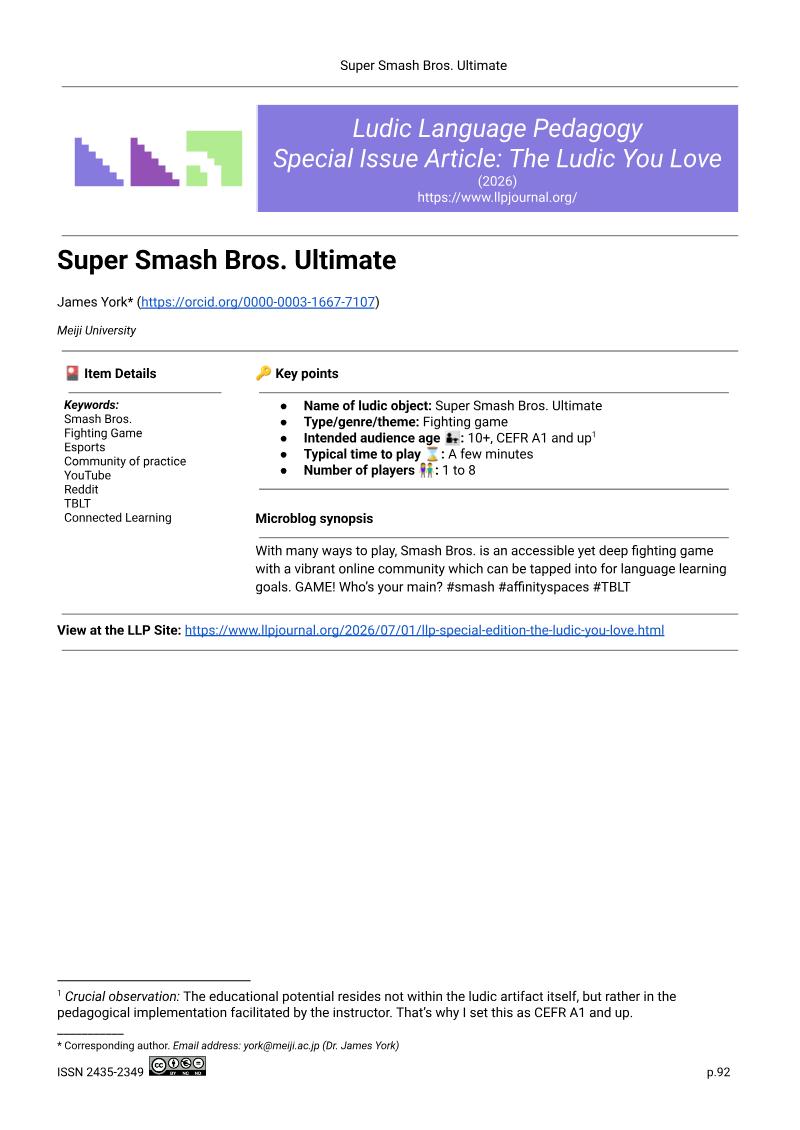
Ludic Language Pedagogy · 2026
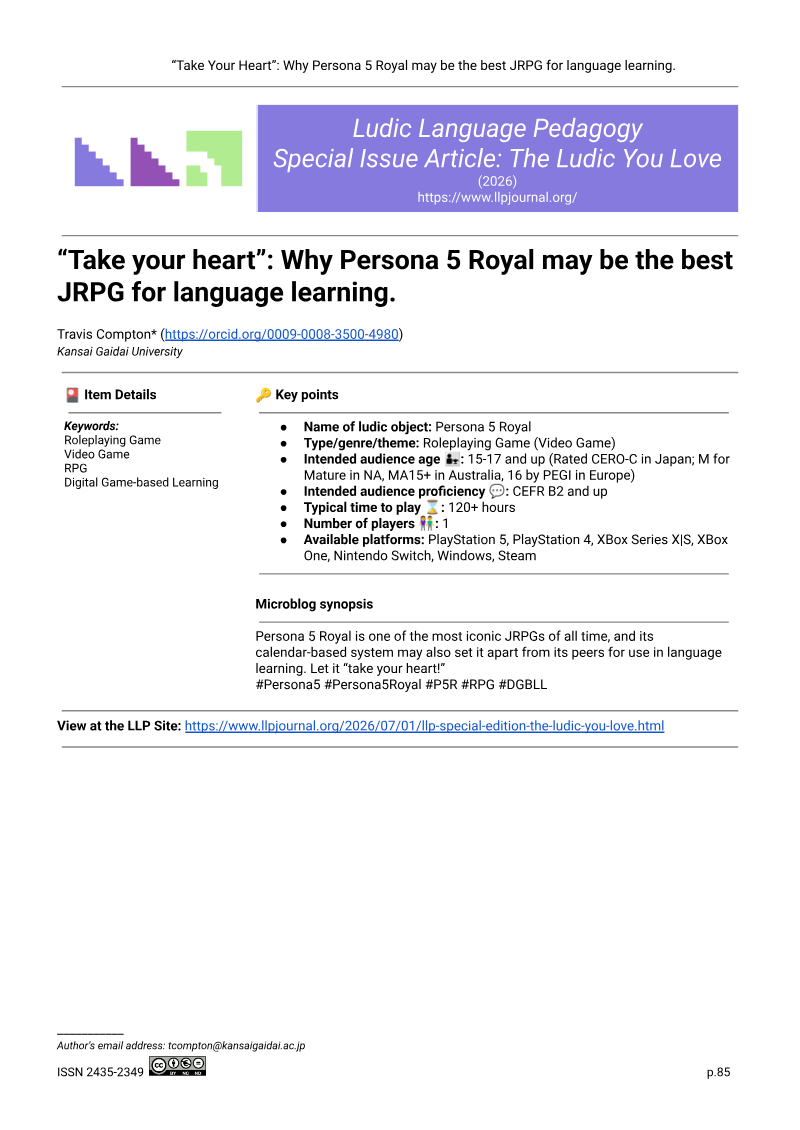
Ludic Language Pedagogy · 2026
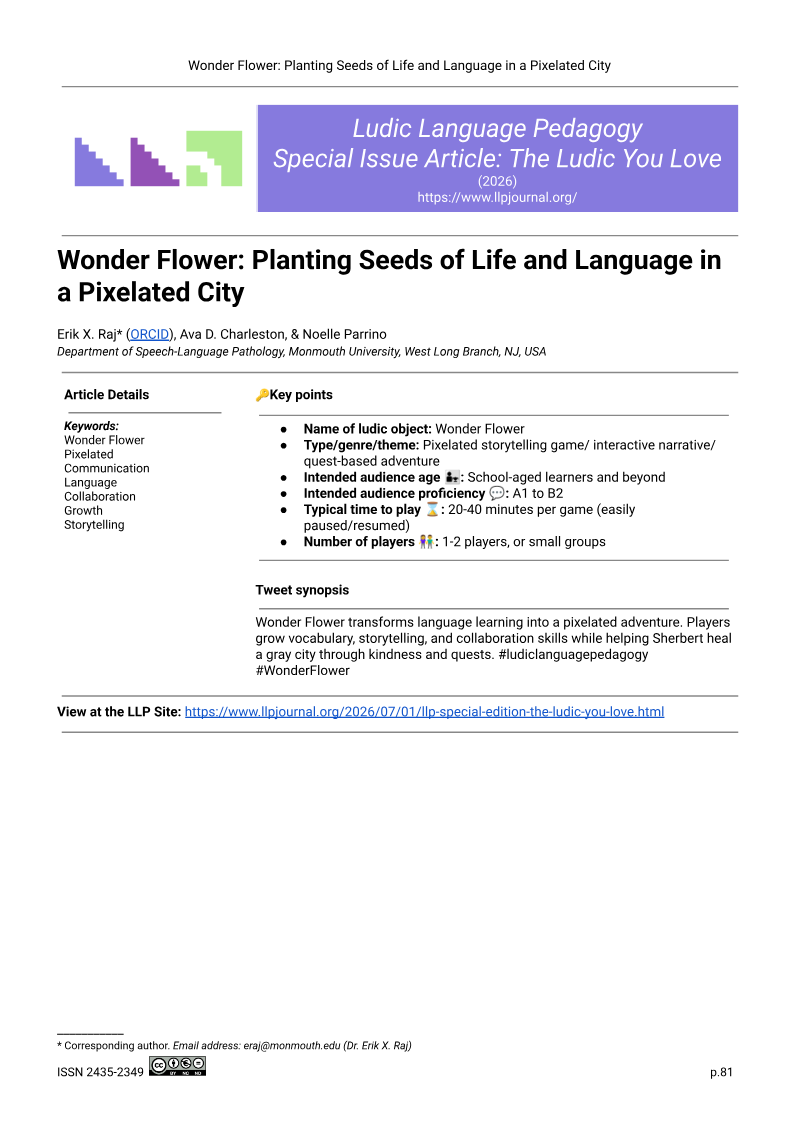
Ludic Language Pedagogy · 2026
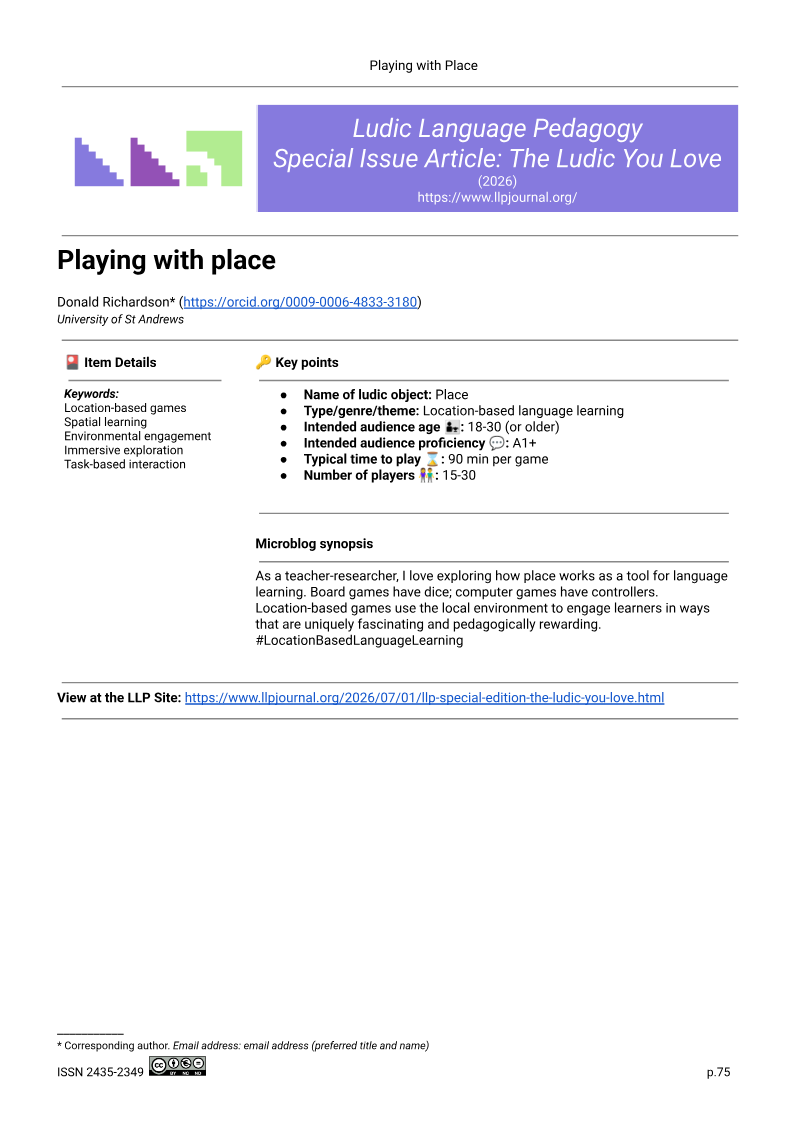
Ludic Language Pedagogy · 2026
Ludic Language Pedagogy · 2026
Ludic Language Pedagogy · 2026
Ludic Language Pedagogy · 2026
Ludic Language Pedagogy · 2026



Ludic Language Pedagogy · 2026
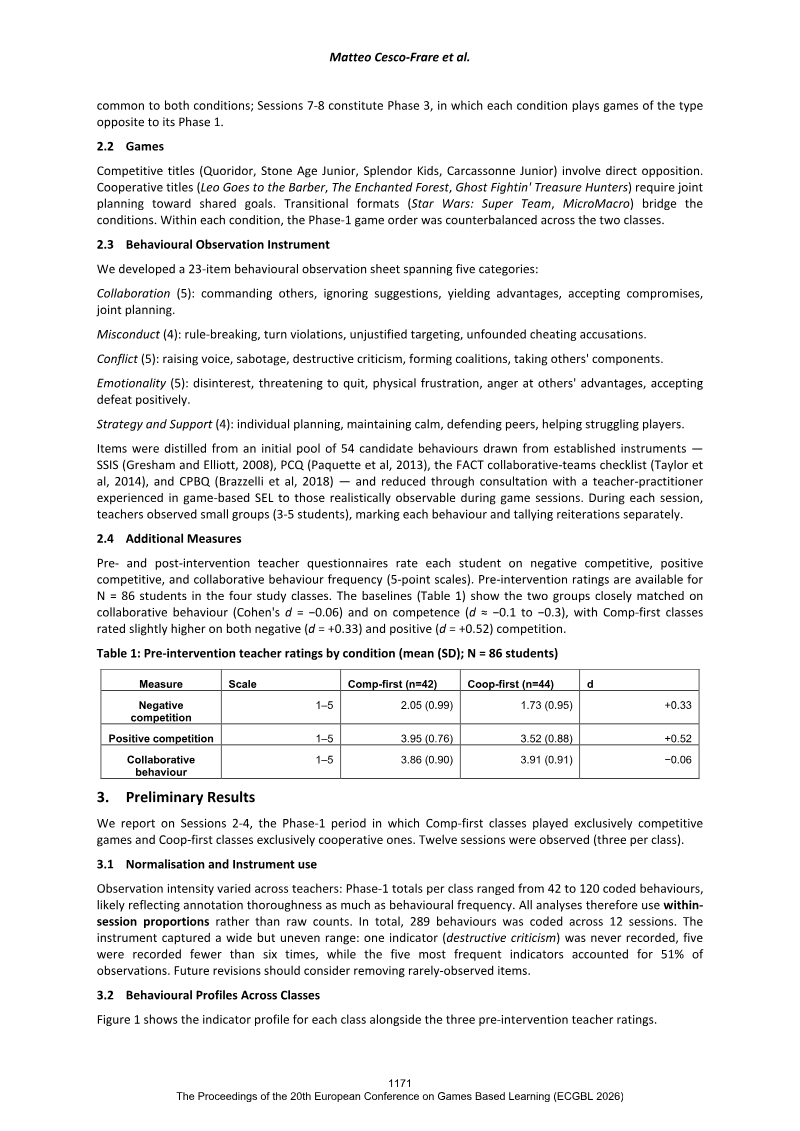
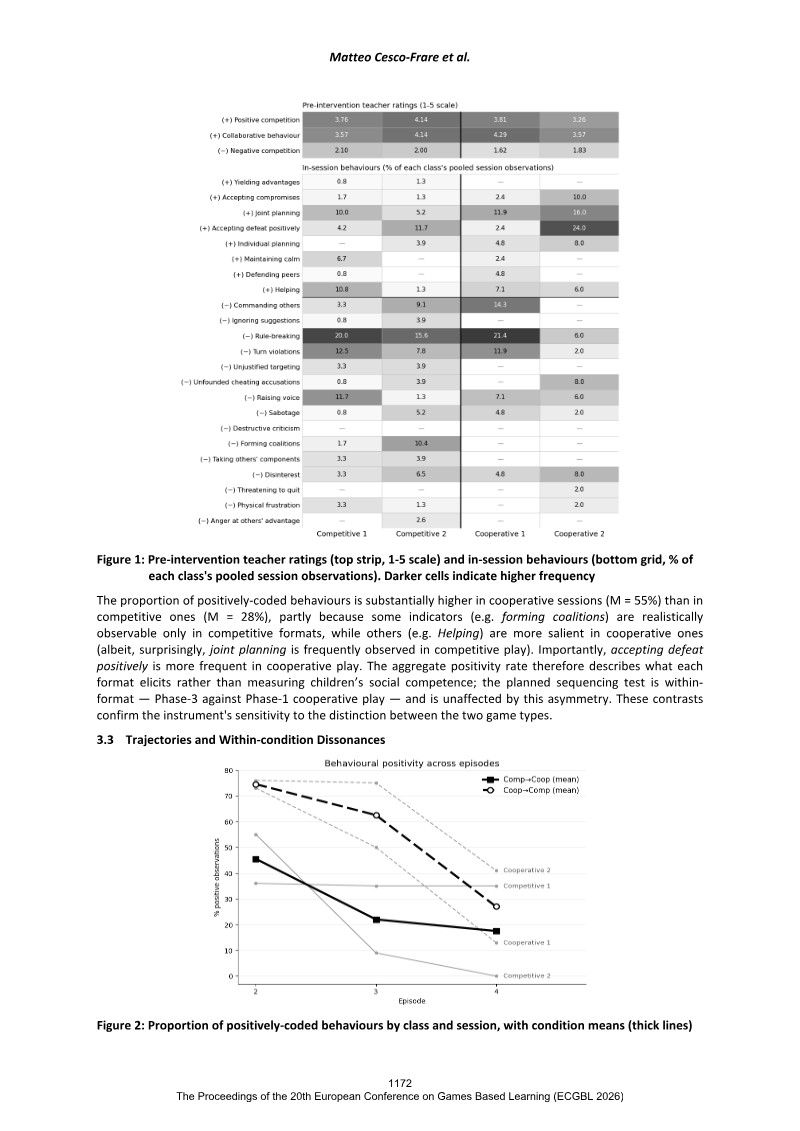
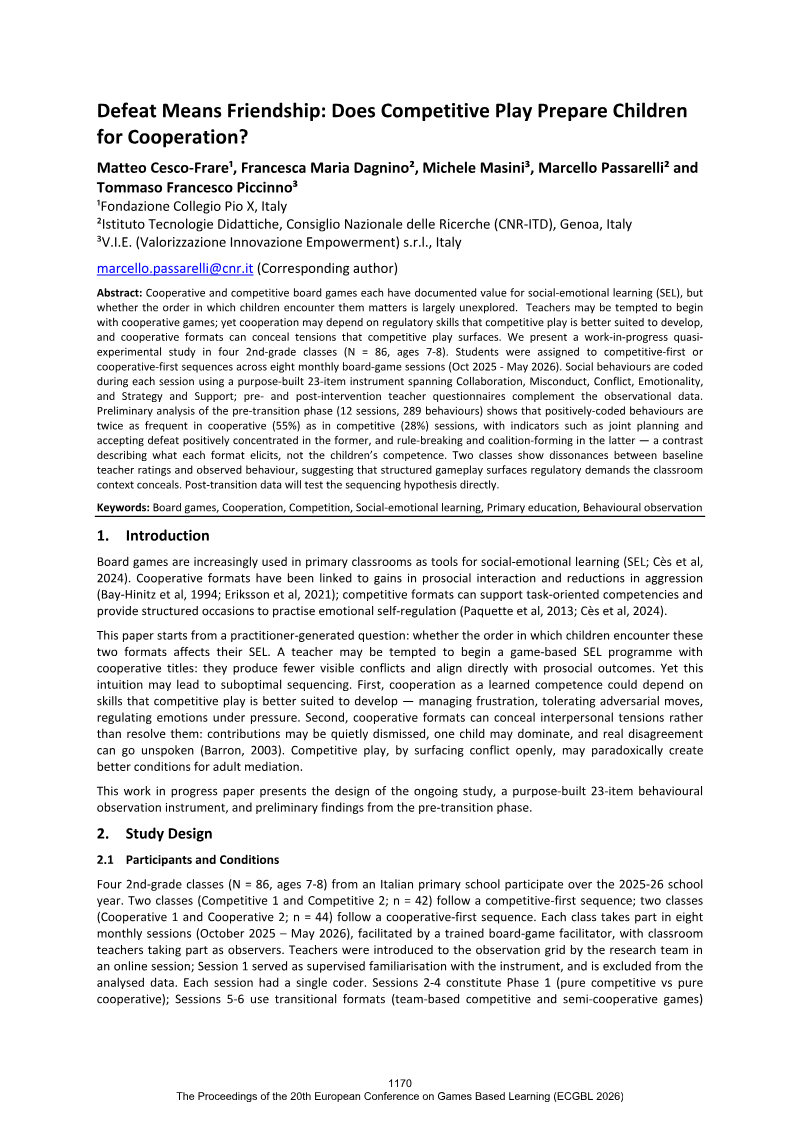
European Conference on Games Based Learning (ECGBL) · 2026



European Conference on Games Based Learning (ECGBL) · 2026
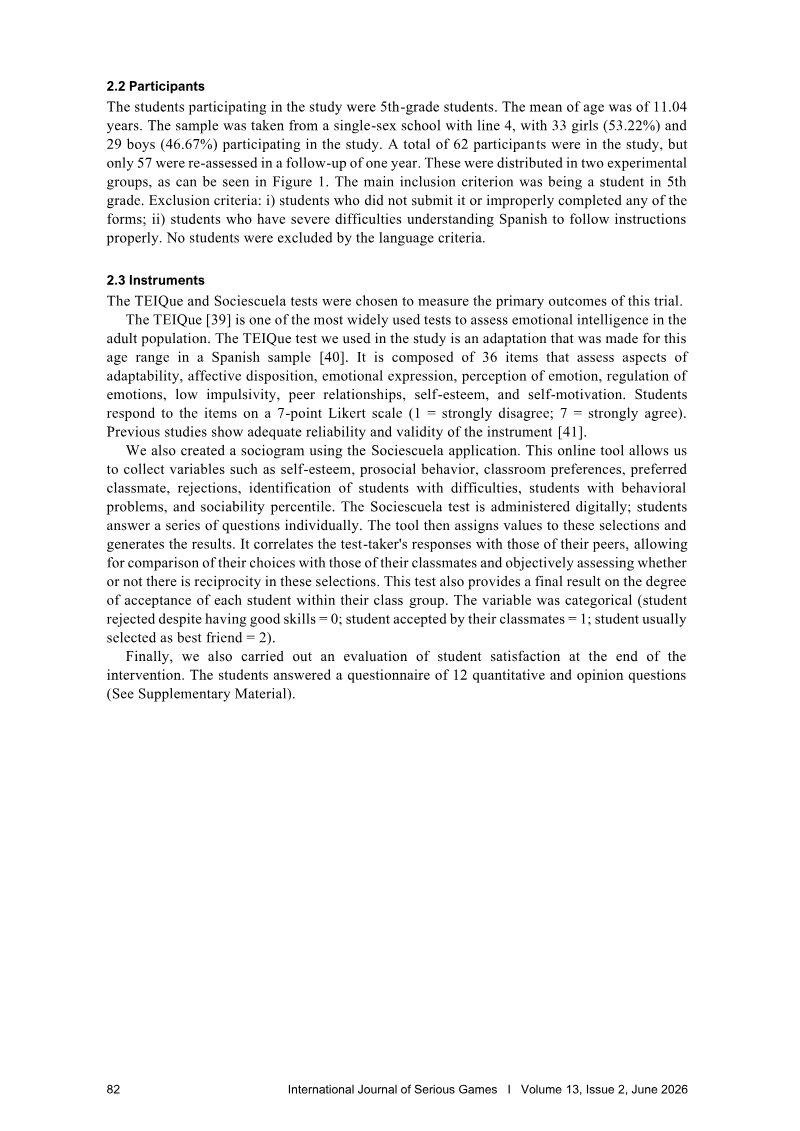
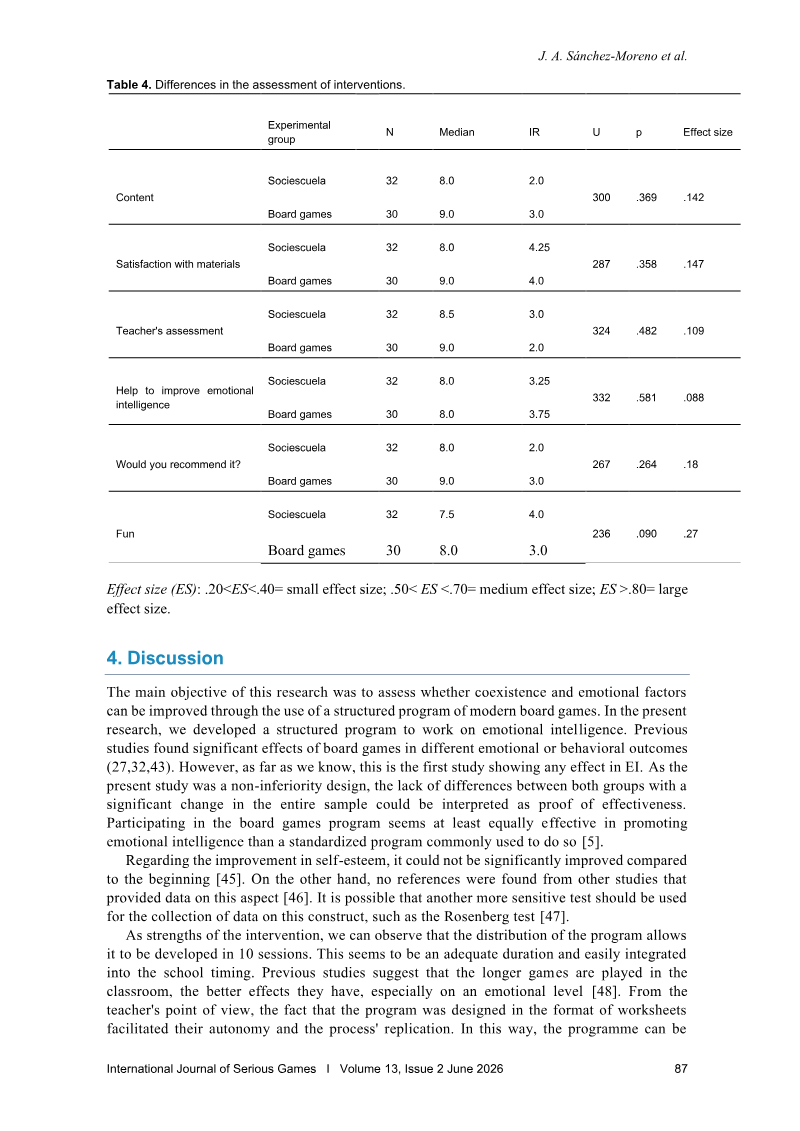
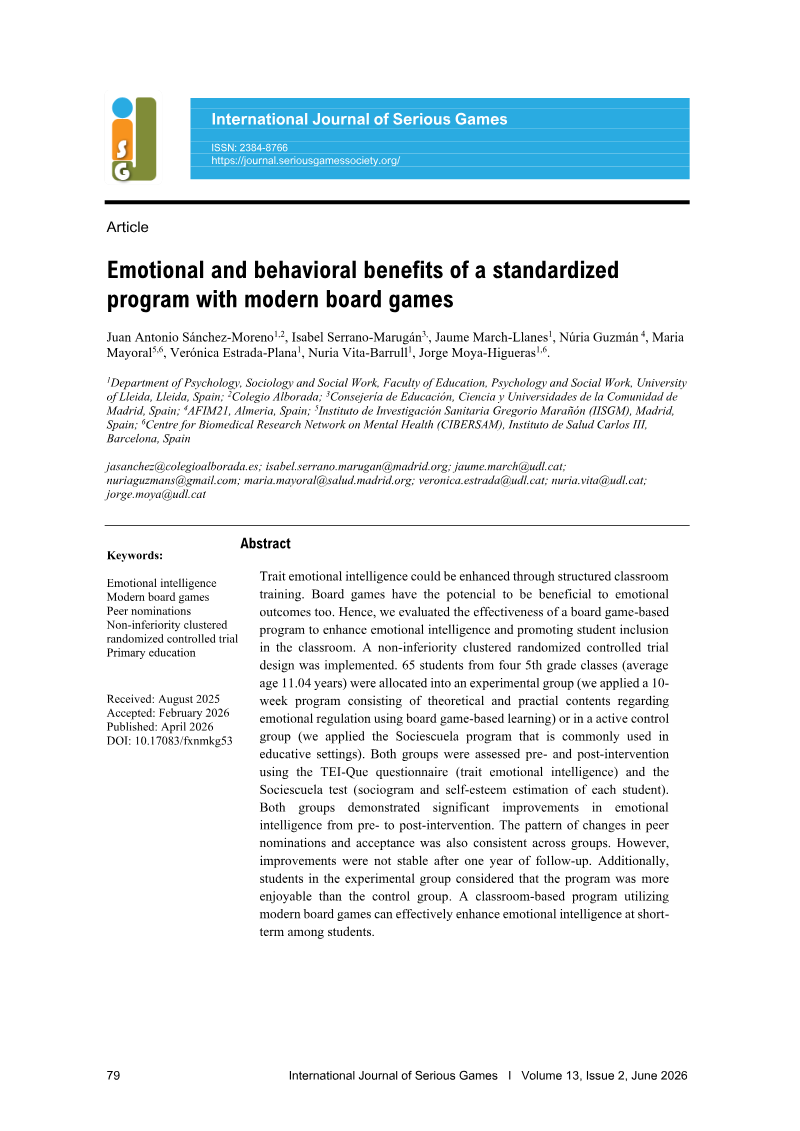
Serious Games Society · 2026