1 free read left. Create a free account for unlimited reading + AI research.
Create free account
Keynote: Mastering In-game Ads
Key insights
6 takeaways- 01The industry is currently focused on attracting non-gaming brand budgets by positioning in-game placements as a more measurable and effective alternative to traditional out-of-home advertising.
- 02In-game advertising provides an incremental lifetime value increase of 2% to 10% by integrating non-intrusive, native placements into virtual environments.
- 03Widespread industry growth is currently hindered by a lack of standardized mediation, the absence of industry-wide viewability metrics, and complex compliance requirements.
- 04Developers should prioritize player behavior data to optimize ad placement strategies, ensuring that monetization efforts remain secondary to the integrity of the user experience.
- 05The strategy is most effective in 3D, sports, racing, and hyper-casual genres, where ads function as organic elements that enhance rather than disrupt gameplay realism.
- 06Adoption is currently concentrated in Tier 1 English-speaking markets and South America, while European expansion remains constrained by programmatic and GDPR-related regulatory restrictions.
Ask AI about this video
Transcript
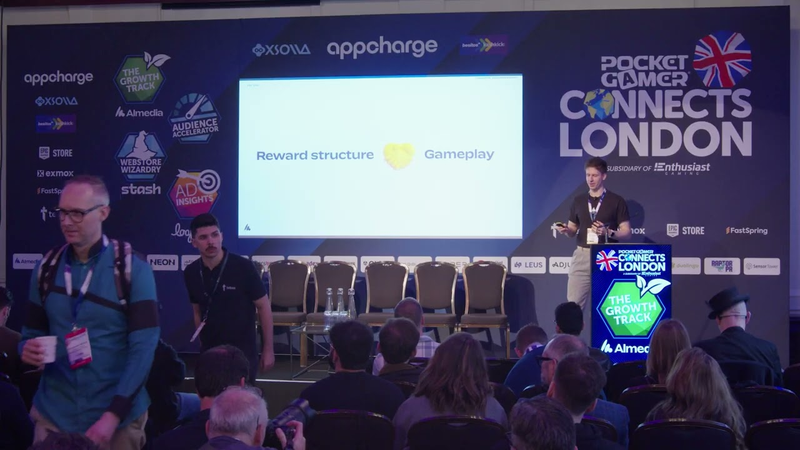
[Music] thank you [Music] up next uh we have our fabulous uh sponsor uh adverty uh with a session on mastering in-game ads so please welcome to the stage uh thorbion Warren from adverty thank you and of course yeah take it away will do thank you very much uh clicker would be this one yes
awesome microphones are working right one gets paranoid but yes okay cool just wanted to check uh hi everybody great to be here great to see a lot of you here uh I'm representing adverty and we're going to spend the next actually pretty much hour and a half talking about in-game monetization uh I'm doing this talk and then right after that my co-worker Chloe will be moderating a panel where you also get to hear from some Publishers who are working with it today I gave a similar presentation at pocketgamer London uh in January I'm going to cover all the points where I was wrong in that one so you know take take my word for what it's worth uh in this one it will be a little bit more focused actually on really implementing things uh for the game very briefly about adverty and about myself adverty we're an in-game match provider we have multi-patent attack it's an SDK based solution where you can integrate ads inside your game and you
earn Revenue when the ads are seen no interaction no performance it's kind of branded things in general uh we have a strong focus on mobile gaming and vrar the tech does work for console PC and other platforms as well we're currently single-mindedly focused on Unity so if you have an engine that or if you have a game built with unity things work like a charm and we're of course expanding that so we'll be able to cover additional platforms for form in the future uh I spent roughly half of my career in mobile ad Tech and the other half in Mobile monetization and user acquisition with different game studios so I've heard the arguments and I've said the arguments and been sort of at both sides of the table um right so to start off the discussion I think it's important to sort of set a frame of reference because a lot of things could be in-game advertising a rewarded video is advertising that happens inside a game but for the purposes of this talk and
also sort of in specific towards this ad category in play or in-game advertising or 100 native ad placements that you really place in the game they're not part of the interface they're not an overlay they're not an interstitial they are inside of the game most commonly the the technology and the sdks to that support this are fairly deeply integrated with a game production engine so Unity on real engine Etc facilitating the same Graphics rendering pipelines allowing your developers to put on custom shaders to make sure the visibility is there like to as the largest possible extent you should treat this as an extension of your game as for again for the purpose of this discussion layout should be non-clickable they should be either static animated or short sort of videos on Loop there are possibilities to make these again these types of ads clickable the technology is quite simple we tend not to focus at it at adverty
because we see the user case for it and from a player point of view we see it being incredibly disruptive if you're driving a car game you're using two fingers or you're doing whatever and then all of a sudden you move over an ad something opens up we don't see that as a good long-term game experience so for the moment where we're not playing around in that area uh another thing that's important I think again to think about because this can be split up and it can be seen from so many different lenses uh but it should be the last point the ads should kind of be scalable and reproducible so I'm not talking about something that's custom made if Coca-Cola comes to you and say I want to have Coke bottles in the background of all your game things that's something I would just more call it like product placement because it's not something that scales something that replaces something you can integrate once and then benefit over a long period of time so even though those things do exist like I'm not really focusing on that when I'm talking about in-game advertising
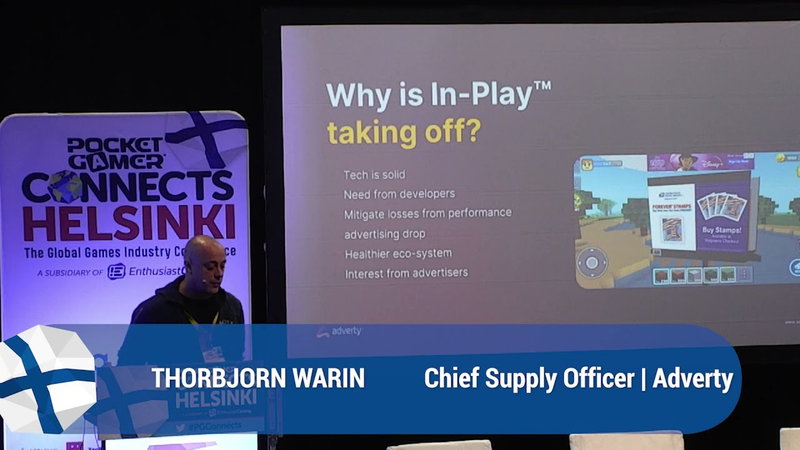
uh this ad format is really taking off this year is is it's definitely the beginning of mass adoption uh in January I predicted that it would go much much faster than it has been but regardless we're seeing both that adverty and across the industry a fairly rapid growth more and more developers more and more games coming in and uh adding this ad formats and there's a bunch of reasons kind of converging explaining why this is happening now because this is by no means new companies have been trying to put advertising inside of games since like 2005 2006. there's been two or three kind of generations and waves of our tech companies trying to do this who just kind of slowly perished or got acquired or pivoted because the market wasn't really ready for it uh but at this moment it is a large part of this is thanks to Mobile gaming because it is truly the first mobile the first gaming Mass medium with the potential to reach hundreds of millions
if not billions of people gaming consoles aren't there yet they're fantastic for more Niche demographics but Mobile gaming is again it's just another advertising Channel the technology is also really solid many companies have had years now to perfect this our SDK has been in the wild for over four years we have done multiple iterations uh compared to many other AD formats it's relatively lightweight so there's less use of cash and memory resources so anrs and sort of handset performance the impact is minimal which is really helpful because this is important for all developers of course uh there's definitely a need for developers right there's a constant need for developers to increase LTV and to earn more money that's why they ultimately exist but we feel and we can sense in the market as well that this need has increased over the past year year and a half I explained this primarily with it as a mitigation of lost from performance revenues due to the changes in the user
acquisition and performance advertising landscape in Prime that's the primary thing um something that is often mislooked but some things I think the game industry as a whole should be really excited about is that this edition of this ad format will help us create a healthier ecosystem for mobile advertising today a very large chunk of the revenue being spent in Mobile advertising is for other mobile games it's an incestuous cycle that kind of feeds Itself by doing this we're getting in third party money if you will coming in from outside and then if you think about it as a balloon when you blow it up it grows in all aspects right so it's a it's kind of a holistic and additional growth to the mobile gaming ecosystem and one that is desperately needed right it's not particularly healthy for so many companies to rely on Advertising spend from very few companies to make their businesses go around uh there's also of course an
ever-increasing interest from advertisers everyone wants that advertisers should be even more interested and I think everyone who's attending this conference understands this but it is of course a challenge to communicate this to agencies and to Brands but with stuff like metaverse and Horizon and we are being very much talked about and becoming a part of sort of common cultural social cultural references uh in a to a different degree we see that there's more interests right advertisers come to us and say hey we want to try this metaverse thing you guys kind of do that right I'm like yeah we kind of do right so like those things are kind of helping and then as well as more and more advertisers try this out there's going to be more and more advertisers that have really positive experiences the industry as a whole is producing white papers there's more standardization happening across the board so it is an industry or a segment of a mobile gaming ad industry that is going to grow tremendously in the next few years both organically but also two injections
the value to developers is fairly again it's very simple it's this Sub sub line subtitle subtitles the word it's a subtitle to my talk this is the easiest and fastest and safest way you can impact your revenues the most there are other things that would have a much higher impact on your Revenue but they demand a much higher workload and to some extent a higher risk things could go wrong Etc we also bring 100 in incremental new Revenue this is money you wouldn't have gotten from any other source in any other way it is by far the least intrusive ad format right you can't I mean you can actually make it part of your game we have several developers who have done that uh some of them will be on stage here later presenting but like using an in-game Jumbotron to display ads uh in one of the examples there's a sort of a 3D game where you grab objects and you have to throw them we've actually put ads on the 3D objects so the ads rotate and as you throw them they fragment into
pieces you can do really cool stuff with it um and it's it's not a bold prediction but but it's one I want to make regardless uh intrusive ads is going to be something people talk a lot about more about in the next few years I am fairly convinced that the platform operators are going to be much and I also do believe they should be more stricter in enforcing ad formats that are really disruptive to some extent uh deceptive as well so I think there's going to be stronger and harder rules and enforcement from the platform holders which is going to have a severely negative impact on several other popular ad formats uh in-game advertising doesn't fall under this at all again you can't click it there is no performance elements attached and it is an organic part of the game it doesn't disrupt the experience do stuff like that so what should you expect as a developer uh again realistically and like no one
has time for like an in-game ads solution will increase your lifetime Revenue with about two to ten percent uh if someone tells you differently either they're lying or your monetization really sucks right we have cases where LTV has increased 15 but that was usually because the Baseline was just really bad but if you've done a good job you have a well-functioning game you can add an additional percentage to your lifetime value by integrating these kinds of ads and as I'm sure all um UA managers know the easiest way to uh improve your CPI is to better your lifetime value it's actually easier to do work that way around make sure you optimize LTV so you can scale and you can build up your user acquisition and your CPI targets as much as possible I cannot stress this enough but the integration is really really fast and easy right we're talking a few hours at the most to some extent it depends on what kind of game you have but it's
fairly easy to if you have an endless Runner you can fairly easily have a reproducible logic that you know every 70 meters in in-game distance place an ad to the left and then to the right like it's it's simple it's not rocket science it doesn't have any impact on the other metrics or performances of your game so again that's why yeah I know two to ten percent won't make your CEO have champagne for breakfast but like it is a solid Edition and with a risk and workload required uh it's again to me a no-brainer the format is constantly developing I come from the rewarded video world so it's very interesting to see how this uh sort of Industry segment to add format to a very large extent follows exactly the life cycle and history of rewarded video but just in a very accelerated fashion in play video is already available having streaming videos such as this works this is not fake this is in one of our games it's a video placement that
they have put in there uh it looks really really cool it's being streamed as well so we check for why you know we check for data availability being very cautious as to not to do to disrupt the gameplay experience this could potentially be a game changer for cpms uh because they are much higher for video even short format three to five second looping videos and there's an increasing demand from them as well thanks to the tick tocketize tokitization I don't know if that's a word but like you know again attention spans getting shorter and shorter everything is fast it's new format um so this is really promising this brings with it of course some fun creative challenges right this doesn't work everywhere if you're driving too fast in the game you won't have time to see the video the video won't be registered as viewed and you won't be paid so it comes down to again applying a bit of creative thinking and problem solving where in the game should I do
this if I did a race game I would put a video ad unit by The Starting Line because there's always a five second countdown put an ad to the left every time someone starts a race you get a video impression that's going to pay you a decent CPM and you're monetizing the play time and in a sneaky way as well it kind of thinking about in-game ads kind of forces you to think about engagement to a lesser extent retention but also really like it's it's driven by the same underlying logic that uh in-game engagement is um there are definitely clickable performance formats and we see a few games are trying and experimenting with it a few of our competitors are doing it as well we have we have a clickable format as well and like I said we can make it work but I I think it is like I said like when I think about it from a game game Studio point of view there's very very few games I can imagine where this actually works without breaking the
gameplay experience like you kind of have to have a static screen with not too much movement and that kind of limits you to let's say puzzle games and I'll touch on that later like puzzle games are not really good for this format they use the entire screen they design everything maybe something like Miniclips 8 Ball Pool could work because there you have a static screen and you could put something clickable but still I'm sure they wouldn't want to have that disruptive experience maybe you're aiming you're dragging your finger you drag it over the ad and I we'll see uh again it works for some games but yeah the scalability with the reproducibility of it I feel is limited um I was very certain in January that we would have mediation by the end of this year and now I'm completely certain that we won't uh nothing seems to be happening no one seems to be interested in building mediation for this uh big opportunity just sitting there waiting for someone to do it as long as it's not someone who is also
an active ads provider because I don't think this industry is going to fall into the Trap that rewarded video industry went into where they allow mediators to also have sort of bidding capabilities another topic that is exceptionally boring and I try to understand it but it always gives me a headache is cmps consent management management platforms and tcfs which are consent strings that you give to programmatic buyers so this is basically an effect of gdpr that it has on gaming with so it's primarily for gdpr Associated countries but if you can collect an explicit consent from your viewer that you can Target them with ads different than what you do on iOS when like apple asks for it but a similar thing but separate then you have the user giving okay to sharing their ID and then you need a software to amend your ad request with a consent string and if
you can get that to work that's really really awesome uh but much like a missing mediation for this ad format there are no good solutions for it like the companies who try to do this all come from the web world so they suck at apps and they super suck at games so someone needs to figure that out as well like currently everyone is kind of trying to build their own thing or figure something out but that is something on the horizon and it usually means a 5 to 15x increase of revenues from gdpr-affected countries so basically all of Europe another thing that becomes important and again it's a fun thing because it's it's it requires creative thinking to so to solve is to make sure that you're managing your in-game viewability and viewability is a metric that is new for these types of ads but it just means as I'm sure you can guess what percentage of ads has actually been viewed and you
want to have the highest possible number the industry as well needs to standardize how this is being measured how this is being reported there are plenty of efforts going on with IAB and things like that and I think there's I'm not an expert so I'm sure there's progress being made but currently like there's a little bit of a difference there uh in terms of being game developers all you need to think about is a little bit what I mentioned in the beginning make sure you place the ads in such a way that the highest number of them possible are being seen and this can also be done in programming sense right so just pre-cache or like request an ad when you're fairly certain the user will get it we had some endless Runner games think so I mean like a Subway Surfers type game where they loaded 50 ads when the race started because but most players die between AD five and six so they're building numbers for this so I they're smart things to do like that like hey don't request all the ads immediately do them when they get close the ad format is so lightweight
the tech is so good it happens instantaneously so there's no issues around that uh speaking of the market I wanted to share this this is our sort of competitor monitoring view uh this is data gathered from our friends that have Topia to have a look at the SDK Footprints uh and and I would say the main providers in the market space right now like there are a couple of others as well but I would say in terms of capabilities and Prospects these are the five main ones what is also interesting that when measuring the SDK footprint roughly 100 million daily active users are exposed to in-game ads every day that's a rough size of the the market according to uptopia of keeping track of these sdks so it still just represents a fraction of what's out there uh and a lot of these daus are also to some extent double counted because many larger providers they add several different sdks into the same game
because no one is getting close to a decent feel rate regardless so like there's not competition on ideas yeah which might also be the thing that keeps mediation from happening finally when looking into games and I'm I'm definitely talking trying to talk game designer language but but again if you're a monetization manager if you're in management product management wherever you're at I I think this becomes a fairly obvious thing right contextual fit really is crucial my stupid example is always no one wants to see a Coca-Cola ad in a Game of Thrones Game as well so you need to even think about that because if you're doing something with high fantasy and elves and Etc it's probably not the game for us right we might probably turn you down and say it's just not going to work but if you do something that is realistic if you do something that's futuristic if you're if you're building Fallout for mobile like imagine how cool you can make it look and again you can put shaders you can make them blink you can do really really cool stuff so always
think about the contextual fit uh some high level notes hyper casual Works exceptionally well for this format it's already of course a type of game that is riddled with ads but this is a very easy add-on for them to make again we're talking a few hours work to you know play place an ad on the side of a building and have it repeat that's the players swings through the city to the right here you can see one of the movable ads that again you grab this box it rotates your throws it and the ad follows along but hyper casual is a great fit for this ad format Sports and racing is also really really good uh usually the biggest challenge there is speed like if you go too fast the ads are just gonna flash by so you don't see them but again by being smart you can figure this out maybe you place the ads in curves when the player has to break to drift maybe you do it by the finishing line by The Starting Line Etc there's many good ways to do it oh
breaking the furniture action and Shooters also work exceptionally well 3D games in general because you tend to move around quite a bit so you're constantly exposed to looking at new surfaces like you can cover a lot of ground by playing Call of Duty or critical Ops or what have you so they tend to work quite well they also tend to have a realistic setting so like adding ads can just actually kind of make things look a little bit cooler puzzle games word games generally no and this I mean it really just kind of comes down to like there's usually never any space and you can't go to them and say Hey give us 20 of your screen in real estate for a three percent increase in lifetime value it's not going to happen right so it is primarily based on the type of the game that I say it's generally not a good fit if you have a word game where you can put something in the background maybe a hidden object game like there's ways one can think about that I think but but for your
classical cover the whole screen casual arcade type Hustler which make up a large share of the global audiences it's generally a no um and with that uh I'm gonna try and stop talking at least a little bit uh after this my co-worker Chloe will be hosting a panel uh you will hear from doe dreams fingersoft and gold Town games they have all had different looks and different experiences from in-game ads uh you'll have a great chance to ask them questions but as soon as I get my headset on you can also ask me questions if anyone has anything ah and here is my headsets brilliant thank you so much though um so we have a time for a lovely q a session here so uh if are there any questions yep
uh thanks a lot for the presentation um one question like is the format like a new standardized creative like when a buyer is going to buy this like programmatically this native inventory um how does the creative look there or does he or does the advertiser have to do new creatives or is it easy can they use the standard Banner they use the standards we we follow the exactly the same formats with you know widescreen books landscape then whatever the fourth is but whatever the international layer advertising Bureau standards are those are being followed and most of them do that being said if you do a direct campaign so you're not buying programmatically if you are so like for instance we had a partnership with Activision where they want to promote Call of Duty for consoles to mobile games and we work with the best mobile games first person shooter in the world based up north in Finland and they said well yeah this is kind of cool like we don't see this as cannibalization console PC is different so then we had a
campaign there and then of course they do custom creatives which again is kind of easy to do right there's not too much animation I'm very partial to GIFS I think they work exceptionally well because this is also a branding format so you know something who cool Pepsi logo something like having like you know 0.8 second rotation or something like that okay but that's sounds great thank you does anyone else have any questions yeah yes can you uh explain why you need an SDK why can't I just buy it off in exchange I mean you can build it yourself if you want to but then you need to build the graphics rendering capabilities you need to figure out how you are going to track if the ad has been seen and then you probably need to build an ad server as well but like we're connected we we have built our own ad server we're connected to seven or eight different programmatic sources so we have that thing covered
and that part of our value proposition two developers is that they don't have to start building ad servers as well or setting this up and then as well the important factor is viewability being able to measure and accurately verify that the ad has actually been seen right but if we have an ad server of our own yeah it should we should be able to get it that way yeah yeah for sure for sure and you know when we're talking about more like I said in the beginning like more Integrations that are a bit more like product placement like let's say you have a racing game and then Ferrari comes and say Hey I want to have Ferrari cars in your game then they just tend to build it themselves right then they just you turn it into a feature and not more is this so much of a sort of an add-on in that sense any more questions no so I actually have a question um do you has there been an ex I can hear you for now so go okay we'll try with this one okay no worries
has there been an example of um someone doing an in-game ad wrong where it's not quite worked out and um just just to get some lessons learned from that uh I I think it's a better question for the panel right so so to get those guys who have actually done it uh I have the luxury of having the bird's eye view of it uh but I mean we have seen some kind of again you know just the poor game designer probably gets kind of a shitty brief from the monetization manager because we've had the instances where people in 3D games like they played pay Place eight ad units inside a room and then when you look at the map like well like point one percent of players ever go to that room so then yeah you know not having really kind of analyze the game and sort of looked at it from that perspective like where are where like another first person shooter developer will work with we've spent a lot of time with their uh level designers like where are natural choke points where does the snipers usually hide which areas are
they looking at and of course a good game developer has access to that data we can use to say well here's going to be a really good point it's not gonna you know there's not usually gun play happening here so maybe it's not disturbing or those types of things brilliant thank you uh so yeah we have another question over here yeah hey thanks thanks for the speech I just wanted to ask what's with ar games is there anything for AR games yeah there is but there's no AR games really I mean with the exception of Pokemon go maybe perhaps right but our Tech Works amazing in AR we actually kind of went backwards like we started with VR we couldn't find a market we went to AR we couldn't find a market and then we ended up with mobile games where it's a huge Market but the tech looks amazing in both AR and VR so we're just kind of eagerly waiting for it to really pop off but with a VR headset I mean the ad is of course fixed in the game environment so as you move your head around it remains in view on AR you can have different counter levels of transposure to it as well so it looks awesome all
right just making a make a good AR game or introduce me to Niantic all right brilliant thank you uh does anyone else have any other questions yep question over here um I think you mentioned about feel Ray would be a concern so that's why a lot of developers make using multiple sdks in their games right so is the fury or Demand right now really focused on tier one countries or you know like the location wise like what would be the focus it it I mean it pretty much looks exactly the same as any other AD format right it's it's just a factor of you know if you're making 80 of your revenue from the US today you're gonna make 80 of your revenue from the US with us as well so we're just really gonna mirror to a very large extent existing thing that being said of course
um us tier one English-speaking World always everyone wants it uh so there's no question there uh European inventory not as valuable because of the gdpr restrictions that apply on the programmatic buying that we need to follow South America is really booming uh and we're also like like I always say like the people who should buy advertising from us are generally the people who are buying advertising outside right they are the ones who should be doing the same thing because it's exactly the same logic you want to buy exposure you want to buy recognition you want to have unique eyeballs and all of that can be delivered plus we can actually measure it unlike a bus company like I have 15 000 people maybe we don't know like we can deliver down to the nanoseconds how many views it has been how many different creatives and all of those things so to some extent right it's about building up Mass right when there are enough people in the world who can be exposed to these kinds of ads the really big advertisers will become interested right
Coca-Cola is going to set aside okay we do Trend we have a marketing budget of 2 billion let's put 20 million to in-game per year let's start there and then when they can see their performance and the trackability of it certainly it's going to increase over time and again the addition of video is I think gonna help accelerate this as well
Summary
In-game advertising has emerged as a critical, low-risk monetization strategy that integrates native, non-intrusive placements directly into virtual environments. By embedding advertisements as organic elements like billboards or digital displays, developers can generate an incremental lifetime value increase of 2% to 10% without compromising the user experience. This shift serves as a vital response to the evolving landscape of user acquisition, providing a sustainable revenue stream that remains resilient against the regulatory pressures often associated with more aggressive or intrusive advertising formats.
The efficacy of these placements is most pronounced in 3D, sports, racing, and hyper-casual genres, where contextual alignment enhances the game’s realism. While the technology utilizes lightweight SDKs and standard IAB creative formats, the industry must still navigate significant hurdles, including the absence of standardized mediation, the complexities of GDPR compliance, and the ongoing need for precise, industry-wide viewability metrics. Developers are encouraged to leverage player behavior data to optimize placement strategies, ensuring that monetization efforts remain secondary to the integrity of the gameplay.
Geographically, adoption is currently concentrated in Tier 1 English-speaking markets and emerging South American regions, while European markets contend with programmatic restrictions. The broader industry objective is to capture substantial marketing budgets from non-gaming brands by offering superior, measurable performance data compared to traditional out-of-home advertising. As the integration of video advertising matures, the sector is positioned to attract larger global brand investments, solidifying in-game placements as a permanent and scalable fixture of the modern digital economy.