VideoThe Game Business
Is Nintendo Switch 2 a legitimate rival to Xbox and PlayStation this time? | Here’s The Dring
7 Apr 202511 min video
[Music] So, here's the drinking. By the way, that's the name of my new series of opinion pieces. If you hate the name and feel I should be frankly ashamed of myself, head to the gamebus.com, click on the story, is Nintendo Switch to a legitimate rival to Xbox and PlayStation, and there's a poll at the bottom where you can insist that I change it immediately. On the other side, if you think it's a work of journalistic genius that should be commended and never altered, also head to the same place and vote for me to keep it. The choice is yours. Now, where was I? Oh, yes. Here's the drink. It feels almost inappropriate to be talking about Nintendo's business strategy at a time like this. The tariffs imposed on Asian countries by the US, the very countries that produce the chips and machines that play our games, feels frankly existential. We just have to hope the various governments reach an agreement or the Entertainment Software Association can make an effective case for our industry. In a time when video game growth is slow to non-existent, this really couldn't come at a worse time. Uh, but anyway, Nintendo, I've been caught somewhat off
guard by the hysteria around the price of Nintendo Switch 2. The retailers I spoke to, they all thought it was reasonable. The analysts didn't shift their sales estimates, and it was roughly in line with what people were suggesting before the before the Direct was aired. I've personally spent £430 on the Mario Kart World bundle, although I'd hardly call that cheap. I didn't think it unreasonable, but I guess that's just it with value. It's subjective. £430 for a games console and a game what will likely be a fixture in my household for me and the kids for the next seven years doesn't feel astronomical to me. But someone else may have a very different perspective. I'll give you an example. When Nintendo charged full price for Super Mario 3D Allstars, do you remember that back in 2020? It was a pretty basic port job done by Nintendo of three old Mario games. Personally, I saw a product that was at least 80 hours of guaranteed joy. I was going to get a lot of fun out of this. was going to last me all Christmas. I felt like it was a bargain. But some fans were outraged. How could Nintendo justify that price tag when
it's clearly spent so little in putting it together? It's an argument I've always found hard to follow that. It's not like we expect romantic comedies to be cheaper at the cinema than than superhero movies because the budgets are less. At the same time, when other game collections come in at a far more wallet friendly price, Rare Play, for instance, featured 30 iconic games, including the Banjo Kazoui platformers, for30, I can see why some fans felt shortchanged. In the end, though, that Mario collection shifted 9 million copies in just a few months. People did see the value. But will the same thing happen this time for all the hang ringing hand ringing rather? Will Nintendo Switch 2 just carry on where its predecessor left off and sell huge amounts of units? I know a lot of the issues actually aren't about the console price, but they're around the $80 price associated with the game Mario Kart World. Although it is cheaper in the bundle, and I have to ask, who's buying Switch 2 without Mario Kart? Anyway, anyway, the point is, it's the highest price we've seen yet for a AAA video game and a big leap over the Switch One
pricing. Is it too high for a video game? Will people find it hard to justify that in the cost of living crisis? Or does its inevitable longevity and quality make it a more palatable purchase? Ultimately, the market will decide this though. Nintendo, PlayStation, Xbox have all got the pricing wrong in the past. Nintendo with the 3DS, PlayStation with the PS3, Xbox with the Xbox One, and they all reacted accordingly. Nintendo Switch 2 looks like a pretty good console with a bunch of greatl looking games. That's the main thing. You can't fix a bad product, but the price can always be amended, assuming the tariffs don't make that financially untenable. The other thing about the direct that sort of that sort of spoke to me a little bit, surprised me in a way, is it's been a long is that it felt like it felt like very much like a PlayStation and Xbox press conference or or or video. It's been a long time since I've considered Nintendo a direct rival to either of those people. They're competitors, of course, in the modern entertainment age where nobody has any time. Everyone is competing with everyone. Movies, books, Tik Toks, walks
in the park, you name it. But ever since Wii, Nintendo has largely avoided targeting traditional gamers, bar a very brief spell at the launch of Wii U. It's focused its efforts on families with novelty control schemes and brightly colored games. Of course, the Switch did successfully appeal to older gamers. The machine's portability has attracted time poor adults who don't get much TV time. I'm one of those adults, but it's still not quite a direct competitor to Xbox or PlayStation. The most popular franchises on though on on Exony and Microsoft's machines remain largely absent from Nintendo. Call of Duty, Madden, Assassin's Creed, even the Switch versions of FIFA, at least up until the EA Sports FC rebrand, were the significantly inferior legacy editions. However, the Switch 2 release is filled with games that have has sold very strongly on PlayStation and Xbox formats. There will be Call of Duty, there will be Madden, EA Sports FC, the full version, Final Fantasy, plus modern hits like Elder Ring and Cyberpunk 2077. At this point, I'm half expecting a Switch 2 version of Grand Theft Auto 6.
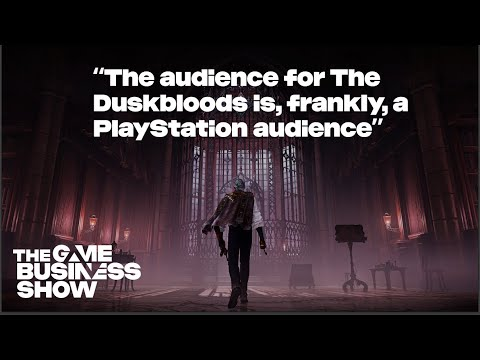
Switch 2 is clearly powerful enough to run capable versions of modern games. With publishers, developers, and even platform holders targeting PCs with varial specs, including the Steam Tech, plus of course the existence of the Xbox Series S, it's not unreasonable to suggest Switch 2 might be able to run most or at least a lot of things that this generation froze at it. That certainly wasn't the case last time. In addition, one of the biggest surprises of the Switch 2 reveal was the Dust Bloods, a new hardcore action game by Elder Ring developer From Software. Nintendo signs games like this from time to time, and they're largely designed to bring a new audience to the Nintendo ecosystem. So, someone comes in for Dust Bloods, and they might go and play Metroid, they might buy an extra controller, they might sign up to the online service. But here's the thing, the audience for Dust Bloods is frankly a PlayStation audience. From Softwar's games are closely associated with PlayStation. Now, I'm not suggesting From Software fans are going to start trading in their PS5s for a Switch 2, nor am I suggesting PlayStation or Xbox fans would ever choose Mario Kart over Gran Turismo or Metroid over Halo. But
what about as an additional purchase, a means to take something like Elder Ring, which they've already played, on the go? We know there is a decent crossover between PlayStation/ Xbox owners and the Switch audience. The difference this time is that there appears to be more of the same games coming to Nintendo's system. In this engagement era, any platform that's hoovering up some of those valuable Madden or Call of Duty hours is a competitor to PS5 and Xbox consoles. And although PS5 and Xbox Series X are technically superior machines, Nintendo is the more flexible option, at least for now. I've often felt PlayStation, Xbox, and Nintendo pace play slightly different versions of the same sport. And I still feel that way. It's just now they appear to be playing them all on the same park. I know certain third party developers that'll be hoping I'm right. At a bar at GDC, I spoke to one leader of a major independent studio, who was openly concerned by Xbox's strategy of moving away from the console. He was concerned it would negatively impact future negotiations
with Sony. It's tough negotiating with somebody when they know that you that you are their only real choice, he said. Perhaps Nintendo Switch 2 could be that alternative choice, a viable option for third party developers that's an alternative to PlayStation. Outside of the third party games, let's talk a little bit about the first party games. In our reaction podcast last week, GameSpot's Lucy James talked of her surprise that there weren't more first party games on display during the Switch 2 reveal. In truth, there was plenty, including some pretty big franchise games in the form of Mario Kart and Pokémon. Yet, I understood where Lucy was coming from coming coming from because it did feel like something was missing. namely a big new Mario or Zelda game that can alongside Mario Kart appeal to both mainstream and hardcore audiences alike. Yet, what if, and bear me with me here, Donkey Kong Bonanza is that game. Let me jump back a bit. A lot has been made about the success of Nintendo Switch because of its 150 million sales, and it's certainly impressive. Let's not let's not no bones
about it. But it's not astronomically bigger than any other era. In the previous generation, the Wii U and the 3DS generation, Nintendo shifted a disappointing 90 million pieces of hardware. But the generation before, the Wii and DS generation, it was over 250 million. The one before that, Gamecube and Game Boy Advance, was 100 million. In the 1990s, across the N64, SNES, and Game Boy, Nintendo shifted some 200 million devices. As a single product, Switch is one of the most successful games machines of all time. But if you take a more holistic view of Nintendo's hardware business, selling 150 million machines over eight years is great, but it's not unheard of. Where I believe Switch has really delivered for Nintendo has been in terms of its IP. Before the launch of The Legend of Zelda: Breath of the Wild, the bestselling Zelda game had only sold 9 million units, and that was 2006's Twilight Princess. Breath of the Wild had sold nearly four times that. Super Mario Odyssey is over twice as big as the previous bestselling 3D Mario game. Animal Crossing is three times bigger
than the previous bestselling title in that series. Mario Kart, Pokemon, Luigi's Mansion, even smaller brands like Pikmin, Fire Emblem, and Kirby are all exponentially bigger today than they were eight years ago. It's this franchise growth that has enabled Nintendo to transform itself into a Disney-like entertainment beer. Lego sets, theme parks, movies, live events, museums, alarm clocks. Yes, Nintendo has always had a strong licensing business, but it's now doing a lot of that work itself. It co-developed those Lego sets. It's co-producing the movies. It made the alarm clock. It designed the theme parks. There are still a few brands that didn't grow much during the Switch generation or at all, which those and those are opportunities for Nintendo. One of those games is Metroid, which received one admittedly excellent 2D game and a remaster, which was also admittedly excellent during the Switch era. Both of which performed very, very well by Metroid standards. By met by Metroid Prime 4 Beyond, which is one of the games due this year, is a fullyfledged new 3D Metroid that crosses a Switch One and two generations. It's
the franchise's biggest launch in more than 15 years. It's an opportunity, but as I said in last week's newsletter, I think the biggest opportunity could be Donkey Kong. The character had a starring role in 2023's 1 billion Mario movie, and a new Donkey Kong theme area had opened up at Super Nintendo World. Yet, game-wise, outside of a few guest appearances and a couple of remasters, he was largely missing from the entire Switch era. So, I'm really keen to see how big Nintendo goes with this new Donkey Kong game. Is it going to treat it like a hero product? because it's the success of EIP like that which will define how successful the Switch 2 generation will be more than how many units of hardware are sold. That's it for today's episode of Here's the Dring. Join us later in the week for our interview with video game analyst Matthew Bull, plus our news and analysis show. Thank you for tuning in.
Auto-generated captions from YouTube — names and numbers may be misheard.
The Nintendo Switch 2 represents a significant shift in Nintendo’s market positioning, moving from a peripheral, family-focused console toward a more direct competitor with the PlayStation and Xbox ecosystems. While Nintendo has historically occupied a distinct niche, the Switch 2’s hardware capabilities and software library—which now include major third-party titles like Call of Duty, Madden, and Elden Ring—suggest a strategy aimed at capturing the "time-poor" adult demographic that typically favors Sony or Microsoft platforms. By offering a portable, flexible alternative that can run modern, high-fidelity games, Nintendo is increasingly positioning itself as a secondary, essential purchase for core gamers.
The discourse surrounding the console’s pricing remains a focal point of industry debate. Despite concerns regarding the cost of living crisis and the $80 price point for flagship software, historical data suggests that consumers prioritize perceived value and long-term utility over initial hardware costs. Nintendo’s success is no longer defined solely by hardware unit sales—which, while impressive at 150 million for the original Switch, are consistent with historical performance—but rather by the exponential growth of its intellectual property. The company has successfully transformed its franchises, such as Zelda, Mario, and Animal Crossing, into massive, Disney-like entertainment pillars that extend far beyond gaming into movies, theme parks, and merchandise.
Ultimately, the success of the Switch 2 will likely hinge on Nintendo’s ability to leverage these expanded franchises, with potential "hero products" like a new Donkey Kong title serving as a key growth driver. By bridging the gap between mainstream appeal and hardcore gaming, Nintendo is attempting to diversify its revenue streams and provide third-party developers with a viable, competitive alternative to the PlayStation-dominated market. The platform’s future success will be measured by its ability to sustain this franchise momentum and maintain its relevance in an increasingly crowded entertainment landscape.

The Game Business · 2026

The Game Business · 2026

The Game Business · 2026

The Game Business · 2026

The Game Business · 2026

The Game Business · 2026

The Game Business · 2026

The Game Business · 2026

The Game Business · 2026

The Game Business · 2026

The Game Business · 2026

The Game Business · 2026
Two & a Half Gamers · 2026

Newzoo · 2026
The Game Business · 2026

Two & a Half Gamers · 2026

Deconstructor of Fun · 2026

The Game Business · 2026
Deconstructor of Fun · 2026
Naavik · 2026
The Game Business · 2026
Newzoo · 2026
Aream & Co · 2026
Take-Two Interactive · 2026
Comments