ReportCompetition
Appendix J: Apple's and Google's Privacy Changes
18 Aug 202672 pages~176 min full read
Key insights
6 slides
Context
Apple and Google privacy frameworks disrupt ad targeting.
App Tracking Transparency, Privacy Sandbox, and Intelligent Tracking Prevention change mobile advertising. These frameworks restrict access to device-level identifiers like IDFA and AdID.
Infrastructure change. Apple and Google privacy frameworks disrupt third-party ad targeting and attribution.
Key number
Identifier restrictions increase developer costs and reduce efficacy.
Restricting device-level identifiers like IDFA and AdID increases costs for developers. It simultaneously reduces the efficacy of digital marketing campaigns.
Page 39 of the reportIDFA and AdID
Device-level identifiers restricted by privacy frameworks
What changed
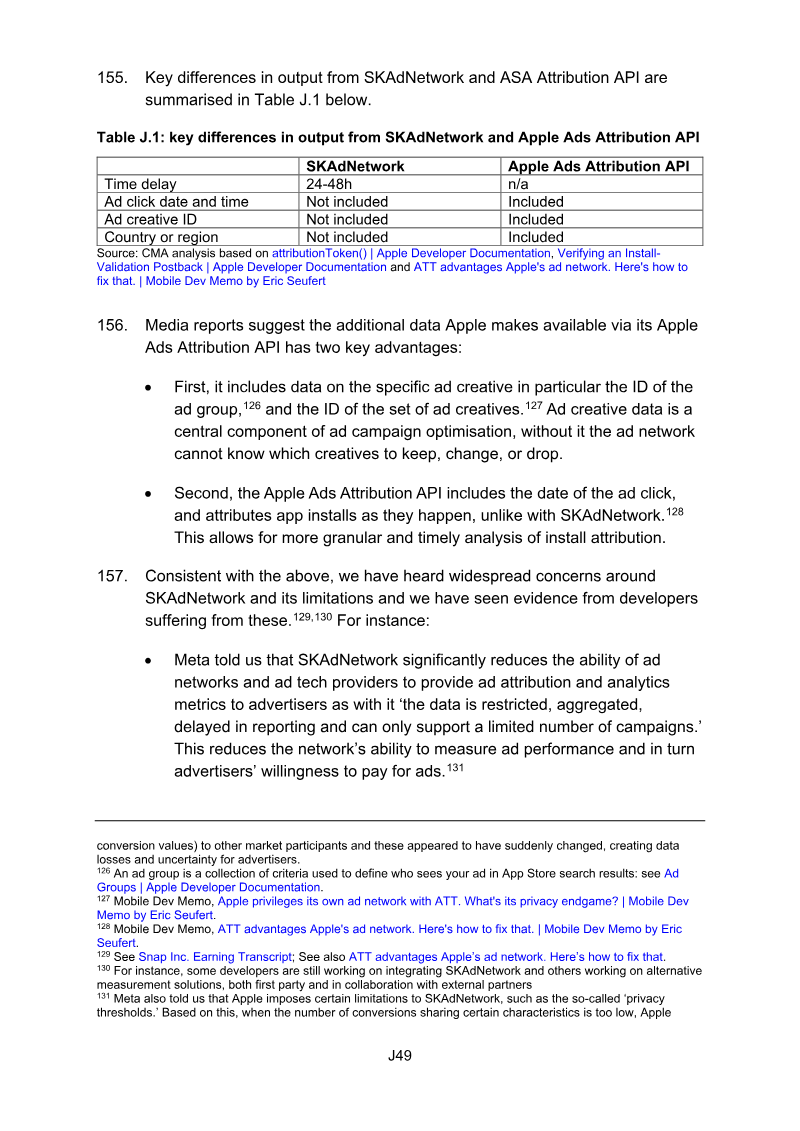
Apple attribution tools offer lower granularity than Apple Search Ads.
Apple’s SKAdNetwork provides lower data granularity than Apple Search Ads. This creates a competitive disadvantage for third-party advertisers.
Consent design
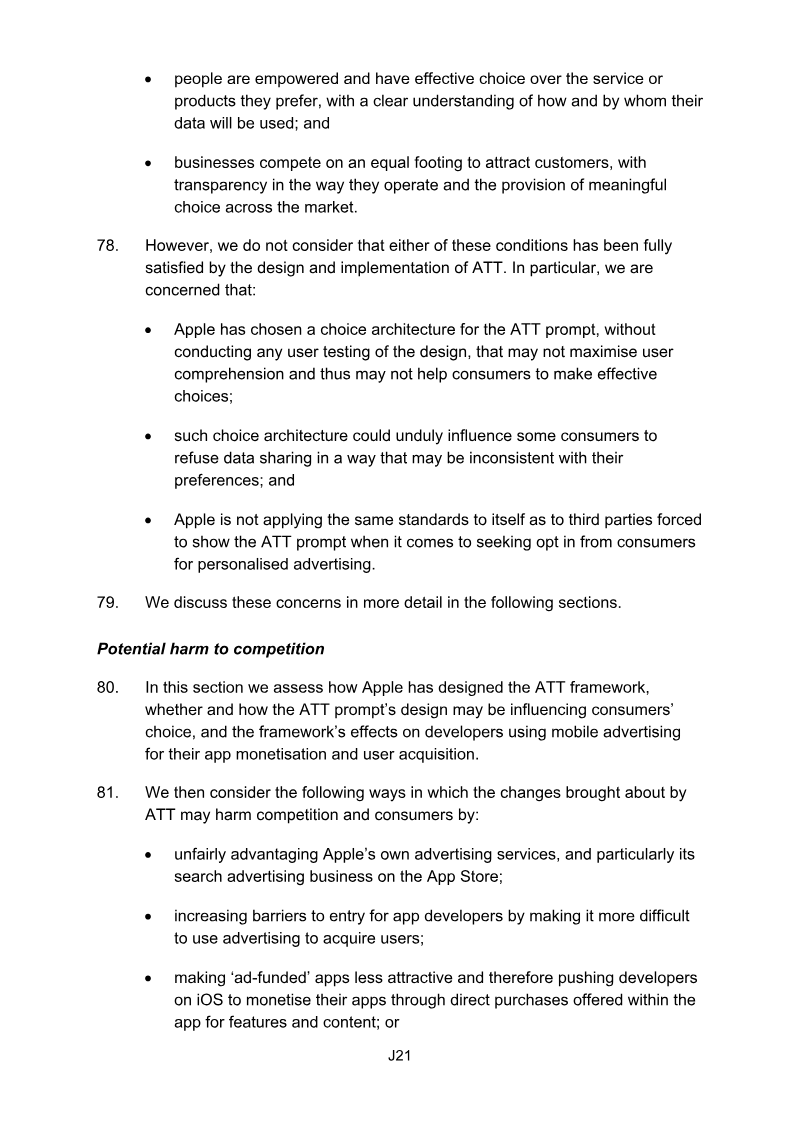
Consent prompt framing may leverage behavioral biases.
Apple’s framing and placement of consent prompts may leverage behavioral biases. This may discourage data sharing and create barriers to entry for competitors.
Market power
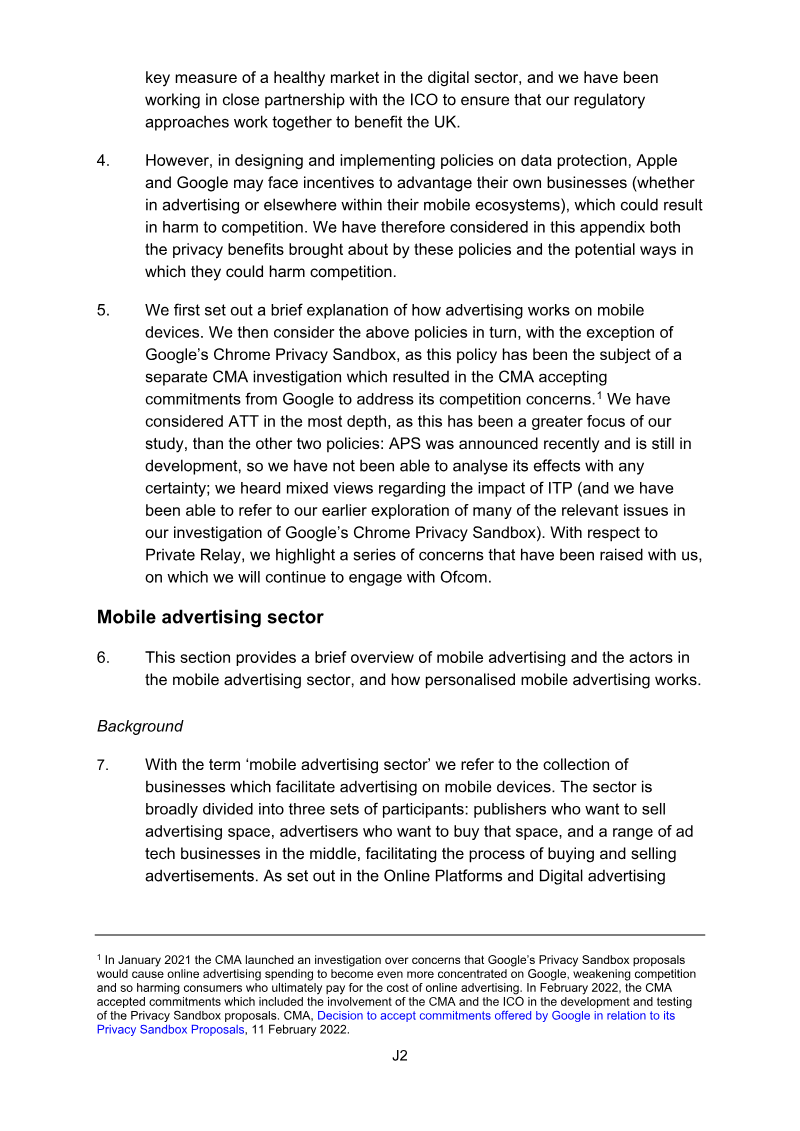
Privacy policies risk consolidating market power in platforms.
These policies force developers to rely on platforms' own advertising services. They also force reliance on commission-based monetization models.
Oversight
Regulatory oversight is needed to prevent self-preferencing.
The transition necessitates regulatory oversight to ensure privacy technologies are not used as a pretext for self-preferencing. It also ensures they do not suppress market competition.
1 / 6
Ask AI about this report