1 free read left. Create a free account for unlimited reading + AI research.
Create free account
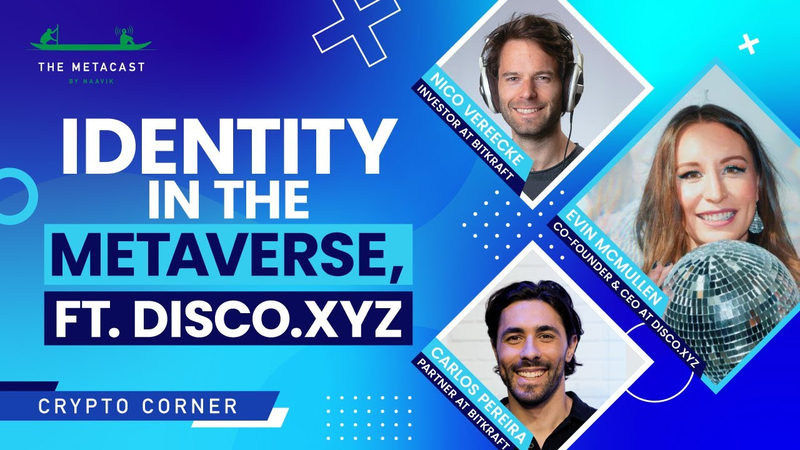
Identity in the Metaverse, ft. Disco.xyz : The Metacast by Naavik
Key insights
5 takeaways- 01The digital identity landscape is shifting toward user-centric data ownership, replacing centralized silos with portable 'data backpacks' that function across Web2, Web3, and physical environments.
- 02High-assurance proofs of humanity serve as a defense against Sybil attacks and bot activity, helping developers foster more authentic interactions within gaming and metaverse ecosystems.
- 03Verifiable credentials allow users to selectively disclose personal attributes through cryptographic proofs, enabling third-party verification without compromising individual privacy.
- 04Portable identity credentials solve the cold-start problem and reduce onboarding friction by allowing users to carry established reputations and data across disparate platforms.
- 05New identity infrastructure provides developers with tiered SDKs and APIs to track customer acquisition costs and lifetime value, metrics that were previously difficult to measure in decentralized spaces.
Ask AI about this video
Transcript
[Music] GM friends and welcome to the medicos crypto Corner brought to you by navic I'm your host Nico verica and today I'm joined by Evan McMullen who's the co-founder and CEO at disco is building your identity backpack backpack for the miniverse and that's where we will be diving into today we also have Carlos who has written recently been promoted to partner at Big craft i'm Carl Carlos Pereira that is still practicing congrats man thank you very much and uh yeah Evan well welcome to the medicost thank you so much it's a pleasure to be here today GM everybody thanks so much for taking time out of your day to talk about our future adventures in the metaverse so I can tell you a lot about Evan but the most important thing is that last week at the bestcroft Summits she started the presentation about disco
with GM and so we are immediately friends because I like people who do that it's important for us to think about you know not only how we greet each other but how we show up for each other and I think one really fun you know delightful thing about GM is that it is time agnostic it is web agnostic um we can use it IRL and web 2 and web3 um and it's sort of a it's a funny thing um but I think that the international um use of this greeting and the fact that it is multi-platform is just another way that we show our human coordination regardless of where you're coming from or where you're showing up couldn't agree more all right so before we dive into what disco is building um maybe some intros are are good to set the stage Evan you want to go first and tell us a bit more about you absolutely um so I'm Evan McMullen co-founder and CEO at the Disco um I first fell in love with web3 and uh decentralized networks over a decade ago
um but more recently have um come up in um the ethereum ecosystem and now consider myself to be web and chain agnostic um so at disco we are as you said building your identity and your data backpacks for the metaverse so that you can own and control private data written about you and um you know proceed through your adventures from app to app across chains in a manner that optimizes for your consent and control um the reason we're called disco is we believe that you are the multi-faceted center of the party just as you are and you should reflect your data and your identity to the world however you decide um you know as we know our web 3 wallets are for public financial data and we think of your data backpack as the best place for you to logically centralize and physically decentralize private data written about you just as you carry around all the things that are important for your day and your physical backpack there is a lot to impact there so I look forward to doing that um Carlos how about you
um yeah so um I'm Carlos I come from a background of traditional Finance with growth npe and began investing games back in 2018 I've always been a huge gamer I still am a huge gamer I had a one hour gap on my calendar before this and I was playing video games so it's uh it's it's always been a huge part of my life um and and I didn't know that you could work with it in an investment capacity and then when I found out I got the the great Fortune of um of starting my journey um spent about a couple of years doing that at Eldridge and then spent a year at a portfolio company and then finally joined big craft last year I'd been uh following those guys and uh seeing them as The A Team for a long time and then after a three year long interview process they uh they gave me a shot um so I joined last year I've done a number of deals on the equity side um sort of closer to my background but then last year I fell in love with the with
the the crypto side of things one seen new games being built on on different infrastructure that I thought ultimately was better for the players right and very much putting myself on a on a player's first mentality from you know from from what I do right with my time um and uh and then after uh after spending a lot of time going through that I you know ultimately switched to spending most of my time on the crypto side which is what I do today as part of our efforts foreign killing it so um let's dive in Evan you you gave us the the high level overview which had a lot of technical terms in there and a lot of decentralized and and stuff like that could you you know break it down first what problem are you solving um for the user so today when we use applications when we enter physical spaces when we're running around on our adventures through our everyday lives we are not the experts on ourselves in fact some random dude probably who made an app that you use sometimes has better data on you
that you do and what that means is that when we um you know go about our various different activities we are leaving slices shards of ourselves to be owned and controlled by these different applications um every time we download a new app or we sign up for a new service we're probably filling out a form probably filling out a captcha trying to find all of the crosswalks and some nine box of images and what this means is that we are creating duplicate copies of the information about ourselves for the ownership and use of the service that we're interacting with um so what this means is that every time we show up to a new app it's like our first day on the internet we have to begin again um so this means that you know Americans spend 11.5 billion hours a year filling out forms this means that that when we show up to a new application or environment we're not able to carry with us the set of reputation and metadata that we've already created already shared about ourselves um and so the problem that we are solving for users is the friction that
we experience when we interact with new services and when we move through the world so the objective of disco is to help you spend fewer fewer moments of your life onboarding so that you can get right to your adventure the Vets could you give me like a practical example how should I think around this what would this mean once disco is widely implemented absolutely so um to start with a pretty simple example um right now when you go into a store to buy clothing you are probably going to spend some amount of time trying to find the right size for you Brands differ from you know one to another uh and you know as we're running around and interacting as independent beings discoverability becomes a huge problem how do I find the right pairing for me whether that's the right pair of shoes the right t-shirt the right business for me to work at the right Dow for me to join um and so if you are able to define a very precise what's called known universe of information about yourself
you're about able to provide good quality data about yourself the second that you encounter a new experience um like if I can carry the size of my foot 25 and a half centimeters into a store that store can then interact with that information and tell me hey Evan you're about to be a size nine here are some shoes that you're really going to like based on your past purchases and taste profile and so being able to address the discoverability problem by allowing you to provide the very best information about yourself to any experience or service is a wonderful way to think about disco now to um you know position that in a little bit more of a maybe a financial term um if you are going to interact with a new bank you want to enjoy some banking services you're going to have to fill out a lot of forms as soon as you arrive know your customer forms anti-money laundering forms and those can take quite a long time not only to complete but also to be processed so you could imagine that if you are enjoying banking services at One Bank you have completed all of those forms you've been approved
as a customer that entity might give you a proof of kyc AML completion that you can own and then take to another organization to show them hey at past muster I've completed these forms I've met these criteria um and if the form of that proof that kyc AML bad badge is signed by the keys of Bank Number One bank number two knows that it hasn't been tampered with that it's been approved and issued by a trusted provider um and so in this way bank number two doesn't have to phone home to bank number one to verify that information we can solve What's called the phone home problem so that a third party can rely on data that I bring to them about myself knowing that it hasn't been tampered with and that I haven't intervened in its quality or content along the way fascinating um it's almost like a passport but better that's a great way to think about it so um unlike a passport uh you do not need
to ask for permission from a centralized Authority um rather you can take custody of this information from a whole bunch of different issuers um and then carry it with you and share it with whoever you would like so actually um you could imagine that you could take a copy of your passport put it in your data backpack and bring it with you to share with apps with other interactions you know whatever uh whatever requires the validation of your unique humanity and your citizenship so for example if you had a signed copy of your digital passport in your data backpack you could bring that to an app the app would see that you have a passport wouldn't even need to see the contents of it but would know that you're not a bot because a bot cannot have a passport so perhaps in that instance you could avoid having to fill out a cap show when you onboard but this brings me to um anytime I have a discussion about gaming in web free where there's actually the potential for people to
start earning money by playing and spending time one of the key assumptions that we usually make is that we need a proof of humanity around the game to solve budding because you know once there is a literal Financial rewards for faking human time inside the game um you get a lot of problems and you get hyperinflation and and Bots and I know a bunch of game developers that struggle with this so you know if through disco we can solve that that's already a huge win in my book that's definitely something that we think about a lot at disco not necessarily a singular um uh proof of humanity but rather how we can allow you to aggregate data around yourself that in total serves as a high Assurance anti-civil proxy so for example if I have an identification credential from my employer I have proof of my non-financial work endows such as I write the newsletter um you know if if I've got a proof that I spoke at the summit the
other day um these are all actions that a bot cannot complete and so the more data exhaust about myself that I'm able to collect in an independently verifiable way and kind of compose it together stack it on top of each other the higher assurances that an application can get that I am indeed not a bot because the cost of accruing all of these different credentials all these different Badges and proofs of my activity um the cost of of you know getting rid of those or handing them over over to someone else increases over time so we can create an economic disincentive for Bad actors while also using the data that we already have that we're already creating to prove our Humanity um additionally because this can be a dynamic and ongoing process there's no need for us to worry about a singular credential that might expire or whose relevancy might fall out I've been thinking about that problem a lot and this this solution is so elegant and I've never thought of this so um I'm
already very happy we're having this conversation um before we dive a dig bit deeper into the workings of disco I'd like to have um Carlos's thoughts on digital identity it's it's a core thesis that with us at bitcroft um and I'd like to have his thoughts on why he's you know he he put so much importance on it um yeah I think so first from a philosophical perspective um this problem has always been very interesting to me because as we imagine the migration of people from the physical world to the digital world um I sort of think about like what is what is the nature of my identity in digital worlds today and and a lot of it comes from games right and I have very different identities and very different games and people know me as different things and then even on social networks right I have in a way there's there exists say LinkedIn Carlos and there exists say Instagram Carlos and there exists say Twitter Carlos um and so for us it was always very natural to have to think about um what does it mean to have digital identity and how should it be different from
physical identity um how should it reflect the fact that we are all these different people but still um unify it in a you know in one in one place right where we have one sort of like a macro identity that we can share in certain certain ways and then app specific micro identities and really the opportunity to to address that problem as it became or as it's set to become more and more prevalent as we spend more and more time digitally and we keep you know leaving shards behind of ourselves or you know as Evan said or hopefully um sort of Distributing shards but not leaving them behind to the extent that we can have more um more autonomy right so from the philosophical perspective like this was super interesting and then from from the Practical one I think it's relevant to consider um that you know in gaming specifically a lot of what we've seen in terms of the growth of how many people game I mean also on um the types of games that have been developed uh have been with the distribution the shift and the meta of distribution that we saw through um social gaming right so Farmville with
Facebook and all that and the notion that we've been able to make more games that address people in a more unique way because we can Target them in a certain way and then basically using targeting to drive better unit economics and also bringing different people to the games and so a lot of the story of how gaming has grown over the past five to ten years in apps in general um relate to a shift in The Meta of distribution and then we start seeing or imagining a web 3 Network in distribution and specifically the the issues around this distribution become apparent very very quickly in that you know since the changes in idfa and targeting in the Apple side we've seen mobile companies struggle to make their numbers because they have a harder and harder time um targeting the user the post idfa world is infinitely superior to the current blockchain world when it comes to our ability to Target individuals right like we have to be significantly better but in in responding to the challenge of being significantly better there emerges an opportunity for a company like um like like with the game
of Farmville um and in Zing overall and sort of those early players to figure it out better and faster and dominate the first Innings of distribution of web3 products right and so it's also a very interesting investment opportunity and that we can simultaneously address the tooling and the infrastructure that is needed to perform this successfully but also hopefully position our portfolio companies to have Cutting Edge information and access the people developing such tools so that we can benefit not only the infra layer but the app layer as well right and so for us and for me particularly It's a combination version of a very natural issue to me which is like I have all these identities digitally and I keep having more of them and you know how can we address this and sort of in a more fund investment sense which is like looks like a really good opportunity to take advantage of something we've seen play out before and make a lot of money and you know for a lot of people and entrepreneurs okay um I was going to go into a philosophical debate on whether you know ATT and what Apple did is actually better for consumers um but this leads into my next question where you know
as a consumer I might not want all of my information out there right and so you know Evan you mentioned you have a backpack you're walking around the maneuvers the problem right now is that everything that's on a blockchain is kind of public and so could you talk me through you know what if I don't want everyone to know the fact that like the fact that I'm an accredited like investor or something like that absolutely Nico I think that you raise a really great point that public ledgers with data in clear text are equal opportunity surveillance apparatuses that data is going to be available to everyone on Earth and in space with an internet connection basically until the heat death of the universe and if we publicize our data to all of those folks that means that we forfeit the ability to selectively disclose parts of ourselves in contexts where they're going to be most appropriate they're going to serve Us best as Carlos was noting earlier uh you know he shares different parts of himself and different contexts right the information that's going to be relevant to his community on
LinkedIn is different than the information that's going to be relevant to his community on World of Warcraft um additionally for marginalized communities the ability to obscure the traits that are used to marginalize them um is the root of being able to create a more Equitable future and so um you know furthermore I think it's a bit of an expensive overshare for us to put data that does not require Global public availability and perpetuity in you know containers like nfts that are transferable when that data doesn't need to be transferable if information describes me it's not going to be useful if you're holding it um and so in order to optimize not only for the utility of the data that describes us but to squarely position the user the individual the subject at the locus of control and consent over their information it does not make sense for us to stash data about human beings on public blockchains and clear text and furthermore you know as long as that single blockchain's API is not the only one upon which Humanity relies we're
actually going to create a lot more complexity if we store data in a place that's not going to be accessible to all the applications and services that a user might want to bring it to um so as we were noting you know you are not a bunch of broken shards you are a disco ball and so that's kind of how we think about the you know the ability to logically centralize data around an individual I am the same Evan who shows up to my Bitcoin and address my ethereum address my email address my pgp key and right now I don't have the ability to easily move information reputation about myself from one of those contexts to another the ability to Leverage The reputation I've built up for example in the ethereum ecosystem when I present my DNS record when I present my email address even though I am the same person it's just simply a different facet of myself that I'm rotating to the for um and so with disco we make it easy for you to bring your own keys that you're already using to interact on chain that public private key pair that allows you to have data known secretly only to you
as well as data that you can put on blast to the whole universe and disco makes it easy for you to explore the spectrum of data privacy and publicity that exists between those two extremes so from a technical perspective what does this mean we are operationalizing two really powerful Primitives brought To Us by the World Wide Web Consortium the w3c these are the good folks who run the internet who you know brought us other identifiers such as URLs so the most recent identifier that they have elevated to the status of things like URLs are called decentralized identifiers or dids so a did method is a way to retrofit an existing public address that you already have so that it can have another set of signing keys that are able to pass private messages so you can take your garden variety ethereum address Bitcoin address Tron address email address pgp key and generate keys that are able to Issue request disclose revoke and manage
private messages sent to any other one of those identifiers so for example my ethereum address Nico's Bitcoin address and Carlos's email address now can be in a group chat without the need for publicizing the data that we're passing between each other without the need to pay gas fees or worry about Network latency because we can pass that information via Pi so the messages that we can send to one another now that we can own and control about ourselves that we can write about ourselves are called verifiable credentials or VCS not to confuse that with Venture Capital which is the reason that we're here today so of course as with all technical things in the web through ecosystem we've got to work on making that nomenclature a little bit more familiar but anyway verifiable credentials are the second really exciting companion primitive to decentralized identifiers these are VCS are are the types of messages that are that are created signed managed by your decentralized identifier so verifiable
credentials I like to think of them almost like an off-chain nft so nfts as we know are on chain public immutable and largely transferable verifiable credentials are off Chain by default they're just assigned attestation or statement written by one party about itself or about another in the form of a Json blob they are encrypted tamper evidence so they have a tamper evidence seal almost like you know a bottle of juice or a bottle of water where if it's been opened you can tell and so the cryptography will not resolve if the data has been tampered within any way after it was initially created they can be revoked or set to expire and so in this way they are a much more appropriate capture of data that describes us as human beings our identity our expression of self is not public and permanent and fixed rather you know the core of individualism is our ability to change and evolve to take on new traits um you know as we learn
new things or we get new responsibilities or capabilities and to jettison and send away that which is no longer relevant that which no longer serves us and so verifiable credentials offer us a really flexible form of metadata about ourselves that can add and take away as we change as human beings verifiable credentials are also globally resolvable meaning that they can be interpreted by anybody with an internet connection who comes across their way you don't have to download a special app you can just drop that JWT token into any old jot resolver that you might find on Google and you'll be able to expand it and validate its contents um because these attestations are signed by the party who set them it means that we can always go back to identifying who made that attestation about you um so we never have a free floating piece of data without an author whose provenance cannot be understood like a diploma once a credential is written about you it's always going to be written about you so it is inherently
non-transferable um the contents will always describe you always tie back to the address that is the subject that is you know written about you um so verifiable credentials are also composable meaning that they can be stacked together in a verifiable presentation this is kind of like you know collecting all the Infinity Stones or collecting all the dragon balls before it will validate so it allows us to bring together multiple qualifications to allow a user to secure access to whatever gated experiences they're looking for as I mentioned earlier they're globally resolvable which means that my Bitcoin address can write a credential about your ethereum address and can send it to Carlos's email address and there's no need for us to you know leverage a complex Bridge or you know wait for uh wait for walk timing or anything like that um and so it gives us just a much more I guess comprehensive way to capture the data exhaust um that we generate as human beings to describe what we've been up to
throughout the metaverse one last thing that I'll note about verifiable credentials also is that because they are a pretty you know simple form they're just a file right Json Bob kind of like a PDF you can store them wherever you would like so with disco we make it easy for you to encrypt these credentials against your own keys and store them in a decentralized storage Network that is censorship resistant um however we also think that data portability is the key to your autonomy so if you want to move your credentials move your data backpack to a different storage Solution that's going to be better for your needs that's totally cool and we want to make sure that you do not have platform lock-in when you're managing the data that describes you so you can store your credentials and your Hardware Enclave you could even print them out on pieces of paper and carry them around with you if that's your Vibe um the the sort of ultimate expression here of verifiable credentials is your ability to use your data to remove the friction of onboarding and accessing the experiences that you want to do anyway so if you have a verifiable credential
you can use it to access experiences in your community such as telegram or Discord channels Google Drive and collaboration tools you can use that same singular credential to access gated visual content perhaps even things like this podcast or a video ticketing e-commerce discounts Etc so the universe of web 2 can be gated and unlocked with a verifiable credential Additionally you can use verifiable credentials to gain access to physical spaces so for example if bitcraft was having an event and they only wanted folks who had a big craft credential to enter people would be able to queue outside the venue present their credential via QR code and then they would be able to ensure that only the desired guests were going to enter that physical space and then lastly verifiable credentials can also be used to gate access to Smart contracts on chain so for example if there was a permissioned D5 pool where you needed to to provide a kyc credential before being
able to deposit or needed to prove that you are a member of a dow before being able to interact you would be able to do so you could even get access to minting certain nfts based on credentials um and so as you can see verifiable credentials are an extremely powerful and flexible but pretty simple structure that can allow us to control access in web 2 web 3 and physical spaces using the keys that we already use to manage our activities on chain that was a lot um if I'm gonna so I'm gonna try and summarize this right so all of your data is essentially encrypted in these Json blobs in programmatic way which means that you can do some really cool with it right you can make it expire in a week you can make it so that you know I can make it so that only I allow only Carlos to look at um certain you know certain data uh things that or things that I've stored um and and much more than that it sounds to me like
um you know there are some other or some other solutions kind of solving the same thing I guess one of the key differences is that here it doesn't necessarily live on chain I guess it could um but you could also keep it off chain and and through what you've built you can then verify that all of that what lives on chain is still true is that fair to describe it absolutely and I think one of the core values of individual identity in web 3 is our our freedom to choose how we express ourselves right now when we interact with public blockchains we're only able to express ourselves with public financial data that's immutable and I think that your money is the least interesting thing about you and so with verifiable credentials we are able to allow people to capture the data that describes them and to decide where it lives how public it is who gets to see it where it gets used
um and that agency is something that we've already become comfortable with when it comes to our financial assets but we haven't yet explored when it comes to the rest of our lives when I hear this and what you describe um as a VC investor some questions come to mind which I now I'm going to ask to Carlos because he has answers to these it seems like me that what you've done is you've made a technical Choice um or like a choice in which like the way you're going to solve your problem and it seems to me also that um looking at the blockchain there's many networks effects around some tech decisions that have been made and I mean they don't even even have to look at the blockchain if you look at the internet as a whole a lot of that is just some some optimal systems that where we have found consensus around and so Carlos how did you decide that the solution that disco is building was was the way to go to solve you know the problems and and the opportunities around uh digital
identity um so when we first had our call with Evan um we had the gun um we were already pretty deep in in terms of thinking about decentralized um identity we had invested in Spruce spent a lot of time being educated by Wayne and Rocco around what they're doing um and and it was the emergence of um the dialogue around soulbound tokens sbts um I think vitalik had published something a couple of friends were working on something I mean the guilds and other apps were starting to think about validating their Scholars and and using soulbound tokens to do so um and so when we spoke to Evan naturally my first question was vitalik says you're wrong you know what about that and um and Evan went on like a five minute thing about actually vitalik is wrong and and it was passionate as always and I loved I I just love the boldness right and so
um I texted uh colleague we have no Malta was on the call inside and I was like I I don't know if she's crazy good or just crazy but I I'm I'm digging it um and then we texted Seb um who has known Evan for a very long time and was a venture partner here and I was like I said like what's the deal here and he was like yeah crazy good crazy but also crazy good and I was like I love it I love it um and so it came it came um ultimately from um from the perspective of two things like one is the like loving the entrepreneur and loving the energy and backing people um even if she came to the pitch with something that was very very different than what I was willing to consider up to this point um but then on the more pragmatic side um I think you have to know when to switch maybe I don't know right there's still a lot of history to be written to see if our decisions are right or wrong the investment side but I think you have to know when to switch from idealism to pragmatism um and I love the idealism of having everything on chain I love reading about like um Dark Forest and how they have that whole game on chain and they're using Z case to hide the you know to create the fog of war and and I love the
idealism of that but you also want to invest in building the future that you want to see now in building the future that you want to see now required some compromises around what should be on chain and what should be off chain um that I thought Evan could very clearly lay out a vision for how we could preserve what's exciting about crypto which is cryptography right like what is the cryptography of what's going on here and how can we use our wallets um as the the ultimate sort of I don't know source of where identity emanates from to then just sign these attestations and and build this macro and micro identity in a way that was cryptography but not necessarily on chain um and and feeling that that was the right balance of pragmatism to again to build the future that you want to build now instead of sitting here and sort of waiting until C case can deliver everything um that we that we need to do to be developing apps and distributing apps and targeting users and talking to people about this stuff today Evan do you want to add anything on that question
well I you know one of the really exciting things for me is the opportunity to work with amazing Partners like big craft who are willing to take a step back from our on-chain enthusiasm and think as Carla said practically about what it means to welcome the next million billion users to the table so at disco we are really excited about being able to use the powers of our public-private key pairs without first having to fund our wallets you are still able to sign data and to pass it in you know a variety of different interactions without having to First go through a kyc process or onboard fiat currency or you know land Financial Assets in your wallet um and so if we think about the range of our human existence or human expression most of what we do every day does not start with a financial transaction um and so considering the broader ecosystem of what it means for us to build a reputation to be a good agent in the games that we play to be accountable
to the communities where we live all of that information can bolster our interactions on chain in a way that exceeds what we're able to do right now with tokens Alone um I also you know I also want to note like I I love technical conjectures that are spicy I think that revisiting the concept of non-transferable nfts which was largely debunked by the privacy and Technology Community 2015-2016 is a really wonderful opportunity for us to discuss what we really want to build here in web3 as a decentralized ecosystem I think that it's also an opportunity for us to think about how we serve more users than just the folks you know who are already here today there are 500 000 daily active Wallets on the ethereum or that interact with the ethereum protocol and that is a rounding error when we think about you know the number of individuals who log into Twitter every day and so if we want to create a decentralized ecosystem that is welcoming to communities who do not
benefit from having all of their traits publicized on chain um you know this includes communities like the lgbtq plus Community this includes women this includes minorities and if we are blasting all of their information on chain associating their gender their ethnicity their socioeconomic status with their public identifiers we would be remiss to assume that the Discrimination that happens in the physical world where we live is not going to be transposed onto these much more permanent much more public networks and so as we consider the fact that ethereum is people all the way down this is true of every blockchain and you know our whole experience of web3 happens between the keyboard and the chair we need to meet people where they are today we need to create experiences that take into account um you know how to remove friction from their lives and how to add value and that means that we need greater flexibility we need greater focus on The Human Experience um you know we are building human coordination tools after all uh and so
it's been really fun to have amazing thought Partners like the folks at bigcraft to help us think about these you know these thorny issues um and to really continuously refocus on The Human Experience got it so if I'm going to try to summarize this again um because I think that might be helpful and is a good test for if I understand this but you want to build backpack of who you are essentially and key of that is being able to not have all of that public right being able to obfuscate some of who you are and share it with whoever you want and so you know there are currently technologies that could potentially make that possible on a public blockchain which would still be costly right because it still has to store there and so what you're doing is you're saying okay why don't we take that data off chain and then and so this is a solution that works right now the Technologies exist and so that means that you can start on boarding the the first million up to billion people um to to disco and get them this backpack absolutely and I think you know one
really fun thing for us to consider as well is that we think of off-chain data verifiable data that is owned and controlled by its subject as the key to fun in the metaverse you and I can't have a lot of fun together if the only thing I know about you is how much money you have right the only thing that we can coordinate together is a shared bank account with a centralized group chat which means we can do treasury allocation um but we can't coordinate around more interesting things um you know we can't throw a party together we can't build a product together in a trust minimized way I need to know what are you good at who trusts me what are you know where are the places that you hang out what kind of music do I like and then with those different kinds of data we are able to coordinate so many more things in a trust minimized manner right now you know when we show up to a new Dao let's say because we're not not able to bring our reputation data from other contexts um the only thing that you can see about us is our on-chain expression and our Central as public expression and that
means that we basically have to start from Square One reintroducing ourselves Every Time We join a new community Every Time We join a new platform and that is not the efficiency and fluidity that we're promised in web 3. what does this look like very practically for a user let's say okay I'm convinced right I want to start building my backpack and I want to start using it how does this work how how should I think around this so we have actually already started onboarding um a handful of dows to enjoy this experience already um so what folks are able to do who are in our private beta program is visit the Disco web app where they bring their own Keys using whatever ethereum compatible wallet they're already using on chain um then they connect to the Disco web app as they would normally any web 3D app on the back end we create a decentralized identifier for them retrofitting the keys they brought to the table and this is the basis of their data backpack so they're then able to create bi-directional independently
verifiable linkages between their data backpack and their Twitter handle their Discord handle their DNS record these linkages are themselves encapsulated as verifiable credentials so what does this mean um they are these linkages between your backpack and your Twitter handle or like a handshake so your Twitter handle consents to being linked to your backpack your backpack consents to being linked to your Twitter handle so in this way it's a much higher Assurance proof than something like an ens text record which is self-attested in clear text on chain one way so you know I could fill out on my ANS profile that my Twitter handle is at Paris Hilton and no one can stop me um additionally because these verifiable credentials are owned and controlled by the user they can be taken to a broad variety of different contexts even out of disco if disco no longer serves them and so this preserves the data portability and user-centricity that we hold really dear so once you've got some data in your data backpack you're going
to be ready to issue credentials to others to receive them and to create some about yourself so for example one of the types of credentials that we have to help folks get comfortable with this new ux flow is a GM credential similar to a Facebook poke back in the day it's a friendly greeting that you can send to someone else but what that feels like is when you receive a GM you're taking custody with your keys of a rectangular jpeg written by you written about you by someone else that can then be used to access you know all kinds of experiences that currently at disco we are building out so that you can bring a credential to an application and get past the access control gate and get on with your adventure in the metaverse um and so the look and feel of managing your credentials is somewhere in between um nfts and your Apple wallet um but because these credentials can be used in a broad variety of contexts we think that it opens up the world of
possibilities far beyond the chain for you how does this work from the the developer side and I guess my more important question is um it sounds to me like you have sort of two-sided interest like platform where you need both users and users and the developers of the applications that use the credentials to be on board um famously these platforms have a sort of cold star problem where you know you need a lot of users to incentivize or to make it worth it for the developers to actually you know Implement Your solution and then the other way around you need a lot of you know Solutions and applications that use it to incentivize your users to actually you know start getting these backpacks um so I guess you know what's in it for the devs how does it work for them and how are you thinking about the the gold star problem so actually let's make this a little bit more complex I would call this a three-sided cold star problem but um absolutely absolutely agree with your characterization here so um in the context of verifiable credentials we often think about the issuers of those credentials so
applications services and individuals who are writing credentials about others we think about the holders of those credentials so the folks who are taking custody of data written about them into their data backpacks and then we think about the verifiers the third party applications who haven't spoken to those issuers um where holders of data are going to visit their front door and showing up with independently verifiable data to define the known universe that can be used to personalize their experiences in those third-party apps um so the wonderful thing for us in web3 is that we are reaching a ceiling of fun and utility that we can coordinate around public Financial assets um so for example in Dows folks are frustrated that they cannot capture proofs of their non-financial work and that the switching costs of going from one Community to another are extremely high holders individual users are frustrated because they spend so much time onboarding and filling out forms and web3 applications are also pretty frustrated because if they want to create and interact with user data
that's not on chain they have to behave like a web 2 app vacuuming up data about their users but the problem is that their back end is a slower more expensive database than you know web 2 application and so due to the incredible friction for developers on the issuance side on the verification side and the end user friction that individuals are experiencing we see an opportunity to remove some of that frustration to ease the path of moving from one application to another um and to add some delight and value along the way yes love it and um well three sides it makes it exponentially harder but um yeah makes a ton of sense to me as a investor but also as a user um I'm always curious when I hear this um because it's not self-evident to me how you make money and even even as a user I want to understand that because if I don't know how you make money you're probably making money of me so um you know how does that work so we see a number of opportunities for
monetization in this new paradigm um Disco has an SDK that makes it easy for applications to issue credentials about their users um in a manner that doesn't require them to undergo all of the complexity of building out this infrastructure so we think the Simplicity of being able to issue verifiable credentials in a w3c compliant form that's going to be interoperable is an opportunity to monetize with a tiered rate limited option however we think it's really important that we always have a free tier for our Builders and degens so that's on the issuer side on the verifier side we have an API that makes it easy to display and validate credentials as well as you know we're excited about working on those verifiable presentations that we talked about earlier the ability to request that a user bring a collection of different credentials together from a variety of categories signers issuers in order to validate those as a whole um so our API similarly I think has a great opportunity for a tiered rate limited pricing structure with a free tier always for rdgms and then additionally
once a user takes custody of a credential we will welcome them into the Disco Marketplace so a set of decentralized and centralized applications where their experiences will be different as a function of having and carrying with um with them the credentials that they've collected so this helps to solve the discoverability problem of applications in web3 as we know the App Store the Apple App Store has this funny rule where you can't have an app in the app store that has its own app store inside of it this is why metamask got booted out of the App Store a while ago for a little a little while and so it's made it really challenging for web 3 users to find applications that they know and trust and to discover new ones that might be relevant to their interests and so by having a more a familiar Marketplace type experience there's a lot of real estate there for us to explore potential monetization furthermore we also think that there's an opportunity to monetize the higher order ux and cryptography that we can bring to the table for end users whether that's dividing your credentials and
data up into different personas so this is you know my professional data this is my data related to fantasy football this is my data related to my fashion whatever those categories might be allowing users to have presets for how they like to share that data to anticipate the types of interactions that they're going to have with future apps so that they can exercise maximum consent um we also as I mentioned are really excited about exploring some of the higher order cryptography capabilities um so professors Like Larry lessig at Harvard since 1997 have been telling us stories about you know the potential in the future to go to a bar and in the United States and instead of having to present your ID and show the bouncer where you live or how tall you are instead that party being able to validate that you have the right qualifications to enter the establishment and then just proceed without leaking all that additional data and that's the kind of thing we'll be able to achieve with Technologies like predicate disclosures that will allow me to present some data in an encrypted form and allow someone else to compute
upon that data to learn about it without seeing all of it um so that allows us to change the question from what is your data to does your data fit my requirements and we think the preservation of privacy and autonomy in that way also offers us a really interesting area to explore monetization you mentioned the metaverse I see the metaverse as the next iteration of the internet and so the most most of the examples that you mentioned are you know things that you would normally do in a you know on a website have you like how are you thinking around what disco could mean for games so um actually I want to first uh revisit our definition of the metaverse um The Jetsons and you know seeing the automated universe that existed around them um so my definition of the metaverse is your ability to show up in any digital or physical environment and receive a personalized experience as a result of the parts of yourself that you choose to share I think we're limiting ourselves if we consider the metaverse to only be
hanging out inside of someone else's website with an iPad strapped to your face um and so when I think about gaming and the metaverse there are so many actions that we do outside of games that might be relevant to how we show up in those games whether it's my accountability in communities the fact that I am a um a good guy I am a rule and hearing um non-bully in one game might be an indicator that I'm going to be a good citizen of a different metaverse or game environment if I have certain preferences whether those are for music for snacks or brands for colors I can bring those preferences with me from one environment to another one metaverse game to another and show up and be able to have a much larger known universe about myself and Skip through some of the onboarding required however of course all of this requires that we have a shared standard of how we communicate information about ourselves whether that's the capture of you know the Gate of our walk whether that's the capture
of um you know like I said the music that we listen to the characters that we like to play um the you know robustness of our human expression just gives us a much larger surface area to play with when we come explicitly to gaming environments um also I think you know discoverability as we noted continues to be a challenge in many spaces and so if I know that a bunch of my friends are playing a specific game or other people who have similar affinities to mind similar personalities to mine really dig a specific game it would be really awesome for that to be served up to me in a manner that not only preserves my privacy but optimizes for the amount of fun that I can have yeah make still sense and I actually really like your definition of the metaverse haven't heard that one but it just makes a ton of sense um Carlos one last question I'd like to ask you is you know you've done a lot of work around digital identity you identified the opportunity of disco and some other projects that we've worked
with where where are you seeing the holes at the moment uh opportunities that not enough people are are working on and and you know that some that that you've you find um should be should be worked on I think the opportunity is obvious enough that that there's a lot of people working on the different aspects of of um identity targeting user um but the user experience around you know identity and using keys for token-gated things and um experiences um so for me it's it's not so much of like looking at one particular place and um and um not seeing anything being built there um but rather having a North star around um I don't know what tells me that we've made enough progress and I was joking with someone the other day um but it's it's actually a joke with a fair bit of truth behind it which is you know I'll start thinking about moving on from from this as an investment thesis when on the app side we can go to a game and say please describe to me your CAC and LTV
um for your crypto game distributed by your different user acquisition channels right when someone can finally tell us what exactly their CAC is and how they think about lifetime value for the consumers across the different channels of acquisition that are endemic and native to web3 that will probably tell that we've made sufficient progress on decentralized identity that we should move on to something else in investment thesis right so like that's the North Star um and we'll you know we're investing now in tools that are specifically targeting cohort analysis for wallets and we're investing in things that are more in the infrastructure side even one layer below this goes on on you know storing the data and then we have you know the layer above which is you know the Disco with like thinking about identity and and issuing the credentials and then it's like the next Slayer is using those credentials to Target users in particular ways and so for us it's about investing in the ecosystem around it with the notion of like what's the ultimate goal which is how do we distribute products in a profitable way that is comparable or hopefully better too or better than web 2 and also good
for the consumer and reflect this this paradigm shift in taking control of your identity that we see the potential for in crypto right so it's like how can we do what we have now in a more consumer friendly way while not sacrificing performance of user acquisition Evan you know um what you're building I think is inspiring it is I don't think it's common knowledge enough that there's another opportunity out there around you know a solution for digital identity um if people are inspired by you know what you're building and want to learn more or just want to talk to you because your enthusiasm is uh infectious um where they can they find you well we absolutely welcome um all those who are excited by this potential future to come join us at disco.xyz um there's a section at the bottom of the website where you can share with us your metaverse dreams and so I want to hear about the future that you all are excited to build so that we can make sure we take those ideas into account as we proceed forward uh you can also always find me on Twitter at proven Authority send me a DM my DMs are always
open would love to chat with you um you can also head up the Disco team on Twitter at disco XYZ fantastic and Carlos if I'm a web free game developer and I can I can tell you what my GAC ltvs are where can I find you you find me at a at a Carlos bigcraft.vc or any of the uh other great people on the team um reach out to any one of us first name at bitcraft.vc it's easy um so uh no don't do it sorry I'm kidding no no all of that is public so um good fantastic this was this was uh an absolute pleasure can I squeeze in one last question for Evan go ahead so I was hoping to ask you this at The Summit you are the only portfolio founder that we have that comes from Berkshire Hathaway highly typical background in gaming what did you learn from uh the Oracle of Omaha that you bring to your web3 experience so
one of the one of the most important lessons that I learned spending a lot of time in Omaha is discipline of singular Focus and that was you know something that I learned in uh in you know what some people might describe as kind of a boring context I was largely focused on insurance and reinsurance um but having a Clear Vision of what you're trying to accomplish and um ruthless discipline around that focus is something that I observed and many of my colleagues um and that I think in web 3 with so many shiny objects and so many adrenaline and dopamine uh you know anchored experiences um with you know ups and downs tokens and icos and nfts um remaining true to a singular thesis and doggedly pursuing that day and night from the protocol of the party um is something that I really try to carry with me when I was a Berkshire I realized that you know most of the most delightful part of my day was talking about web3 and convincing my colleagues to download coinbase at the water cooler
and so um you know even though I discovered my sort of singular Focus um and and really kind of came came to terms with dedicating myself to it in that space I definitely carry with me the discipline that I learned from the folks there thank you Carlos for that question that is a live lesson at the end of this episode beautiful thank you thank you um fantastic so uh Evan Carlos this was it um loved having you on um and love learning more about disco and what you're building and I really hope that you know you'll be able to uh to get enough what is it validators and issuers on no no violators or is validators that was it anyway so there's there's a lot to digest here but uh this was fascinating thank you so much um listen very much Evan yeah thank you thank you guys for having me I was sorry thank you guys for having me it has been an absolute pleasure and I will see you in the metaverse there we go that's that's the sentence in on which we end but actually I've won
more final note um as as you guys or people listening might know that I'll be um transitioning away from the Miracast um we have a bunch of interested interested people to take over as a host uh but if you are too feel free to reach out and uh happy to to chat and see if there's a fit and then with that we're at uh this was a very interesting episode and um instead of seeing you next week I'll see you in a minute first [Music] foreign
Summary
The digital identity landscape is undergoing a fundamental shift toward user-centric data ownership, moving away from centralized silos and the privacy risks inherent in public blockchain ledgers. By utilizing decentralized identifiers and verifiable credentials, a new framework allows individuals to maintain a portable data backpack that functions across Web2, Web3, and physical environments. This architecture enables users to selectively disclose specific attributes through cryptographic proofs, ensuring that personal information remains private while still being verifiable by third-party applications.
This approach addresses the critical friction of repetitive onboarding and the cold-start problem for new platforms, as users can carry their established reputation and credentials between disparate digital experiences. Beyond enhancing user convenience, these verifiable credentials serve as a robust defense against Sybil attacks and bot activity. By requiring high-assurance proofs of humanity, developers can create more secure digital ecosystems, effectively disincentivizing bad actors and fostering more authentic interactions within gaming and metaverse environments.
Ultimately, the goal is to bridge the gap between decentralized technology and practical business utility. By providing developers with tiered SDK and API infrastructure, this model enables the precise measurement of customer acquisition costs and lifetime value, metrics that have historically been difficult to track in decentralized spaces. As these identity solutions mature, they promise to facilitate a more sustainable and personalized digital economy, where user agency and data portability are balanced with the analytical needs of developers to build efficient, consumer-friendly platforms.