Key insights
5 slides
Undocumented history
An estimated 70,000 video games from Japan remain unknown to Western audiences.
Between the late 1970s and early 2000s, a vast number of games were produced in Japan. Most of these titles have not been documented in English-language literature.

1 / 5
- 01An estimated 70,000 video games were produced in Japan between the late 1970s and early 2000s, the vast majority of which remain unknown to Western audiences.See it on page 14
- 02The Japanese gaming industry originated in the late 1970s and early 1980s within a computer hobbyist scene centered on platforms like the PC-88, rather than the console-first narrative often presented by corporate PR.See it on page 6
- 03Early Japanese computer games experienced a 'Cambrian Explosion' that established foundational mechanics, including recharging health bars and complex RPG tropes, years before they were popularized by consoles.See it on page 4
- 04First-hand research involving over 70 interviews with Japanese developers reveals that much of the industry's technical innovation was driven by independent computer hobbyists before the market shifted to console dominance.See it on page 1
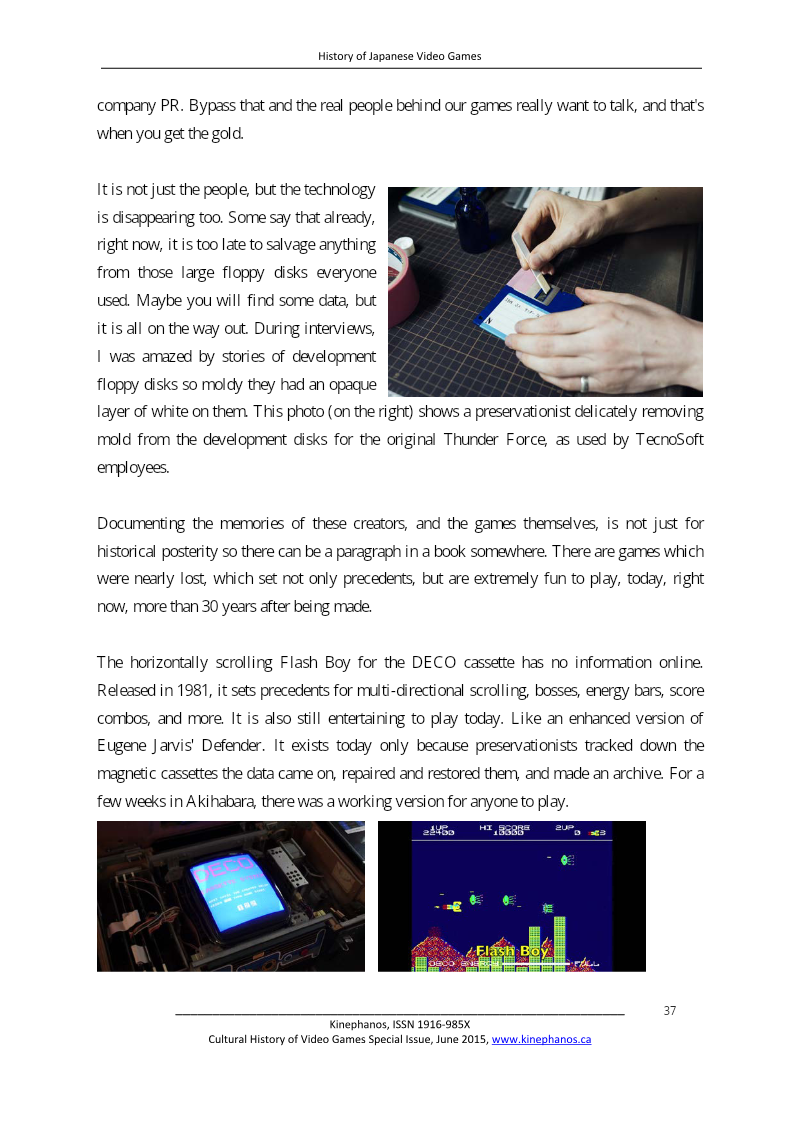
- 05The history of the Japanese gaming industry is at high risk of permanent loss due to the dissolution of pioneering companies and the rapid physical decay of original development media like floppy disks.See it on page 13
- 06Urgent preservation efforts are required to capture the oral histories of aging developers and recover physical software data before these cultural artifacts disappear.See it on page 13
Ask AI about this article
Summary
The history of Japanese video games remains significantly under-documented in English-language literature, which often relies on sanitized, PR-vetted narratives or focuses exclusively on console giants like Nintendo. The primary thesis is that the Japanese gaming industry is a complex, multifaceted ecosystem that originated largely in the computer hobbyist scene of the late 1970s and early 1980s. By bypassing corporate public relations and engaging directly with developers, researchers can uncover a wealth of esoteric history, unreleased projects, and technical innovations that have been largely obscured by the industry's volatility and the language barrier.
Methodologically, the research involved conducting over 70 in-depth, first-hand interviews with Japanese developers, utilizing on-hand interpreters to circumvent official corporate channels. This approach revealed that many foundational industry figures began their careers on hobbyist computers like the PC-88 rather than consoles. Key findings highlight the "Cambrian Explosion" of early Japanese computer games, which established critical mechanics—such as recharging health bars and complex RPG tropes—long before they were popularized by consoles. Furthermore, the research underscores the fragility of this history, noting that many pioneering companies have been absorbed or dissolved, and original development media, such as floppy disks, are rapidly decaying.
The scope of this analysis covers the evolution of the Japanese game industry from the late 1970s through the early 2000s, with a specific emphasis on the transition from the computer-centric "lawless frontier" to the console-dominated market. The findings conclude that an estimated 70,000 games were produced in Japan during this era, the vast majority of which remain unknown to Western audiences. Urgent preservation efforts are required to save both the oral histories of aging developers and the physical data of early software before these cultural artifacts are lost permanently.