1 free read left. Create a free account for unlimited reading + AI research.
Create free account
Grit: Real stories from the smallest studio in the top 25 mobile grossing charts
Key insights
6 takeaways- 01Pixelberry Studios achieved a top 25 grossing position on the US iPhone charts in 2016 by maintaining a consistent core team through over a decade of industry shifts and corporate pivots.
- 02Experience within larger corporate structures like EA taught the leadership the necessity of persistent pitching for innovative models, specifically in-app purchases and episodic content.
- 03The studio’s survival strategy relies on three pillars: business agility, professional networking, and internal trust, which were refined through early failures in the browser-based gaming market.
- 04During financial crises, the team ensured the launch of new intellectual property by collectively opting for temporary pay cuts to avoid layoffs and maintain cohesion.
- 05The studio’s focus on narrative-driven games fosters deep emotional connections with players, which directly influenced their commitment to inclusive character design and long-term social impact.
- 06Sustained success in the mobile industry is driven by learning from repeated failures and maintaining a mission-driven focus on player engagement rather than relying on immediate hits.
Ask AI about this video
Transcript
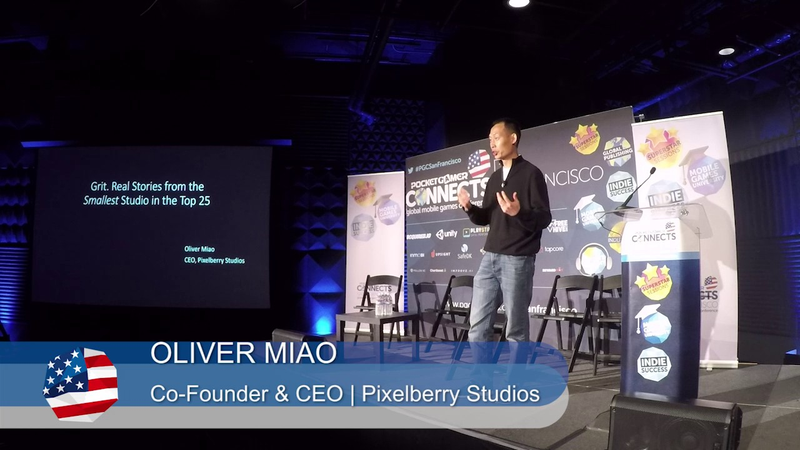
[Music] hi Oscar said I'm Oliver I'm the CEO one of the cofounders of pixel berry studios for those of you aren't familiar with pixel berry Studios we've been making Story games on mobile for the past twelve years and our most recent game choices is currently a top 25 game on the iPhone in the US because we make story games I thought for today's talk I just tell you some stories about our history as a team and go through some examples where we've hit rock bottom or almost died as a company and kind of the lessons we've learned from that and my hope is that you'll be able to take away specific learnings from that as well as be inspired by some of our story so I'll start with um kind of the first time how
our company was in jeopardy um our company has been through four different on specific companies but it's been the whole same team through that whole time and so the first company I started was called Center score and it was four friends from college working out of a small apartment working on browser-based web games and we had a lot of fun doing this we are a few years out of college I think we're still very naive which is why we started the company in the first place and we started bringing in a lot of players and we'd have people who would email us asking us to change our server IPS because their schools has had blocked their games out other people who are sending us money in envelopes as part of our subscription service but the problem is we weren't making enough money we had started during the.com crash and we were relying on advertising revenues and it was much too early for subscriptions and it was really devastating during that
time when you start your own company and you have your own studio as many of you in the audience know it becomes a part of your life and when I realized that we'd probably have to shut the company down I felt like I was a huge failure and I remember one night just lying on my bed while like my co-founders were in the living room and I was just in my bedroom and just crying and feeling alone and wondering what we had done wrong um fortunately in this case we were blessed and on the very last day when we were planning to shut our servers down we actually had a friend who called us and basically said hey we just signed a contract for cellphone games but her company doesn't know how to make games could you guys subcontract with us and we left at that opportunity and we really looked back what did why did we fail what did we do wrong and we
realized that even though we love making games and we spent a lot of time making games that we really failed on the business side of things you know we had poor people I spent 75 percent of my time coding and 25 percent of my time on business and that just wasn't enough so we looked at this as a new chance to kind of resurrect our business and I went to a hundred percent of my time on business on the perm any of you who are programmers in engineers if like meteor introvert it was really hard for me to cold call people but to go to conferences and talk to strangers and because my company was on the line it's something I did and what I did realize over time is just like everything else the more you practice you get better at it and I ended up going to one conference I come to these sessions I go there early and when they were pauses in between I just talked to the people around me and one-time person my right was from Sony
person my left was from Sega and we ended up doing deals with both those teams and so from that first time we really survived because we learned from our mistakes the second time our team ran into a lot of trouble was when I was a TA and by then we had created our first story game in 2005 made it successful Solar to the vendee and later the vendee sold us key a we were at a it was during a period of time when ei was one of the strongest mobile games publishers and the whole market was paid games there was no in-app purchases yet but we heard rumors that it was coming down the pipeline so we took our game surviving high school and we developed it for the iPhone and I went to the executives to pitch kind of the model we wanted to use for this game and we told them when we see games like on doodle jump and pocket
gods release new content even though their paid games they'd start to spike up in the charts and so we told them we want to give away free content to we'll have a paid game but we'll give away free monthly content episodic content and we think that will help us spike up the charts too and executives that EA came back to us and said no way we don't give away free stuff here but we really believe in that model so we went back to them a second time and we basically said ok we'll give away free content but we know you'll like giving things away so people miss it it'll be like a TV show you watch the TV show for free and if you missed that week's content then you're going to have to go buy the DVD to better understand the content and we're going to use ie PS for that and they said hey that's kind of interesting when they said no we don't want to do that but we're really passionate about this idea and so we went back a third time and we told them for the most passionate players will
charge them $0.99 for next week's content so they can pay for beforehand give away free content to everyone else and if they miss it they can pay for it I'm not sure if they believed in the idea but I think because we were so persistent they basically said yes and the reason why I say I don't know if they believed in the idea is a month before we launched the game when we had already completed the game it actually had me lay off half our team so I had to lay off my co-founders I'd lay off our designers are artists our engineers we essentially were left with just our writers and QA and myself on the live ops team and when we launch the game because we were EA's first game with in-app purchases we did much better than they expected we ended up hitting number eight and top grossing and I think on the lessons we kind of learned from there was because we were persistent about our business model even though they killed half our team and laid them off and we only had writers and QA left
with just that small team we were able to stay high in the charts and to make money as a studio which essentially kept us alive from them laying off the rest of the team now the third time we got in trouble as a team was also at EA and so after we launched surviving high school and turned it in success and we're doing well for a while you know I like with the big company I went through three bosses in three months um they really loved the idea of what we were doing um each boss gave my team more and more resources but in the end they switched strategies and decided to fix on focus on bigger branded titles and we were working on original IP so they laid us off again and this time they laid off a majority of our team and they kept a small number of writers and I put myself on that layoff list and that's when my
co-founders and I started thinking about starting pixel berry as a new startup a few months later to decide that the writers who were there were still too expensive and they laid them off too so they basically by this point they that had killed our entire team but because we had built relationships with them they did come to us and say hey the game still making money would you consider doing live ops for the game and you know we'll we'll do a royalty share with you and so um we left at the opportunity and once again we're essentially blessed and had a chance for us to kind of resurrect our team and to start over and I think the learnings we learned from that third time of essentially dying and coming back again was that you know relationships in the industry matter right if um even though my bosses had laid off my team you know two times we had kept friendly relationships and that made a difference in allowing us to be able to
do this and then the fourth time our team almost died was just last year it was before we were we lost choices we'd started working on the team and really believed in the game and because as you can tell we've seen so many ups and downs as a studio you know we were thinking about selling our company and we're doing that based on success of high school story we ended up having multiple offers narrowed down to one company and we were negotiating the final details of the term sheet when they decide to pull out of the deal now this whole way through we thought we were going to be acquired by a company who wanted us to grow our team in size so we're actually growing our team instead of getting smaller the problem is our revenues were going down during that time so our revenues were going down our expenses were going up and we started running out of money um this was
in May of last year sat down with our whole team and basically told them look we're running out of money we can still launch choices like we're planning in July but if we launch the game because we're behind schedule we're only going to be not able to launch with one story as opposed to the three that we wanted to do and we looked at the finances so if all the founders take our salaries down to minimum wage and everyone else takes a 20% pay cut we can launch a month later which will let us launch with three stories and we basically said why answer all your questions we'll talk to you about um about you know any of the details you want to know and then the management team is going to leave the room you guys can discuss it together debate it probably sleep on it and then take a vote and whatever you guys vote that's what we're going to do as a studio and so the next day they came back to us and they told us hey we want to take the pay cut we believe in what we're doing as a team and and we believe
in each other and we even had people on the team come to us and tell us hey someone on the team is buying a house right now they really can't take a salary hit when they're applying for a mortgage will you take more from me and we told those people you know we have a small buffer so we'll take care of those circumstances and so we were able to launch a month later a week after we launched the game was doing so well now we brought everyone salaries back to normal two months later we repaid the difference and we've been growing ever since and I think what we really learned from there is just when you have a team that's been through a lot of ups and down and really trust each other it makes a huge difference and it's because we've been working together for six to 16 years through all these ups and downs that you know we were able to kind of come together and believe in each other and so um those were kind of four
examples of when our team almost died and when we were able to you know through whether it was luck through earnings or through relationships we had built we were able to kind of crawl back from your debt and kind of grow as a team um now we've continued to grow but what I realized during this whole time of these ups and downs is that you know the team you work with really matters and also what your mission and what you do really matters um you know those were four examples of when our company almost died but they actually weren't the most difficult thing we had to do as a company and that most difficult week we had was a few months after we launched high school story on so high school story was our team's first game as pixel
Berry at the studio and um it was a mix of a simulation game and a story game and um and to the surprise of I think the executives that EA that laid us off you know our first game hit number 10 engrossing and did quite well and kind of proved them wrong and so we kind of have a chip on our shoulders as a team but after we had been the game had been live for a few months we got a message from a player from kind of our in-game support system and is a girl who was playing our game and she told us that she was planning to kill herself and we were we were utterly shocked and surprised and we didn't know what to do and so our CEO Cara and myself we actually called the suicide prevention hotline ourselves together to ask them for advice and they basically told us you know when you have someone who's
talking to you about things like this you should just tell them to go get professional help and we told them like well you know if we do that they might just ignore us right because we're not being empathetic we're not trying to relate with them but they told us you know that's just the policy we we advise companies when they encounter these situations and so our management team we sat down and discussed you know how are we going to approach this are we just going to tell her hey you should go get professional help you should hear some help lines here's a counselor or were we going to try and engage with her and we realize that you know if we were with a bigger company we'd probably just have to go the route of telling them you know her to get help but as a smaller company we could take on kind of the potential financial risk or the liability of engaging with her and if something went wrong um it could potentially tank our company but we decided that that was the right thing to do but we wanted to be
really careful about it so Cara and I we message back to the player we were always messaging together making sure that we were saying the right thing and we told her hey um you really should get help we understand you're going through a really tough time and we're just here to listen um if you need someone to talk to and so on that week when we message back and forth with her was you know the most stressful week of my professional life every time we got a message back I was scared of what she was going to say or what she was going to tell us we were even more scared when we didn't get a message back from her but fortunately after a week on the messaging with her she wrote back to us and she told us that on that she actually was getting help and that it was because of our game that she was still there and it was moments like that that um made us realize that what we do as a game studio um really has a
significant impact not just on people's entertainment in their enjoyment but in terms of how they can engage with us and how they feel connected to us um especially because we're doing story based games I think people feel more connected to us because of the characters we tell and so with choices we really put an emphasis on on making people feel like they're part of our game so we have a diversity of a gender a diversity of race a diversity of sexual orientation so that our players really feel like they belong and so you know I hope these stories really make you think about you know the different struggles you may be going through in your own careers and when you hit rock bottom you know know that there are things on the other side that you know a
lot of times it's hitting these failures um not knowing what you're doing and kind of crawling back from them um that really makes a difference and our careers aren't defined by one job or what we do in one instance but based off of how we react to failures and how you know step by step we get better at what we do and if you really look at the mobile games companies who have been successful in the past few years most of them they didn't just start making mobile games a year ago or a few years ago these are people like supercell who started in 2001 you know people at keying who were making you know match three games back in the early 2000s to you same people made a lot of mistakes and from those mistakes they've had successes thank you [Applause] [Music]
Summary
Pixelberry Studios, a mobile game developer known for the title Choices: Stories You Play, serves as a case study in organizational resilience and the importance of long-term team cohesion. The studio’s history, spanning over a decade, is characterized by repeated cycles of near-collapse, layoffs, and pivots. By maintaining a consistent core team through multiple corporate iterations and industry shifts, the studio successfully transitioned from a small startup to achieving a top 25 grossing position on the US iPhone charts in 2016.
The studio’s survival strategy centers on three pillars: business agility, professional networking, and internal trust. Early failures in the browser-based gaming market taught the leadership to prioritize business development alongside technical production. Subsequent experiences within larger corporate structures, such as EA, highlighted the necessity of persistence in pitching innovative models like in-app purchases and episodic content. When faced with financial crises, the team demonstrated extreme commitment by collectively opting for temporary pay cuts to ensure the successful launch of new intellectual property.
Beyond financial metrics, the studio emphasizes the social impact of its narrative-driven games. A pivotal moment involved the team’s direct intervention in a player’s mental health crisis, which underscored the deep emotional connection fostered by story-based gaming. This experience influenced the studio’s commitment to inclusive character design, reflecting a broader philosophy that game developers should consider the long-term impact of their work. Ultimately, the studio’s trajectory suggests that sustained success in the mobile industry is rarely the result of immediate hits, but rather the product of learning from repeated failures, fostering deep interpersonal trust, and maintaining a clear, mission-driven focus on player engagement.












Comments