1 free read left. Create a free account for unlimited reading + AI research.
Create free accountPresentation Quantic Foundry
1 free read left. Create a free account for unlimited reading + AI research.
Create free accountPresentationQuantic Foundry
This decline is consistent across all demographics, including casual, core, and hardcore segments of gamers.
This analysis examines gamer motivations through a decade-long study of over 1.75 million players, utilizing a proprietary model that categorizes gaming drivers into six primary pairs: Action, Social, Mastery, Achievement, Immersion, and Creativity. The research aims to map these psychological drivers to specific gameplay behaviors, providing a framework for understanding how player preferences evolve and how market trends influence engagement.
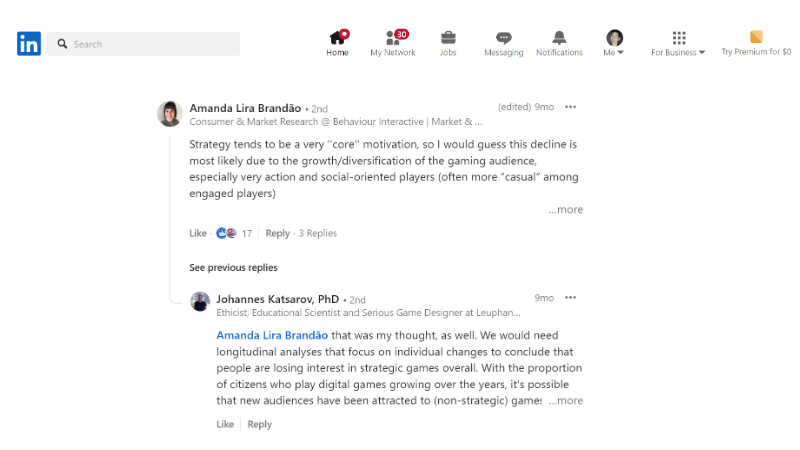
A central finding of the research is the significant decline in the appeal of strategy-based gameplay over the past ten years. This downward trend is consistent across gender, geographic regions, and gamer types, including casual, core, and hardcore segments. Data indicates that this shift is not driven by existing players changing their preferences, but rather by the entry of new cohorts who exhibit lower baseline interests in strategic mechanics. Younger age groups demonstrate the most pronounced decline, suggesting a generational shift in gaming expectations.
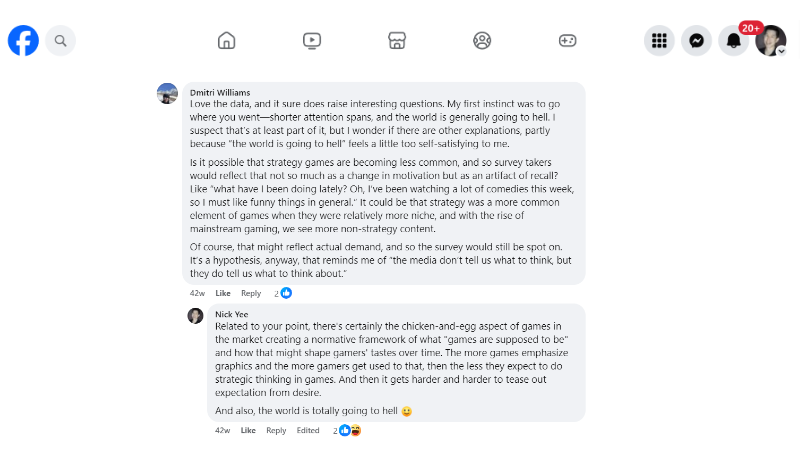
The study suggests that the market itself plays a critical role in shaping these preferences. As the gaming industry has expanded, the proliferation of titles emphasizing instant gratification, high-fidelity graphics, and dopamine-triggering mechanics has created a normative framework that may discourage strategic thinking. While some observers attribute this trend to shorter attention spans or the influence of modern game design, the data confirms that the distribution of player motivations has shifted toward non-strategic interests as the total population of gamers has grown and diversified.
Methodologically, the study relies on longitudinal survey data collected between 2016 and 2024. By controlling for demographic variables and analyzing distribution density, the research isolates the impact of new player cohorts on overall market trends. The findings highlight a complex interplay between individual psychological motivations and the evolving landscape of available gaming content, where market supply and player demand continuously reinforce one another.
Quantic Foundry · 2026
Quantic Foundry · 2025
Quantic Foundry · 2025
Quantic Foundry · 2025
Quantic Foundry · 2024
Quantic Foundry · 2023
Quantic Foundry · 2023
Quantic Foundry · 2023
Quantic Foundry · 2021
Quantic Foundry · 2021
Quantic Foundry · 2021
Quantic Foundry · 2020