1 free read left. Create a free account for unlimited reading + AI research.
Create free accountWhitepaper Japanese Association for Role-Playing Game Studies (JARPS)
1 free read left. Create a free account for unlimited reading + AI research.
Create free accountWhitepaperJapanese Association for Role-Playing Game Studies (JARPS)
Distilling the key insights…
This study investigates the role of the Game Master (GM) in facilitating communication among children with Autism Spectrum Disorder (ASD) during Table Talk Role-Playing Game (TRPG) sessions. While previous research has established that TRPGs can promote conversation in this demographic, the specific mechanisms of GM intervention remained under-examined. The study aims to clarify how the GM’s comments and interventions assist children in engaging in voluntary and cooperative dialogue.
The research was conducted at a public elementary school in Tokyo, involving a small group of children with ASD over five sessions. Using conversation analysis, the researchers examined transcripts from the first and fifth sessions, focusing on a five-minute segment from each. The methodology involved both quantitative analysis of verbal overlaps and qualitative assessment of the GM’s role in guiding game progression and social interaction. The GM was a graduate student with four years of experience, though not a specialist in ASD support.
Key findings indicate that the GM functions as a participant within the game rather than a traditional instructor. By providing "soft frameworks" and suggestions based on game rules rather than direct social instruction, the GM successfully encouraged children to coordinate their actions and reach consensus. Quantitative data showed a significant reduction in verbal overlaps and interruptions by the fifth session, suggesting that participants developed better turn-taking skills through the game’s natural flow.
The study concludes that TRPGs offer a unique environment where communication is optimized through the shared goal of game achievement. Unlike Social Skills Training (SST), which often relies on direct instruction, this approach allows children to learn through self-directed discovery and cooperative play. The GM’s role is to manage the game’s structure, which in turn facilitates spontaneous social adjustment among the participants.
Japanese Association for Role-Playing Game Studies (JARPS) · 2025
Japanese Association for Role-Playing Game Studies (JARPS) · 2025
Japanese Association for Role-Playing Game Studies (JARPS) · 2025
Japanese Association for Role-Playing Game Studies (JARPS) · 2024
Japanese Association for Role-Playing Game Studies (JARPS) · 2024
Japanese Association for Role-Playing Game Studies (JARPS) · 2024
Japanese Association for Role-Playing Game Studies (JARPS) · 2024
Japanese Association for Role-Playing Game Studies (JARPS) · 2024
Japanese Association for Role-Playing Game Studies (JARPS) · 2024
Japanese Association for Role-Playing Game Studies (JARPS) · 2024
Japanese Association for Role-Playing Game Studies (JARPS) · 2024
Japanese Association for Role-Playing Game Studies (JARPS) · 2024
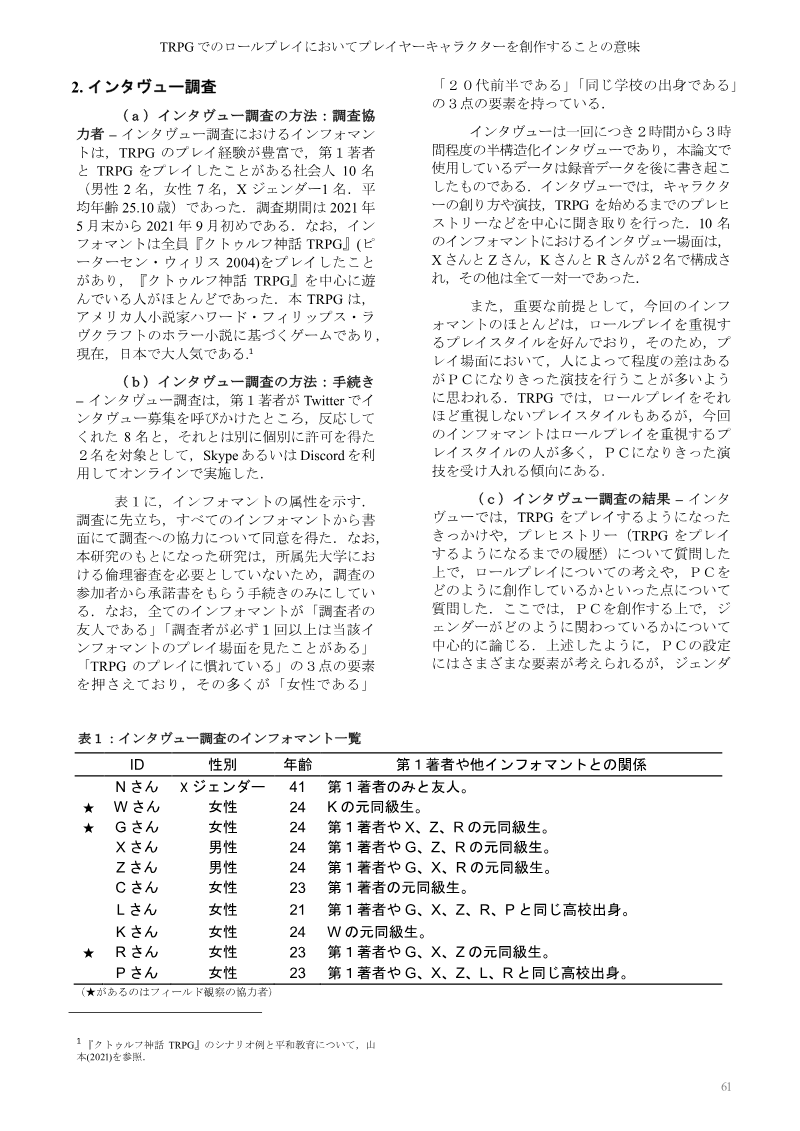
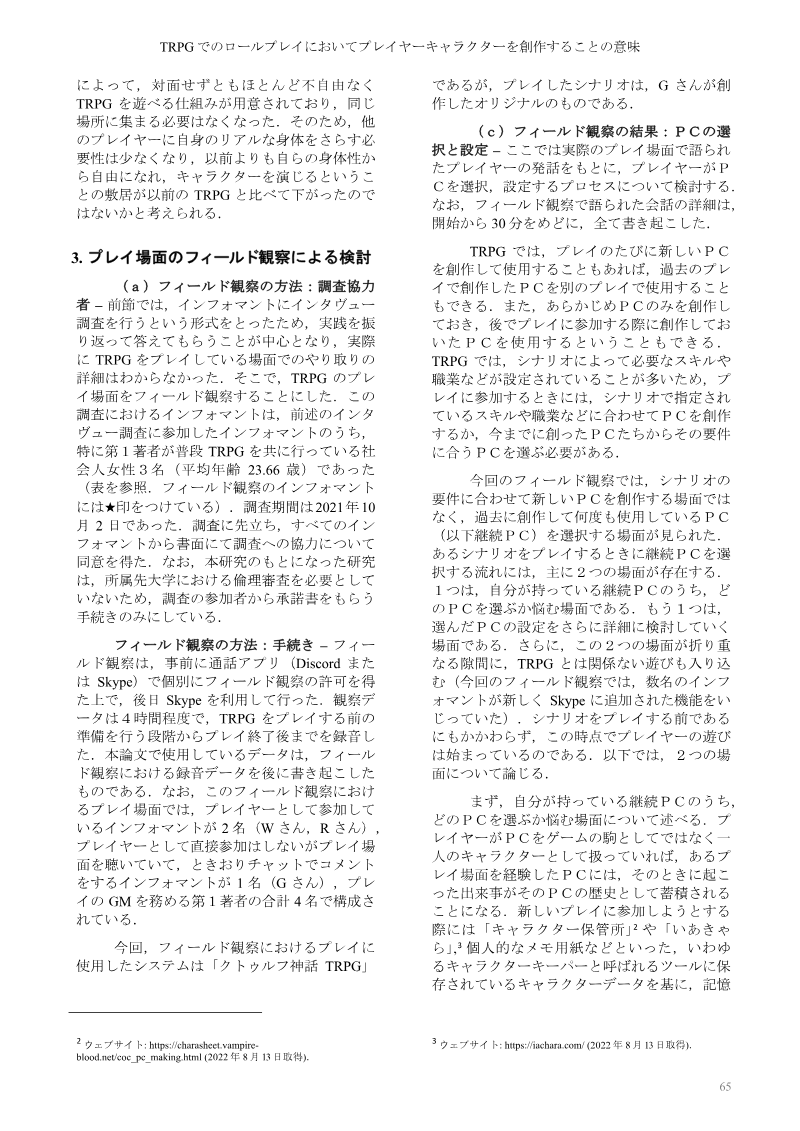
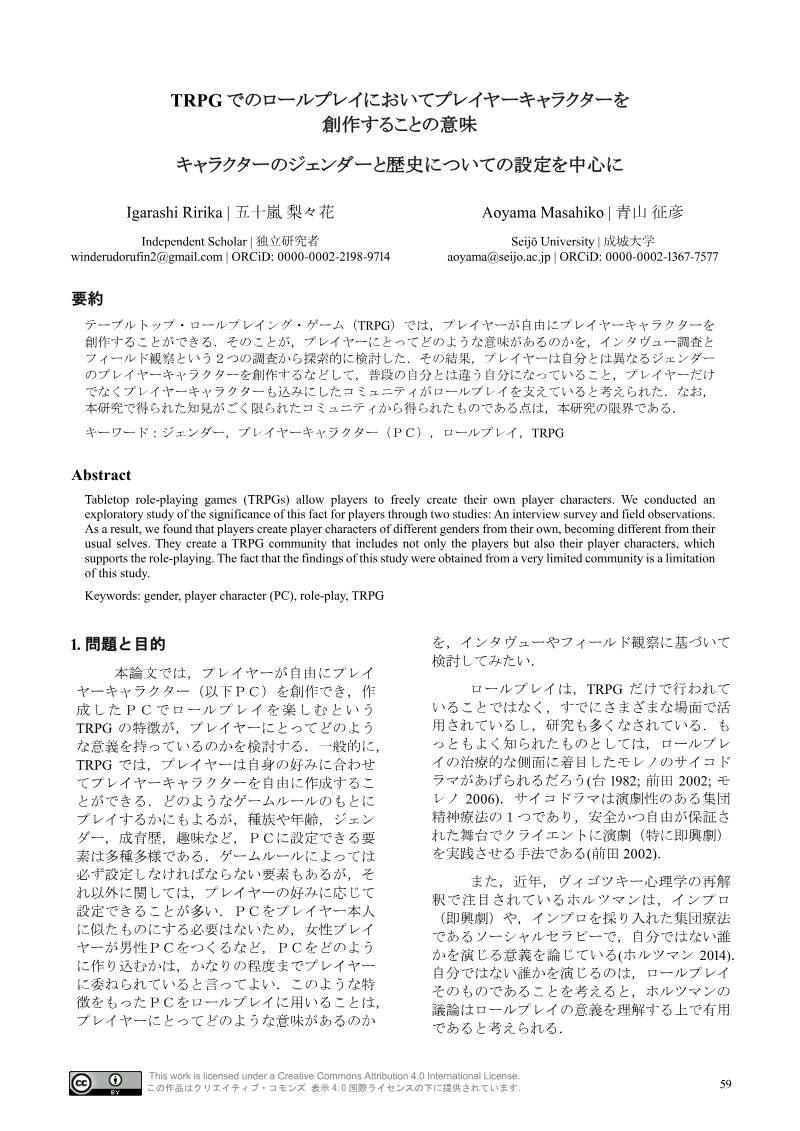
Japanese Association for Role-Playing Game Studies (JARPS) · 2022
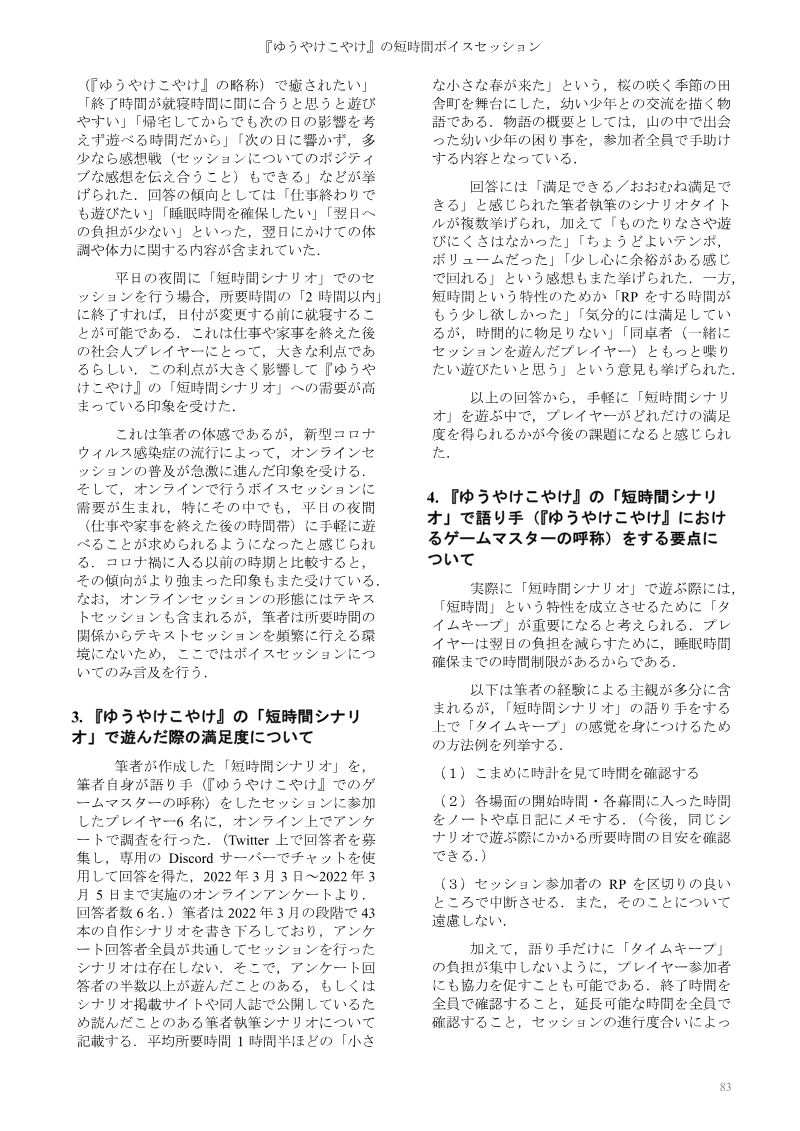
Japanese Association for Role-Playing Game Studies (JARPS) · 2022
Japanese Association for Role-Playing Game Studies (JARPS) · 2019