Social Deduction reports and market data
8 game industry reports, presentations and talks about social deduction from writers such as Game Developers Conference and Tencent, newest from 2023. Every document has a summary and key insights with the page they come from, and 340 charts and tables are extracted as data.
Documents

Script Murders: The Form and Design of the Most Popular Tabletop Genre in China
The Chinese script murder industry, known locally as jubensha, has matured from a niche adaptation of Western whodunit mysteries into a sophisticated, immersive social phenomenon.
- The Chinese 'jubensha' (script murder) market is driven by social interaction, with a core demographic of 18-to-25-year-olds (Gen C) who prioritize group activities and immersive experiences.
- The market is segmented into three primary design patterns: traditional 'whodunnit' mysteries (50% market share), supernatural themes (20%), and new mystery genres (30%).
- Operational success relies on four pillars: physical layout/cosplay, high-quality script writing, the role of the Dungeon Master (DM) to guide narrative flow, and the use of NPCs to enhance immersion.
Emergency Meeting! It's the 'Among Us VR' Postmortem
The development of Among Us VR represents a strategic effort to translate a globally recognized 2D social deduction IP into an immersive first-person experience.
- The 15-month production cycle for Among Us VR was executed by a peak team of 28 developers, focusing on a Minimum Viable Product that prioritized core social deduction mechanics.
- Early development centered on a 'beautiful corner' prototype to establish visual and technical benchmarks, specifically addressing VR-specific challenges like locomotion and motion sickness mitigation.
- The team implemented a tiered playtesting strategy targeting VR newcomers, which directly informed the development of comprehensive comfort settings and an intuitive tutorial system.
Social Media Deep Dive: 'Among Us' TikTok Strategy
A successful TikTok strategy for game developers hinges on balancing high-effort, personality-driven content with data-backed experimentation to foster long-term community loyalty.
- Prioritize sustainable community engagement and a consistent brand voice over chasing fleeting viral moments to foster long-term player loyalty.
- Maximize total views by keeping videos under 15 seconds and ensuring a strong hook within the first three seconds to trigger immediate curiosity.
- Use TikTok as a primary discovery tool for younger demographics by blending gameplay updates with culturally relevant memes and niche-interest sub-genres.
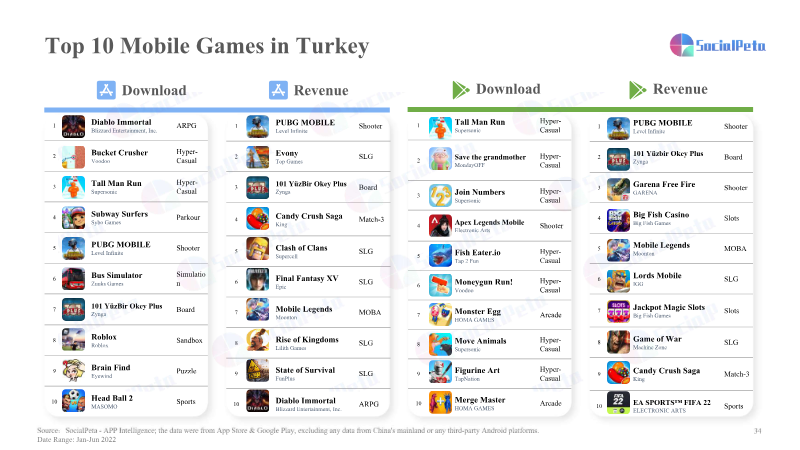
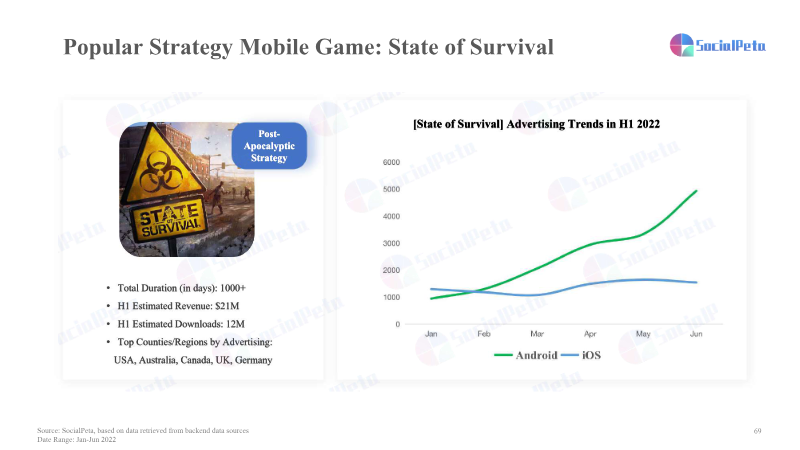

Global White Paper on Mobile Advertising & Marketing Game
Mobile game advertising in 2022 experienced a pronounced contraction, with total creatives falling nearly 30% year-over-year to 15.8 million while the advertiser base stayed flat at 45,100.
- Mobile game advertising volume contracted by nearly 30% in 2022 to 15.8 million creatives, driven by a shift toward quality-focused marketing and the impact of Apple’s IDFA changes.
- Video ads dominate the market, accounting for over 86% of all creatives, while casual and puzzle titles have displaced RPGs as the primary drivers of advertising spend.
- Cost-per-mille (CPM) is highest for strategy games at $21.58, and iOS advertising remains 15% more expensive than Android equivalents.
A Cruel Fate: Emergent Tragedies in The Shrouded Isle
The Shrouded Isle redefines dystopian game design by replacing conventional resource management with a focus on psychological variables and character-driven interactions.
- The Shrouded Isle shifts resource management from traditional technological progression to psychological variables, focusing on maintaining faith and political loyalty.
- The game forces players into a Machiavellian framework where regime survival requires the sacrifice of individual villagers, creating emergent tragedies through unpredictable human variables.
- Information progression is a core mechanic that limits player knowledge, forcing a transition from optimization-based gameplay to a survivalist strategy centered on calculated power maintenance.
Secret Hitler: Designing Conflict & High-Tension Moments
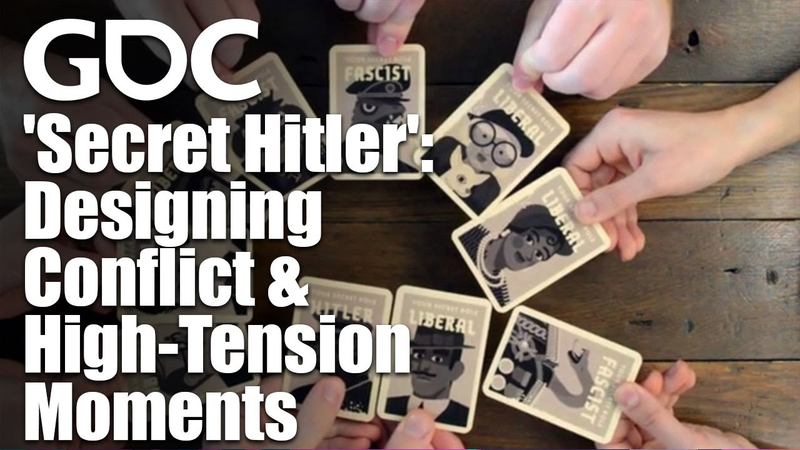
Secret Hitler functions as a masterclass in social deduction design, prioritizing high-tension interpersonal drama and narrative-driven gameplay over rigid mechanical balance.
- The core design philosophy of Secret Hitler focused on maintaining high-tension, personal conflict and a sense of a 'knife's edge' throughout the entire session, rather than prioritizing perfect game balance or deterministic outcomes.
- The game utilizes a 'rising action' structure where fascist policy enactment increases the intensity of suspicion and social interaction, ensuring the game remains engaging until the final moments.
- To prevent the 'snowball effect' where one team dominates, the developers implemented mechanics like term limits and presidential succession to force players to interact with new, potentially untrusted partners rather than relying on a fixed group of allies.
Social Animals: Werewolves Within and the Virtual Tabletop
The development of Werewolves Within centers on the thesis that virtual reality can successfully replicate the nuance and intimacy of face-to-face tabletop gaming by prioritizing social presence over complex digital mechanics.
- Virtual reality social experiences are most effective when they prioritize non-verbal cues like leaning, eye-tracking, and spatial awareness over complex digital mechanics.
- Stylized avatars function as digital masks that lower player inhibitions and reduce social anxiety, fostering more confident engagement than photorealistic representations.
- Design constraints, such as using gamepads instead of touch controllers and implementing randomized seating, prevent the misuse of physical gestures and keep the focus on social interaction.
The Prototype that was Banned from Halfbrick
Game design possesses the capacity to fundamentally alter human behavior, often with unintended and disruptive consequences.
- A pen-and-paper strategy game developed at Halfbrick was terminated after only eight days because its complex alliance-building and high-stakes mechanics caused a total collapse in office productivity.
- The game's 'daisy-chaining' mechanics and lack of randomness transformed professional relationships into intense personal rivalries, creating a toxic environment incompatible with the workplace.
- High-stakes feedback loops and forced social dependencies in game design can prioritize engagement at the expense of player well-being, often leading to blame and frustration.