1 free read left. Create a free account for unlimited reading + AI research.
Create free accountWhitepaper DiGRA
1 free read left. Create a free account for unlimited reading + AI research.
Create free accountWhitepaperDiGRA
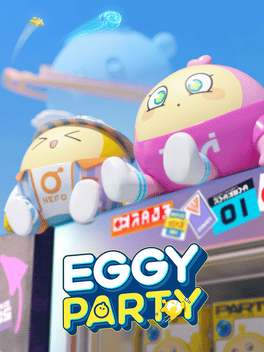
The paper is a theoretical and qualitative case study of Eggy Party, a NetEase party game with a built-in 3D map editor. It examines how user-generated content shapes players' embodied experiences.
This paper is a theoretical and qualitative case study examining how user-generated content (UGC) shapes players' embodied experiences in Eggy Party, a NetEase party game with a built-in 3D map editor. It draws on embodiment theory from philosophers such as Merleau-Ponty, Ihde, and Dreyfus, and frames the analysis around two dimensions: UGC as a means for players to capture and express embodied experience through map editing, and UGC as a driver of interaction between players. Interactivity and agency serve as its central analytical lenses, with procedural rhetoric used to explain how game design conveys meaning and shapes player beliefs.
The study's empirical basis is a sample of 15 fan-made maps, examined through players' video recordings of their gameplay. These maps are sorted into three categories according to the relationship between creator and player: Designer-Centric maps with linear narratives in which player actions determine completeness, Hybrid-Centric maps that offer observation and route choices without imposed constraints, and Player-Centric maps that are themed but lack narrative and allow limited self-directed action. Across these categories, the author argues that players experience the game not merely as participants but as active agents, and that the absence of competition in some fan-made maps lets players prioritize experience and self-expression over winning.
Methodologically, the research applies Fairclough's three-stage model of critical discourse analysis, treating map creation and interpretation as texts. The micro level covers description of player-made maps, the meso level covers other players' interpretations, and the macro level addresses broader sociocultural implications such as self-expression, power dynamics, and cultural narratives. The author presents the work as ongoing, with findings to be detailed in later stages, and positions it as an effort to address a gap in micro-level research on embodiment in electronic games.
Each row is a game or company this document names, each column a document, oldest first. A mark means that document names it. Select a row to see those documents.

DiGRA · 2026

DiGRA · 2026



DiGRA · 2026



DiGRA · 2026



DiGRA · 2026



DiGRA · 2026



DiGRA · 2026



DiGRA · 2026

DiGRA · 2026



DiGRA · 2026



DiGRA · 2026

DiGRA · 2026