1 free read left. Create a free account for unlimited reading + AI research.
Create free account
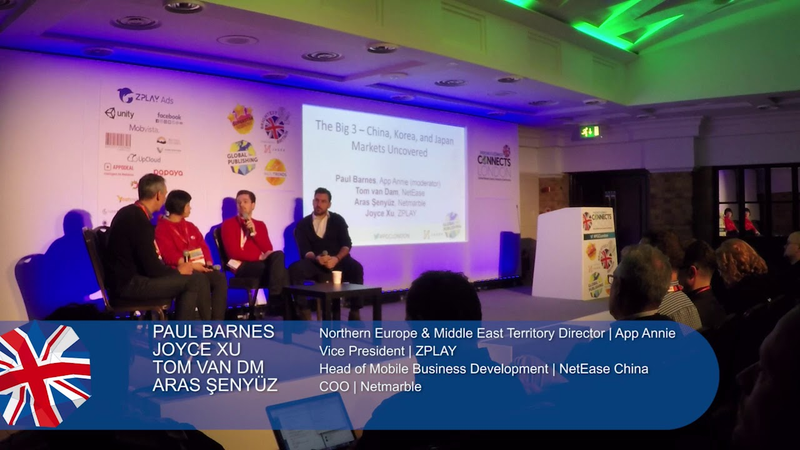
The big three – China, Korea, and Japan Markets Uncovered
Key insights
7 takeaways- 01The Chinese mobile gaming market is the world's largest, with over 550 million users and annual revenue exceeding $100 billion as of 2017.
- 02Market segmentation in China is driven by device quality, with iOS users representing a higher-spending demographic compared to the broader, more price-sensitive Android user base.
- 03Asian gaming markets exhibit significantly higher engagement, with average daily play times reaching six hours compared to 1.5 hours in Western markets.
- 04Game design must be localized for Asian audiences, specifically by implementing steeper leveling curves and longer-term progression systems to match local player behavior.
- 05Successful entry into Asian markets requires high content intensity; developers should have at least three months of content ready at launch to support rapid updates every two weeks.
- 06Marketing mechanics in Asia rely heavily on social platforms like WeChat, Kakao, and Line, whereas Western marketing is more dependent on influencers and different social media channels.
- 07The Chinese market is increasingly competitive, leading domestic developers to expand into Western markets where they leverage over a decade of mobile-first, free-to-play experience.
Ask AI about this video
Transcript
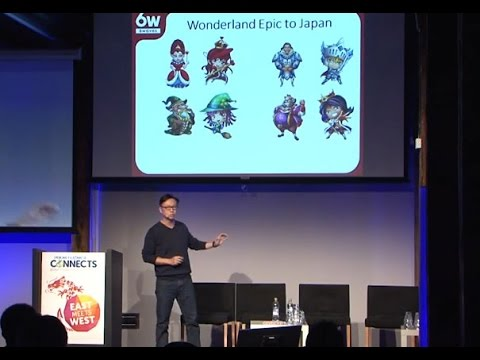
[Music] [Music] so let's go so my name is Paul Barnes on the region director for Northern Europe and Middle East for a pani so welcome to the session everyone I'm going to introduce my esteemed panelists in a minute but I'm going to have a quick quiz first of all and it's a very contentious quiz because we're already disagreeing over what the answer is so I'm going to ask you a question which is how many games had revenue of more than 1 billion dollars in 2017 alright and this is from an app the app any retrospective published recently I'll give you a clue it's more than one and
less than six all right so if you think it's two games more than a billion you want to put your hand in the air if you think it's - okay a couple hand in the air if you think it's three few more and if you think it's for and what about five five you were just what an informed audience four is the right answer according to a penny although Tom and I are already arguing over over whether there's a few other candidates in there and I should congratulate both these guys here actually an heiress for lineage two revolution and Tom for fantasy westward journey both up there in the in the top of the charts so I think there's two things come from that right one of which is if you're looking globally revenues in its eyes and markets you have to start with with these with with these three markets because of all of those games every single one of them comes from these markets every single game over a billion dollars revenue in 2017 came from these markets and that's true whether you
whether exactly what the number is so that's that and the second thing is what an amazing panelists we have is we've got representation or two of the companies in that list so it should be a good discussion so with that in mind I think I'm going to ask the guys to introduce themselves first of all and just give us a little bit about your experience in these markets and then we'll take the discussion from there so Joyce would you like to kick us off yeah okay yeah hello everyone I'm Joyce she they play I'm the vice president hope they play in charge the plays overseas business corporation and during Westmont and also some strategy cooperation they play is there game publisher and the developer for eight years we published her over 200 games and maybe yeah and also cooperated with foreign developers from over 20 countries yeah because the monster games were publisher terror games so it's we started to build our ads platform into some of the 14th and now it's our platform including access
PE DSP 8x8 exchange and also playable as and network thank you okay thanks my name is Tom I work for Nettie's China which is a very large publisher and developer about 16,000 people what mady's does essentially is develop a lot of mobile games these days less and less PC and although we're very dominant in China about 25 percent of the entire market people in the West don't know us as well however that's starting to change because you might know about a game called rules of survival or knives out essentially the battle royale games on mobile and those are developed by Nettie's teams so slowly our company is coming West as well and I think it will be one of the topics on the panel today
but yes that's pretty much it my role at Nettie's I do a licensing so I look for content in other countries to bring to China or for opportunities for our games to go to the west or perhaps use a specific IP it's very popular thank you so my name is Aris I'm currently working as the CEO of netmarble amia region since 2013 and that part was a 17 year old company born in Korea and currently we own the IPS like lineage to revolution Marvel feature fight and our family include recent acquisition of like Kabam from us and joy city so we are also a large family like 3500 people and like you said like I mostly work on action RPG and RPG and with core chart core titles and my role including investment
merger acquisitions and you know publishing marketing and game operation then you may region great thank you guys so I want to start by putting some context to it and saying just how big these markets and what's the kind of growth rate on it to give us some context and then we'll start to dive into why they're different and what people can learn from that there was one slide I don't know if it found its way to the AV teams there was a slide from the a Pawnee retrospective no nodding shaking heads at the back okay that's fine I'll read it out so a Pawnee published the 2017 retrospective last week which is obviously worth a look at if you have any interest in these kinds of market market analysis figures but just to put context on it so the size of the markets from Japan is a twelve billion size of revenue market in 2017 from our estimates and that's a sixty percent growth from 2015 to 2017 and China in a very similar in terms of size but the growth rate what we track is
growth rate from 2015 to 2017 was two hundred and fifty percent it's just been a crazy increase in China in revenue in the last couple of years and then Korea is slightly smaller more like three billion but again a really fast growth rate that eighty percent growth rate over the last two years so I guess from you guys who've been operating in these markets over the last couple of years it just be really interesting to get you a sense of what it's been like to see that to see that growth occurring and whether you whether you see this continuing to grow whether you're seeing signs of maturity you know where you think that the the markets are on the growth curve and I guess Joyce Joyce and Tom you may want to comment on China between you yeah okay yeah sure sir I always they're a forced answer huh I'm like II know what makes it what makes it yeah so it soon yeah actually is there a place based in China but is the way you are we also published your game is globally and also
I read Stan the data for maybe any is also yes so there is some data adjuster yes want to share according to some third-party marketing agencies or some data sharing some in 2017 the revenue scare of China Mobile has achieved about over 100 billing yeah so sir huge market yeah I think in China marketer has ranked in a number one mobile market actually and also the mobile game users the amount of mobile game users is about 550 billion meaning 550 meaning yeah so in 2007 teens were found as some the Chinese users actually they like his many kinds of games yeah shows some hardcore gaming core games are really popular in China actually so like yeah maybe I I think it's time where share a lot yeah so is there like her there the Tarot game is a
like our game and also a survival game and all solar mobile games really popular and recently in the end of 2017 a kind of new games it's a kind of dating game it's also got a really success in China actually and also a phone is some even though it server hardcore game it call games got really good success we've found is there there Chinese users they stood really sir like there Carol games actually so it's they are searching out all kinds of app stores and just just to find some very interesting Carol game so it's just we still really believe is there there is a big amount of for Carol game users kill in China actually and we also found that area some Android stores they recommend some indie developer games got a really good da you growth in China in 2017 yeah
yeah that is other things we we found and also folder as model in China and restores is already is open most of the channel and restores so all the things it will fail is very exciting good and is it similar for you Tommy do you expect to see continued growth at this rate in China there absolutely will be more growth to answer your question of what has driven this massive growth in the past two three maybe four years I essentially identified three factors one is this year amount of people that are in China that are just able to play games and currently we're about 550 million smartphone users so just the amount of people helps a lot then secondly it's the willingness to spend like in the West you know we are slowly getting more used to spending money on something we do on our mobile phones or just in
passing as opposed to taking the time or doing a premium purchase or anything like that and thirdly there is the fact that the Chinese economy is still doing very very well better than more country in most countries in the world which means that the amount of additional income people have each year that they can now go and spend on games is also growing so all these factors together lead to this massive growth but we are seeing that the factor of people so the amount of new people coming in the market every year that's pretty much matured we've only seen about five percent growth as opposed to fifty percent 100% 200% in previous years so we reach the threshold there pretty much but the other two factors will consider continue to boost growth okay and just before we move on from China I wanted to ask you you too a question I've heard a few people talk about China and divided into two markets you know the tier 1 and tier 2 cities
versus that sort of tier 3 and more rural I mean adduce do you see it that way when you look at gaming do you divide it that way into into into segments of maturity when you're looking at what games are going to be successful to some extent may-maybe not so much the tier 1 and tier 2 although for activities that you hold like player events this might you know sway your thinking but there's definitely a difference between those with the high purchasing power and high-end devices versus the people that run on cheap devices which automatically have a lower spending rate attached to it so that distinction and for example why we like to focus on the iOS market for instance is because all those people already spend on an iPhone which is their status symbol so we know they're willing to to spend money whereas for a lot of people you could say on the Android Market are more
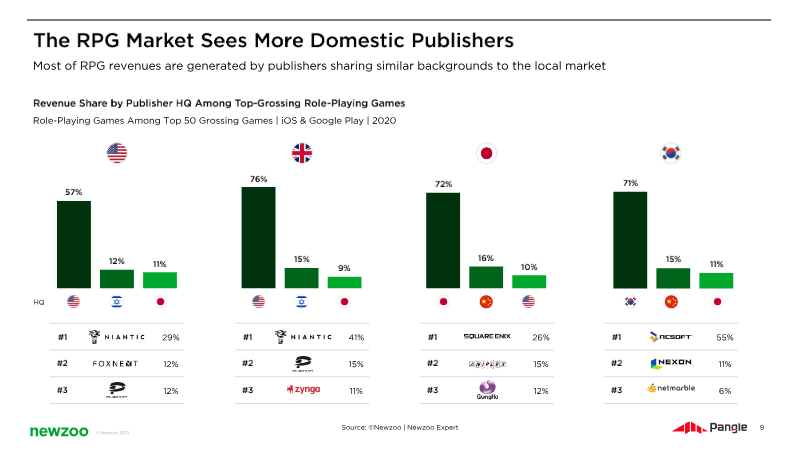
likely to just got the best value for money on the handset they bought in the store and as a result less likely to spend on the game as well cool good an heiress from a Korean point of view I think be really interesting we were talking before about some of the experiences you've seen games being successful being less successful over time to be interested to get your thoughts on that yeah when you look at we just saw it in the previous presentation you know when you look at the US and European market the top 10 games are pretty similar right like you have lots of games that are same in the top 10 charts but when you look at like China Japan and Korea you know Korea is like 3 billion USD but like it's only 50 million people so compared to the like AR ppu per person it's extremely high we see that Korea is an RPG country so the top 10 all of them on are RPGs and when you look at like in China for example we see that like some
new genres are successfully implemented like MOBA or like you know like survival game like you guys did and what Queen does best is putting like the MMO like large-scale MMORPG to the mobile for the first time so that's why like lineage 2 revolution came and launched like last year in December like in 2016 and the first month revenue was as much as the like the total of the whole market was equal to that game's monthly revenue so can you imagine like the size growth of one single market with a successful implementation of a new genre that wasn't available in the local market or global before so it was actually a hundred and seventy-six million USD in just a month and the rest of to all the games together was like hundred and fifty something 176 million in the first month in just one country so it's just in Korea yeah so it showed that these countries like Korea Japan
and China they managed to take those new games genres and put them on mobile somehow and that's an important point of view that we have to keep in mind because when they do that right now it's important that like in the West there are so many talented developers so if they want to be successful in Asia they need to take this into consideration because these guys already played started playing mobile on mobile like you know that 70 million da you in are now a failure in China only so and your game is like incredible right now in again like number one it's the amount of da Yu is like out of this world so we have to understand that to be successful there you have to be multiplayer online somehow and you have to bring something new today tastes and the content consumption is so large compared to Europe so fast I mean you have to be
ready with like a year-long content to be able to like serve these people yeah and that affects not just the content as the game mechanics as well right something that really caught my eye from from our retrospective last week was the the difference in in in user profile and user behavior so for the UK that 25 to 44 age band was a huge 36 percent of the total time spent in mobile games was was by people in that demographic whereas when you start looking at at Japan and career it's 55 56 percent you know it's much more in that slightly older demographic that are the people who are playing mobile games heavily and and exactly what you were saying about the intensity of calm ten consumption it was I think if you look at the top 10% of gamers in in Europe compared to the big three markets here in in these markets they're spending three times as much three times as many hours a day if you like actually G playing game it just gonna give some
data about it like we for the same game we face experience like six hours per day in Asia and one half hour per day in Europe and most because like even we do the farming easier people in Europe and in the US tend to spend less time on farming or like you know it's also playing and so on but in Asia that's a completely different culture like they keep on leave their phone open for hours and hours and hours so that's also like a big difference like three times more playing time so if you look at that context in you know for people in the audience who are representing games companies from from Europe what would your advice be what do you think of the the the elements that are going to identify a game that could be sucks could make that transition successfully I mean there's been some great failures there's obviously a few successes as well do you have a sort of a sense of what the characteristics are the most important characteristics for any of you
guys I'm not asking you first choice now you say okay I mean we have many trials and we failed a lot over the years and you know our first success was interesting the Marvel Fisher fight which was a Western IP so it means that like those guys in Korea and especially in Japan they tend to I mean their characters their you know the localization that they need is on a completely different level so when you look at the top 10 you see that Square Enix being very successful you know like this manga characters manga ip's like like Dragon Ball or you're like you know the other type is are being extremely successful it's not just because the IP but it's also because of the game mechanics and everything else of course but it takes a step further for them so that's number one and number two is like the content levels and you know if you don't have and ready based on your for example in
lineage we have the top levels hundred and twenty so once you are 120 it's very rare that you quit the game because you already achieved a lot and like it's you spend a lot and yeah but on the other hand in the West you don't need that you need much lower level of gameplay for someone to be hooked up to your game and start spending and so on so I think it's also a very big difference you have to adapt to their behavior so that you have to make your leveling steep it has to be much harder in Asia they have to spend much more time to like go up in that sense so that's how a couple of other companies like had to change their game design to adapt like there are a few example in Korea and Japan we also adapted from Korea to Japan to make lineage revolution into revolution number one in Japan once it's launched because that you need to be different in that sense even within Asia you need to be different from my perspective I would give a two
piece of advice to a Western developer which is either be quick or be quicker what I mean by that is either you take the products that you have and you take it to market as soon as you can and be the first have that first mover advantage and if you have some type of unique gameplay that people will want to try out you're the first one and that will get you a lot of views installs and also a lot of companies that are going to try and copy you so hence the need to be fast especially if your game is already out in the West and it's gotten a certain level of attention it's gotten a certain level of success you can be sure that within 14 days development teams have formed in any of the Asian countries that are copying your game exactly and probably more tailor-made to the Asian markets that is a given 14
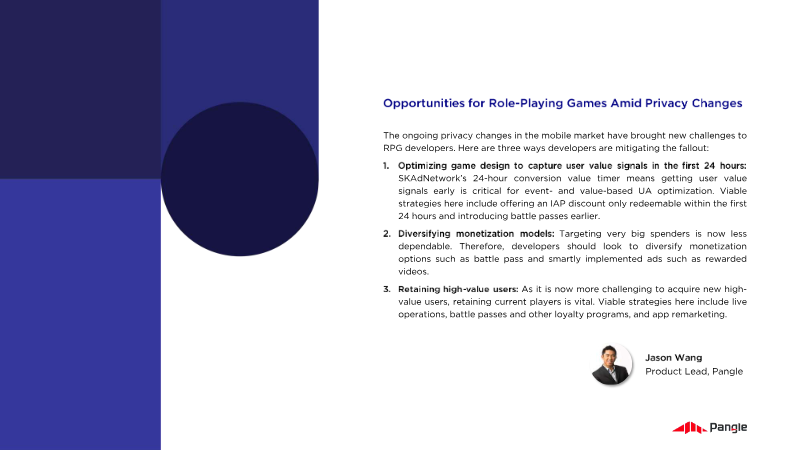
days that's all it takes and maybe that's even a long time all it takes is two people to have a conversation and saying I saw this game okay this is making money let's do so that's one track the other track is be quicker which essentially is you still take your time in getting content ready the content intensity and the consumption of X is very very high all of the games that we release in China we already have three months of content ready when we launch the game because in the first three months you don't have time to build content you're busy fixing things you're busy addressing community issues that you found or other optimization issues but you have to push out content like every two weeks for the big titles so you have to be quicker in this sense by beating other teams that are trying to do the same thing you still can take a little bit longer but if you're moving second third like for
example what we're going to see with battle royale on mobile with player unknown battlegrounds coming to mobile yes their plans but the markets already been taken for a large part right the question is do you still have a chance and from experience in most cases even if you were the first one with the idea or you were the original creator your chances of success are very very slim good choice anything is right to that yeah so it's an after Tom set yeah the things I feel a little bit pressure but anyways we are doing the Kerrigan publishing yeah so it's full for the hardcore games the market is really hard it's uh it's a reamer a higher competition but for the Kara game publishing as soon we still things who can say many kind of Carol Bank games can get a big amount users actually so it's our suggestion escape innovative actually so Steve Alford an innovative
team you know innovative game and together users there is one of our games who our brother companies are publishing recently the game is and now is their top I think it's top four yeah so sir get all about more than 300,000 downloads per day yeah so it's a really first hand where things kept in a way to enter their China market is really big and Chinese user they like all kinds of food Carol games so try okay good so we've got a couple of minutes left there's two things I wanted to hit quickly one on this point of advice and any sort of top thoughts or top guidance that you have for people about working with publishers maybe if people haven't engaged with a publisher in these markets before are there any sort of golden rules or bits of guidance you'd want to share any of you with the guys I think the the best advice I could give on this point is set your ambition level before you start finding a publisher some publishers are
really good at covering the niche markets some publishers are really good at covering the top end of the market and if you don't have the right expectation or the right ambition level for your particular product you're going to end up with a mismatch for example if you're thinking that your game is going to go and top 50 grossing in any of the Asian markets well you better put your whole company and development team on the Asian market or else you're not going to make it if you're just thinking this is incremental revenue then there are a distinct set of publishers that are very good at in a low effort low-key kind of way getting you that incremental revenue so I'd go from that perspective that's good advice thank you okay so it's I think the publishers shooter provide a total solution for their developer yeah including localization Mart Edition and also marketing promotion other things and also I think they're as full for example our they
place value is way out we are creating the value of developers so it's we now it's an we publisher in Carroll games and dinners we would builder as platform all the things we just want to get more user and then two together good market smart citation from the from the games so that is what we do so other solutions we provide to the world developers and then this we try our best to get more users for their games and a higher revenue okay good good stuff so I'm going to look at you as a final thing we were talking about a bit before was we've looked a lot at western games going to Asia here what about Asian games coming to the West just two final thoughts on anything that we know anything about that like yeah like I said like we have multiple games that are like enjoying success and enjoying fail it with even the netmarble because we have a deal with both Hasbro and Disney and we have Star Wars Force
arena like Morrow feature fight Marvel contest of Champions you know we have some of the ladies to revolution right now and so on so some of them like really enjoy it really good success at the moment but what I would say that it's also important for us to understand that the marketing mechanics are completely different in these two different parts of the world like in Asia you know most of the things are going through line Kakao and you know we chat and so on we're like socially people are connected to each other through a mobile platform so they invite each other they talk to each other over there but in the West we have like stuck with what's up or like you know the penetration of that kind of social medium is pretty low so you are mostly have to go through the influences more than ever and make you have to go to like a start list stars like you know we work with Conan O'Brien people work with
like Arnold so what's gonna get or whatever so it's also important to like take good care of that it's a because it's a large geography so for that like for Asian for an Asian developer or the Asian publisher it's extremely important to work with someone who knows the local markets because the France is different German is different and you cannot easily be successful in all of them it's pretty similar to Asia in that sense so so I would like suggest to like talk and meet with those people to understand and spend time in each region ok it's already - yeah you tell me about the impact of influences in career is pretty strong as well right yeah exactly like in Korea it's a-you know you cannot go out in the market and be top ten without working with a top kpop star or you know movie started pretty difficult to reach all these audiences at all good and some did you want a last word on this on the on the idea of games coming from Asia to
the West any predictions for 2018 well any predictions may be hard to say but I want to paint a picture of what you should expect so in in Asia it's now a red ocean absolutely I mean Chinese developers that I talk to they say oh we're gonna launch a game in Europe because it's so easy right they say like if I compare this to what competent level of competition I have in China I will just give up the Chinese market and I'll go directly overseas but also for the companies that are successful in China they've got the market share for each extra percent of market share they have to battle really really hard or they can spend a few resources to try and crack the West they already got the free-to-play experience for over a decade they know that mobile comes first because there's no console era so people are going directly to mobile people most people don't have pcs either
so you have these really dedicated companies not only companies but the teams within these companies are extremely dedicated in a lot of Western countries we have a very high minimum wage if we don't get a bonus we still can lead a comfortable life but these development teams these especially the smaller ones they live on very little income so their game is successful they will be rich they'll all buy a Mercedes so these people are working seven days a week if they can 24 hours a day I can tell you in our company by default if a game goes to market we're on what we call nine to six days a week and if it's launch day it goes to seven days a week and this can keep up for an entire to three months at least and people are willing to do that they're saying this is what's needed to make my game successful and just putting in those hours means they can get a lot more done in a lot shorter
period of time plus it will be quicker right and this is the what I think as a European that people need to be aware of these Asian teams are so committed if they crack how to appeal to the audience's here which is now a bit hit or miss hit obviously a lot of misses too but once they've got that experience of what works and what doesn't work I think we'll have a lot of pressure coming from Asia on to the Western developers okay excellent Thank You Thom I'm getting a nod from the side that we've run out of time we could carry on but yeah that's fine I think so hopefully some useful insights for people around content around mechanics I really like your quick or quicker the advice but working with publishers and ambition setting ambition levels and so on and some fascinating insight at the end there about about dev teams in China so thank you guys and thank you for your attention thank you [Applause]
[Music] you [Music]
Summary
The mobile gaming markets in China, South Korea, and Japan represent the most significant revenue drivers in the global industry, accounting for every mobile game that generated over $1 billion in revenue during 2017. These markets are characterized by rapid growth, high user engagement, and intense competition. China, in particular, has seen a 250% revenue increase between 2015 and 2017, reaching over $100 billion in total mobile market scale with approximately 550 million users. South Korea and Japan also exhibit high revenue-per-user metrics, driven by a cultural preference for hardcore, multiplayer, and RPG-centric titles.
Key findings indicate that success in these regions requires a deep understanding of local consumer behavior, which differs significantly from Western markets. Asian gamers demonstrate higher intensity in content consumption, often spending three times as many hours per day in-game compared to European players. Furthermore, the demographic profile in Japan and Korea skews older, with the 25–44 age bracket accounting for over 50% of time spent in mobile games. To succeed, developers must prioritize steep, long-term progression systems and be prepared to launch with substantial content pipelines, as the market demands constant updates to maintain player retention.
For Western developers looking to enter these markets, the panel emphasizes the necessity of speed and strategic partnerships. Because local development teams are highly competitive and capable of replicating successful mechanics within weeks, developers must either be the first to market or significantly faster in their execution. Conversely, as Asian developers increasingly target Western markets, they are leveraging their decade-long experience in free-to-play monetization and high-intensity development cycles. Success in this cross-regional expansion requires adapting marketing strategies—such as utilizing influencers and local social platforms—and aligning product ambitions with the specific capabilities of local publishing partners.